






An Introduction to Mass Spectrometry-Based Proteomics
Introduction
A new graduate student may receive a proteomics dataset before learning how the data were generated. A project manager may review a service quote that mentions LC-MS/MS, peptide-spectrum matches, and label-free quantitation without a clear picture of how those pieces connect. A biologics scientist may know peptide mapping is required for characterization yet be unsure how mass spectrometry differs from antibody-based protein assays. These knowledge gaps are common because mass spectrometry-based proteomics combines sample preparation, instrumentation, and computational analysis in one workflow.
Mass spectrometry-based proteomics uses liquid chromatography and tandem mass spectrometry to measure peptides and proteins in biological samples. The method supports protein identification, abundance comparison across conditions, and mapping of many post-translational modifications in a single analytical program. It is widely used in basic research, biomarker discovery, and biopharmaceutical characterization because it can generate sequence-level evidence across many proteins without requiring antibodies for every target.
This introduction explains what mass spectrometry-based proteomics measures, how a standard workflow produces results, what typical outputs contain, and how laboratories choose between common strategy paths when planning a first project.
What Mass Spectrometry-Based Proteomics Is
Mass spectrometry-based proteomics is the measurement of proteins and peptides using mass spectrometry as the primary detection technology. In most projects, proteins are extracted from samples such as cell lysates, tissues, biofluids, or purified biologics, then converted into peptides by enzymatic digestion before LC-MS/MS analysis.
The mass spectrometer records the mass-to-charge ratio of peptide ions and, in tandem MS/MS mode, their fragment ions. Software then matches those spectra to predicted peptide sequences from a protein database. Identified peptides are grouped into protein-level results with statistical filters that control false positive assignments.
Proteomics is the biological goal: understanding which proteins are present and how they change. Mass spectrometry is the analytical method that makes large-scale protein measurement practical. The two are linked, but they are not the same thing. Proteomics defines the question. Mass spectrometry provides the measurement system used to answer it.
Why Laboratories Use Mass Spectrometry for Proteomics
Mass spectrometry-based proteomics is used when projects need breadth, sequence evidence, or flexible comparison across sample groups.
A discovery study may need to compare hundreds or thousands of proteins between treated and control cells. An immunoassay panel can measure selected targets efficiently, but it cannot survey the proteome without prior antibody selection for each protein.
A biopharmaceutical team may need peptide-level sequence coverage on a therapeutic protein. Mass spectrometry can localize modifications and document coverage with searchable spectral evidence.
A biomarker program may need to identify candidate proteins in plasma or serum before building a smaller monitoring assay. LC-MS/MS discovery can generate that candidate list from complex biofluids when sample preparation is matched to the matrix.
A signaling study may need to map phosphorylation or other modifications across many proteins. Enrichment combined with modified peptide searching extends standard proteomics into PTM-focused analysis.
These use cases share one principle: mass spectrometry converts complex protein mixtures into measurable peptide signals that can be identified and compared systematically.
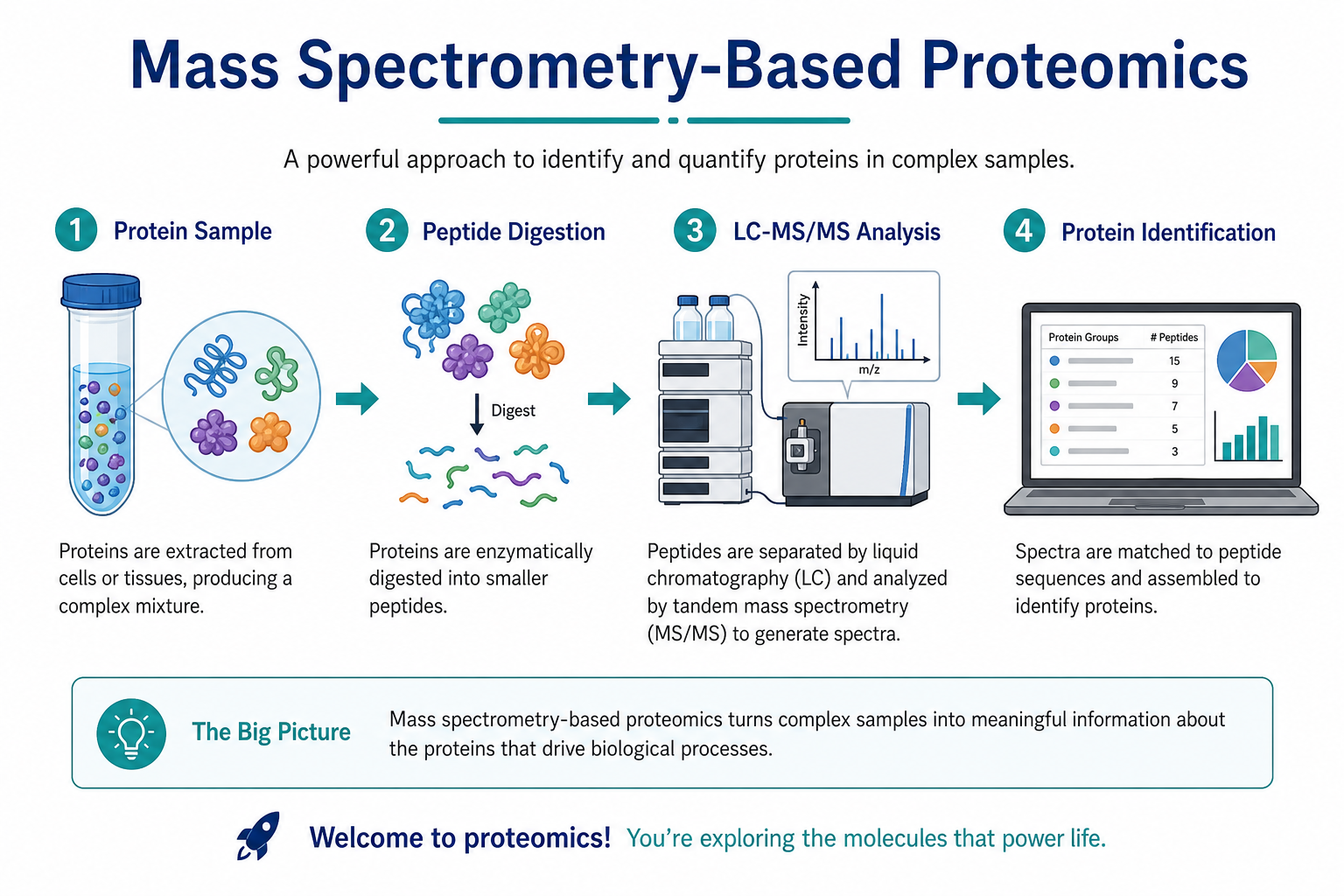
Figure 1. Mass spectrometry-based proteomics links biological samples, peptide measurement by LC-MS/MS, and protein-level identification results.
A Basic Workflow in Five Steps
Most introductory mass spectrometry-based proteomics projects follow a bottom-up workflow. The steps below describe the standard path from sample to report.
Step 1: Prepare the sample.
Proteins are extracted from cells, tissue, biofluid, or purified material under conditions compatible with downstream digestion. Reduction, alkylation, and cleanup remove interferents that would reduce LC-MS/MS performance.
Step 2: Digest proteins into peptides.
Trypsin is the widely used protease because it produces peptides suited to LC and tandem mass spectrometry. The digestion step is what makes the workflow bottom-up.
Step 3: Separate peptides by liquid chromatography.
Reversed-phase LC spreads peptides across a gradient so the mass spectrometer analyzes them in a time-resolved manner. Better separation usually improves identification depth in complex mixtures.
Step 4: Acquire MS and MS/MS spectra.
The instrument records precursor ions in survey scans and fragments selected precursors to produce product ions for sequence assignment. Acquisition mode may be data-dependent for discovery depth or data-independent for reproducible quantification across cohorts.
Step 5: Identify and report proteins.
Database searching assigns peptide sequences to spectra. False discovery rate filtering removes low-confidence matches. Identified peptides are grouped into protein results and summarized in tables that support biological interpretation.
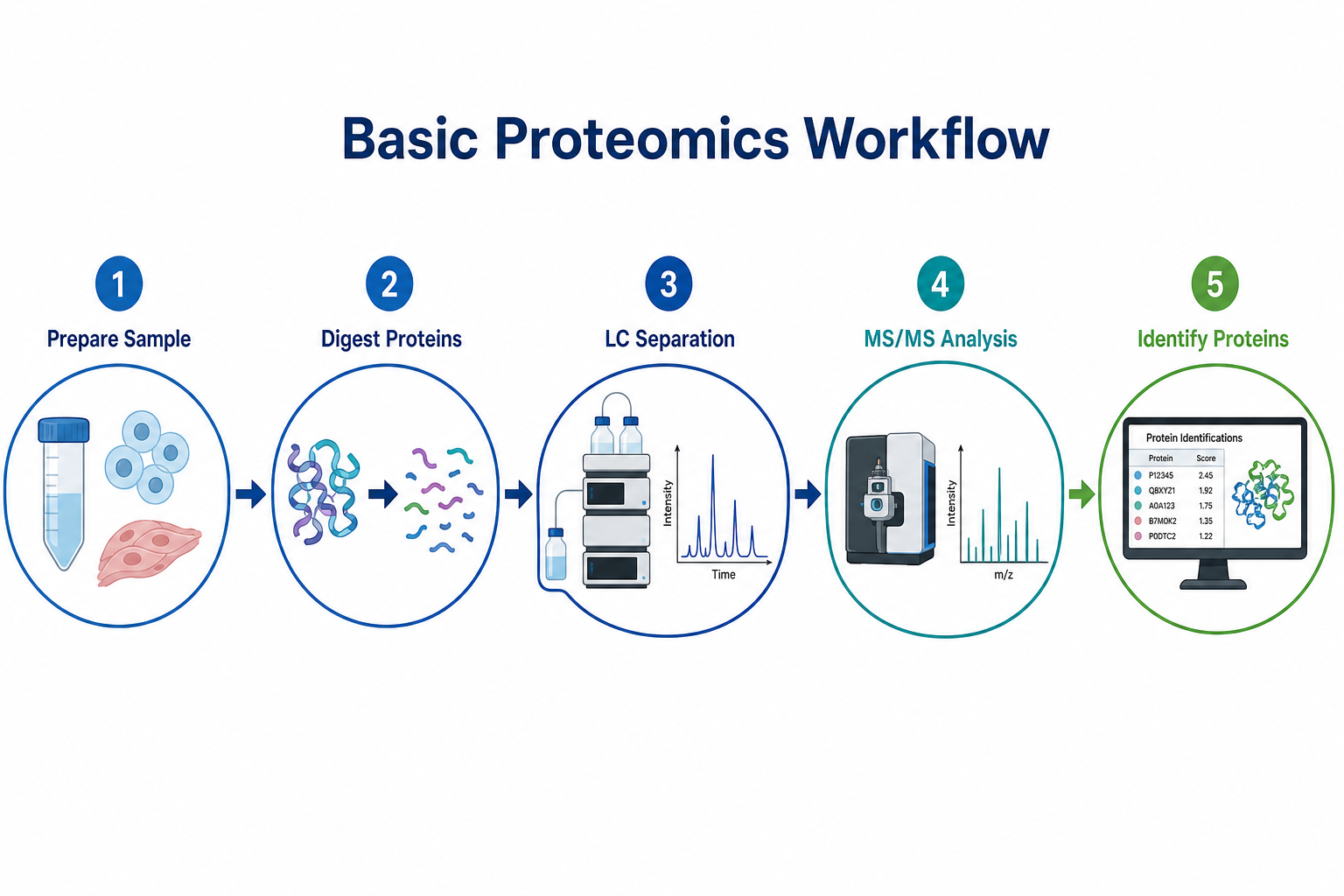
Figure 2. A basic mass spectrometry-based proteomics workflow moves from sample preparation through digestion, LC-MS/MS, and protein identification.
What Results from a Proteomics Experiment Contain
New readers often open a proteomics report and see several tables without knowing how they relate. A typical deliverable set includes three linked layers.
The peptide evidence layer contains peptide-spectrum matches with scores, modification annotations when applicable, and retention time information. This layer shows the direct experimental evidence behind protein calls.
The protein summary layer groups peptides into protein identifications and may include sequence coverage notes. This is often the main table used for pathway review or candidate selection.
The quantitative comparison layer, when included, reports abundance differences across sample groups based on peptide intensities or targeted transitions. This layer supports treatment comparisons, time course analysis, or batch review.
Understanding these layers helps readers evaluate whether a dataset supports identification only, quantitation, or both.
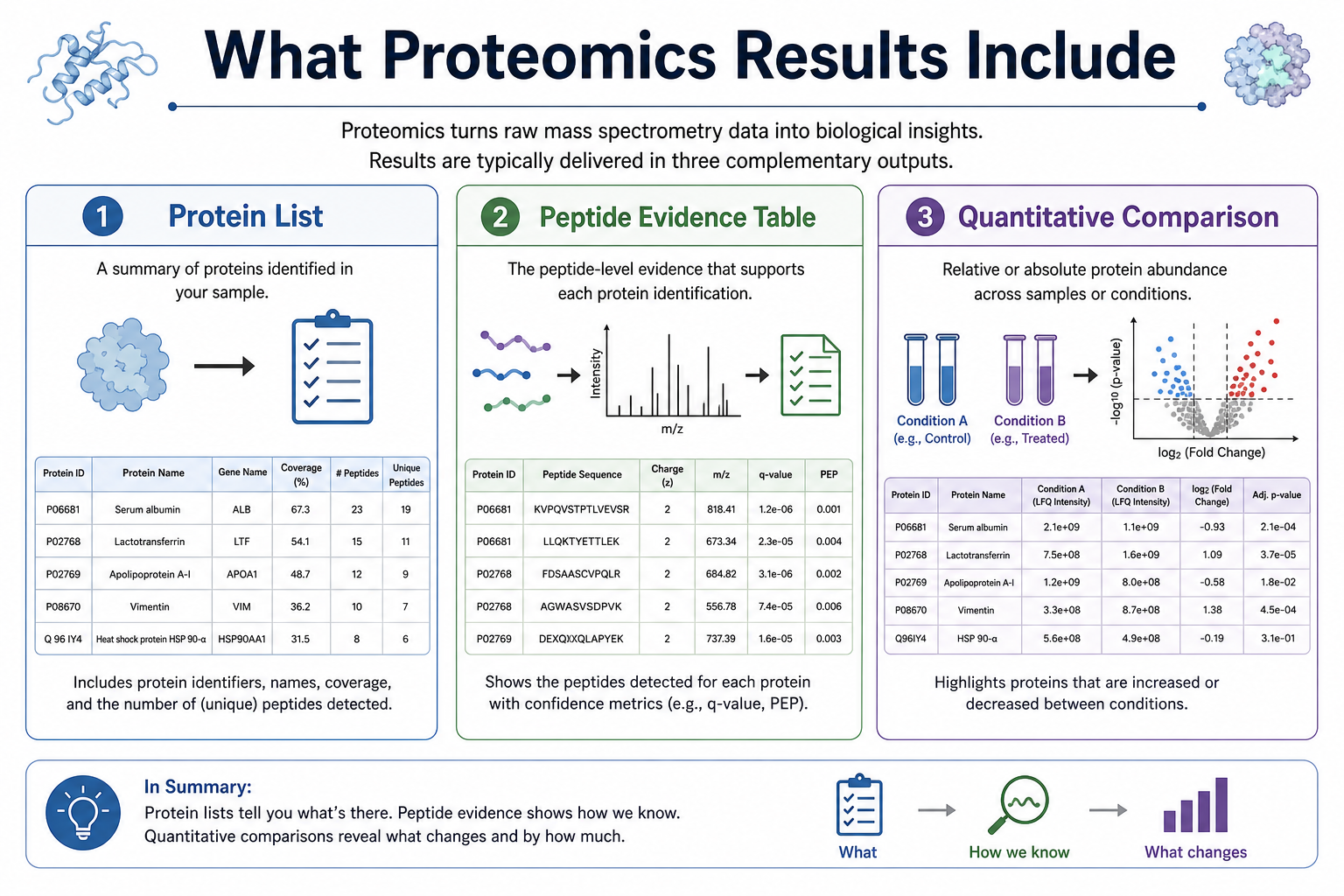
Figure 3. Mass spectrometry-based proteomics reports usually include protein summaries, peptide evidence, and optional quantitative comparisons.
Related Services
Protein Identification Service
Quantitative Proteomics Service
Label-Free Quantitative Proteomics Service, MS Based
Proteomics Bioinformatic Analysis Service
Researchers planning a first mass spectrometry-based proteomics project should define sample type, identification goals, and whether quantitation is required before selecting a service scope.
Three Common Strategy Paths
Not every proteomics project uses the same workflow design. Three paths cover many introductory needs.
Bottom-up discovery analyzes digested peptides by LC-MS/MS to identify many proteins across complex samples. It is the usual starting point for cell lysate comparison, signaling studies, and biologics peptide mapping.
Top-down or intact protein analysis measures proteins with minimal digestion when proteoform information is required and sample complexity can be controlled. It is often used as a follow-up rather than the first step in large discovery screens.
Targeted monitoring uses PRM or MRM to measure selected peptides repeatedly after discovery. It is common when a smaller protein panel must be tracked across many samples with assay-style consistency.
Most teams begin with bottom-up discovery, then move to targeted or intact analysis when follow-up questions become clear.
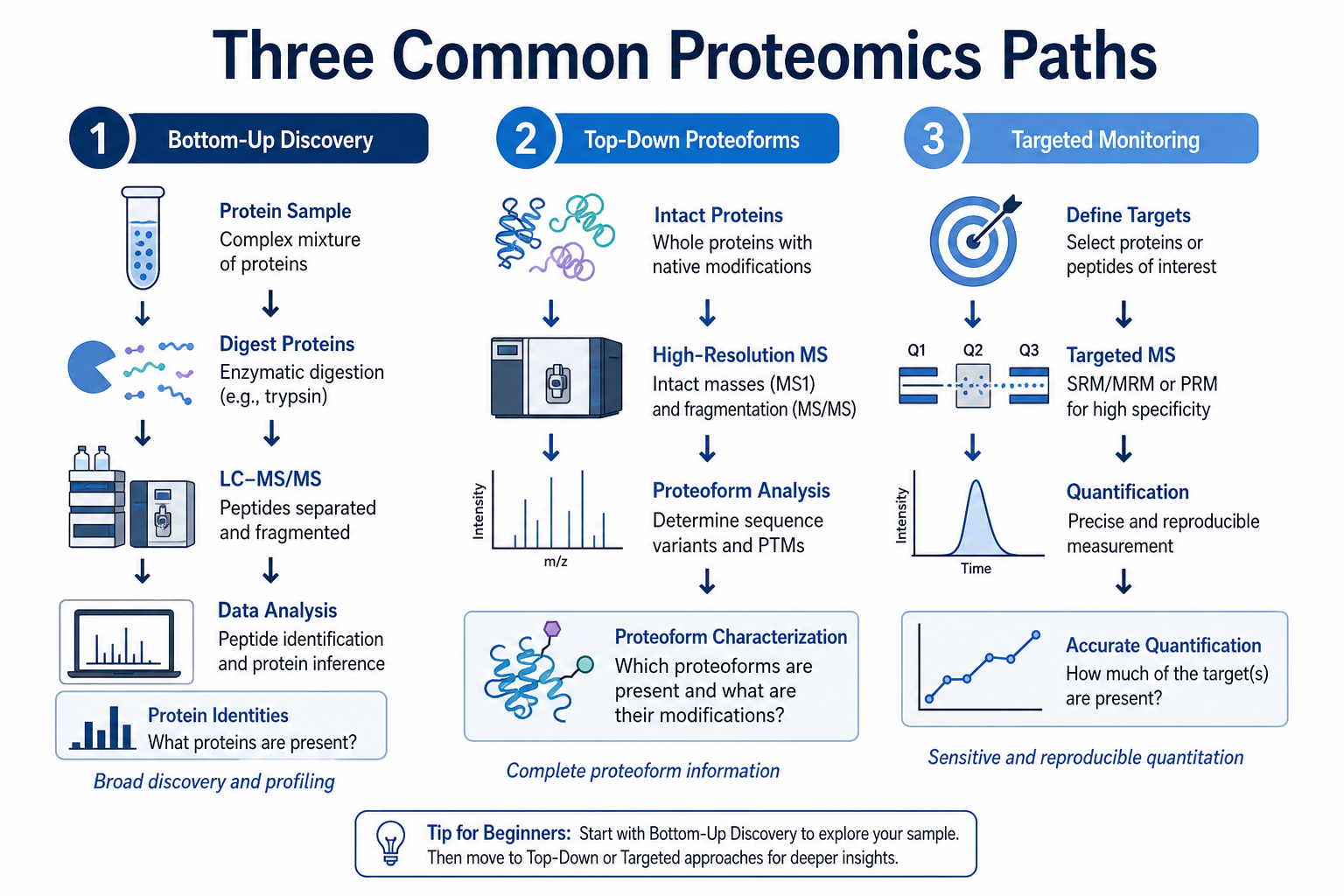
Figure 4. Mass spectrometry-based proteomics commonly begins with bottom-up discovery and may extend to top-down or targeted follow-up.
Identification and Quantitation Use the Same Experiment Differently
Identification asks which proteins are present. Quantitation asks how abundance differs between conditions. Both can come from one LC-MS/MS dataset, but they rely on different review standards.
|
Output Type |
Question Answered |
What Reviewers Check |
|---|---|---|
|
Protein identification |
Which proteins were detected? |
PSM quality and false discovery rate control |
|
Peptide identification |
Which sequences match the spectra? |
Fragment ion coverage and search parameters |
|
Relative quantitation |
Which proteins change between groups? |
Normalization, missing values, replicate agreement |
|
Modification mapping |
Where are PTMs localized? |
Site localization metrics and enriched sample design |
|
Targeted monitoring |
Can selected proteins be tracked repeatedly? |
Transition quality and assay reproducibility |
A strong project plan defines which outputs are required before samples are prepared because enrichment, replicate number, and acquisition time all depend on that decision.
Where Mass Spectrometry-Based Proteomics Is Used
Mass spectrometry-based proteomics appears across research and development settings.
In basic science, it compares protein profiles across genetic backgrounds, treatments, or developmental stages. In clinical and translational research, it supports biomarker discovery in biofluids and tissues. In biopharmaceutical development, it documents protein identity, sequence coverage, and product heterogeneity. In drug discovery, it helps characterize targets, off-target binding, and pathway responses at the protein level.
The sample type and reporting standard change across these settings, but the core workflow logic remains similar.
Practical Limits Beginners Should Know
Mass spectrometry-based proteomics is powerful, but several limits shape what can be claimed from a dataset.
Complex samples contain proteins across a wide abundance range, and low-abundance proteins may be missed without enrichment or fractionation. Bottom-up analysis infers proteins from peptides, so protein grouping can be conservative when peptides are shared across family members. Quantitative comparison requires consistent sample handling and enough replicates to separate biological variation from technical noise. Discovery results usually need targeted or orthogonal follow-up before they are used for routine monitoring.
These limits do not reduce the value of the method. They define where reporting should stay cautious and where additional experiments may be needed.
Frequently Asked Questions
What is mass spectrometry-based proteomics?
It is the use of liquid chromatography and tandem mass spectrometry to identify and compare proteins in biological samples, usually through a bottom-up workflow that measures digested peptides.
How is it different from western blot or ELISA?
Western blot and ELISA detect predefined targets with antibodies. Mass spectrometry-based proteomics can identify many proteins from sequence database matching without requiring an antibody for each target.
Do I need to understand bioinformatics to use proteomics data?
Basic interpretation requires familiarity with protein tables, peptide evidence, and quantitation metrics. Deeper pathway analysis may involve bioinformatics support depending on project scope.
What sample types can be analyzed?
Common samples include cell lysates, tissues, plasma, serum, cerebrospinal fluid, and purified proteins or biologics. Preparation requirements differ by matrix.
Can one experiment identify and quantify proteins?
Yes. The same LC-MS/MS run can support identification through peptide-spectrum matches and relative quantitation through peptide intensity comparison when the study is designed for both outputs.
Conclusion
Mass spectrometry-based proteomics connects biological questions about proteins with an analytical system that can measure peptides at scale. A standard bottom-up workflow moves from sample preparation and digestion through LC-MS/MS acquisition to database searching and protein reporting. Results usually include peptide evidence, protein summaries, and optional quantitative comparisons that support discovery, characterization, and follow-up validation.
Researchers who understand this basic structure can plan projects more clearly, read service proposals with greater confidence, and interpret proteomics tables with a stronger sense of what the data can and cannot support.
Teams beginning mass spectrometry-based proteomics can contact MtoZ Biolabs to review sample type, project goals, and the workflow suited to identification, quantitation, or both.
If a first project requires both discovery identification and a defined reporting format for publication or QC review, MtoZ Biolabs can help align sample preparation, acquisition mode, and deliverables before phase 1 sample intake.
Researchers evaluating proteomics service options can request a project assessment from MtoZ Biolabs to define phase 1 experimental scope and phase 2 analysis outputs.
How to order?




