






Integrating LC-MS/MS Proteomics with Liquid Biopsy Platforms
Introduction
Liquid biopsy platforms are reshaping how researchers and clinicians access molecular information from blood, plasma, serum, and other body fluids without invasive tissue collection. A translational oncology group may combine circulating tumor DNA analysis with plasma protein profiling to monitor treatment response. A biomarker discovery team may pair exosome isolation with LC-MS/MS quantitation of low-abundance signaling proteins. A precision medicine program may need protein-level evidence that complements nucleic acid assays when tissue biopsy is unavailable or repeated sampling is required.
Integrating liquid chromatography-tandem mass spectrometry (LC-MS/MS) proteomics with liquid biopsy platforms extends molecular profiling beyond genomics and transcriptomics to direct protein measurement in accessible clinical matrices. Unlike immunoassay panels alone, LC-MS/MS proteomics can survey hundreds to thousands of proteins in one workflow when sample preparation, depletion strategy, and quantitation design are matched to the fluid type and analytical goal.
For teams building liquid biopsy programs, the integration value lies in linking pre-analytical sample handling, protein enrichment, peptide measurement, and multi-omics interpretation into one coherent biomarker discovery or monitoring strategy.
What Liquid Biopsy Platforms Mean in Proteomics Context
Liquid biopsy refers to analysis of biomolecules in body fluids that reflect physiological or disease states. Common liquid biopsy matrices include plasma, serum, whole blood, cerebrospinal fluid, urine, saliva, and isolated extracellular vesicles. Established liquid biopsy modalities often focus on circulating tumor DNA, circulating tumor cells, cell-free RNA, or exosomal nucleic acids.
LC-MS/MS proteomics adds a protein dimension to these platforms by measuring peptides derived from proteins present in the same fluid samples. This integration is useful because proteins and post-translational modifications often represent the functional state of a pathway more directly than nucleic acid abundance alone. A gene may be expressed without corresponding stable protein detection in circulation, while a secreted or shed protein may provide immediate biological context for disease activity or treatment effect.
Integrating LC-MS/MS proteomics does not mean replacing existing liquid biopsy assays. It means designing workflows in which fluid collection, storage, fractionation, and downstream molecular assays are coordinated so protein data can be interpreted alongside genomic, transcriptomic, or cell-based liquid biopsy readouts.
Why LC-MS/MS Proteomics Is Integrated with Liquid Biopsy Platforms
Protein measurement in biofluids supports biomarker discovery, disease monitoring, pharmacodynamic assessment, and mechanistic follow-up in settings where tissue sampling is limited.
Protein biomarker discovery in plasma or serum can identify candidate markers for oncology, inflammation, cardiovascular disease, and other conditions when discovery proteomics is combined with statistical filtering and targeted follow-up.
Treatment monitoring benefits when circulating protein changes are tracked across serial liquid biopsy time points with reproducible quantitation.
Complementarity with nucleic acid liquid biopsy improves interpretation when genomic alterations and protein phenotypes are measured from the same sample cohort.
Minimal-invasive sampling supports longitudinal studies that would be difficult with repeated tissue biopsy.
Mechanistic validation connects fluid protein shifts to pathway hypotheses when integrated with transcriptomic or metabolomic data from the same platform.
LC-MS/MS proteomics does not by itself establish clinical validity for a biomarker panel. Assay verification, reproducibility testing, and clinical correlation remain necessary before protein signatures move toward diagnostic or monitoring use.
Core Integration Workflow
A practical integration workflow connects liquid biopsy sample handling with bottom-up LC-MS/MS proteomics.
Pre-analytical standardization defines collection tube type, clotting time for serum, anticoagulant choice for plasma, processing delay, centrifugation conditions, aliquoting, and storage temperature. These variables affect protein integrity and comparability across longitudinal samples.
Sample preparation may include depletion of abundant proteins such as albumin and immunoglobulins, fractionation, exosome isolation, or enrichment of targeted protein classes when low-abundance biomarkers are the focus.
Protein digestion and peptide cleanup prepare the sample for reversed-phase LC separation and high-resolution MS/MS acquisition using discovery or targeted modes.
Data analysis assigns peptide-spectrum matches, quantifies proteins across sample groups, and integrates results with other liquid biopsy data layers when multi-omics review is in scope.
Reporting delivers protein identification tables, differential abundance results, candidate biomarker lists, and method notes covering fluid handling and quantitation strategy.
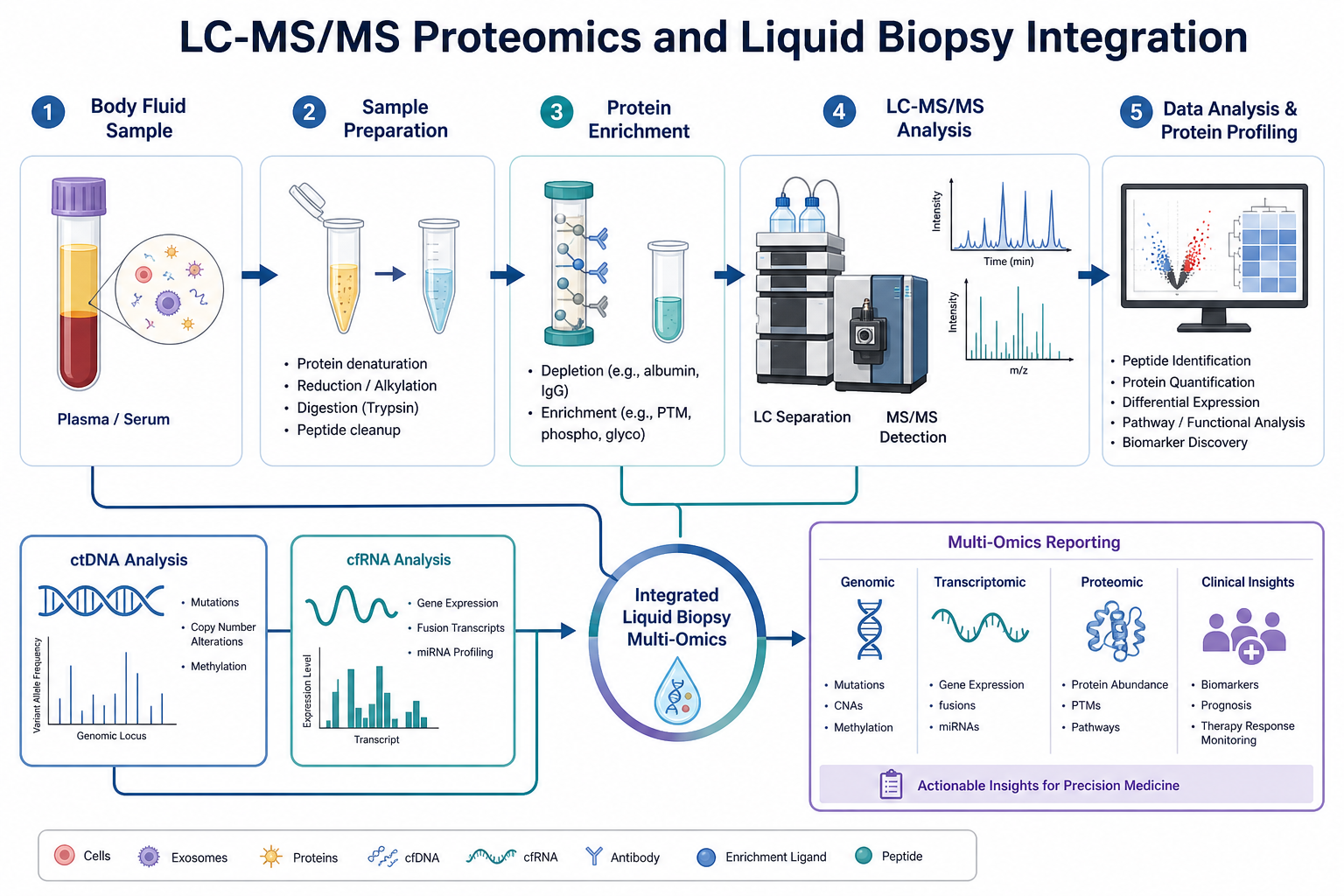
Figure 1. Integrating LC-MS/MS proteomics with liquid biopsy platforms requires coordinated fluid handling, sample preparation, LC-MS/MS analysis, and multi-omics reporting.
Related Services
Label-Free Quantitative Proteomics Service, MS Based
Proteomics Bioinformatic Analysis Service
Researchers building integrated liquid biopsy and proteomics workflows can consult MtoZ Biolabs to review fluid type, enrichment strategy, and the reporting depth required for the biomarker program.
Sample Types and Preparation Considerations
Different liquid biopsy matrices present different proteomic challenges. The table below summarizes common fluids and practical preparation notes.
|
Liquid Biopsy Matrix |
Common Use |
LC-MS/MS Preparation Consideration |
|---|---|---|
|
Plasma |
Oncology monitoring, inflammation studies |
Anticoagulant selection and abundant protein depletion |
|
Serum |
Biomarker discovery, clinical research |
Clotting time and complement-related protein variability |
|
Cerebrospinal fluid |
Neurological disease research |
Low protein amount and specialized handling |
|
Urine |
Kidney and metabolic marker studies |
Wide concentration range and normalization strategy |
|
Exosome-enriched fractions |
Tumor-derived protein signaling |
Isolation method affects proteomic depth |
|
Cell-free fluid fractions |
Complement to ctDNA or cfRNA assays |
Coordination with nucleic acid extraction workflow |
Pre-analytical consistency is often the largest source of variability in liquid biopsy proteomics. Integration planning should define collection SOPs before large sample sets are accumulated.
Quantitation Strategies in Integrated Platforms
Discovery-oriented liquid biopsy proteomics often uses label-free quantitation based on peptide ion intensities across LC-MS/MS runs. This supports broad screening across patient groups or time points when the goal is to identify candidate proteins for follow-up.
Targeted LC-MS/MS using PRM or MRM acquisition improves sensitivity and reproducibility for selected peptides from priority biomarkers after discovery screening.
SWATH or data-independent acquisition can support reproducible quantitation across larger cohorts when library-based analysis is established for the fluid proteome under study.
Quantitation strategy should match platform stage. Discovery label-free workflows are common in early biomarker programs. Targeted quantitation is often preferred when a defined protein panel must be monitored across serial liquid biopsy collections.
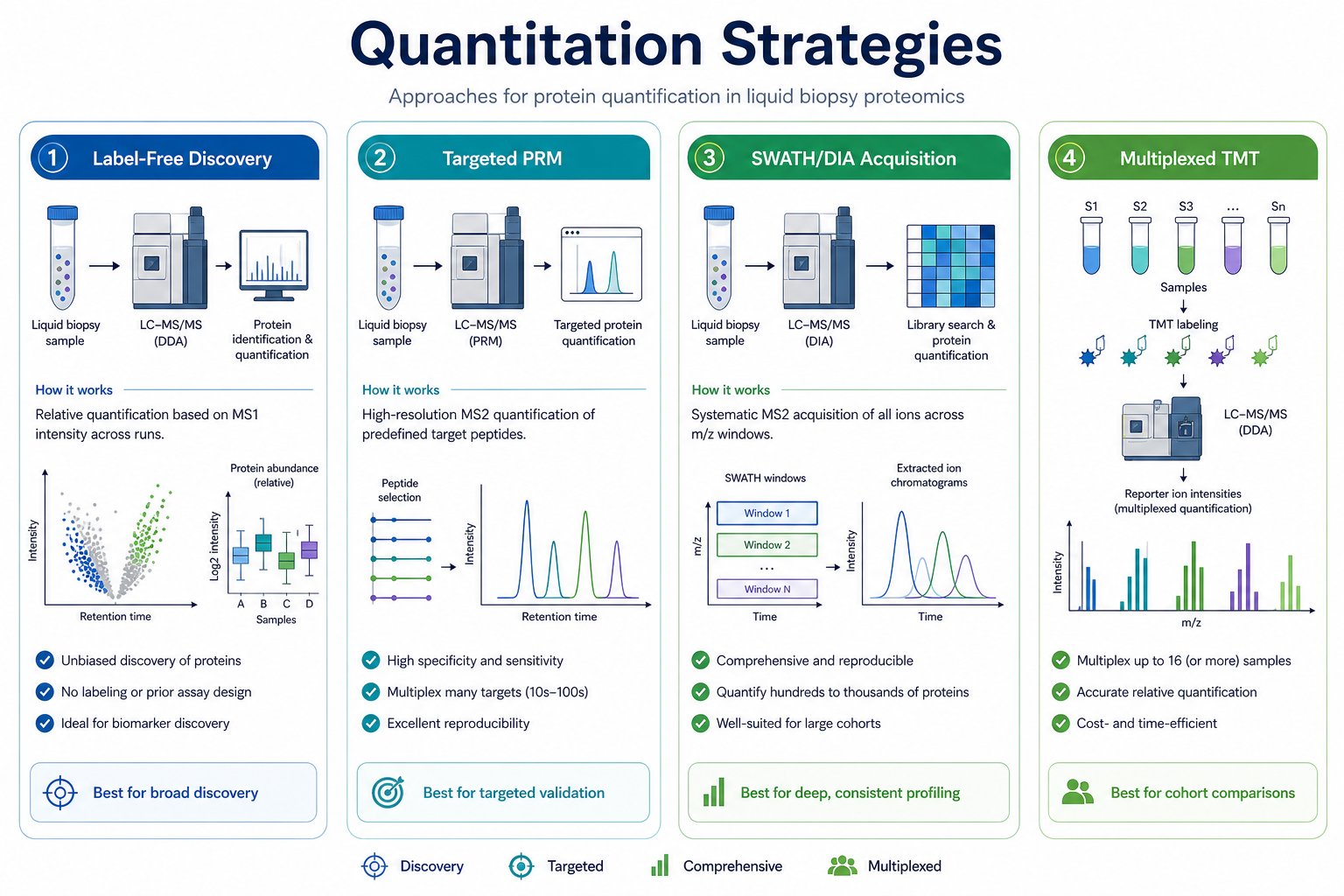
Figure 2. Label-free discovery, targeted PRM, and SWATH acquisition are common quantitation routes in liquid biopsy proteomics integration.
Core Technical Advantages and Current Limitations
Core Technical Advantages
Direct protein measurement in accessible fluids.
LC-MS/MS proteomics reports protein abundance without requiring antibody reagents for every candidate marker during discovery.
Compatibility with multi-omics liquid biopsy platforms.
Protein data can be integrated with genomic, transcriptomic, and metabolomic layers from the same study design.
Flexible depth from discovery to targeted monitoring.
Programs can move from broad fluid proteome screening to focused PRM panels as biomarker evidence matures.
Support for longitudinal sampling.
Minimal-invasive collection enables repeated measurement across treatment or disease progression.
Peptide-level specificity.
LC-MS/MS provides amino acid sequence confirmation for assigned biomarker peptides during development.
Current Limitations
Abundant proteins mask low-abundance candidates.
Albumin and immunoglobulins dominate plasma and serum, requiring depletion or enrichment for deeper coverage.
Pre-analytical variability is high.
Collection, processing, and storage differences can alter fluid proteomes more than analytical instrument variation.
Sensitivity limits remain for rare circulating proteins.
Some biologically relevant proteins may fall below discovery detection without targeted enrichment.
Clinical validation is a separate workflow.
Integrated discovery data do not automatically translate to CLIA-grade or IVD-ready assays.
Data integration complexity increases.
Combining proteomics with other liquid biopsy modalities requires aligned metadata and interpretation standards.
Applications in Biomarker and Translational Research
Integrating LC-MS/MS proteomics with liquid biopsy platforms supports several research and translational scenarios.
Oncology treatment monitoring.
Serial plasma proteomics can track protein changes alongside circulating tumor DNA during therapy.
Early biomarker discovery.
Case-control fluid proteomics helps identify candidate proteins for downstream assay development.
Pharmacodynamic assessment.
Circulating protein changes may reflect target engagement or pathway modulation after drug treatment.
Inflammation and immune monitoring.
Plasma proteomics can profile cytokine-related and immune-associated proteins in longitudinal studies.
Multi-omics patient stratification.
Combined protein and nucleic acid liquid biopsy data may improve subgroup definition in precision medicine research.
These application areas describe common uses. Regulatory and clinical deployment require additional validation beyond discovery-stage integration.
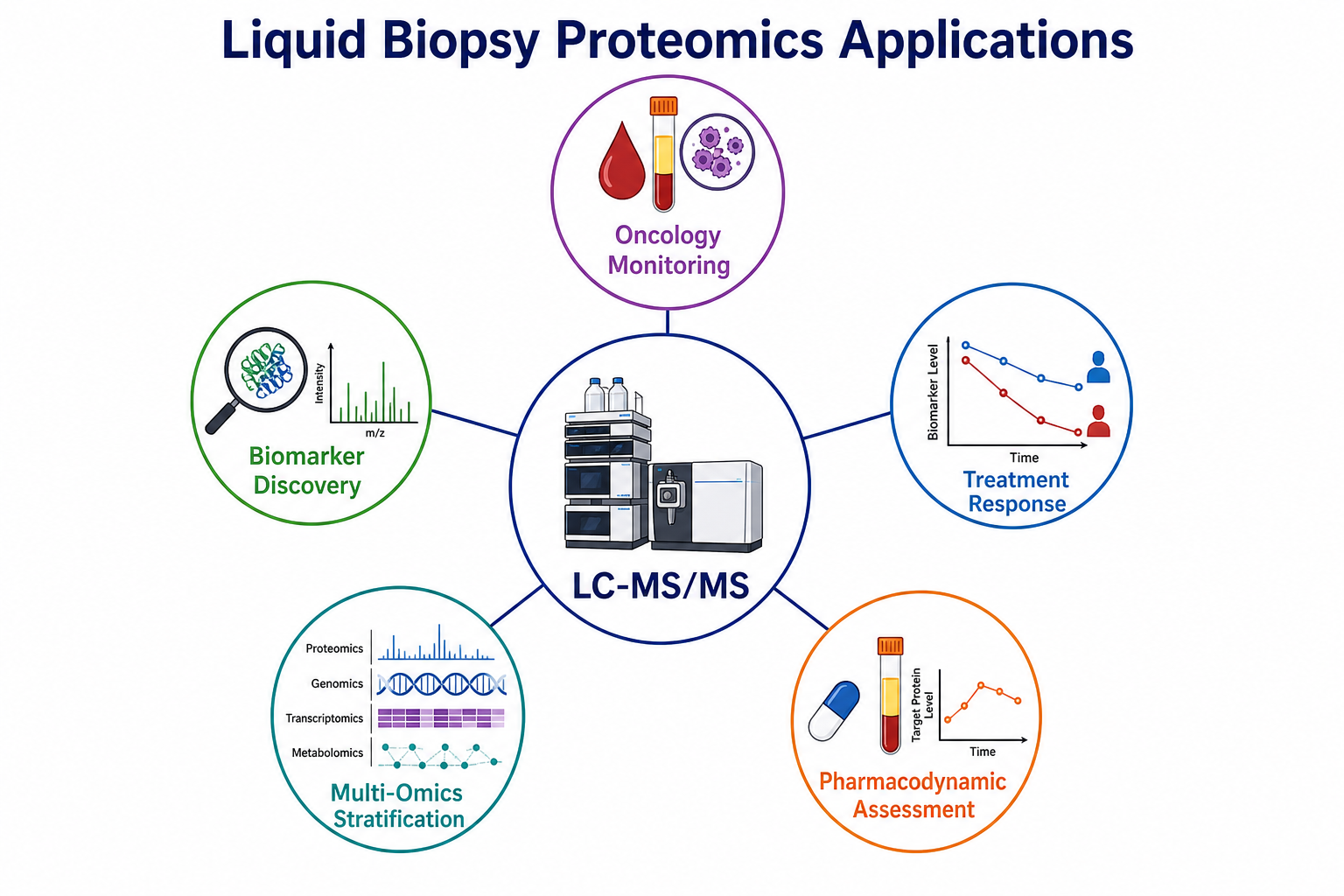
Figure 3. Integrated liquid biopsy proteomics supports oncology monitoring, biomarker discovery, and multi-omics patient stratification.
Frequently Asked Questions
1. What does integrating LC-MS/MS proteomics with liquid biopsy platforms mean?
It means coordinating fluid sample handling, protein sample preparation, LC-MS/MS analysis, and data reporting so protein measurements complement other liquid biopsy assays such as ctDNA or cfRNA analysis.
2. Which liquid biopsy samples are widely used for proteomics?
Plasma and serum are widely used matrices. Cerebrospinal fluid, urine, saliva, and exosome-enriched fractions are also used depending on the disease context.
3. Why is abundant protein depletion often required in plasma proteomics?
Albumin and immunoglobulins dominate plasma protein mass and can limit detection of lower-abundance biomarker candidates without depletion or enrichment.
4. Can LC-MS/MS proteomics replace ctDNA analysis in liquid biopsy?
No. Proteomics and nucleic acid liquid biopsy provide complementary information. Many integrated programs use both data layers.
5. When is targeted PRM quantitation preferred over label-free discovery?
Targeted PRM is often preferred after candidate biomarkers are identified and a defined protein panel must be monitored with higher reproducibility across serial samples.
Conclusion
Integrating LC-MS/MS proteomics with liquid biopsy platforms extends minimal-invasive molecular profiling to direct protein measurement in plasma, serum, and other body fluids. Successful integration depends on pre-analytical standardization, sample preparation matched to fluid type, quantitation strategy aligned with discovery or monitoring goals, and coordinated interpretation with other liquid biopsy data layers. Label-free discovery, targeted PRM, and SWATH-based workflows each support different stages of biomarker program development.
Reliable integrated platforms define collection and storage standards early, select enrichment strategies for low-abundance targets, and plan validation steps before protein signatures are used for clinical decision support. Researchers building liquid biopsy proteomics workflows can contact MtoZ Biolabs to review fluid type, enrichment route, and the reporting format required for the integrated study design.
How to order?




