






Integrated EV Isolation-to-Proteomics Service for Source Material-Based Exosome Studies
Proteins measured by LC-MS/MS originate from the final extracellular vesicle (EV) preparation rather than from the source material in isolation. Soluble proteins, lipoproteins, cellular debris, culture additives, and other matrix components that remain after EV preparation can therefore shape the resulting protein profile alongside vesicle-associated proteins.
An integrated EV isolation-to-proteomics route should link source material assessment, EV separation or enrichment, applicable quality control, protein preparation, LC-MS/MS measurement, and data analysis. The purpose is not to maximize the number of upstream procedures, but to select a sequence that preserves the intended biological comparison and produces interpretable protein evidence.
Assessing Source Material and Project Feasibility
1. Biofluids and Cell Culture-Conditioned Medium
(1) Plasma and Serum
Plasma and serum contain abundant soluble proteins and lipoprotein particles that may co-isolate with EVs and dominate peptide signals. Hemolysis, anticoagulation, clot formation, processing delay, and residual cells may also alter the recovered composition. Comparative studies should use one matrix consistently and control preprocessing across groups.
(2) Urine and Cerebrospinal Fluid
Urine varies with hydration, collection timing, salt concentration, cellular content, and storage-related precipitation. Preclarification and, when appropriate, concentration may be needed before EV enrichment. Cerebrospinal fluid (CSF) often provides limited particle and protein material, making adsorption and transfer loss especially important. Feasibility depends on sample condition, planned characterization, and the analytical objective rather than a universal minimum input.
(3) Cell Culture-Conditioned Medium
Conditioned medium contains material released by viable cells as well as proteins and particles introduced by serum, supplements, cell stress, or cell death. Cell viability, confluence, conditioning duration, medium composition, and clarification should be aligned across groups so that later protein differences are not driven by unequal culture conditions.
2. Sample Condition and Feasibility Factors
(1) Preanalytical Quality and Preservation History
Microbial contamination, extensive cellular disruption, prolonged processing, repeated freeze-thaw exposure, partial thawing, and abnormal precipitation can change the recoverable EV population or increase non-vesicular protein background. These observations should be documented before EV preparation because downstream purification cannot necessarily reverse preanalytical changes.
(2) Available Material and Matrix Risk
The amount of material required depends on the source matrix, background level, EV preparation route, planned QC, and whether the goal is protein identification or comparative quantification. Limited-input, high-background, or incompletely documented samples may require a preliminary feasibility assessment so that EV characterization and proteomic preparation do not consume material needed for the primary analysis.
3. Study Design Before EV Preparation
(1) Identification or Quantitative Comparison
Protein identification asks which proteins are detectable in an EV-enriched preparation. Quantitative proteomics additionally asks how relative protein abundance differs across predefined samples or groups. Quantitative studies place greater demands on matched sample processing, biological replication, batch control, and data completeness than a single-condition identification study.
(2) Groups, Replicates, and Batch Structure
Experimental groups, controls, biological replicates, core comparisons, collection timing, and processing batches should be defined before EV isolation. If biological condition is confounded with a preparation or LC-MS/MS batch, later analysis cannot reliably separate biological and technical effects.
Planning EV Isolation, Enrichment, and QC
1. Selecting an EV Preparation Route
EV preparation should match the source material, matrix background, available input, analytical objective, and acceptable balance between recovery and contaminant removal. Common approaches include ultracentrifugation, density-gradient separation, size-exclusion chromatography, precipitation, filtration, affinity capture, and microfluidic methods. They should be selected or combined according to project needs rather than treated as a fixed sequence.
2. Balancing Enrichment, Purity, and Recovery
EV enrichment increases the relative representation of vesicle-associated material but does not establish absolute purity. More extensive cleanup may reduce soluble proteins, lipoproteins, or culture-derived background, yet each additional step may also reduce EV recovery. Particle yield alone is not sufficient for route selection because a high count can coexist with substantial non-vesicular material.
3. Using EV Characterization as Supporting QC
(1) Particle and Morphology Evidence
Nanoparticle tracking analysis describes particle-size distribution and concentration. Transmission electron microscopy or cryo-electron microscopy contributes morphological or structural information. These measurements support characterization of the preparation but do not identify every measured particle or demonstrate absolute EV purity.
(2) EV Marker Protein Evidence
Western blotting for EV-associated markers such as CD9, CD63, and CD81 adds protein-level evidence. Marker detection supports the presence of EV-related material, but it does not establish that every protein later detected by LC-MS/MS is located inside a vesicle or represents selective EV cargo.
(3) Selecting QC Modules by Project Need
The appropriate QC combination depends on source material, available sample, EV preparation status, and study objective. QC should support interpretation without consuming disproportionate amounts of limited material.
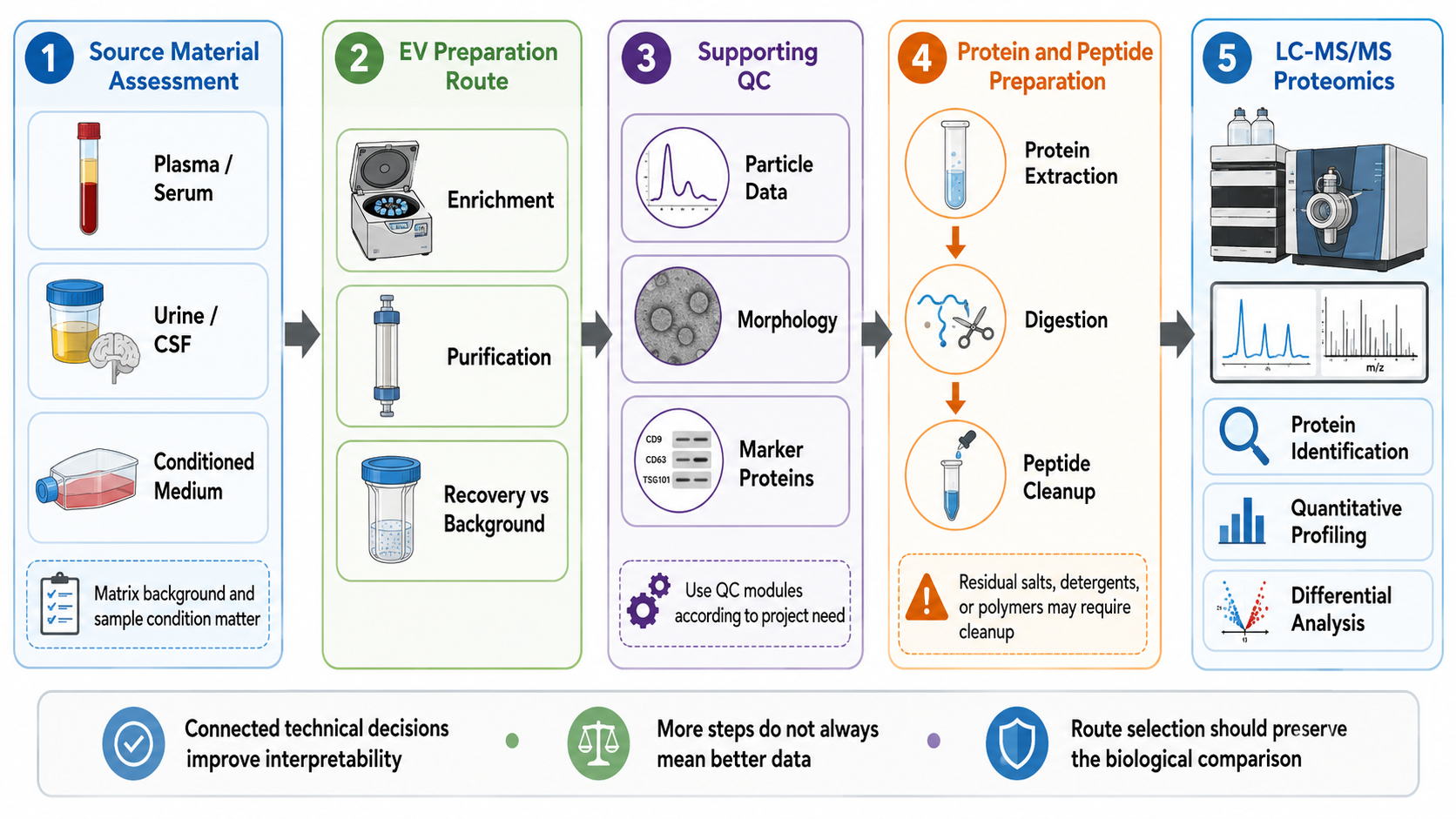
Figure 1. Integrated Workflow From EV Preparation to Proteomics
Connecting EV Preparation to LC-MS/MS Proteomics
1. Protein Extraction and Peptide Preparation
EV preparations require protein solubilization, reduction, alkylation, enzymatic digestion, and peptide cleanup for bottom-up LC-MS/MS. Extraction should recover soluble and membrane-associated proteins while limiting transfer loss. Salts, detergents, precipitation polymers, and other residual reagents may require cleanup or buffer exchange.
2. LC-MS/MS Protein Identification
Liquid chromatography separates peptides before tandem mass spectrometry records precursor and fragment-ion information. Database searching connects accepted peptide evidence to proteins or protein groups. Identification establishes that compatible peptide evidence was detected in the analyzed EV preparation. It does not independently establish vesicular localization, protein abundance change, biological function, or disease specificity. Proteome coverage remains dependent on EV purity, source matrix, species, available material, protein recovery, digestion quality, and the LC-MS/MS strategy.
3. Quantitative Proteomics for Defined Comparisons
Relative quantification may use Label-Free analysis or isobaric labeling with TMT or iTRAQ. Data-independent acquisition (DIA) is an acquisition strategy that is often used to generate consistent quantitative matrices, commonly in Label-Free studies. These terms describe different design dimensions and should not be treated as interchangeable options. Route selection depends on sample number, available material, group structure, batch requirements, and the intended comparison.
Data Analysis and Evidence Boundaries
1. Identification and Quantitative Outputs
Protein identification results describe detected proteins and their supporting evidence. Quantitative matrices represent relative abundance across samples, while standard visualizations examine data distributions, replicate relationships, clustering, and group-associated patterns. Differential analysis evaluates proteins in relation to a predefined comparison. These outputs are connected, but each addresses a distinct analytical question.
2. Differential and Functional Analysis
Differential protein screening should consider effect size, biological variability, replicate consistency, missing values, statistical significance, multiple-testing control, and data completeness. Gene Ontology, KEGG pathway, and protein-protein interaction analyses can organize identified or differential proteins into functional categories, pathways, and network relationships. These analyses support interpretation and hypothesis generation rather than experimental confirmation.
3. Candidate Prioritization and Interpretation Limits
Candidate proteins may be prioritized using quantitative change, replicate consistency, peptide evidence, functional annotation, network context, and the study objective. A differential protein is not automatically a validated biomarker, pathway enrichment is not a confirmed mechanism, and detection in an EV preparation is not proof of intravesicular localization. Group association also does not establish causation. Targeted or orthogonal experiments are required when the research question extends beyond discovery-stage profiling.
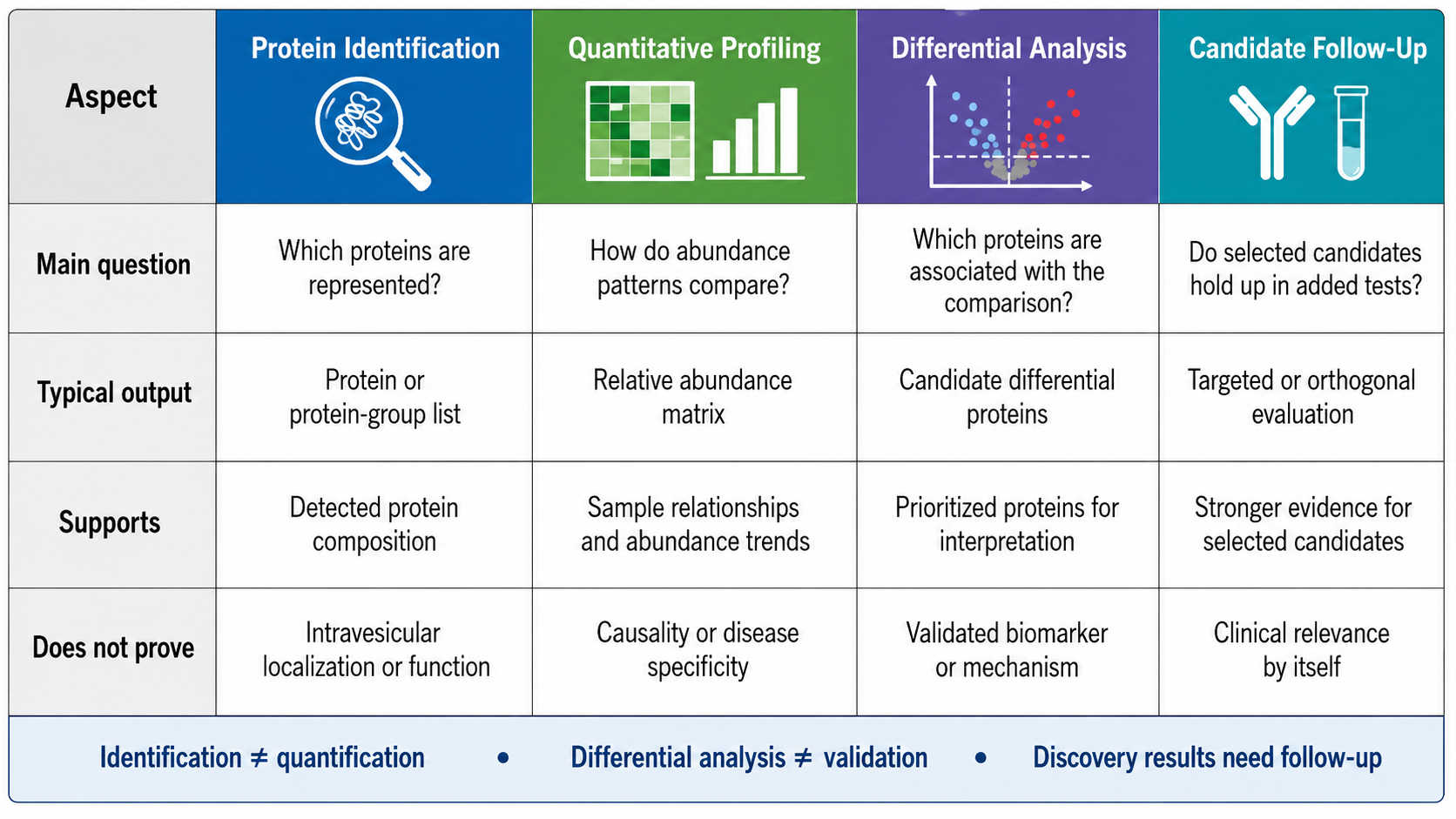
Figure 2. Evidence Levels in EV Proteomics Interpretation
Source material-based EV proteomics is most interpretable when sample feasibility, EV preparation, applicable QC, LC-MS/MS design, and data analysis are planned as connected technical decisions. MtoZ Biolabs evaluates plasma, serum, urine, CSF, and cell culture-conditioned medium projects and supports EV isolation, enrichment or purification, applicable EV characterization, LC-MS/MS protein identification or quantitative proteomics, and corresponding data analysis according to the approved project scope. Submit your inquiry below for project evaluation.
MtoZ Biolabs, an integrated chromatography and mass spectrometry (MS) services provider.
Related Services
How to order?




