






Intact Mass Analysis or Peptide Mapping First?
Introduction
Product characterization teams often need structural evidence before release, comparability, or process development moves forward. A purified antibody lot may need confirmation that the product mass matches expectation. A biosimilar group may need lot-to-lot consistency data. A CMC team may need localized evidence for oxidation, clipping, or sequence heterogeneity. In each case, the same question appears early in planning: should whole-molecule intact MS or bottom-up mapping come first?
The two assays answer related but not identical questions. Intact MS measures the molecular weight of the undigested biologic and can screen major mass-shifting variants at the whole-molecule level. Bottom-up mapping digests the product and uses MS to confirm peptide coverage, detect modifications, and localize changes that may be invisible as distinct intact species. Neither method replaces the other in every project, but the order of execution affects cost, sample use, timeline logic, and how quickly the team reaches a supportable decision.
Choosing the wrong first assay can delay follow-up work, consume limited material on the wrong experiment, or produce a report that answers a narrower question than the release or comparability review requires.
Related Services
- Intact Mass Analysis Service
- Intact Mass Analysis of Antibodies Service
- Peptide Mapping Service
- Primary Structure Analysis Service
- High-Resolution LC-MS Molecular Weight Identification Service
- Intact Protein Mass Spectrometry Service
- Biological Products Analysis Service
- Charge Heterogeneity Analysis Service
When the better first assay is unclear, MtoZ Biolabs can review sample amount, reporting depth, and product characterization goals before work begins.
When Researchers Face This Decision
The intact-versus-mapping choice usually appears at the start of a characterization package rather than after both datasets are complete. Common decision points include:
- confirming that a new antibody lot matches expected molecular mass before broader release testing
- investigating an unexpected SEC or charge profile with limited sample available
- supporting a biosimilar comparability review at the primary structure level
- localizing a suspected oxidation, deamidation, or clipping event
- deciding whether an early clone screen needs whole-molecule confirmation or sequence-level proof
- responding to a regulatory question that specifies peptide coverage or localized modification evidence
In each scenario, the better first step depends on the decision behind the project, not on which assay is more familiar to the team.
Four Comparison Dimensions That Matter Most
A useful comparison should focus on project-relevant differences rather than method labels alone.
1. Evidence Depth
Intact MS provides whole-molecule mass confirmation and major variant screening. Bottom-up mapping provides sequence coverage, site-level modification assignment, and stronger primary structure evidence when that is the project requirement.
2. Speed and Sample Efficiency
Whole-molecule measurement is often faster and can use less material for an initial mass-level answer. Bottom-up mapping requires digestion, more method setup, and usually more interpretation time, but it returns deeper structural detail.
3. Variant Type
Mass-level review is strong for glycoform shifts, clipping visible as distinct intact masses, conjugation changes, and major product-related variants. Mapping is stronger when modification localization is required, abundance is low, or the variant is not resolved at the intact level.
4. Project Phase and Reporting Intent
Early screening, lot release support, and comparability triage often start with intact MS. Regulatory primary structure packages, site-specific modification review, and sequence confirmation more often require mapping as the lead or co-lead assay.
Method Comparison at a Glance
|
Dimension |
Intact Mass Analysis |
Peptide Mapping |
|---|---|---|
|
Sample state |
Undigested biologic |
Digested peptides after enzymatic cleavage |
|
Primary readout |
Molecular weight and intact mass profile |
Peptide coverage and modification map |
|
Typical strength |
Fast whole-molecule confirmation |
Site-level modification assignment and sequence evidence |
|
Common limitation |
Minor variants may be unresolved |
More sample and method scope for full coverage |
|
Best first step when |
Main mass confirmation is the immediate question |
Sequence proof or localization is required now |
|
Common follow-up |
Bottom-up mapping, glycan analysis, charge review |
Intact MS for whole-molecule context when needed |
|
Reporting fit |
QC, comparability screening, early CMC review |
Primary structure analysis and detailed variant review |
Both assays support biologics characterization when used in the right order. The difference is whether the project needs a fast mass-level answer at the intact level or peptide-level evidence that can localize structural change.
Researchers should compare methods by the study decision behind the project, not by assuming one assay always comes first.
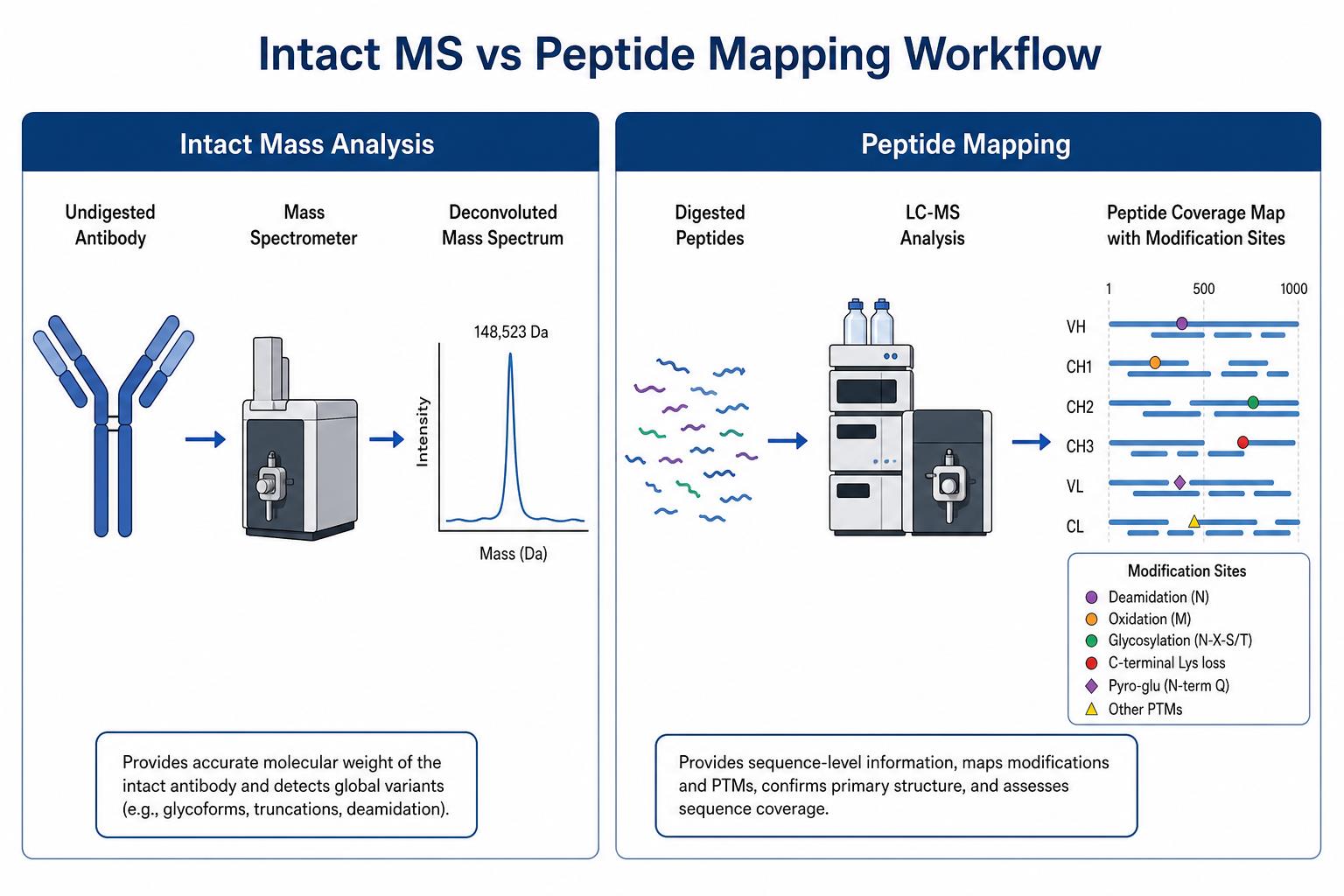
Figure 1. Intact MS measures undigested biologics for mass-level confirmation; bottom-up mapping analyzes digested peptides for coverage and site-level modification assignment
How Intact MS Fits Common Project Types
Whole-molecule measurement is often the better first assay when the immediate need is expected mass match with relatively limited sample and time.
Intact MS is often the better first choice when:
- the main product mass must be confirmed against an expected biologic sequence and major PTMs
- molecular weight confirmation is needed before broader release or comparability testing expands
- the team needs a rapid screen for clipping, glycoform shifts, or conjugation-related mass changes
- comparability review begins with lot-to-lot intact profile comparison
- sample amount is limited and a whole-molecule readout is enough for the current decision
- an unexpected profile from SEC or charge analysis needs a mass-level explanation before deeper work
Intact workflows are widely used for antibody, fusion protein, and recombinant therapeutic QC when the question is whether the observed product mass is consistent with expectation. For many early CMC decisions, mass-level confirmation at the intact level is an efficient entry point into a broader characterization plan.
The main weakness appears when the project requires localized modification evidence, low-abundance variant detection, or peptide coverage for regulatory review. A clean intact mass does not prove that every sequence position or modification has been examined.
How Bottom-Up Mapping Fits Common Project Types
Bottom-up mapping is often the better first assay when the project must localize change, confirm sequence coverage, or produce primary structure evidence that intact MS cannot supply alone.
Mapping is often preferred when:
- oxidation, deamidation, clipping, or sequence variants must be localized to specific residues
- regulatory or internal documentation requires peptide coverage and modification annotation
- intact MS shows a mass shift but cannot explain its source
- low-level heterogeneity is biologically important even if the main intact mass looks acceptable
- a biosimilar or innovator comparison must extend beyond mass-level similarity into localized features
Strengths include site-level modification assignment, peptide-level sequence confirmation, and the ability to detect changes that are hidden within the main intact envelope. The workflow is central to primary structure analysis for many biologics programs.
The main limitation is scope. Full mapping with rich coverage and modification search requires more method development, sample use, and data review than a focused intact mass check. Running mapping first without a clear localization or coverage goal can consume material before the simpler mass question is answered.
Which Assay to Run First by Project Goal
The best first step depends on what the project must prove and what happens if the first result is inconclusive.
1. Choose Intact MS First When
the immediate question is whether the main product mass matches expectation, whether major mass-shifting variants are present, or whether two lots look similar at the whole-molecule level.
2. Choose Bottom-Up Mapping First When
the decision depends on localized modifications, peptide coverage, sequence confirmation, or regulatory primary structure evidence.
3. Choose a Staged Workflow When
intact mass analysis is used for triage and mapping is triggered only if a mass shift, comparability concern, or coverage gap remains unresolved. This is common in CMC programs with limited sample and phased reporting needs.
4. Run Both in Parallel When
timeline pressure is high, sample amount is sufficient, and the review requires both whole-molecule context and localized peptide evidence from the start.
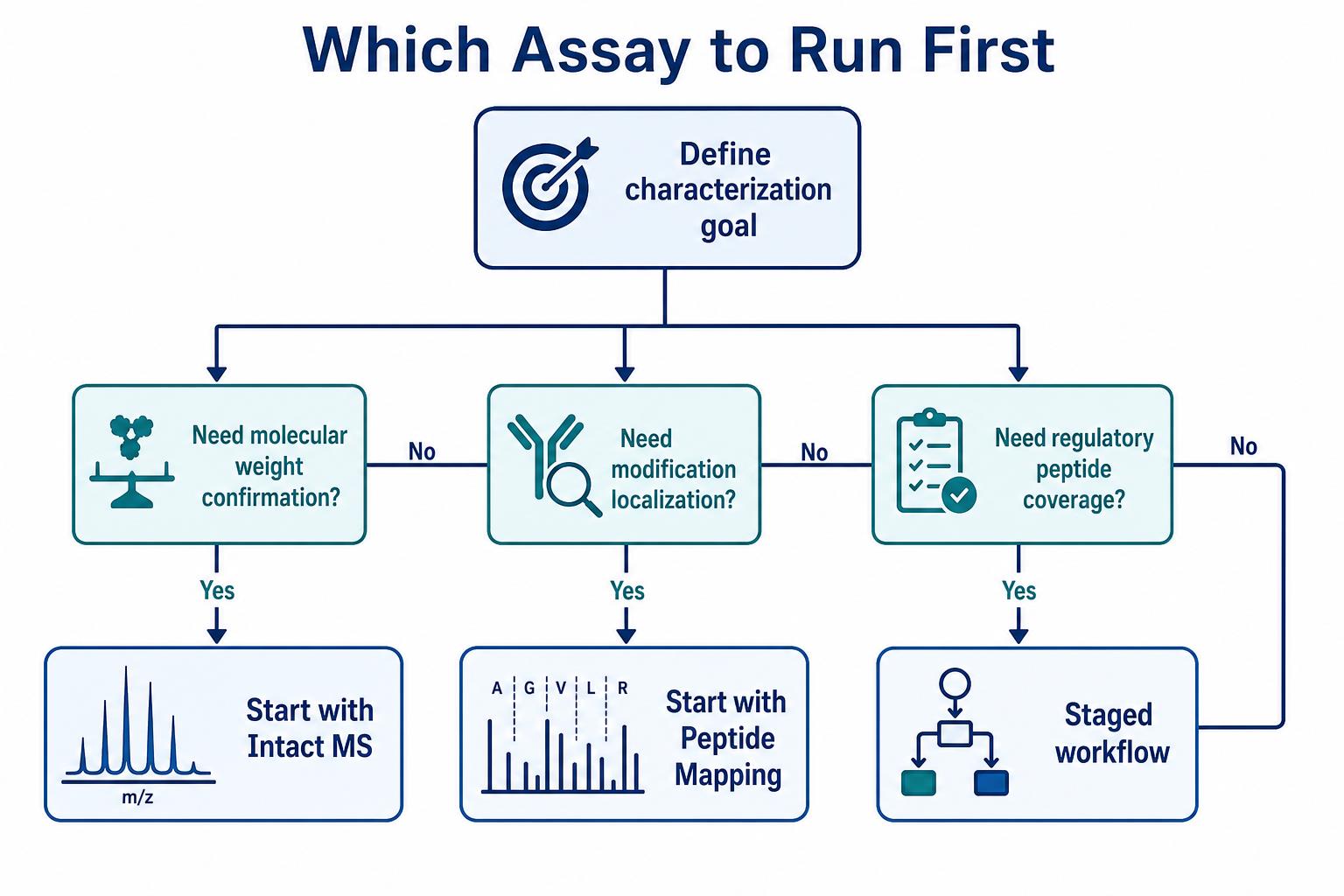
Figure 2. Decision flow for choosing intact MS or mapping first based on evidence depth, variant type, and reporting goal
Reporting depth should be defined before assay order is fixed. A project that only needs main mass confirmation should not begin with full mapping unless sample strategy or regulatory scope already requires it.
Project Goal and Assay Order Fit
|
Project Goal |
Usually Best First Step |
When to Add the Other Assay Next |
|---|---|---|
|
Main mass confirmation for purified antibody |
Intact MS |
Add mapping if a mass shift or coverage question remains |
|
Localized oxidation or deamidation review |
Bottom-up mapping |
Use intact MS for whole-molecule context if needed |
|
Biosimilar comparability screening |
Intact MS for mass-level lot review |
Add mapping for localized difference follow-up |
|
Regulatory primary structure package |
Bottom-up mapping |
Support with intact MS for whole-molecule confirmation |
|
Early clone or construct screening |
Intact MS for rapid mass check |
Move to mapping when sequence proof is required |
|
Unexpected SEC or charge variant signal |
Intact MS if sample is limited |
Add mapping to localize the underlying change |
|
ADC mass and conjugation review |
Intact MS for conjugate mass profile |
Add mapping for site-level conjugation detail |
|
Low-abundance clipping concern |
Bottom-up mapping if intact profile is ambiguous |
Use intact MS first only when a distinct clipped mass is likely |
A strict either-or choice is not always necessary. Pilot review of sample amount, reporting deadline, and the decision threshold often clarifies the order faster than defaulting to the more familiar assay.
Limitations to Keep in Mind
Neither assay answers every product characterization question on its own. Intact MS depends on resolution, separation, sample purity, and realistic expectations for minor variant detection. Bottom-up mapping depends on digestion efficiency, coverage depth, modification search scope, and interpretation time.
Researchers should also avoid reversing the decision logic after the fact. A project that needed site-level modification evidence from the start should not treat a clean intact mass as sufficient primary structure evidence. Likewise, a project that only needed mass-level confirmation should not delay release support because mapping was run first without a coverage requirement.
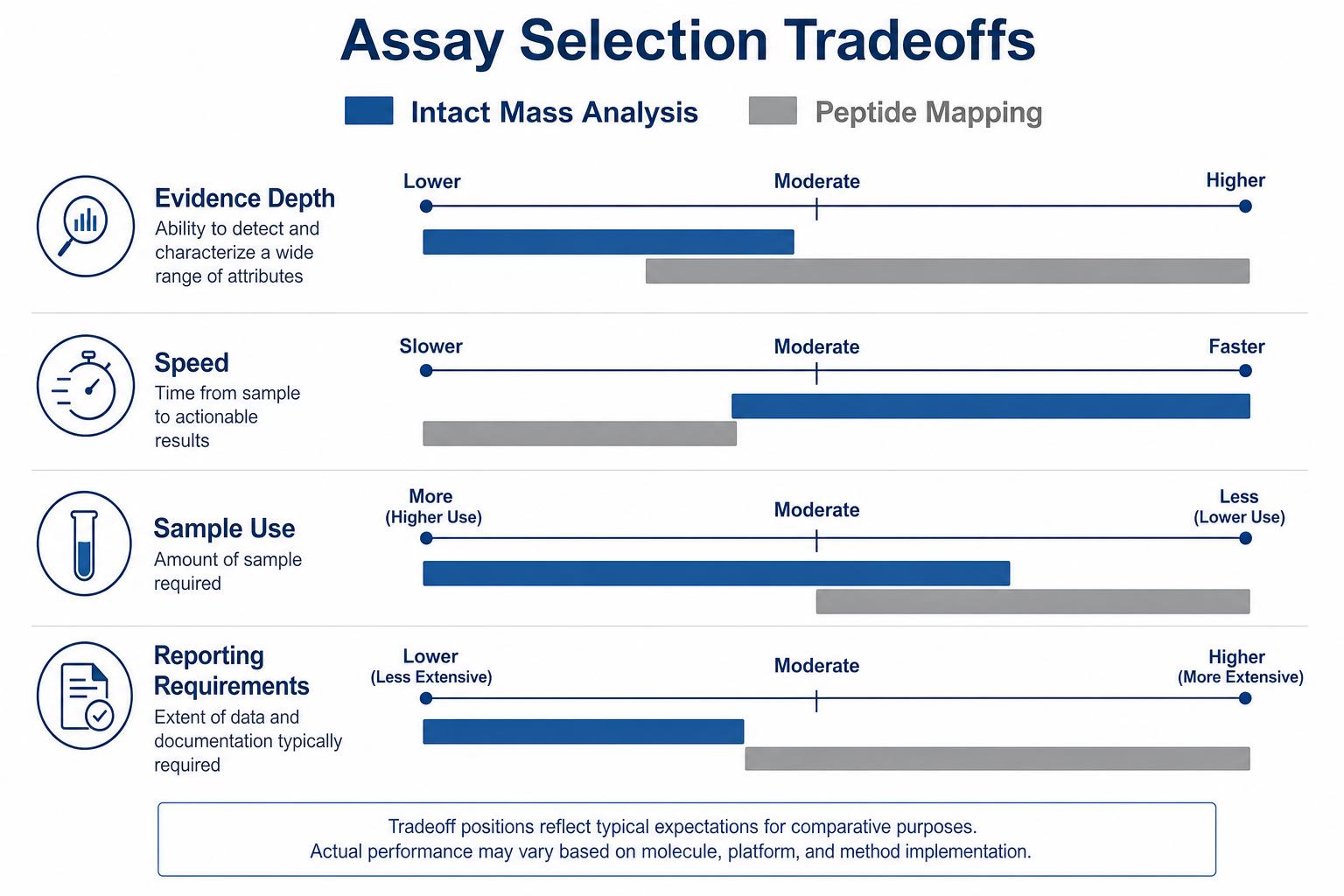
Figure 3. Key tradeoffs across evidence depth, speed, sample use, and reporting requirements
Before committing to assay order, confirm the decision behind the project, the minimum acceptable evidence, available sample amount, and whether the first result is intended to trigger a defined follow-up assay.
Frequently Asked Questions
1. Is intact mass analysis enough for biologics release support?
It can support mass-level QC and comparability screening, but many release or primary structure packages also require bottom-up mapping or other orthogonal evidence depending on product type and reporting scope.
2. When should mapping come before intact MS?
Mapping should come first when localization, sequence coverage, or modification-specific evidence is required for the current decision rather than after a whole-molecule screen.
3. Can intact MS replace bottom-up mapping?
No. Intact mass analysis confirms whole-molecule mass and major variants efficiently, but it does not provide the same level of localized sequence and modification evidence as mapping.
4. What if intact MS shows a mass shift but no clear variant assignment?
That is a common trigger to move to bottom-up mapping, glycan analysis, or another orthogonal assay that can localize the underlying change.
5. How much sample is needed for each assay?
Sample needs vary by method depth and biologic type. Intact MS often requires less material for a focused mass check. Full mapping usually requires more sample and method scope, so assay order should be planned with available material in mind.
Conclusion
Intact mass analysis and bottom-up mapping both support biologics characterization, but they fit different first-step decisions. Intact MS is often the better starting point when the project needs fast mass-level confirmation, major variant screening, or lot-level mass comparison. Mapping is often the better starting point when the project needs site-level modification evidence, peptide coverage, or primary structure proof from the outset. The strongest plans define the decision threshold first, match assay order to reporting depth, and use the second assay deliberately when the first result leaves a defined gap.
If your team is deciding whether to begin with intact mass analysis or mapping first, contact MtoZ Biolabs to review sample amount, reporting goals, and the characterization sequence that best fits your biologic.
How to order?




