






How to Improve Bottom-Up Proteomics Results: From Protein Digestion to Peptide Identification
Introduction
Bottom-up proteomics projects often produce large raw files and long protein lists, yet the results still fail the decision they were meant to support. A discovery run may identify many proteins while missing the low-abundance targets that matter most. A purified protein sample may yield weak peptide coverage because digestion was incomplete. A modified peptide may be reported with a high score but without enough fragment evidence for residue-level confidence. In each case, the bottleneck is usually not the instrument alone but the workflow steps between protein digestion and peptide identification.
Improving bottom-up proteomics results requires attention to sample preparation, digestion efficiency, peptide cleanup, LC-MS/MS acquisition, database search settings, and review standards. Teams that focus only on increasing identification counts may overlook missed cleavages, poor chromatography, chimeric spectra, or database parameters that suppress true peptides. A results-focused workflow prioritizes usable peptide evidence over headline numbers.
The sections below outline where bottom-up proteomics performance is most often lost and which changes from digestion through peptide identification produce the strongest improvement in protein analysis quality.
Why Bottom-Up Proteomics Results Underperform
Most underperformance traces back to workflow weaknesses rather than platform choice alone.
Inefficient or inconsistent protein digestion.
Incomplete cleavage, over-digestion, or poor reduction and alkylation can reduce the number of identifiable peptides and distort modified peptide behavior.
Sample matrix interference.
Salts, detergents, lipids, and abundant proteins can suppress peptide recovery, worsen chromatography, and reduce MS/MS quality.
Weak LC-MS/MS acquisition design.
Short gradients, insufficient MS/MS sampling, or poor precursor selection can leave many peptides with fragment-poor spectra.
Incorrect database or search parameters.
Wrong enzyme specificity, incomplete databases, unrealistic modification settings, or loose mass tolerances can create false positives and missed identifications.
No enrichment for low-abundance targets.
Phosphopeptides, ubiquitinated peptides, and other modified forms may remain undetected without targeted enrichment or deeper acquisition.
Automated reporting without review.
High-scoring but weakly supported peptide-spectrum matches can inflate protein lists without improving decision quality.
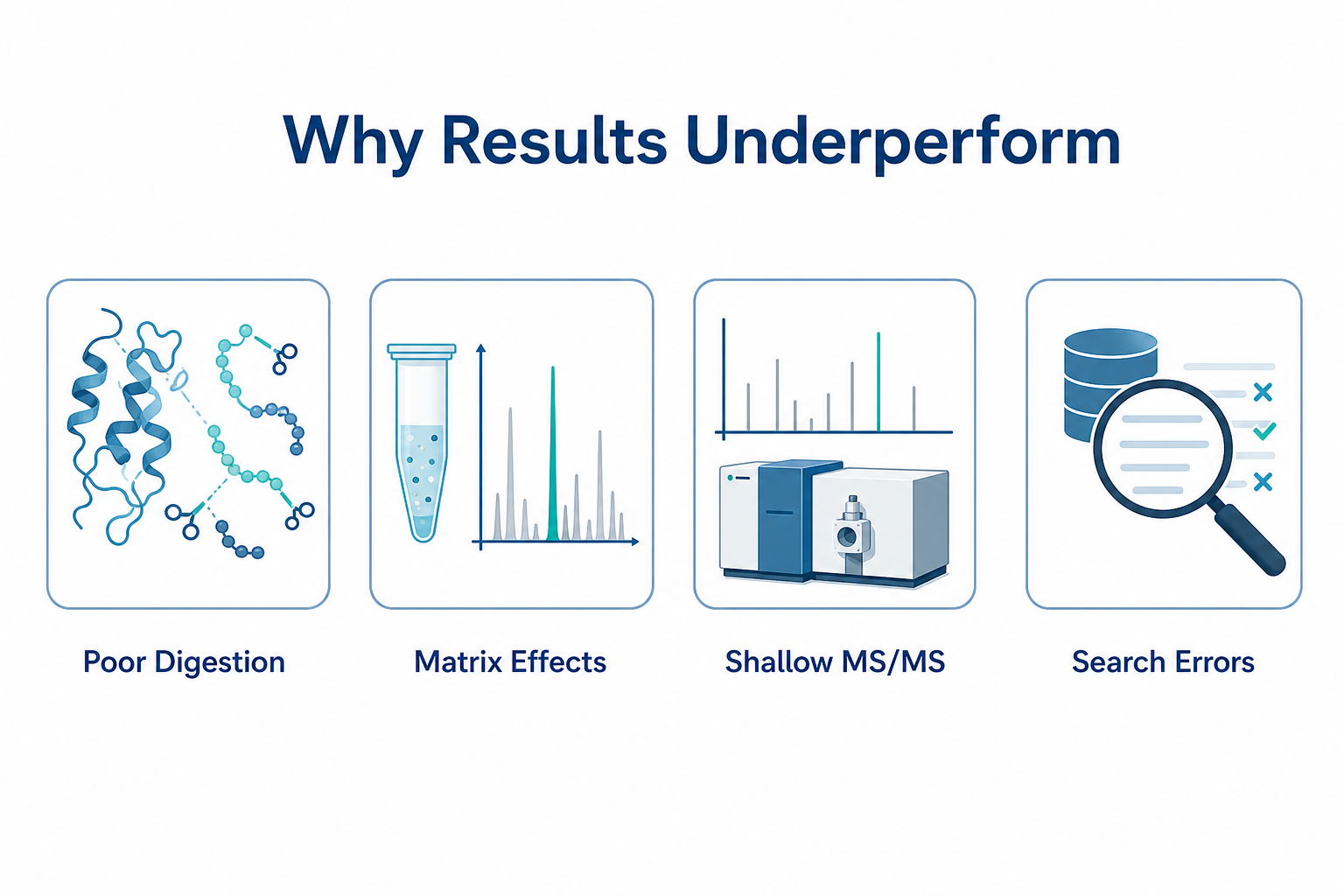
Figure 1. Bottom-up proteomics results are most often weakened by digestion problems, matrix interference, shallow acquisition, search parameter errors, and limited review.
Practical Improvements from Digestion to Peptide Identification
Better bottom-up proteomics results usually come from coordinated changes across preparation, acquisition, and interpretation rather than one late-stage software adjustment.
Improve protein extraction and digestion conditions
Start with representative sample handling and accurate protein quantitation. Select lysis and solubilization conditions that maintain protein recoverability without introducing excessive detergents. Match enzyme choice to the sample type, using trypsin for routine workflows and complementary enzymes when coverage gaps are expected. Include reduction and alkylation for disulfide-rich proteins and confirm digestion completeness before LC-MS/MS analysis begins.
Reduce matrix effects before LC-MS/MS
Desalt digests, remove incompatible additives when possible, and consider fractionation or depletion strategies for complex lysates and biofluids. Cleaner peptide mixtures improve chromatographic performance and reduce chimeric precursor selection during MS/MS acquisition.
Optimize LC gradient and acquisition depth
Use gradient length and replicate injections matched to sample complexity. Discovery projects on complex lysates often benefit from longer gradients and repeated runs. Projects focused on a purified protein may need less breadth but still require enough MS/MS depth to support confident peptide identification and modification review.
Build an accurate search environment
Provide complete protein databases, correct enzyme rules, realistic fixed and variable modifications, and appropriate precursor and fragment tolerances. Custom databases may be required for recombinant constructs, fusion proteins, or non-model organisms. Search settings should reflect the biological question rather than default templates.
Review peptide identifications before protein inference
Apply false discovery rate controls, inspect modified peptides manually, and separate high-confidence PSMs from borderline matches. Protein inference should be built on peptide evidence strong enough to support the intended conclusion, not on the largest possible identification list.
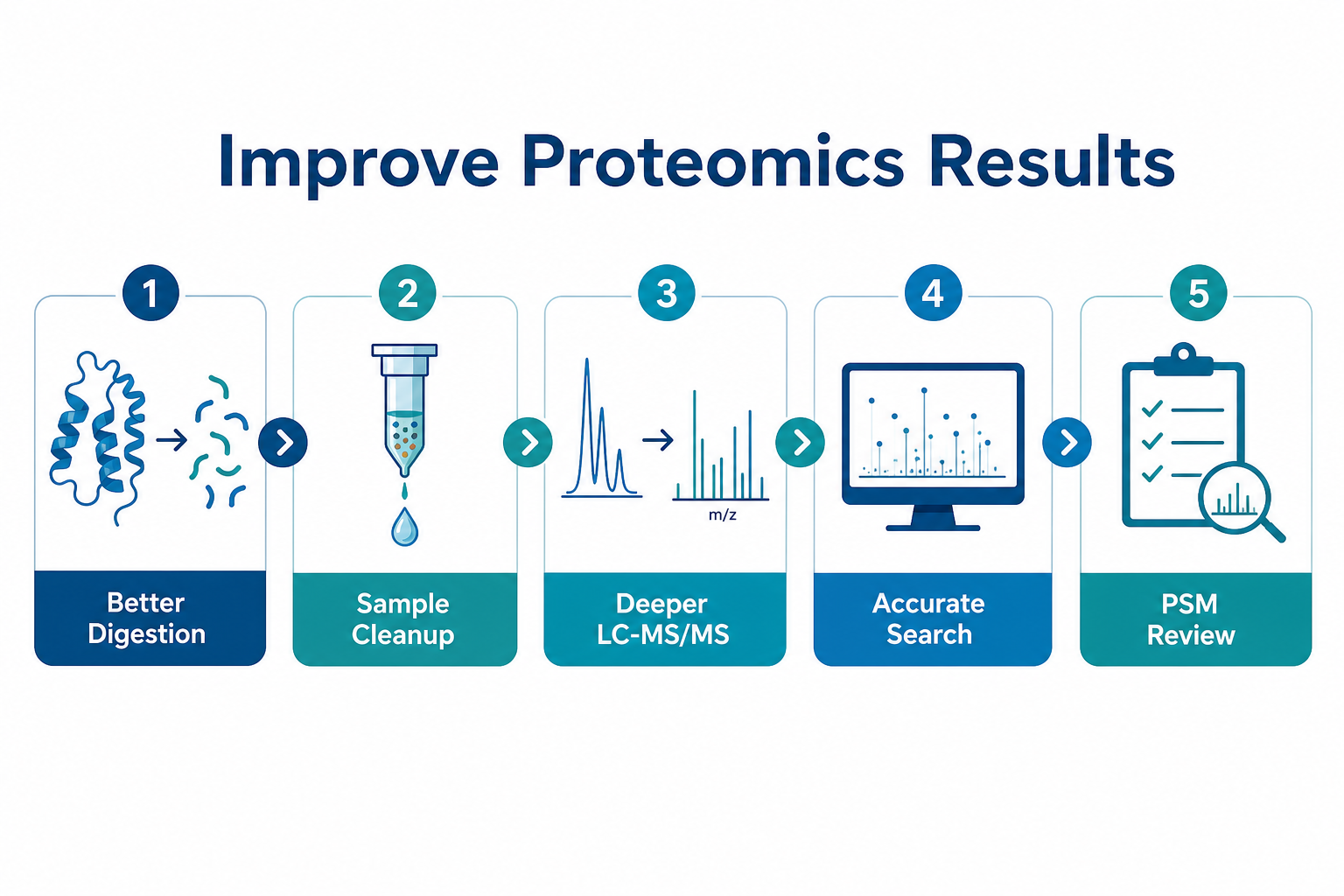
Figure 2. Bottom-up proteomics results improve when digestion, sample cleanup, LC-MS/MS depth, database search, and PSM review are optimized together.
Related Services
Teams working to improve bottom-up proteomics performance often need validated workflows, optimized digestion strategies, or expert interpretation support. Relevant options include:
Protein Identification Service
Label-Free Quantitative Proteomics Service, MS Based
Mass Spectrometry-Based Protein Identification Service
Researchers seeking stronger bottom-up proteomics results can consult MtoZ Biolabs to review sample type, digestion strategy, and identification depth before the next run.
Workflow Factors That Most Affect Peptide Identification Quality
The table below summarizes the workflow stages that most strongly influence bottom-up proteomics outcomes. It supports project review but does not replace sample-specific feasibility assessment.
|
Workflow Stage |
What to Optimize |
Result Impact |
|---|---|---|
|
Protein extraction |
Representative lysis and solubilization |
Better starting material for digestion |
|
Digestion design |
Enzyme choice, reduction, alkylation |
More complete and predictable peptides |
|
Peptide cleanup |
Desalting and matrix reduction |
Improved LC and MS/MS performance |
|
LC-MS/MS acquisition |
Gradient length, replicates, enrichment |
More high-quality PSMs |
|
Database search |
Enzyme rules, modifications, tolerances |
Fewer false calls and missed peptides |
|
PSM review |
FDR control and manual inspection |
Higher-confidence peptide identification |
If one stage above is weak, later identification gains are often limited no matter how advanced the search software may be.
Expected Improvements After Workflow Optimization
A workflow-focused bottom-up proteomics project should produce better evidence quality, not only a longer protein table. Expected improvements often include more complete digestion patterns, stronger fragment ion support for key peptides, improved identification of modified peptides, better replicate overlap, and clearer separation between confident and tentative assignments.
Validation should match the study goal. Discovery projects may emphasize replicate consistency and conservative false discovery controls. Biomarker-oriented studies may require manual review of candidate proteins and peptides before follow-up assays. Purified protein or biologics projects may require tracked critical peptides and predefined acceptance criteria. Useful validation steps include replicate LC-MS/MS runs, alternative enzyme digestion, targeted PRM or MRM follow-up, and orthogonal assays for proteins central to the conclusion.
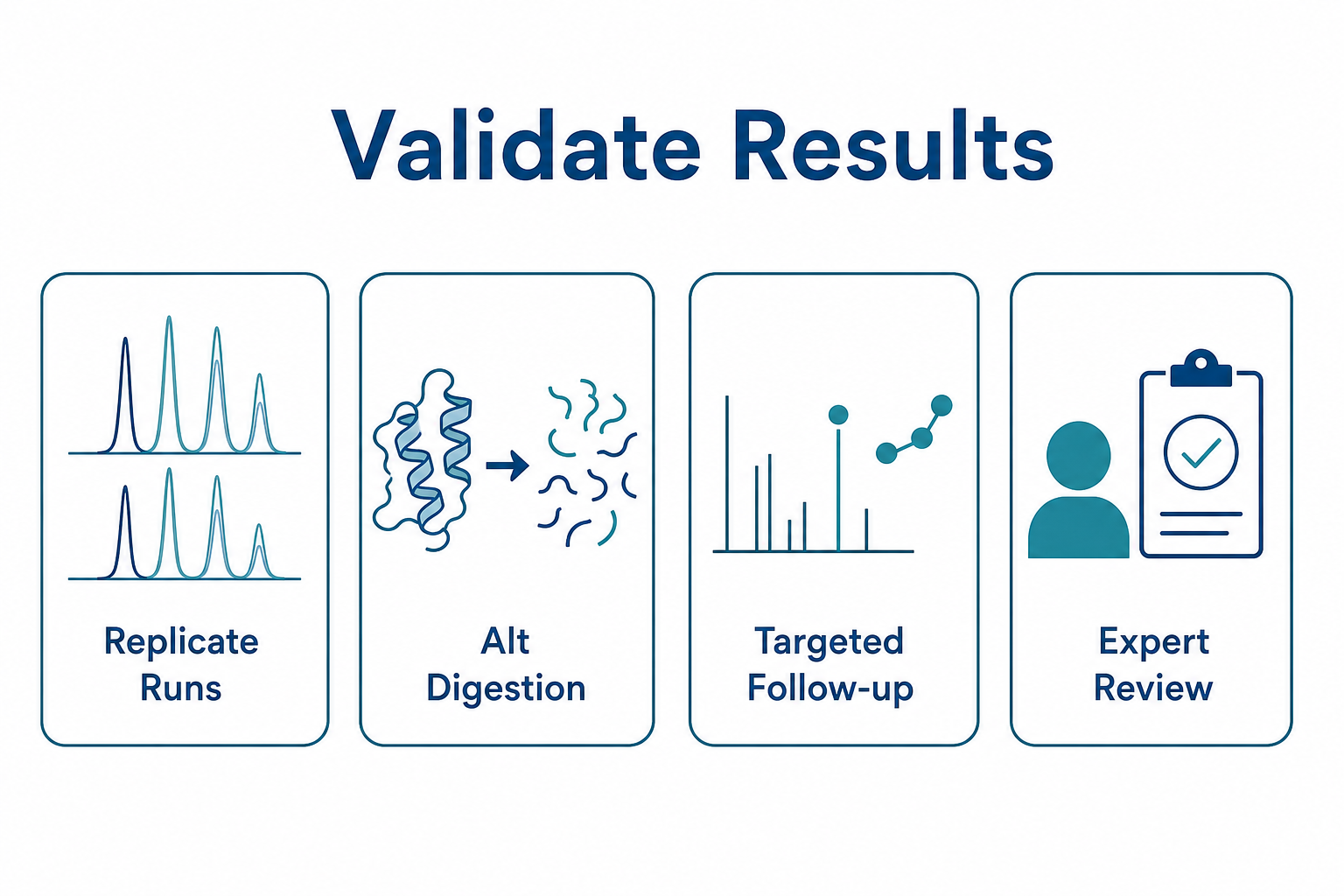
Figure 3. Improved bottom-up proteomics results are often validated through replicate LC-MS/MS, alternative digestion, targeted follow-up, and expert PSM review.
Useful post-analysis questions include:
- Did digestion produce the expected peptide coverage pattern?
- Are key modified peptides supported by diagnostic fragment ions?
- Do replicate runs agree on the same important PSMs?
- Are tentative identifications clearly separated from reportable results?
Key Considerations Before the Next Run
Several improvements are easier to implement before acquisition than after a large dataset has already been generated.
Define the result standard early.
Discovery breadth and high-confidence protein confirmation require different workflow settings.
Do not optimize only for protein count.
Long identification lists with weak PSM support can reduce overall result quality.
Treat complex matrices as a digestion and fractionation problem.
Search tuning alone rarely fixes poor peptide recovery from difficult samples.
Reserve sample for confirmatory analysis.
Alternative digestion or replicate runs may be needed to resolve borderline regions.
Document unsupported or ambiguous identifications clearly.
Transparent QC reporting improves trust more than inflated protein totals.
Match enrichment to the biological question.
PTM-focused projects often need enrichment before identification depth improves meaningfully.
Frequently Asked Questions
1. What most often limits bottom-up proteomics results?
Inefficient digestion, matrix interference, shallow LC-MS/MS acquisition, incorrect search parameters, and lack of manual PSM review are the most common limits.
2. Can better search software alone improve peptide identification?
Better software helps, but identification quality still depends on digestion completeness, sample cleanup, acquisition depth, and database accuracy.
3. How does digestion quality affect peptide identification?
Poor digestion reduces the number and quality of measurable peptides, which directly lowers identification depth and weakens protein inference.
4. When are replicate runs worth the extra instrument time?
Replicates are especially valuable for discovery studies, low-abundance targets, modified peptide review, and any project requiring confidence in specific protein assignments.
5. When should a team seek external proteomics support?
External support is often practical when optimized digestion workflows, deeper acquisition design, or expert PSM review is needed beyond current internal capacity.
Conclusion
Improving bottom-up proteomics results requires coordinated attention to every step from protein digestion to peptide identification. Weak performance usually reflects digestion inefficiency, matrix interference, shallow LC-MS/MS acquisition, search parameter mismatch, or unchecked automation rather than instrument limitations alone. Better outcomes come from stronger sample preparation, cleaner peptide input, acquisition depth matched to sample complexity, accurate database setup, and manual review of critical PSMs before protein inference. The most useful reports distinguish confident identifications from tentative calls and document workflow limitations clearly. Researchers aiming to improve bottom-up proteomics results can contact MtoZ Biolabs to review sample status, digestion strategy, and the identification standard required for the next protein analysis project.
How to order?




