






How to Use Proteomics to Study Plant–Pathogen Interactions
Proteomics helps study plant–pathogen interactions when you already have a working infection model and a clear comparison. This article focuses primarily on host-response proteomics: measuring how plant proteins change after pathogen challenge or across resistant and susceptible materials. Two common host-centered contrasts are pathogen-inoculated versus procedure-matched mock tissue from the same genotype, and resistant versus susceptible plants harvested under the same pathogen challenge. In both cases, the readout is which host proteins change in abundance, grouped into defense- and metabolism-related patterns that can be ranked for later validation.
It does not replace lesion scoring, pathogen load assays, or genetics. Protein abundance is not the same as enzyme activity, and a differential protein is a candidate, not a proven resistance gene. Design the infection dose, harvest time after inoculation, and tissue type first, then run quantitative comparison once those choices are stable. Projects intended to quantify both host and pathogen proteins require a separate dual-species feasibility assessment and data-analysis strategy.
If you want an early check, send MtoZ Biolabs the host species and tissue, pathogen and inoculum details, planned arms, harvest days after inoculation, and approximate sample amount. Also indicate whether the project targets host proteins only or both host and pathogen proteins, and describe the sample’s inactivation and biosafety status. That package is enough to judge whether plant pathogen proteomics fits the model you already have.
What Proteomics Can Show in an Infection Model
Once plants are infected in a controlled way, plant–pathogen interaction proteomics is mainly used to map host protein changes that track with infection or with resistance phenotype. In plain terms, host-focused plant pathogen proteomics asks which plant proteins move when the pathogen is present, and which of those movements line up with a resistant or susceptible outcome.
Typical outputs include:
- Proteins that rise or fall after inoculation relative to procedure-matched mock controls
- Proteins that differ between resistant and susceptible lines under the same challenge
- Pathway-level patterns that organize candidates, such as defense signaling, redox balance, cell-wall-related proteins, or primary metabolism remodeling
These outputs are most useful when phenotype notes are recorded at harvest with the same scoring rule across plants. A protein change that sits with a clear disease-score difference is easier to prioritize than a change from poorly matched tissue.
What the same dataset cannot do on its own is prove how a pathogen is killed, measure pathogen titer, or confirm that a protein causes resistance. Those claims need independent assays. Likewise, a standard host-focused dataset does not guarantee reliable identification or quantification of pathogen proteins.
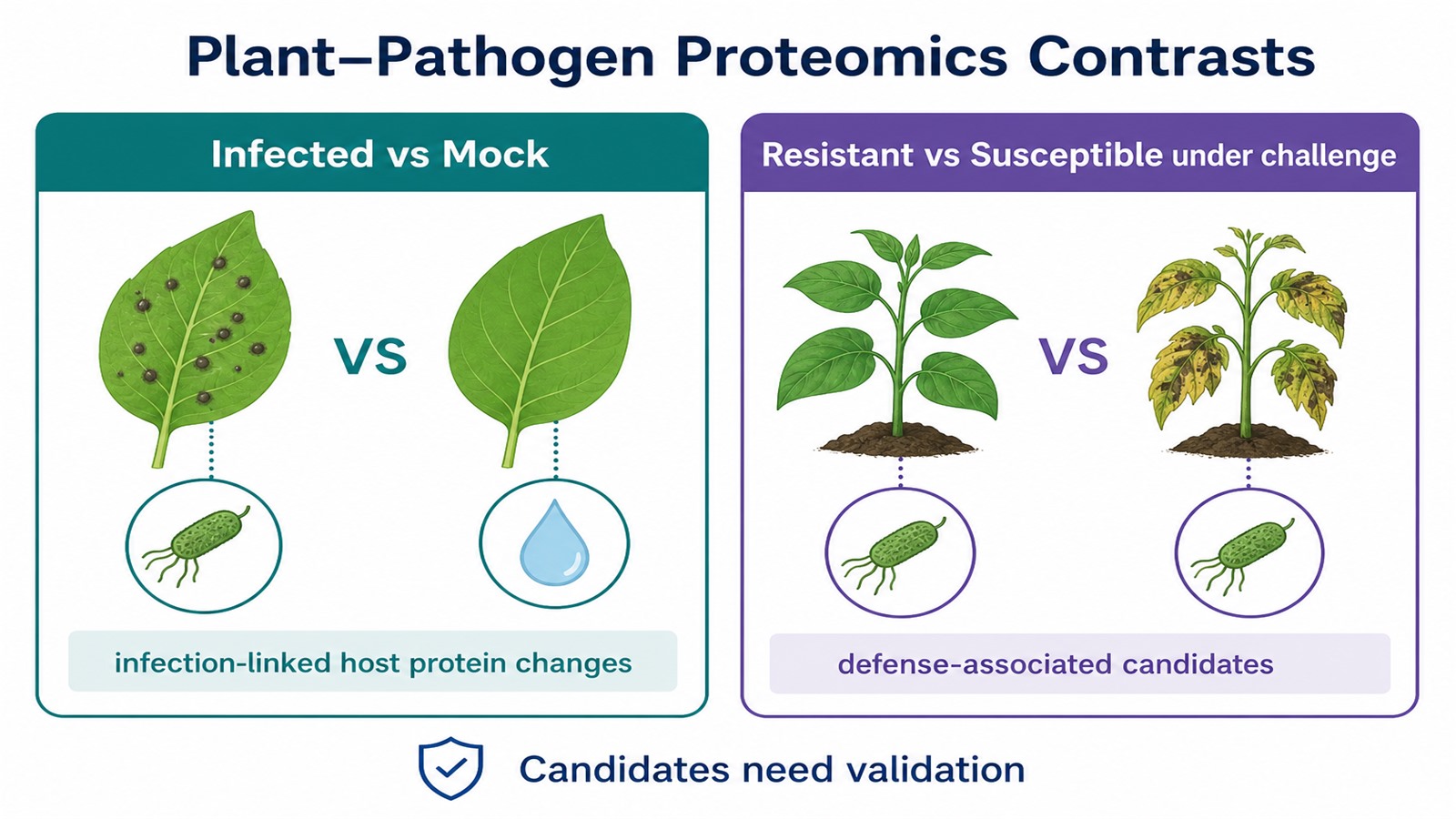
Figure 1. Use pathogen-inoculated versus procedure-matched mock tissue to map infection-linked host changes, or resistant versus susceptible plants under the same challenge to prioritize defense-associated candidates.
Choose the Contrast That Matches Your Question
Not every infection study needs every arm. Pick the contrast that answers the question you will write in the paper or report. Plant pathogen proteomics is flexible here, but the arm list should stay as simple as the claim.
|
Question |
Primary contrast |
Add these arms when needed |
|
Which host proteins change after infection? |
Pathogen-inoculated vs procedure-matched mock, same genotype |
Early and later harvests if timing matters |
|
Which proteins track with resistance under challenge? |
Resistant infected vs susceptible infected |
Mock arms for each genotype to separate constitutive differences |
|
Is a change constitutive or infection-induced? |
Genotype × inoculation layout |
Keep inoculum and timing identical across genotypes |
|
Does the response differ across infection stages? |
One genotype across defined days after inoculation |
Do not pool early and late tissue into one infected arm |
|
Can both host and pathogen proteins be measured? |
Separate dual-proteome feasibility assessment |
Host–pathogen databases and species-specific peptide evaluation |
The mock control should reproduce the inoculation procedure, carrier solution, mechanical treatment, and environmental handling as closely as possible, with the pathogen omitted. An untreated plant is not always an adequate mock if the infection group also receives infiltration, abrasion, surfactants, or other handling.
If the susceptible line collapses much earlier than the resistant line, avoid a late shared harvest that mainly compares intact tissue with degraded tissue. Move both genotypes to an earlier shared window, or label late susceptible samples as a damage-state arm and interpret them with that limit.
For resistance comparisons, both genotypes should receive the same pathogen strain, dose, and application method. Challenging only the susceptible line mixes genotype with exposure and weakens the resistance claim.
Sampling Decisions That Matter More Than the Instrument
Infection biology is time-dependent. Early and late sampling windows should be defined relative to the infection cycle of the specific host–pathogen model rather than by one-universal number of hours or days after inoculation. Early windows may capture recognition and defense activation, whereas later time points may reflect colonization, tissue damage, or recovery. Write the harvest clock next to each arm name before the experiment starts.
Keep tissue identity consistent. Sample the tissue zone that matches the biological question and the pathogen’s site of colonization. For localized leaf infections, the lesion center, lesion margin, surrounding tissue, and distant tissue may represent different biological states. Root pathogens require root tissue collected with the same anatomical boundaries and handling across plants.
Leaf and root tissues should generally be analyzed separately, even when the project concerns whole-plant responses. Combining organs can obscure tissue-specific protein changes and make it difficult to determine where a response originated.
Plan collection amounts as baselines, not as performance targets. Soft tissues such as leaves and flowers are often collected at about 2 g per unit. Hard tissues such as roots, bark, twigs, fruits, or seeds are often collected at about 5 g per unit. Pollen is often planned at about 100 mg per unit. Use independent plants or pots as biological replicates. Leaves from the same plant are not independent biology for a plant-level claim.
Degraded, contaminated, or repeatedly freeze-thawed material is not recommended. Infectious plant material is not accepted for submission. In practice, that means pathogen work should be finished in your laboratory containment setting, and only non-infectious processed material should be discussed for shipping after local biosafety rules are met. Service work can include protein extraction, digestion, and LC-MS/MS. Gel imaging and related standalone preparation modules are not offered as separate services here.
One practical limit is worth stating plainly: standard plant proteomics workflows are optimized for host proteins. Reliable pathogen-protein detection depends not only on pathogen biomass, but also on sampling location, extraction compatibility, database quality, and the availability of peptides that can be uniquely assigned to the pathogen. Shared or highly homologous peptides should not be interpreted as species-specific evidence unless their assignment is unambiguous. Absence of pathogen peptides should not be read as proof that the pathogen is cleared.
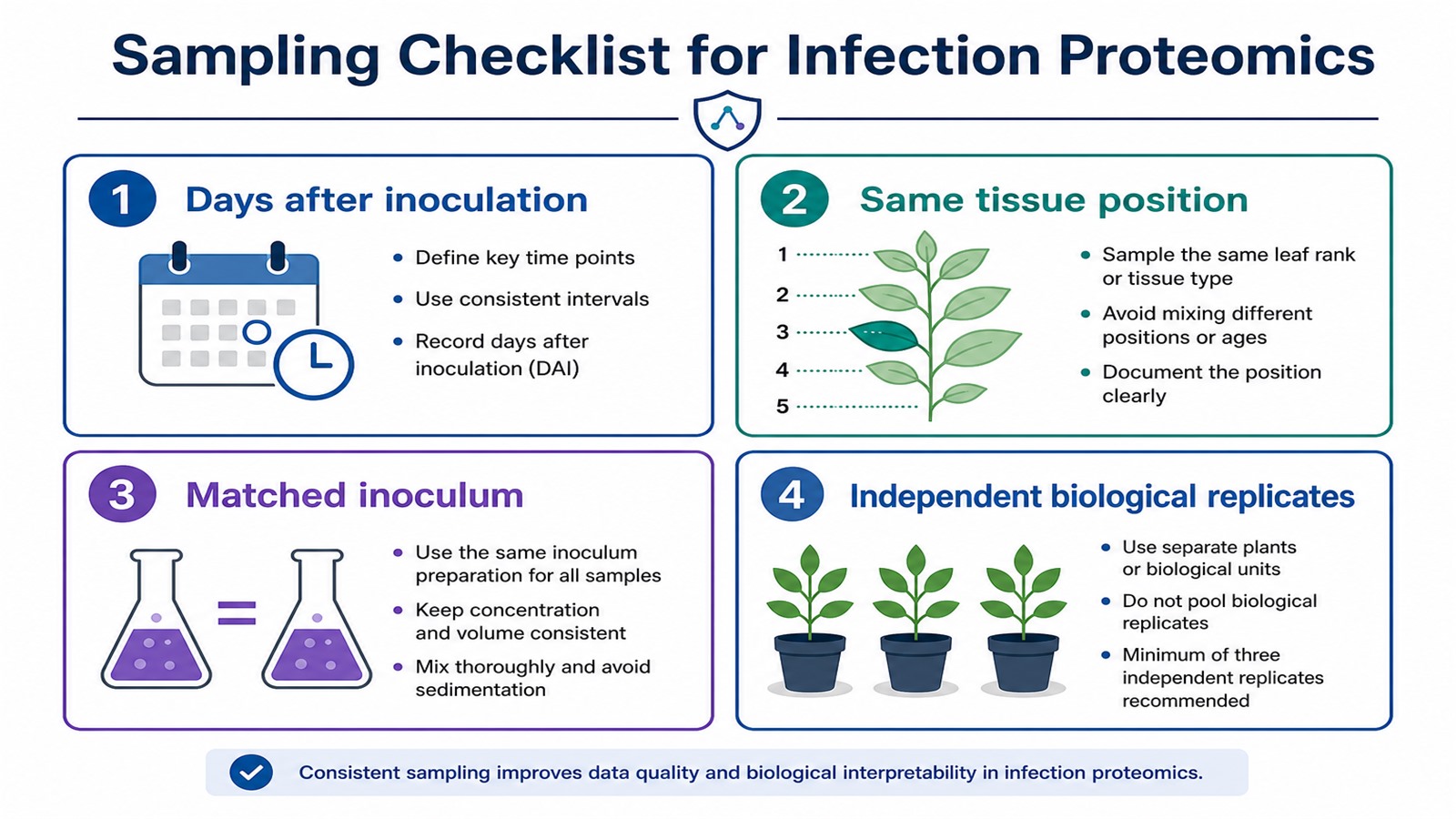
Figure 2. Lock days after inoculation, sampling zone, tissue identity, matched inoculum, and independent biological replicates before quantification.
From Protein Lists to Interpretable Candidates
Quantitative comparison is the usual route for plant–pathogen interaction proteomics. Identification alone can inventory proteins in a tissue, but infection and resistance questions need abundance differences across arms. That is why most plant pathogen proteomics projects for interaction studies are planned as quantitative cohorts rather than single-sample inventories.
DDA fits smaller pilots, such as one infected-versus-mock contrast. Software direction commonly includes MaxQuant or Proteome Discoverer. DIA fits larger matched cohorts across genotypes or time points. Software direction commonly includes Spectronaut or DIA-NN. Platform discussion can include Orbitrap Exploris 480, timsTOF Pro, and Orbitrap Astral once the cohort size is clear.
A practical sequence is Phase 1 quantitative comparison on the primary contrast, then Phase 2 expansion to extra time points or mock baselines once phenotype scoring and inoculum timing are stable. Report content can include differential analysis, functional annotation, GO and KEGG views, protein-protein interaction context, and Reactome analysis where species support is available. Use pathway views to organize candidates. Validate priority proteins before claiming a defense mechanism.
When both host and pathogen proteins are part of the research question, the project should be designed as a dual-species analysis from the beginning. Host and pathogen reference databases, shared-peptide handling, expected pathogen biomass, and species-specific protein assignment should be reviewed before the workflow is finalized.
If early signaling is the next question after an abundance screen, plant phosphoproteomics can follow. If antimicrobial metabolites or hormone shifts are central, plant metabolomics or plant hormone analysis is better planned as a companion study than inferred from proteins alone.
Related Services
Plant Phosphoproteomics Analysis Service
Frequently Asked Questions
Can proteomics replace disease scoring or pathogen load assays?
No. Proteomics maps host protein changes linked to your infection model. Disease scoring and pathogen quantification remain separate measurements.
Should I start with infected versus mock or with resistant versus susceptible?
Start with pathogen-inoculated versus procedure-matched mock tissue when you want infection-linked changes in one genotype. Start with resistant versus susceptible plants under the same challenge when the goal is to prioritize proteins associated with resistance phenotype.
How many time points are useful after inoculation?
One well-chosen harvest can describe the protein response at a defined infection stage. It cannot represent the full interaction process. Add early and later time points when you need to distinguish defense activation from colonization, tissue damage, or recovery. The timing should follow the specific infection cycle rather than a universal day-after-inoculation rule.
Can the same dataset identify both plant and pathogen proteins?
Not reliably in every project. Standard plant proteomics is usually host-focused. Dual host–pathogen analysis requires sufficient pathogen biomass, suitable sampling and extraction, appropriate reference databases, and peptides that can be assigned confidently to each species. A separate feasibility assessment is recommended.
How much tissue should be planned?
As planning baselines, soft tissues are often about 2 g per unit, hard tissues about 5 g per unit, and pollen about 100 mg per unit. Confirm unusual matrices before harvest.
What information should be shared before the project starts?
Share host species and tissue, pathogen and inoculum details, arm list, harvest days after inoculation, replicate plan, and approximate sample amount. Also specify whether the goal is host-response analysis or dual host–pathogen proteomics, which tissue zone will be collected, and whether the material has been safely inactivated. MtoZ Biolabs can then check whether plant pathogen proteomics matches the model.
Conclusion
Proteomics is a strong discovery tool for plant–pathogen interactions when the infection model is already in hand and the contrast is explicit. Host-focused infected-versus-mock analysis maps infection-linked plant protein changes. Resistant-versus-susceptible comparison under matched challenge ranks defense-associated candidates. Keep inoculum, tissue, sampling zone, and harvest timing aligned, treat pathway hits as context for candidate ranking, and validate before claiming mechanism.
Studying plant responses and simultaneously measuring pathogen proteins are related but distinct proteomics goals. Dual-species analysis requires additional consideration of pathogen biomass, reference databases, and species-specific peptide assignment. Used with these boundaries, plant pathogen proteomics stays tied to the biology of the infection model rather than to a generic protein survey.
Researchers preparing this work can review the host tissue, pathogen protocol, arms, harvest windows, host-only or dual-proteome objective, and sample amount with MtoZ Biolabs before collection.
How to order?




