






How to Improve LC-MS/MS Proteomics Data Quality: From Sample Preparation to Peptide Identification
Introduction
LC-MS/MS proteomics can generate large peptide datasets quickly, yet many projects still end with weak identifications, inconsistent coverage, or search results that cannot support the intended biological or biologics decision. A run may yield thousands of peptide spectrum matches while critical regions remain unsupported. Modified peptides may receive high scores without reliable localization. Discovery lists may contain false positives that disappear under manual review. In each case, the issue is often data quality rather than instrument availability alone.
Proteomics data quality depends on decisions made across sample preparation, digestion, LC-MS/MS acquisition, database searching, and peptide identification review. Poor extraction, incomplete digestion, short LC gradients, incorrect search parameters, and automatic acceptance of borderline matches all reduce the value of the final report. Teams that focus only on increasing identification count often collect more features while leaving the most important peptides unresolved.
Improving LC-MS/MS proteomics data quality from sample preparation through peptide identification helps research, discovery, and biologics teams produce evidence that supports comparison, validation, and documentation with appropriate confidence.
Why LC-MS/MS Proteomics Data Quality Is Often Low
Most quality problems trace to a limited set of workflow weaknesses rather than mass spectrometer failure alone.
Weak or incompatible sample preparation.
Inefficient lysis, residual detergents, salts, or excipients can suppress peptide ionization and reduce usable MS/MS spectra.
Incomplete or inconsistent digestion.
Variable enzyme activity, insufficient denaturation, or suboptimal digestion time can leave long peptides that fragment poorly and reduce identification confidence.
Insufficient LC-MS/MS acquisition depth.
Short gradients, low replicate coverage, or aggressive precursor selection limits may miss low-abundance peptides central to the project.
Incorrect or incomplete database setup.
Missing sequences, wrong enzyme specificity, outdated construct files, or inappropriate modification parameters create false negatives and misleading matches.
Overreliance on automated peptide identification.
Software scores alone may not distinguish confident assignments from borderline matches, especially for modified peptides and low-abundance features.
Lack of predefined review standards.
Without acceptance criteria for peptide spectrum matches, reports may mix high-confidence and weak identifications without clear grading.
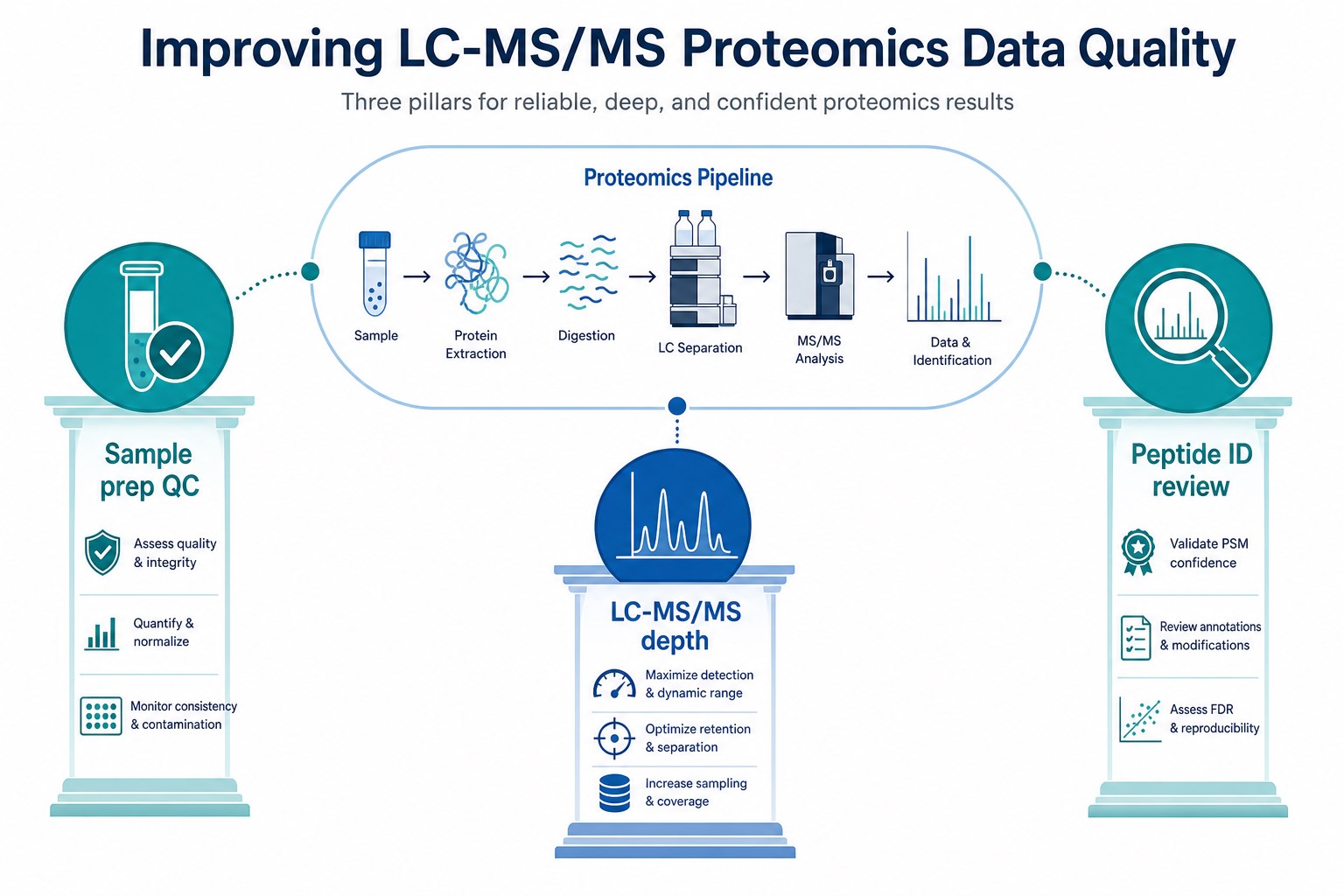
Figure 1. LC-MS/MS proteomics data quality depends on sample preparation control, acquisition depth, and rigorous peptide identification review.
How to Improve Data Quality Across the Workflow
Data quality improves when upstream sample handling, acquisition design, and review standards are planned together rather than corrected after the first search report.
Strengthen sample preparation and digestion control
Use representative material and quantify protein input with a qualified method before digestion begins. Remove or minimize salts, detergents, and matrix components that suppress LC-MS/MS performance when feasible. Match lysis and solubilization conditions to sample type while preserving compatibility with downstream digestion. Select enzyme strategy based on project goal, using trypsin for routine workflows and complementary proteases when coverage gaps are expected. Include reduction and alkylation for disulfide-rich proteins when full cleavage access is required. Document digestion time, temperature, and enzyme lot so repeat runs remain comparable.
Optimize LC-MS/MS acquisition for usable fragment evidence
Extend gradient length and acquisition time when low-abundance peptides or difficult modified forms are central to the project. Use resolution and mass accuracy settings suited to the peptide set and modification scope. Increase replicate injections or run duplicate sample preparations when the decision depends on weak but biologically important features. Monitor system suitability and retention stability so chromatographic drift does not reduce identification consistency across batches.
Build an accurate search and identification environment
Provide complete reference sequences, correct enzyme rules, realistic fixed and variable modifications, and appropriate precursor and fragment mass tolerances. Use custom databases for recombinant constructs, fusion proteins, species with incomplete annotation, or biologics with known variants. Apply false discovery rate filtering for discovery projects and tighter manual thresholds when reporting biologics-grade identifications. Define whether protein inference rules match the reporting standard required by the project.
Apply structured peptide identification review
Review peptide spectrum matches against predefined acceptance criteria rather than accepting all software output by default. Inspect modified peptides for sufficient fragment support and residue localization confidence. Flag unsupported regions, ambiguous assignments, and single-peptide protein hits that require caution in interpretation. Separate confirmed, provisional, and excluded identifications in the final report when project standards require graded confidence.
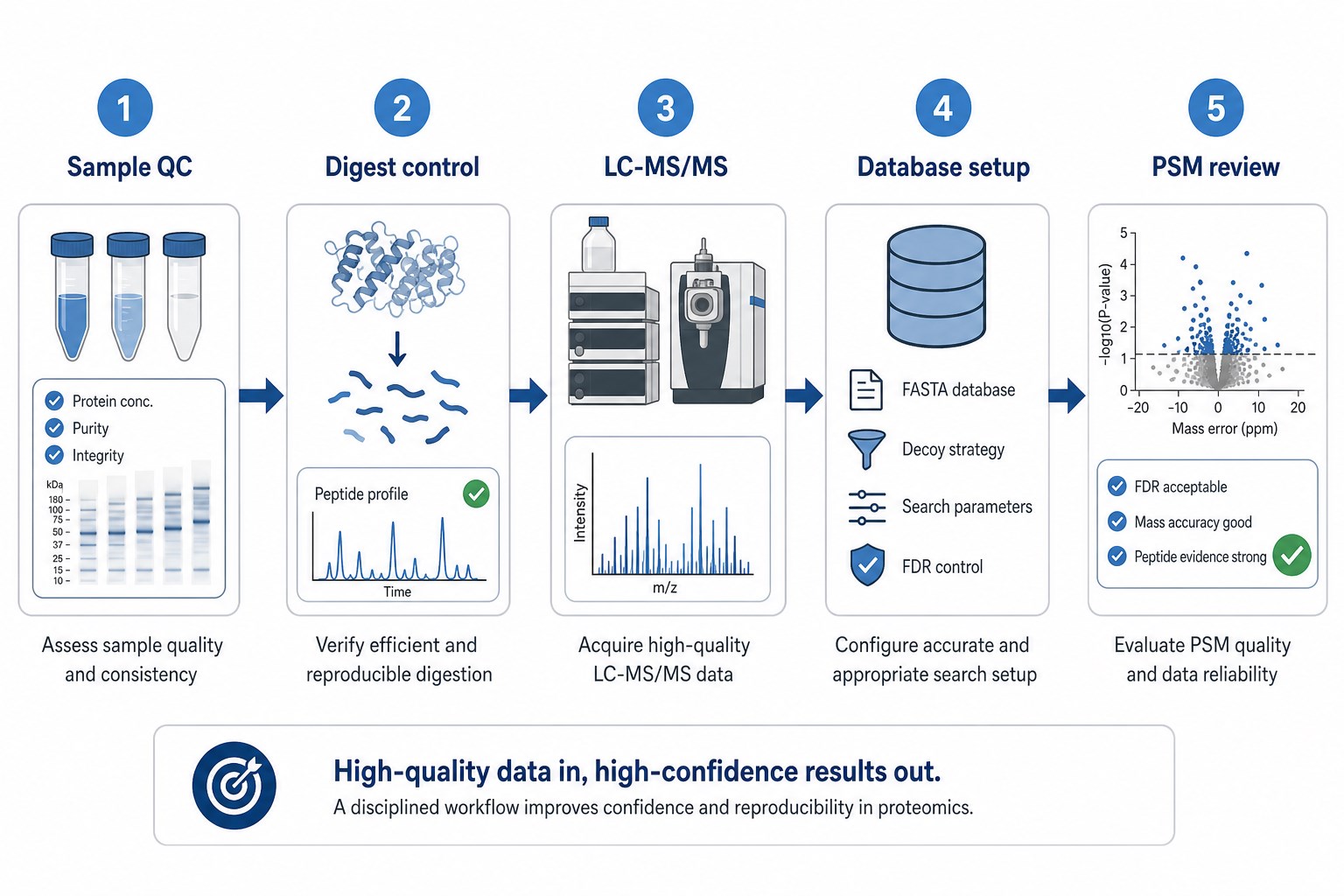
Figure 2. Improving proteomics data quality requires controlled sample preparation, standardized digestion, optimized LC-MS/MS, accurate database setup, and structured PSM review.
Related Services
Comprehensive Peptide Mapping Service
Biopharmaceutical Peptide Mapping Analysis Service
Primary Structure Analysis Service
Protein Full Sequence Coverage Analysis Service
Teams seeking higher-quality LC-MS/MS proteomics data can consult MtoZ Biolabs to review sample preparation strategy, acquisition design, and peptide identification standards for the project goal.
Quality Controls by Workflow Stage
Different workflow stages require different quality controls. The table below summarizes practical focus areas.
|
Workflow Stage |
Common Quality Risk |
Improvement Control |
|---|---|---|
|
Sample intake |
Matrix interference, inaccurate input |
Cleanup, accurate quantitation, metadata capture |
|
Digestion |
Incomplete or variable cleavage |
Qualified enzymes, fixed SOP, completeness check |
|
LC-MS/MS acquisition |
Weak fragment spectra |
Longer gradients, replicates, suitability monitoring |
|
Database search |
False positives or missed IDs |
Complete reference, correct mods, FDR control |
|
Peptide ID review |
Overcalling weak PSMs |
Manual QC and confidence grading |
|
Final reporting |
Mixed-confidence identifications |
Confirmed vs provisional reporting tiers |
Quality improves when the same control logic is applied across all samples in a comparison set.
Peptide Identification Quality Checklist
Peptide identification is the final gate for proteomics data quality. Useful review criteria include:
Digestion completeness should be verified before LC-MS/MS when low coverage is unacceptable for the project.
MS/MS spectra for reported peptides should contain interpretable fragment ion series rather than precursor-rich but fragment-poor data.
Modified peptides should meet project-specific localization confidence before being reported as confirmed.
Search parameters should be locked and documented for all samples in a comparative study.
Single-peptide protein identifications should be flagged unless project rules explicitly allow them.
Critical peptides for biologics or hypothesis-driven studies should receive manual spectral review even when software scores appear acceptable.
Replicate behavior should be checked when identifications support quantitative or comparability conclusions.
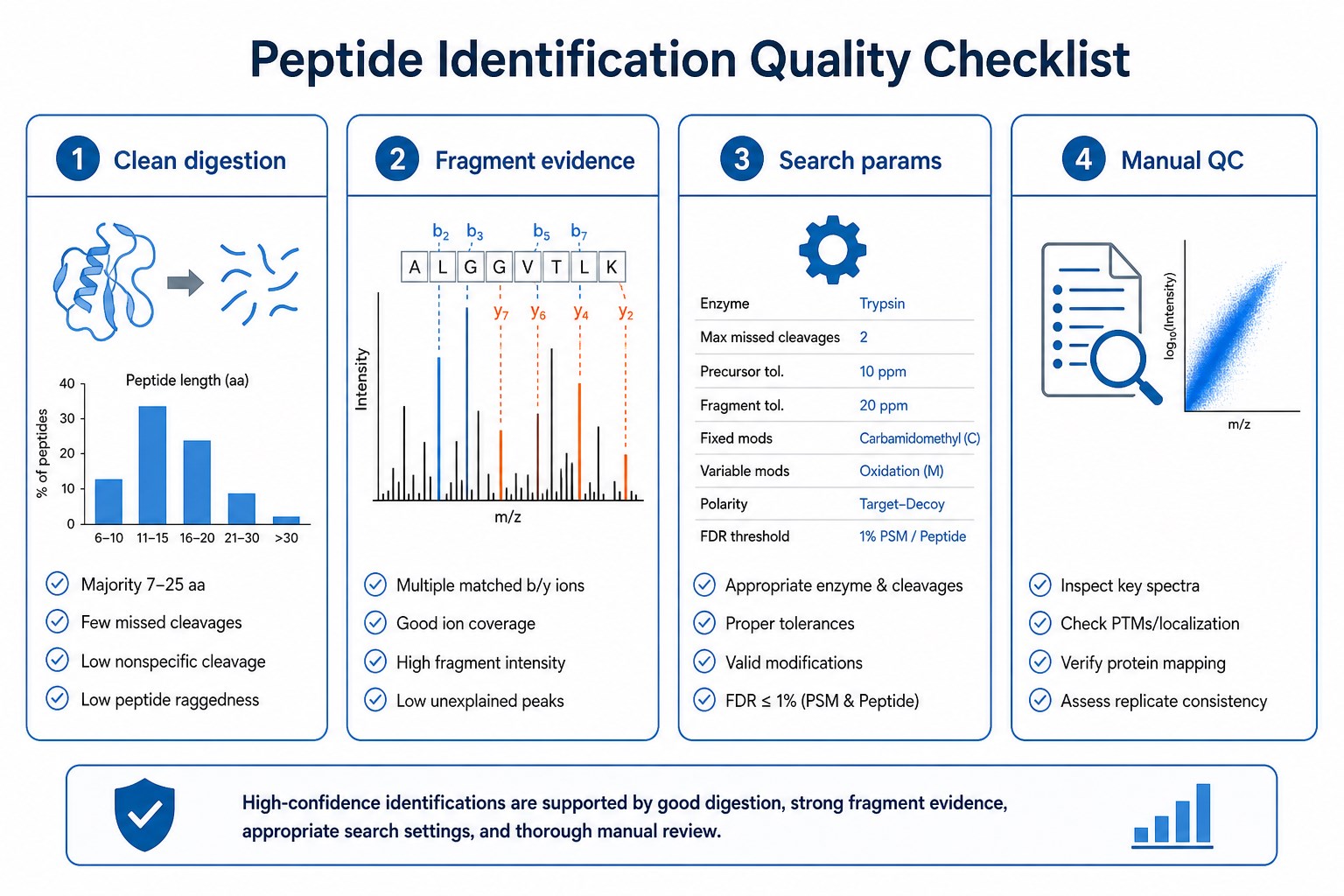
Figure 3. Peptide identification quality depends on clean digestion, strong fragment evidence, accurate search parameters, and manual QC.
Core Benefits and Remaining Limits
Core Benefits
Higher-confidence peptide and protein calls.
Structured review reduces false identifications in final reports.
Better coverage of important regions.
Improved digestion and acquisition increase support for difficult peptides and modified forms.
More reliable comparability across runs.
Standardized prep and search conditions improve batch-to-batch consistency.
Stronger support for biologics and discovery decisions.
Graded identification confidence makes reports more actionable.
Reduced repeat analysis and sample waste.
Early QC gates prevent reporting from weak or inconsistent runs.
Remaining Limits
Complex matrices remain challenging.
Highly formulated or low-input samples may still limit identification depth.
Low-abundance peptides may stay near detection limits.
Enrichment or fractionation may still be required for rare targets.
Discovery and biologics projects need different standards.
Exploratory FDR thresholds may not suit sequence confirmation workflows.
Expert review adds time but improves quality.
Manual QC remains important for modified peptides and borderline PSMs.
Data quality improvement does not replace biological validation.
Proteomics findings often require orthogonal confirmation when claims are high stakes.
Sample and Method Planning for High-Quality Proteomics
Before starting a quality-focused LC-MS/MS proteomics study, teams should define:
- sample type, extraction method, and expected matrix interference
- protein quantitation approach and minimum input requirements
- digestion strategy and need for complementary proteases
- LC gradient length, replicate design, and acquisition depth
- reference database completeness and modification search scope
- PSM acceptance criteria and reporting tiers for confirmed versus provisional IDs
- intended use of data: discovery, quantitation, biologics confirmation, or documentation
Feasibility review before method lock-in is most effective when quality requirements are defined upfront.
Frequently Asked Questions
1. What most often reduces LC-MS/MS proteomics data quality?
Poor sample preparation, incomplete digestion, weak MS/MS fragmentation, and incorrect database or review standards are the most common causes.
2. Does longer LC gradient always improve data quality?
Longer gradients often improve peptide separation and identification depth, but project timeline and sample throughput must also be considered.
3. Are all software-assigned peptides reliable?
No. Modified peptides, low-abundance features, and borderline scores often require manual review against project-specific criteria.
4. How important is database setup?
Very important. Incomplete or incorrect reference sequences and modification parameters can create both missed identifications and false positives.
5. Can data quality improvements help biologics peptide mapping?
Yes. Controlled digestion, deeper acquisition, and reviewed PSM confidence are essential for biologics-grade sequence and modification reporting.
6. Should single-peptide protein hits be reported freely?
They should be flagged or excluded unless project rules explicitly accept them, because protein inference from one peptide is inherently weaker.
Conclusion
Improving LC-MS/MS proteomics data quality requires control from sample preparation through peptide identification review, not only stable instrument operation. Standardized extraction and digestion, optimized acquisition, accurate database searching, and structured PSM review reduce weak identifications and strengthen the evidence available for discovery, quantitation, and biologics characterization.
Teams that define quality thresholds before analysis and report confirmed versus provisional identifications transparently produce proteomics data that are easier to compare, defend, and use in downstream decisions. Data quality should be treated as a workflow design goal rather than assumed from identification count alone. Groups planning higher-quality LC-MS/MS proteomics can contact MtoZ Biolabs to review sample strategy, acquisition design, and peptide identification standards suited to their program.
How to order?




