






How to Choose a Peptide Sequence Analysis Service: Key Deliverables, Sample Requirements, and Cost Drivers
Introduction
Researchers comparing peptide sequence analysis providers often begin with price, yet quotes can differ sharply before the first sample is shipped. One project may need database search confirmation for a purified recombinant protein with a known construct sequence. Another may require de novo interpretation for unmatched spectra from a complex mixture. A third may need Edman confirmation, modification review, and documentation-grade reporting for a biologics milestone. In each case, the service scope is different even if the project title sounds similar.
Choosing a peptide sequence analysis service is not only a budget decision. It is a decision about deliverable depth, sample suitability, interpretation standard, and whether the report will support the next QC, comparability, publication, or discovery step. Teams that compare headline prices without reviewing included workflow stages often face repeat analysis, missing deliverables, or reports that do not meet the validation standard required for the project.
The sections below outline the key deliverables to request, the sample information providers need at intake, and the cost drivers that most often shape peptide sequence analysis quotes.
Why Peptide Sequence Analysis Quotes Vary
Peptide sequence analysis is not a single flat assay fee. A service quote usually reflects feasibility review, sample handling, LC-MS/MS acquisition, database search or de novo interpretation, expert review, and report formatting. Two requests that appear similar on a sample list can involve very different workloads.
One project may need reference-based peptide identification for one purified protein with a complete sequence file. Another may need de novo sequencing for low-abundance peptides, fractionation before analysis, replicate acquisition, manual spectral review, and a formal report with QC commentary. Quotes also vary because service tiers differ. Some packages emphasize fast identification lists. Others include coverage mapping, modification localization, annotated spectra, comparability notes, and validation support suited to biologics or publication review.
A lower-cost option may be appropriate when the goal is exploratory confirmation with flexible reporting. A higher-cost option is often necessary when sequence evidence must support formal documentation, comparability, or high-confidence residue assignment.
Key Deliverables to Confirm Before Choosing a Service
The most useful way to compare providers is to define deliverables before requesting a quote. A peptide sequence analysis report should be matched to the decision the data must support.
Common deliverables include peptide-spectrum match tables with scores and modification annotations, assigned peptide sequences with confidence notes, de novo sequencing results for unmatched spectra when applicable, coverage or confirmation summaries against a reference sequence, annotated MS/MS spectra for critical peptides, Edman cycle data for targeted N-terminal projects, QC comments on ambiguous residues or unsupported regions, and method notes covering digestion, acquisition, and search parameters.
Teams should also confirm file format expectations. Some projects need searchable tables and spectral exports for internal LIMS or QC systems. Others need a concise confirmation report for a single synthetic peptide or impurity investigation. Defining deliverables early prevents paying for the wrong service tier or receiving data that requires substantial internal rework.
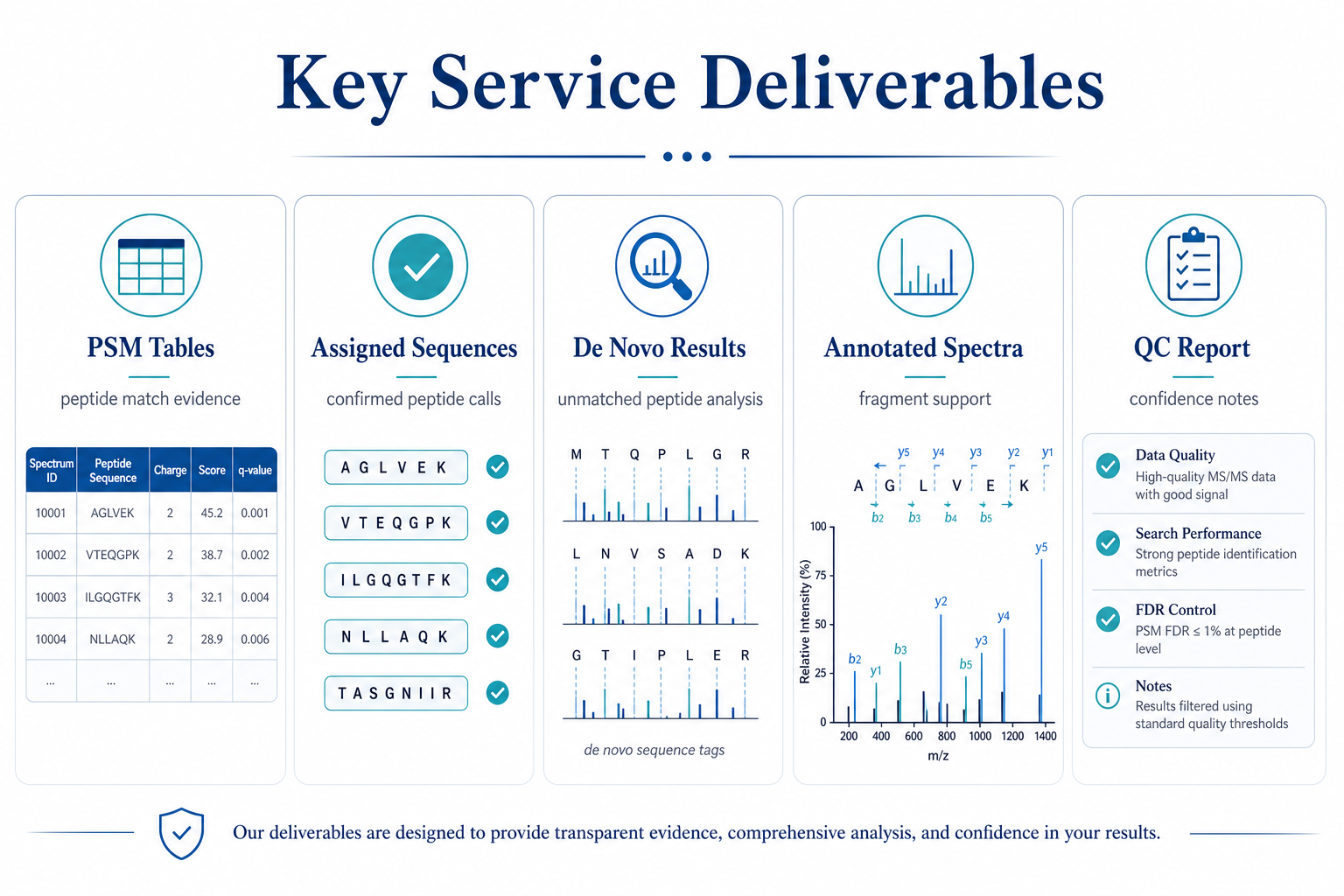
Figure 1. Peptide sequence analysis service deliverables should match the reporting goal, from PSM tables and assigned sequences to annotated spectra and QC commentary.
Sample Requirements Providers Usually Need at Intake
Sample suitability often determines whether a peptide sequence analysis project succeeds on the first attempt. Most providers need more than a sample tube and a project title.
Essential intake information usually includes sample type and source, estimated purity and concentration, buffer or formulation composition, storage and shipment conditions, peptide or protein length and complexity, reference sequence availability, known modifications or sequence features, number of samples, and the intended use of the final report. Purified peptides or proteins are often the most straightforward starting materials. Complex digests, low-abundance targets, and formulation-containing samples may require feasibility review before analysis begins.
Sample amount also matters. Low input can limit the option to rerun an alternative digestion strategy, acquire replicate data, or perform confirmatory review without requesting new material. Teams should disclose salts, detergents, excipients, and stabilizers because these components can affect digestion, chromatography, and MS/MS performance.
The table below summarizes common intake requirements. It supports provider comparison but does not replace sample-specific feasibility review.
|
Intake Item |
What to Provide |
Why It Affects Service Success |
|---|---|---|
|
Sample type |
Purified peptide, protein, digest, or fraction |
Matrix complexity affects prep and identification confidence |
|
Purity and amount |
Estimated purity and available quantity |
Low purity or low input can force repeat work |
|
Buffer composition |
Full formulation or purification buffer details |
Additives can suppress peptide recovery or fragment quality |
|
Reference sequence |
Known sequence or custom database need |
Reference availability determines search versus de novo route |
|
Reporting goal |
Confirmation, identification, de novo, or QC documentation |
Deliverable depth shapes service tier and quote |
|
Modification scope |
Expected or suspected PTMs |
Modification review increases search and interpretation effort |
|
Sample number |
Single sample or paired comparison set |
Additional samples add acquisition and reporting workload |
If one or more intake items are incomplete, feasibility review before shipment is usually more efficient than assuming the provider will infer the missing details later.
Core Cost Drivers in Peptide Sequence Analysis Services
A useful quote comparison should identify which workflow stages are included rather than treating all peptide sequence analysis services as equivalent.
|
Cost Driver |
What It Covers |
Why It Affects Price |
|---|---|---|
|
Feasibility review |
Sample suitability, route selection, and scope alignment |
Reduces rework risk before analysis begins |
|
Sample preparation |
Cleanup, fractionation, digestion, or enrichment |
Complex matrices increase handling time |
|
LC-MS/MS acquisition |
Gradient length, replicate runs, and MS/MS depth |
More instrument time raises project cost |
|
Database search |
Reference-based PSM assignment and filtering |
Larger search space and modification review add effort |
|
De novo interpretation |
Unmatched spectrum analysis and residue review |
Manual review increases interpretation time |
|
Modification localization |
PTM assignment and ambiguity resolution |
Requires deeper spectral inspection |
|
Expert review and reporting |
Manual validation and formatted deliverables |
Documentation-grade output increases review load |
|
Confirmatory analysis |
Replicate runs, alternative digestion, or Edman support |
Adds sample use and additional workflow steps |
These drivers explain why two providers may quote different prices for what appears to be the same peptide sequence analysis request.
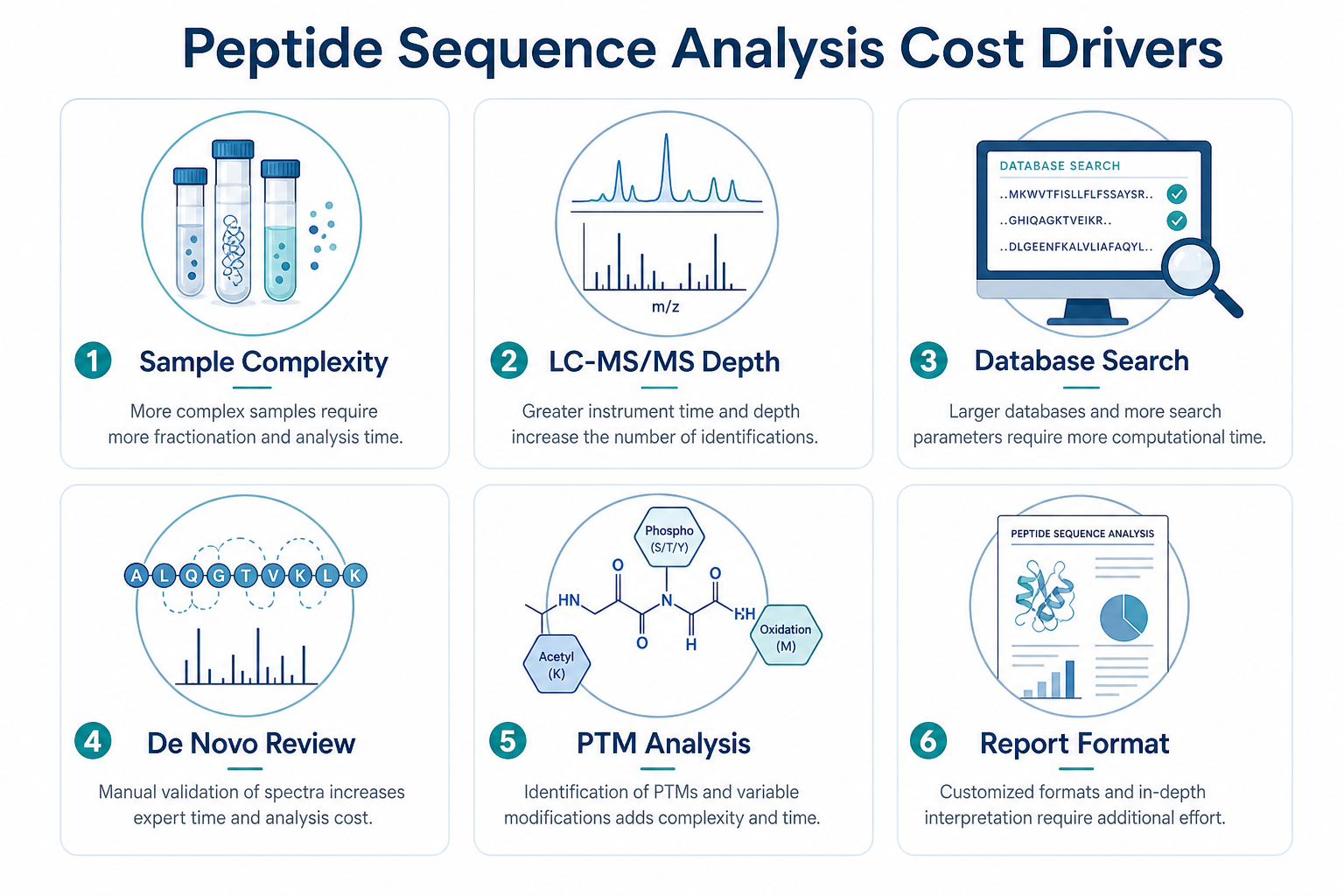
Figure 2. Peptide sequence analysis service cost is shaped by sample complexity, acquisition depth, interpretation route, modification review, and reporting standard.
Related Services
Teams evaluating peptide sequence analysis providers often compare adjacent service tiers at the same time. Relevant options include:
Peptide Identification Service
De Novo Peptide Sequencing Service
Mass Spectrometry-Based Peptide Identification Service
Primary Structure Analysis Service
Researchers comparing peptide sequence analysis service options can consult MtoZ Biolabs to review sample type, deliverable needs, and the reporting depth required before requesting a project-based quote.
How Service Scope Changes the Budget
Scope is usually the largest driver of peptide sequence analysis cost. The table below links common service levels to typical project profiles. It supports budgeting conversations but does not replace sample-specific feasibility review.
|
Service Scope Level |
Typical Project Profile |
Main Cost Drivers |
|---|---|---|
|
Basic peptide identification |
Single purified sample with known reference |
Feasibility review, LC-MS/MS, database search, concise report |
|
Sequence confirmation package |
Synthetic peptide or targeted protein region |
Targeted interpretation and confirmation reporting |
|
De novo sequencing support |
Unmatched or novel peptide investigation |
Additional interpretation and manual spectral review |
|
Modified peptide review |
PTM localization in scope |
Enrichment, search complexity, and expert validation |
|
Multi-sample comparability set |
Reference plus test samples |
Extra acquisition and cross-sample reporting |
|
Documentation-grade reporting |
QC, comparability, or filing support |
Annotated spectra, QC notes, and formal report formatting |
Project phase also matters. Early research may need only enough sequence evidence for an internal go/no-go decision. A later milestone may require broader reporting, stronger validation language, and traceable deliverables. Matching service depth to project phase often controls cost more effectively than choosing the lowest quoted package.
How to Evaluate Providers and Reduce Rework Cost
Several planning steps can improve quote accuracy and reduce repeat analysis expense.
Define the reporting goal before requesting quotes.
Identity confirmation, de novo investigation, modification review, and QC documentation require different service tiers.
Provide complete sample and sequence information early.
Missing buffer details or reference files are common causes of rescoping after the first run.
Ask which workflow stages are included.
Feasibility review, expert interpretation, and confirmatory analysis may or may not be part of the quoted package.
Match service tier to validation standard.
A discovery-grade report is not equivalent to a QC-support package with manual review of critical peptides.
Reserve enough sample for confirmatory work.
Low sample amount can eliminate rerun options without new material submission.
Compare deliverables, not only price.
The cheapest quote may exclude the reporting elements the project actually needs.
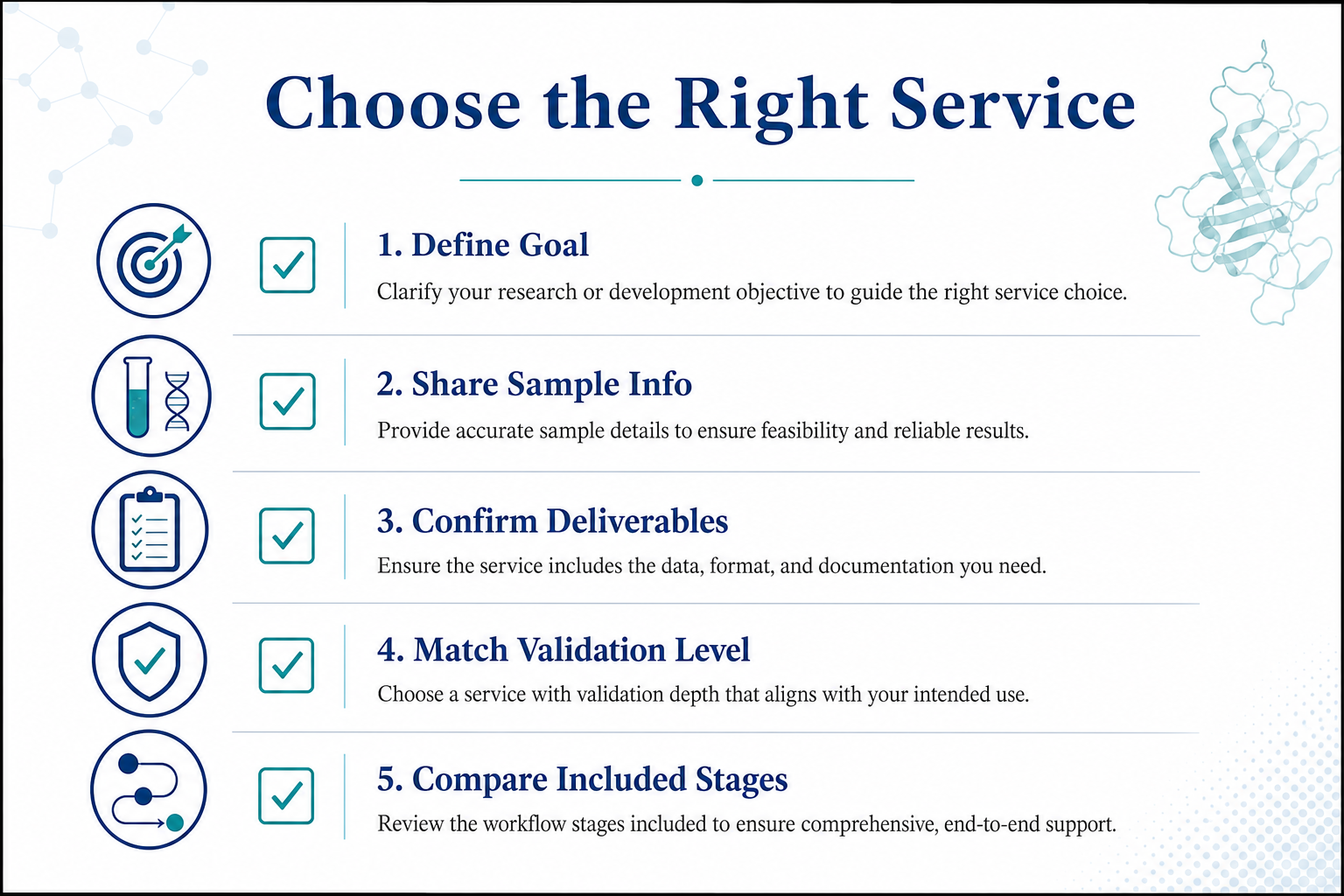
Figure 3. A provider comparison checklist should cover deliverables, sample readiness, scope level, validation standard, and included workflow stages.
Frequently Asked Questions
1. What deliverables should I expect from a peptide sequence analysis service?
Common deliverables include PSM tables, assigned peptide sequences, de novo results when applicable, annotated spectra for key peptides, modification summaries, and QC notes on ambiguous assignments.
2. What sample information is most important before requesting a quote?
Sample type, purity, concentration, buffer composition, reference sequence availability, modification scope, sample number, and the intended use of the report are the most important intake details.
3. Why do peptide sequence analysis quotes vary so much?
Quotes vary because sample complexity, acquisition depth, database versus de novo interpretation, modification review, sample number, and reporting standard change the amount of preparation, instrument time, and expert review required.
4. Is de novo sequencing always included in peptide sequence analysis services?
No. Some projects use reference-based identification only. De novo interpretation is usually scoped separately when unmatched or novel peptides are central to the project.
5. How can feasibility review reduce total project cost?
Feasibility review helps match the analytical route and deliverable format to the sample before work begins, which can prevent repeat analysis and rescoping after the first report.
Conclusion
Choosing a peptide sequence analysis service requires more than comparing a single quoted price. Deliverable depth, sample suitability, interpretation route, and validation standard determine whether the final report supports the intended protein research, proteomics, or biologics decision. Key deliverables often include PSM tables, assigned sequences, de novo results when needed, annotated spectra, and QC commentary. Sample requirements at intake usually cover purity, amount, buffer composition, reference sequence availability, and reporting goal. Cost drivers such as feasibility review, sample preparation, LC-MS/MS depth, database or de novo interpretation, modification review, and formal reporting explain most quote differences between projects. The most predictable outcomes come from defining scope early, sharing complete sample information, and comparing included workflow stages rather than headline price alone. Researchers evaluating peptide sequence analysis service options can contact MtoZ Biolabs to review sample status, deliverable needs, and the reporting format required before requesting a project-based quote.
How to order?




