






How to Choose a Quantitative Proteomics Strategy
Choosing a quantitative proteomics strategy means matching the measurement endpoint to the study design before selecting a labeling format or acquisition mode. Relative discovery methods answer how the same protein changes across defined groups. Calibrated targeted methods answer how much of a named protein is present. TMT, DDA-based label-free quantification (LFQ), data-independent acquisition (DIA), and targeted assays such as parallel reaction monitoring (PRM) are different routes to those endpoints, not interchangeable names for one workflow.
Start from the biological contrast, sample readiness, cohort size, and whether the project needs broad candidate ranking or a predefined panel. Those constraints usually narrow the choice faster than a technology checklist. Researchers who already have sample groups, replicates, and a defined comparison can also review the MtoZ Biolabs Quantitative Proteomics Service for project-specific feasibility and analysis planning.
Define the Study Scope: Discovery or Targeted Quantitative Proteomics
The first step in quantitative proteomics strategy selection is determining whether the study requires broad protein discovery or focused measurement of predefined targets.
Discovery Quantitative Proteomics
Discovery quantitative proteomics measures a broad range of proteins across biological samples without requiring predefined protein targets. It is commonly used when researchers aim to identify proteins associated with biological changes, treatments, phenotypes, or experimental perturbations.
Typical applications include: Differential protein abundance analysis; Mechanism exploration; Candidate biomarker discovery; Treatment response studies.
Discovery workflows generate a broad protein profile and help prioritize candidate proteins for further investigation or targeted validation.
Targeted Quantitative Proteomics
Targeted quantitative proteomics focuses on predefined proteins or peptides using targeted mass spectrometry approaches. These methods are used when researchers already know the proteins of interest and require focused, sensitive, and reproducible measurements.
Common targeted approaches include: Parallel reaction monitoring (PRM); Multiple reaction monitoring (MRM); Selected reaction monitoring (SRM).
Targeted workflows are commonly used for candidate verification, panel-based measurements, and quantitative monitoring of selected proteins. Discovery and targeted strategies are often complementary, with discovery workflows identifying candidates and targeted methods measuring selected targets in subsequent studies.
Determine the Quantitative Endpoint: Relative or Absolute Protein Quantification
After defining the study scope, the next consideration is whether the project requires relative comparison or absolute measurement.
Relative Protein Quantification
Relative quantification compares the abundance of the same protein across different samples, experimental groups, or conditions. Quantitative results are typically reported as ratios, fold changes, normalized intensities, or other within-study measurements.
Relative quantification is widely used for discovery-based studies, including comparisons such as: Treatment versus control groups; Different genotypes or phenotypes; Different time points or experimental conditions.
The primary goal is to identify proteins showing abundance differences between groups rather than determine their absolute concentration.
Absolute Protein Quantification
Absolute quantification aims to determine the amount or concentration of predefined proteins or peptides. Compared with relative quantification, absolute measurement requires a calibrated quantitative design.
Absolute quantification workflows commonly involve suitable target peptides, stable isotope-labeled standards, and calibration procedures. The AQUA strategy established the use of isotope-labeled peptide standards for measuring absolute protein amounts by comparing endogenous peptides with known quantities of labeled standards (Gerber et al., 2003).
Absolute quantification is typically applied when the research objective requires quantitative values for selected proteins rather than only relative changes between samples.
Relative and absolute quantification therefore address different measurement goals: relative quantification focuses on abundance differences across samples, whereas absolute quantification provides calibrated measurements for predefined analytes.
Compare Label-Based and Label-Free Quantitative Strategies
Quantitative proteomics strategies can be classified into label-based and label-free approaches based on whether isotope or chemical labels are introduced before LC-MS/MS analysis. Common label-based approaches include SILAC, TMT, and iTRAQ. Among them, TMT and SILAC are widely used strategies for relative protein quantification but are suited to different experimental designs.
TMT-Based Quantitative Proteomics
TMT is a chemical labeling strategy that uses isobaric tags to enable multiplexed protein quantification. Peptides from different samples are labeled, combined, and analyzed by LC-MS/MS. Reporter ion intensities released during fragmentation are used for relative protein abundance comparison (Thompson et al., 2003).
TMT is suitable for studies requiring multiplexed comparison of multiple samples within a coordinated experimental design. Labeling efficiency, channel balance, and sample compatibility should be considered during experimental planning.
TMT vs. SILAC
TMT and SILAC both support relative protein quantification but differ in labeling strategy and sample requirements.
| TMT | SILAC | |
|---|---|---|
| Labeling strategy | Chemical labeling | Metabolic labeling |
| Typical samples | Broad biological samples | Mainly cell culture systems |
| Key advantage | Multiplexed comparison | Controlled labeling in cell models |
TMT is commonly selected for multi-sample comparison, while SILAC is mainly used for controlled cell culture experiments.
Label-Free Quantitative Proteomics
Label-free quantitative proteomics measures protein abundance without isotope or chemical labels. Quantification is based on peptide-level signals acquired from LC-MS/MS analysis. Intensity-based approaches such as MaxLFQ estimate relative protein abundance across samples (Cox et al., 2014). LFQ provides flexibility for larger cohorts and independent sample analysis. It can be implemented with different acquisition strategies, including DDA and DIA, depending on study requirements.
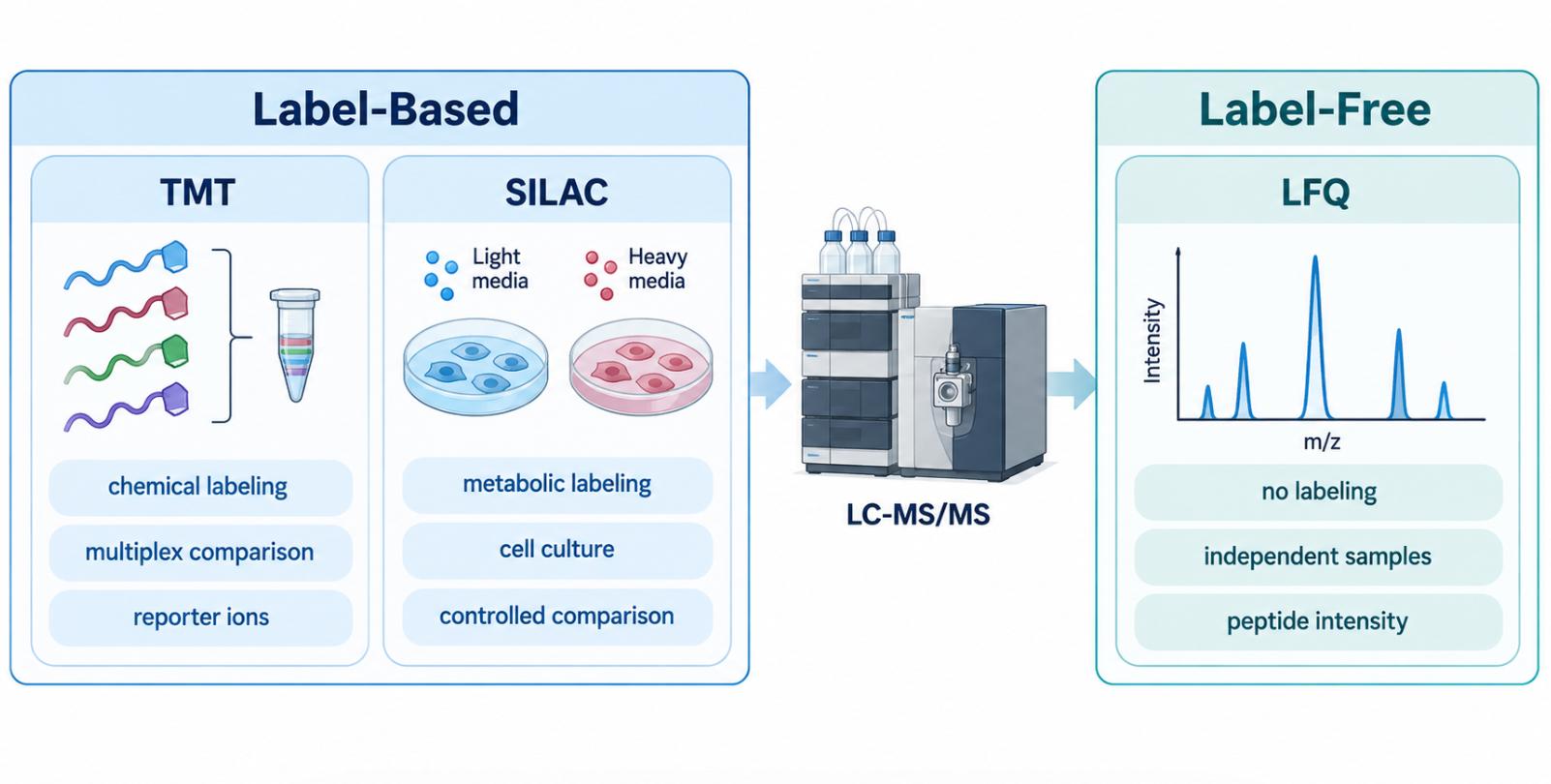
Figure 1. Label-Based vs Label-Free Quantitative Proteomics
Consider Acquisition Mode: DIA vs. DDA Proteomics
Acquisition mode describes how mass spectrometers collect precursor and fragment-ion information. It represents a different planning dimension from labeling strategy and quantitative endpoint.
Data-Dependent Acquisition (DDA)
DDA selects precursor ions for fragmentation according to predefined acquisition rules, commonly prioritizing higher-intensity precursor ions within each cycle.
DDA is widely used in discovery proteomics and can support quantitative analysis when combined with appropriate data processing and experimental design.
Data-Independent Acquisition (DIA)
DIA systematically fragments ions across predefined precursor windows and generates multiplexed fragment-ion datasets that can be computationally extracted for consistent and quantitative proteome analysis (Gillet et al., 2012).
Compared with traditional DDA acquisition, DIA can provide consistent measurement across samples by systematically collecting fragment-ion information. DIA is commonly applied in quantitative proteomics studies requiring reproducible protein profiling across multiple samples.
DIA and DDA represent different acquisition strategies that can be selected according to the required data characteristics and study design.
Select Targeted Quantitative Proteomics Strategy
Targeted quantitative proteomics is used when specific proteins or peptides have already been defined for focused measurement. Common targeted approaches include PRM and MRM/SRM, which differ in acquisition strategy and are selected based on target number, assay requirements, and quantitative objectives.
| PRM | MRM/SRM | |
|---|---|---|
| Acquisition | Measures full fragment-ion spectra of selected precursors | Monitors predefined precursor-fragment transitions |
| Main advantage | Provides detailed fragment-ion information for target confirmation | Enables highly focused and established targeted assays |
| Common applications | Candidate validation and targeted protein quantification | Routine targeted measurement of predefined panels |
How to Match a Quantitative Proteomics Strategy With Project Requirements
The appropriate quantitative proteomics strategy depends on the research objective, sample structure, quantitative requirements, and validation needs.
| Research Requirement | Suitable Strategy Considerations |
|---|---|
| Discover proteins associated with biological changes | Discovery quantitative proteomics using TMT, label-free, or DIA-based approaches |
| Compare protein abundance between experimental groups | Relative quantitative proteomics |
| Analyze predefined protein targets | Targeted quantitative proteomics using PRM or MRM/SRM |
| Obtain absolute protein amounts | Calibrated targeted quantification with appropriate standards |
| Analyze multiple samples within a coordinated experiment | TMT-based multiplexed quantification |
| Analyze flexible sample cohorts | Label-free quantitative proteomics |
| Validate selected candidates after discovery | Targeted PRM or MRM/SRM workflows |
When selecting a quantitative proteomics strategy, researchers should also consider sample amount, sample quality, biological replicates, experimental grouping, and downstream analysis requirements. Researchers who need the theme-level map of strategies, workflow, and data outputs can refer to Quantitative Proteomics: Methods, Strategies, Workflow, and Applications for broader orientation.
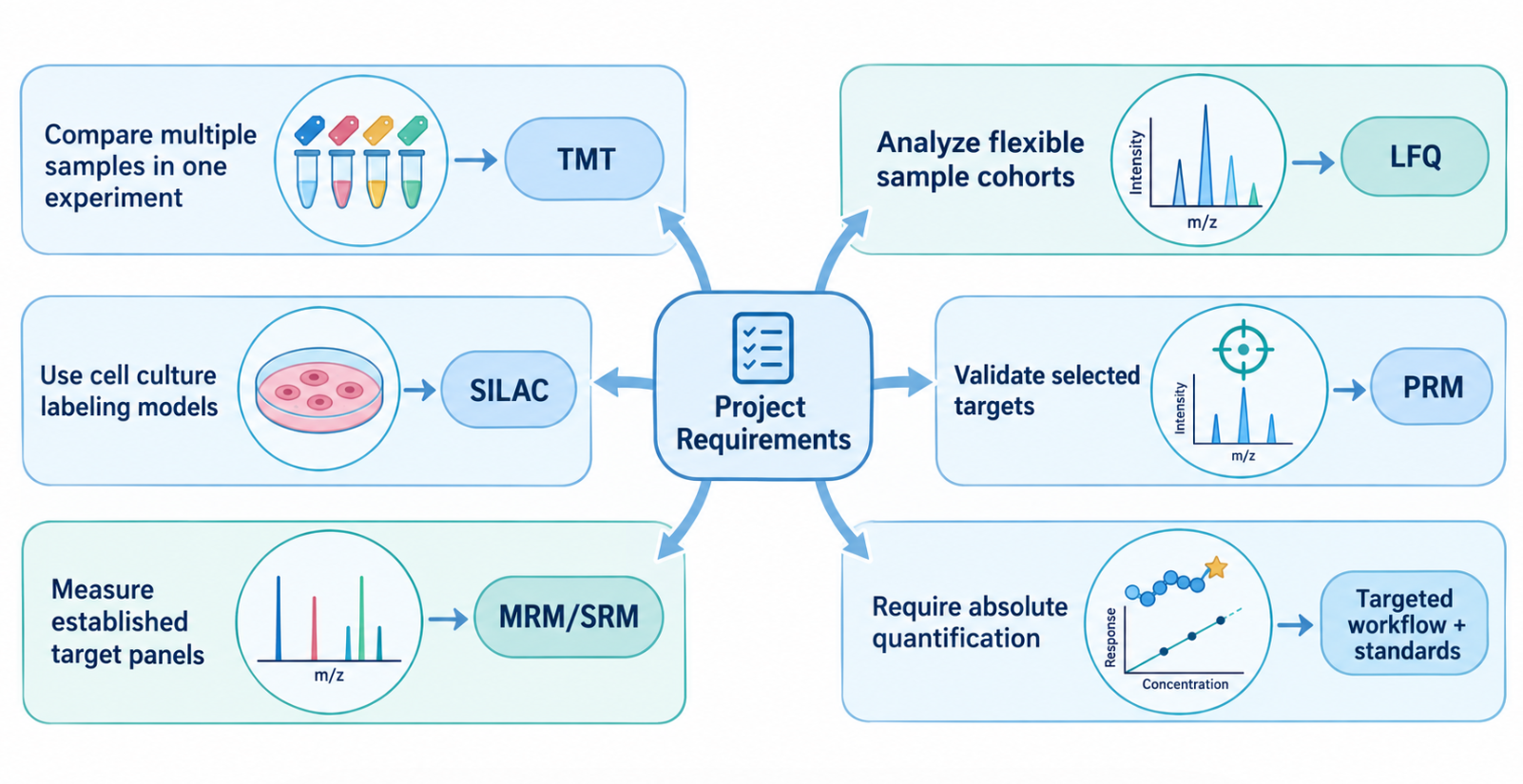
Figure 2. Matching Project Requirements With Quantitative Proteomics Strategies.
Frequently Asked Questions
1. Should I choose TMT or DIA first?
The choice depends on your research goal, sample structure, and study design. TMT is often suitable for studies with clearly defined groups and a limited number of samples that require multiplexed comparison. DIA-LFQ is often preferred for flexible sample cohorts, larger sample numbers, or studies where samples need to be analyzed independently. Consider factors such as the number of samples, biological groups, available sample amount, and whether you prioritize multiplexed comparison or flexible quantitative profiling when selecting between TMT and DIA-LFQ.
2. Is label-free the same as DIA?
No. Label-free and DIA describe different aspects of quantitative proteomics. Label-free refers to quantification without isotope or chemical labeling, while DIA describes how precursor and fragment ions are acquired during mass spectrometry analysis. DIA can be used as a label-free quantitative approach, but label-free workflows can also use other acquisition strategies. The choice depends on factors such as sample number, study design, and quantitative requirements.
3. When is absolute quantification the right first method?
Choose absolute quantification when the scientific claim requires calibrated amount for named proteins and suitable peptides, standards, and assay design are available. It is not the default first step for unbiased discovery of unknown changing proteins.
4. How much protein is typically used when planning a relative proteomics study?
Typical planning amounts are more than 20 ug total protein and more than 0.5 ug/uL. 50 ug is commonly used. These values help size extraction and digestion. Feasibility still depends on sample type, buffer, contaminants, degradation, database availability, and the planned contrast.
5. Can one strategy answer both discovery ranking and absolute validation?
Not as a single undifferentiated method. Rank candidates with a discovery design first, then build a targeted assay for the named panel if absolute or focused verification is required. Plan both stages before the first acquisition block when the publication claim depends on both.
Conclusion
A durable quantitative proteomics strategy starts from the measurement endpoint and the study constraints, then selects among TMT, DDA-LFQ, DIA-LFQ, and targeted assays for the role each method can actually play. Keep discovery ranking and calibrated panel measurement as sequential designs when both are needed. Once the contrast, sample plan, and strategy shortlist are defined, researchers can review the MtoZ Biolabs Quantitative Proteomics Service for project-specific sample evaluation, feasibility assessment, and workflow planning.
References
1. Gerber SA, Rush J, Stemman O, Kirschner MW, Gygi SP. Absolute quantification of proteins and phosphoproteins from cell lysates by tandem MS. Proceedings of the National Academy of Sciences of the United States of America. 2003;100(12):6940–6945. doi:10.1073/pnas.0832254100.
2. Thompson A, Schäfer J, Kuhn K, Kienle S, Schwarz J, Schmidt G, Neumann T, Johnstone R, Mohammed AKA, Hamon C. Tandem mass tags: A novel quantification strategy for comparative analysis of complex protein mixtures by MS/MS. Analytical Chemistry. 2003;75(8):1895–1904. doi:10.1021/ac0262560.
3. Cox J, Hein MY, Luber CA, Paron I, Nagaraj N, Mann M. Accurate proteome-wide label-free quantification by delayed normalization and maximal peptide ratio extraction, termed MaxLFQ. Molecular & Cellular Proteomics. 2014;13(9):2513–2526. doi:10.1074/mcp.M113.031591.
4. Gillet LC, Navarro P, Tate S, Röst H, Selevsek N, Reiter L, Bonner R, Aebersold R. Targeted data extraction of the MS/MS spectra generated by data-independent acquisition: A new concept for consistent and accurate proteome analysis. Molecular & Cellular Proteomics. 2012;11(6):O111.016717. doi:10.1074/mcp.O111.016717.
How to order?




