






How to Choose a Mitochondrial Protein Analysis Method Based on Your Study Design
Choose a mitochondrial protein analysis method by first defining the protein-level evidence needed to answer the research question. The study should clarify whether it requires profiling of detectable proteins, relative abundance comparison, evidence from a mitochondrial-enriched fraction, broader whole-cell context, or a combination of these outputs.
Identification-focused profiling may be suitable when the main goal is to characterize proteins detected in a defined preparation. Quantitative proteomics is appropriate when the study requires relative abundance comparison across independently replicated samples or conditions. Mitochondrial enrichment may be considered when evidence from a mitochondrial-enriched fraction is central to the study. Acquisition strategies such as DDA or DIA and quantification formats such as label-free analysis or TMT labeling should then be selected according to the complete project design.
Why Study Design Comes First
Many method-selection problems start from the wrong end. Choosing an acquisition mode or a platform before the study design is settled often forces a redesign later.
Method selection should consider several connected elements:
- Research question and planned comparisons: what biological difference or pattern the study is intended to evaluate.
- Evidence scope: whether the project requires whole-cell context, mitochondrial-enriched evidence, or both.
- Analytical outputs: whether the project requires identification-focused profiling, quantitative comparison, or both.
Clarifying these elements narrows the suitable workflow options, but method selection may still require project-specific evaluation. The final route should reflect both the scientific objective and the material that can realistically be submitted.
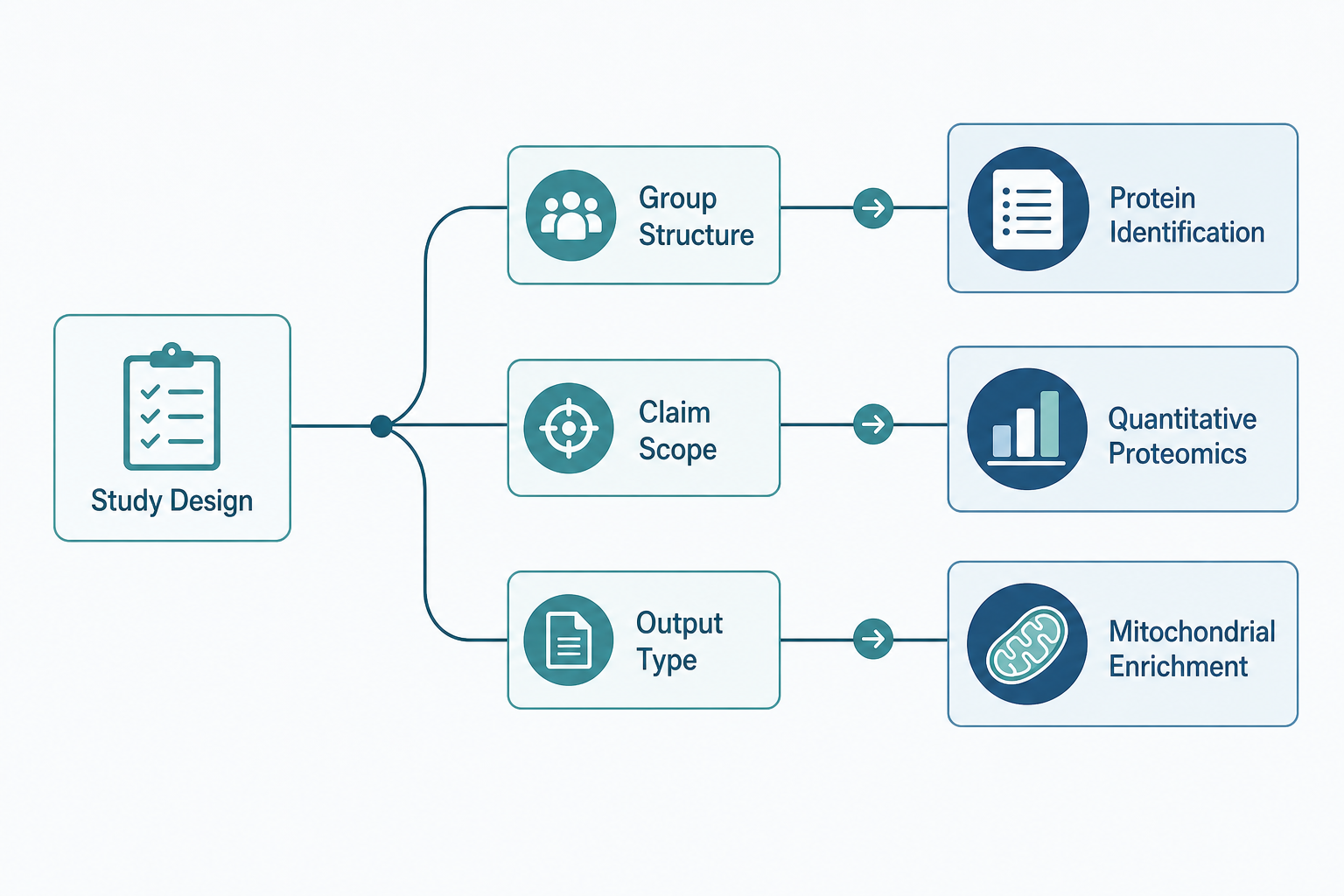
Figure 1. Group structure, claim scope, and output type map a study design to a method route.
Reading Your Study Design
Before selecting a method, describe the design in plain terms. Four questions are usually enough:
- How many groups are compared? One group is characterization; two or more groups is comparison.
- Are the groups predefined or open-ended? Fixed groups such as control and treatment support planned multiplexing, while open pilots keep flexibility.
- Is the claim about the mitochondrion specifically? An organelle-specific claim needs enrichment; a whole-cell claim can use total lysate.
- What is the deliverable? A list of detected proteins, or a comparison of abundance across arms.
Answering these four keeps later choices grounded in the actual experiment rather than in a preferred technique.
Study Design to Method Map
|
Study design pattern |
Claim scope |
Output needed |
Method direction |
|---|---|---|---|
|
Single group characterization |
Presence in a fraction |
Protein catalog |
Protein identification |
|
Two-group comparison |
Abundance difference |
Quantitative matrix |
Quantitative proteomics, DDA pilot or DIA |
|
Multiple fixed groups |
Abundance across arms |
Quantitative matrix |
Quantitative proteomics, DIA or TMT |
|
Organelle-specific claim |
Mitochondrion only |
Catalog or comparison |
Enrichment before analysis |
|
Whole-cell context |
Cell-level readout |
Catalog or comparison |
Total lysate acceptable |
The map is a starting point, not a rule that overrides the actual question. When two rows apply, the more specific claim usually wins. An organelle-specific comparison, for example, needs both enrichment and quantification.
Two design patterns are worth separating clearly. A pilot with open-ended groups keeps flexibility and often starts with DDA, so early data can inform a larger design. A confirmatory study with fixed groups benefits from a locked plan, where DIA or TMT is chosen before analysis and the arm structure is not changed afterward. Treating a pilot as if it were confirmatory, or the reverse, is a frequent source of wasted effort.
Method Options and Their Technical Value
Protein identification
Protein identification catalogs which proteins are detected in a defined sample or enriched fraction.
What this route contributes:
- Confirms which proteins are present in the submitted material
- Fits single-group characterization and early setup checks
- Provides a reference list before a larger quantitative design
Limit:
- Does not support abundance comparison between arms
- A catalog entry is not evidence of a quantitative change
Quantitative mitochondrial proteomics
Quantitative mitochondrial proteomics measures relative abundance and compares it across defined arms.
What this route contributes:
- Compares protein abundance between conditions
- Fits two-group and multi-group designs
- Produces ranked candidates for later follow-up
Limit:
- Requires matched enrichment, protein amount, and handling across arms
- Differential results stay exploratory until confirmed by orthogonal methods
Mitochondrial enrichment before analysis
Enrichment concentrates mitochondrial material so conclusions can be tied to the organelle.
What this route contributes:
- Supports organelle-specific claims
- Reduces the dominance of high-abundance cytosolic proteins
- Applies to both identification and quantitative routes
Limit:
- Adds an upstream step that must be matched across all arms
- Recovery depends on sample type and input amount
Choosing the Acquisition Mode After the Design Is Fixed
An acquisition strategy is required for both identification-focused and quantitative workflows. The selection criteria may differ according to the intended protein coverage, measurement consistency, sample number, quantitative format, and available material.
DDA suits flexible pilots and smaller comparative sets. Software direction commonly includes MaxQuant or Proteome Discoverer.
DIA suits broader matched cohorts that need consistent quantification across many samples. Software direction commonly includes Spectronaut or DIA-NN.
TMT suits predefined multiplexed group maps analyzed together in one batch.
The order matters. Design first, then quantification versus identification, then the acquisition mode. Reversing this order is a frequent cause of rework.
Applications by Design Type
Characterizing one mitochondrial preparation
Use protein identification. The goal is to confirm which proteins appear in the fraction, so a catalog is the correct deliverable. Treat the list as a reference for a later quantitative phase rather than as evidence of change.
Comparing a disease model against a control
Use quantitative mitochondrial proteomics with matched enrichment. A DDA pilot can give an early read; DIA suits a larger matched cohort. Keep both arms under the same enrichment, lysis, and storage rules so abundance differences are more likely to reflect biology.
Comparing several fixed treatment or genotype groups
Use quantitative mitochondrial proteomics with DIA or TMT after the arm structure is locked. Confirm group labels and replicate logic before analysis begins, because changing arm definitions later usually forces a redesign.
Making an organelle-specific claim
Use mitochondrial enrichment before either identification or quantification. Without enrichment, a mitochondrial claim is difficult to defend against cytosolic background.
Building a candidate list for later validation
Use quantitative screening first, then treat the differential proteins as a ranked list rather than a final result. Orthogonal follow-up such as western blot can be discussed after candidates are ranked, but it is planned as a separate module and is not an automatic part of the screening phase.
Phenotype assays such as respiration, membrane potential, or ROS sit outside this proteomics scope. If those readouts are needed, plan them as separate experiments and keep them distinct from the proteomics claim.
Sample Readiness for the Chosen Route
Method selection depends on sample input, especially for enrichment-based work. Quantitative designs are more sensitive to input consistency than identification.
Planning amounts:
- Cells: about 5 x 10^7 cells per sample
- Animal tissue: about 200 mg per sample
- Isolated mitochondrial protein: at least 50 ug, with 80 to 100 ug preferred when possible
- Isolated mitochondrial protein concentration: at least 0.5 ug/uL, with 1 ug/uL or higher preferred when possible
Unequal protein amount across arms can create abundance differences that come from loading rather than biology, so confirm amounts for every arm before quantification is locked. Record freeze history and buffer composition as well, since repeated freeze-thaw cycles and unmatched buffers can change recovery. Platform discussion can include Orbitrap Exploris 480, timsTOF Pro, and Orbitrap Astral once the route is set.
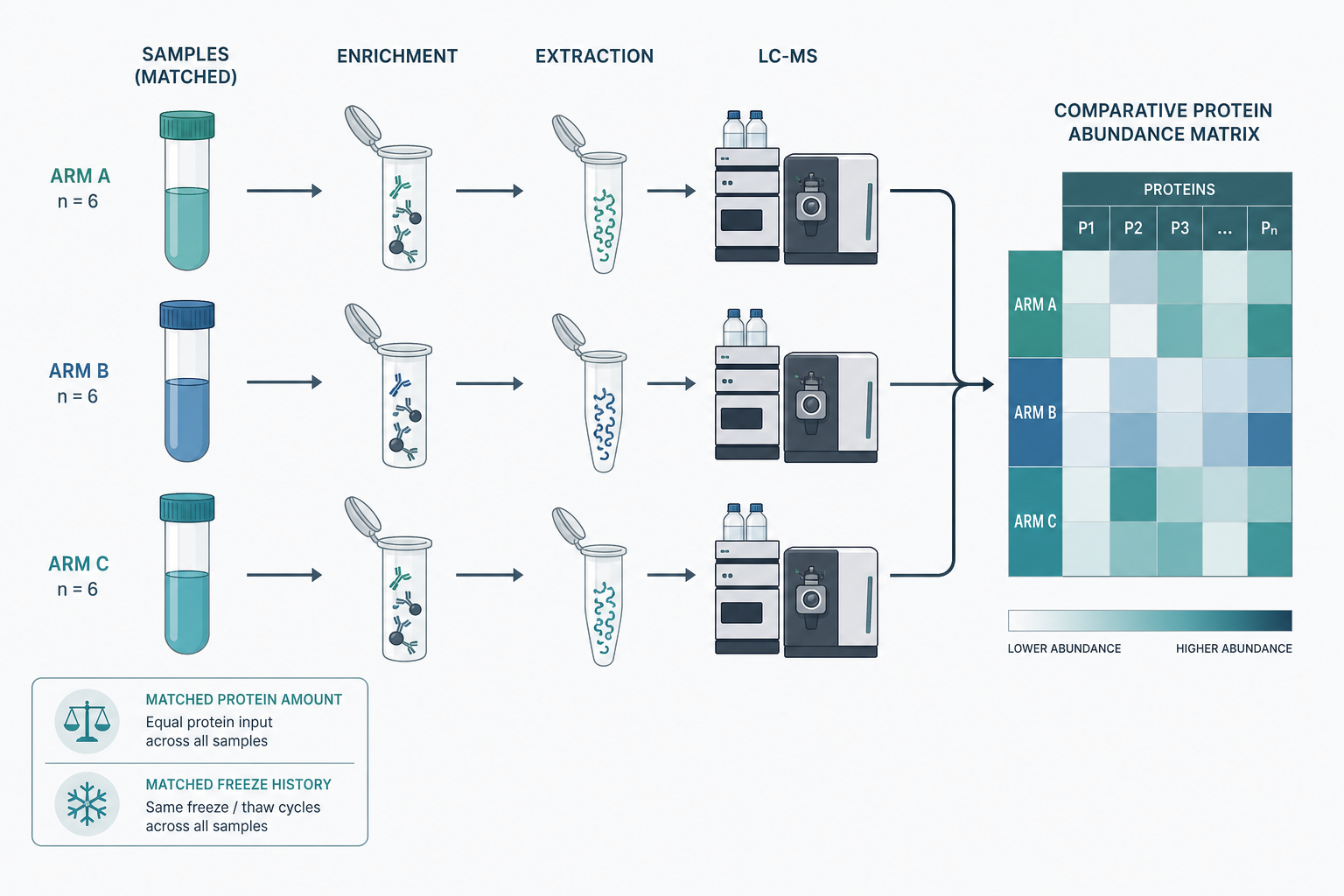
Figure 2. Matched input and handling across arms support a reliable comparison after the design is set.
Decision Checklist
Define the primary research question and intended protein-level evidence.
Define all planned comparisons and confirm that each group contains appropriate independent biological replicates.
Decide whether the claim is organelle-specific and whether enrichment is required.
Set the deliverable: a protein catalog or a quantitative matrix.
Select the acquisition mode from cohort structure only after the design is fixed.
Confirm sample amounts and matched handling across every arm.
If the design is still open, resolve the group structure and claim scope before locking any analytical route. MtoZ Biolabs can review the study design, sample type, and expected output before the method is finalized.
Related Services
Mitochondrial Proteomics Service
Mitochondrial Isolation and Mitochondrial Protein Purification Service
Subcellular Proteomics Service
Frequently Asked Questions
1. Why should study design drive the method choice?
Study design defines group structure, claim scope, and output type. These three facts determine the method, so fixing the design first avoids mid-project route changes.
2. How do I know if I need enrichment?
Enrichment is useful when evidence from a mitochondrial-enriched fraction is central or when greater representation of mitochondrial-associated proteins is needed. Whole-cell proteomics may be more appropriate when the broader cellular response is important.
3. Does detection in a mitochondrial-enriched fraction confirm mitochondrial localization?
No. Detection shows that protein evidence was present in the analyzed preparation. Co-isolated proteins and transient mitochondrial associations may also contribute to the result, so localization claims require annotation and, where necessary, orthogonal evidence.
4. When is quantitative proteomics the right route?
Quantitative proteomics fits designs with two or more compared groups, where the deliverable is a comparison of abundance across arms.
5. What sample amounts should be planned?
Typical MtoZ Biolabs planning guidance includes approximately 5 × 10^7 cultured cells, approximately 200 mg of animal tissue, or an isolated mitochondrial preparation providing at least 50 µg of measurable protein. For isolated preparations, 80–100 µg and a concentration of at least 1 µg/µL are preferred when possible. Final requirements should be confirmed for the specific project.
Conclusion
Mitochondrial protein analysis should be selected according to the research question, evidence scope, sample feasibility, biological replicate structure, and intended analytical outputs. Identification and quantification are connected outputs, while mitochondrial enrichment, DDA, DIA, label-free quantification, and TMT address different dimensions of the workflow.
Describe the design clearly, confirm enrichment need and sample readiness, and then lock the analytical route. For design-specific selection of a mitochondrial protein analysis method, contact MtoZ Biolabs with study groups, sample type, and the expected analytical output.
How to order?




