






How LC-MS Works in Proteomics To Identify and Quantify Proteins
Introduction
Proteomics projects often begin with a practical question: how does a complex protein mixture become a protein identification table or a quantitative comparison report? A cell biology lab may need to know which signaling proteins change after treatment. A biopharmaceutical group may need to confirm protein identity in a purified sample. A biomarker team may need reproducible abundance measurements across dozens of plasma specimens. In each case, liquid chromatography-mass spectrometry (LC-MS) and tandem mass spectrometry (LC-MS/MS) provide the analytical bridge between digested peptides and protein-level conclusions.
LC-MS proteomics separates peptides by liquid chromatography, measures their mass and abundance in the mass spectrometer, and uses MS/MS fragmentation to assign sequence evidence when identification is required. Protein quantification is then derived from peptide ion intensities, spectral counts, isobaric reporter signals, or targeted ion monitoring depending on the experimental design. Understanding how these steps connect helps teams interpret proteomics data, evaluate reporting quality, and choose workflows matched to discovery, comparability, or targeted monitoring goals.
What LC-MS Proteomics Means in Practice
LC-MS proteomics most often refers to bottom-up analysis in which proteins are digested into peptides before chromatographic separation and mass spectrometry measurement. The mass spectrometer records precursor peptide ions during LC elution and, in LC-MS/MS mode, selects selected precursors for fragmentation to generate sequence-informative product ions.
The output is not a direct intact protein measurement in standard bottom-up workflows. Instead, peptide-spectrum matches (PSMs) are assigned through database searching or spectral library matching, and protein identities are inferred from shared peptide evidence. Quantitative values are calculated from peptide-level measurements and rolled up to protein groups for comparison across samples.
This peptide-centric architecture is why sample preparation, LC gradient design, acquisition mode, and search parameters all influence both identification depth and quantitation quality in the same experiment.
How Liquid Chromatography Supports Proteomics Analysis
Liquid chromatography reduces analytical complexity before peptides enter the mass spectrometer. In bottom-up proteomics, reversed-phase LC is widely used to separate digested peptides by hydrophobicity across a gradient of increasing organic solvent.
Chromatographic separation serves three main functions. It reduces ion suppression by limiting the number of peptides ionized at the same time. It improves dynamic range by spreading abundant and low-abundance peptides across distinct retention times. It links peptide signals to reproducible elution windows that support label-free quantitation based on extracted ion chromatograms.
Gradient length, column chemistry, flow rate, and sample loading affect how many peptides are resolved per run and how consistently peptide signals are measured across replicate injections. Poor LC performance can reduce identification counts and distort quantitative comparison even when the mass spectrometer is operating normally.
How Mass Spectrometry Identifies Proteins
Protein identification in LC-MS/MS proteomics depends on measuring precursor mass, selecting ions for fragmentation, and interpreting fragment ion patterns.
In a survey MS scan, the instrument records precursor m/z values and signal intensities for peptides eluting from the LC column. In data-dependent acquisition, the most intense precursors are selected for MS/MS fragmentation in sequential cycles. In data-independent modes such as SWATH, defined m/z windows are fragmented systematically to improve reproducibility across runs.
MS/MS fragmentation produces product ions that reflect peptide sequence structure. Database search engines compare observed spectra with in silico fragment ions from protein sequence databases and assign PSMs with scoring metrics. False discovery rate filtering removes low-confidence matches before protein inference.
Protein inference groups PSMs into protein groups when shared peptide evidence supports the same database entry. One protein identification in the final report may therefore represent multiple proteoforms or isoforms grouped according to the search and inference rules used.
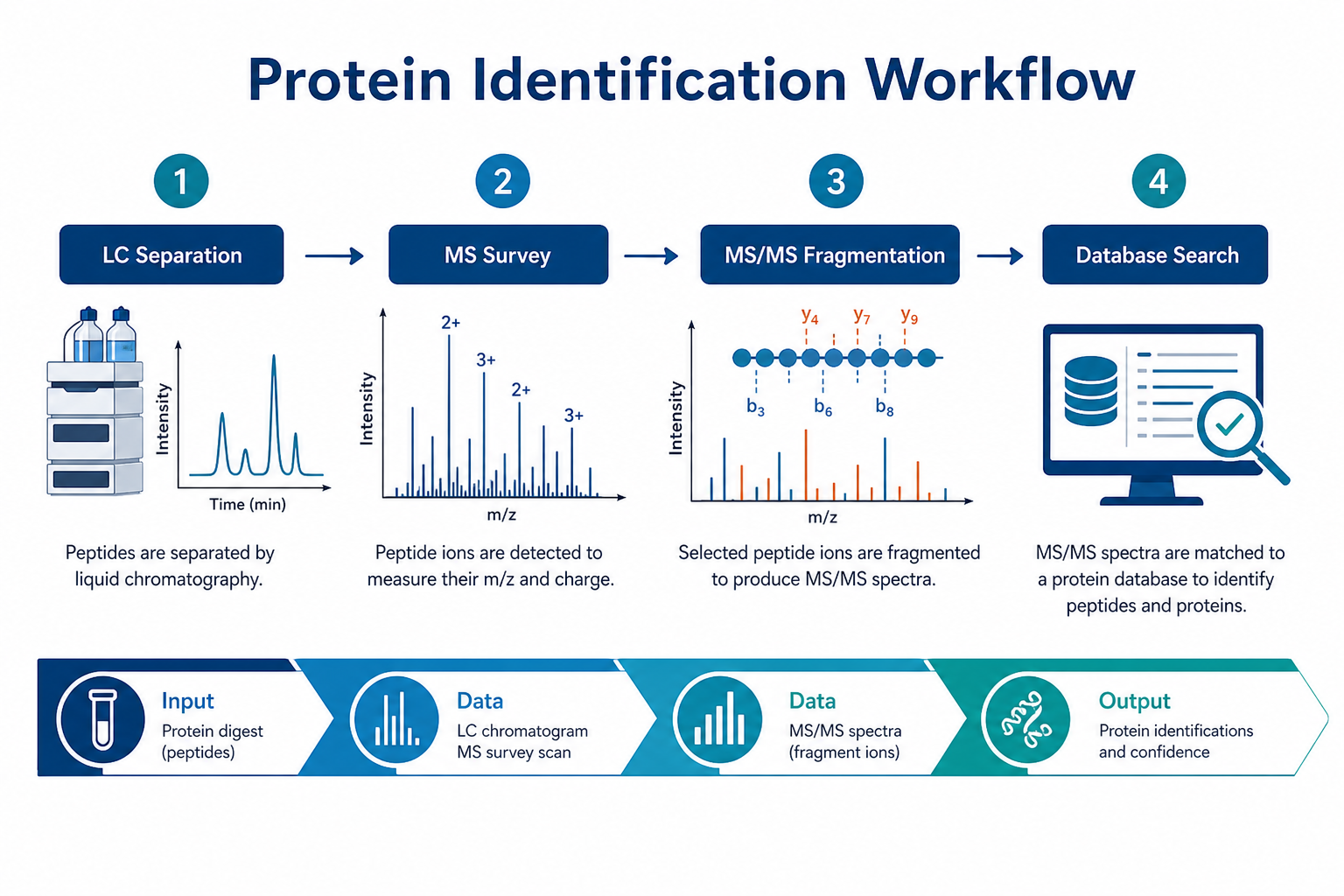
Figure 1. LC-MS/MS protein identification in proteomics combines peptide separation, precursor measurement, MS/MS fragmentation, and database searching to assign peptide-spectrum matches and infer protein identities.
Related Services
Protein Identification Service
Label-Free Quantitative Proteomics Service, MS Based
Quantitative Proteomics Service
Proteomics Bioinformatic Analysis Service
Researchers planning LC-MS proteomics projects can consult MtoZ Biolabs to review sample type, identification goals, and the quantitation strategy best suited to the study design.
How LC-MS Quantifies Proteins in Proteomics
Protein quantification in LC-MS proteomics is peptide-based. The instrument measures ion signals for peptides across samples, and software converts those measurements into relative or absolute abundance estimates at the protein level.
|
Quantitation Approach |
How LC-MS Measures Abundance |
Typical Use |
|---|---|---|
|
Label-free quantitation |
Peptide precursor or extracted ion intensity across runs |
Discovery comparison across sample groups |
|
Spectral counting |
Number of MS/MS spectra assigned to a protein |
Semi-quantitative screening |
|
Isobaric labeling (TMT, iTRAQ) |
Reporter ion intensity after MS/MS |
Multiplexed group comparison |
|
Metabolic labeling (SILAC) |
Light versus heavy peptide ratios |
Cell culture-based comparison |
|
Targeted PRM or MRM |
Monitored peptide transition intensity |
Focused assay-style quantitation |
Quantitation quality depends on LC reproducibility, acquisition depth, normalization method, and missing value handling. Identification and quantitation are linked in the same workflow, but a protein can be quantified with fewer spectral requirements than are needed for high-confidence de novo-level sequence confirmation in difficult cases.
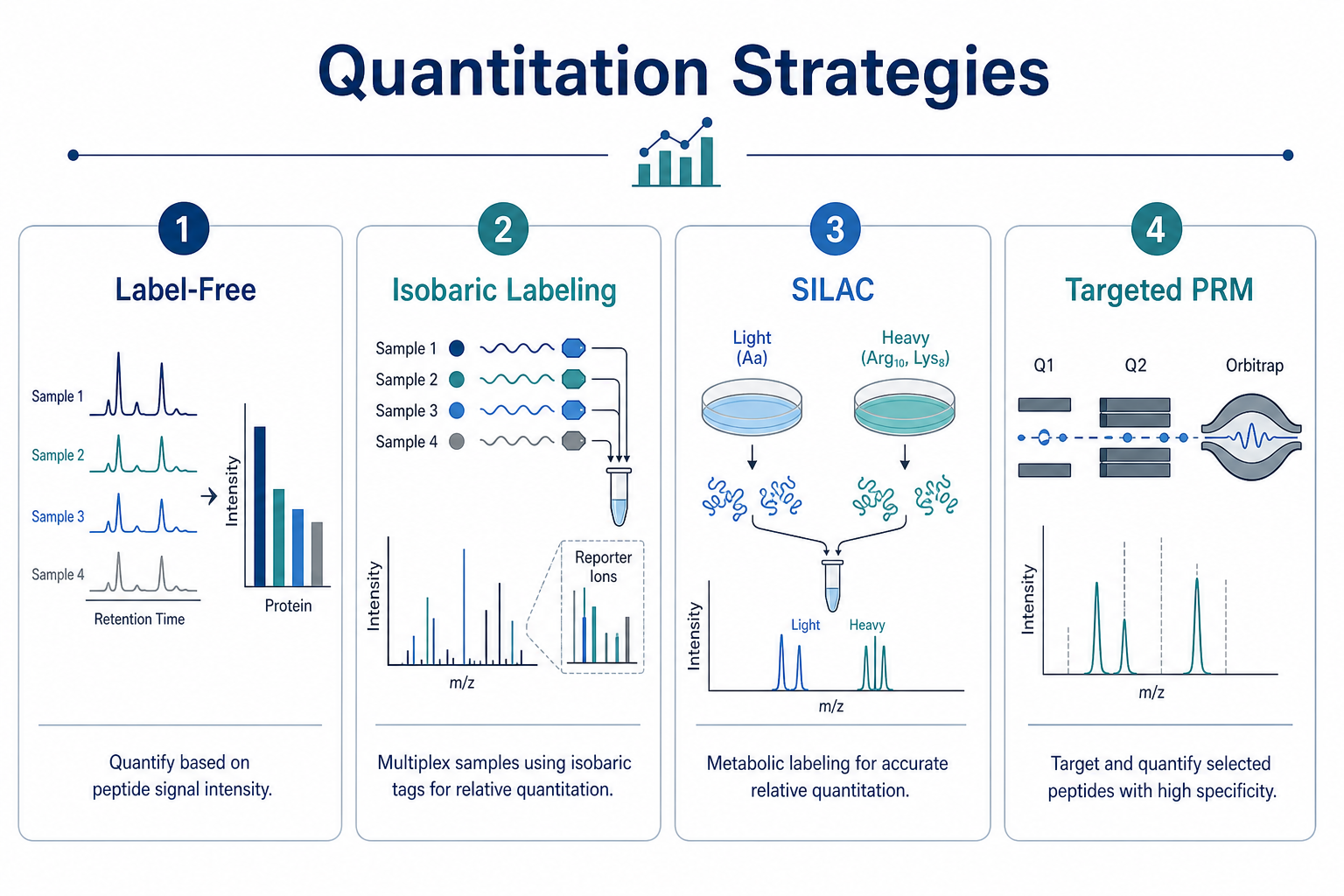
Figure 2. LC-MS proteomics quantifies proteins through label-free intensity, isobaric or metabolic labeling, and targeted PRM or MRM measurement.
From Peptide Signals to Biological Conclusions
A complete LC-MS proteomics project converts raw spectral data into interpretable tables through several linked steps.
Peptide identification filters PSMs by score and false discovery rate thresholds. Protein inference aggregates peptides into protein groups and removes redundant entries according to the reporting rules selected.
Peptide quantitation extracts ion chromatograms or reporter ion intensities and normalizes signals across samples to reduce run-to-run variation. Protein quantitation rolls peptide values up to protein groups using median, summed, or model-based methods.
Statistical comparison identifies proteins with consistent abundance changes between conditions when replicate samples are available. Functional interpretation may add pathway or network context when the study scope includes broader discovery review.
The final report should state which acquisition mode, search engine, quantitation method, and filtering thresholds were used so identification and quantitation results can be evaluated together.
Core Technical Advantages and Current Limitations
Core Technical Advantages
Sequence-level identification evidence.
LC-MS/MS provides peptide sequence support through fragment ion matching rather than mobility or binding affinity alone.
Multiplexed protein analysis.
One LC-MS run can measure many proteins and peptides in the same sample.
Flexible quantitation options.
The same platform supports discovery label-free analysis, isobaric multiplexing, and targeted peptide monitoring.
Compatibility with modified peptides.
PTM-aware database searches can localize modifications when fragment ions support residue assignment.
Scalable workflow from discovery to targeted follow-up.
Candidate proteins identified in discovery mode can move to PRM assay development without changing the core LC-MS platform.
Current Limitations
Protein inference is required in bottom-up workflows.
Identification is built from peptides, not intact proteins.
Missing values affect quantitative comparison.
Low-abundance proteins may be identified in only some replicates.
Acquisition choices create trade-offs.
Deeper MS/MS sampling improves identification but can reduce quantitative coverage per run.
Sample preparation strongly affects results.
Digestion efficiency, cleanup, and matrix contaminants influence both ID and quant performance.
Quantitation is not automatically absolute.
Relative abundance is common unless targeted absolute standards are used.
Applications Where LC-MS Identification and Quantitation Matter
LC-MS proteomics supports multiple research and development scenarios when both protein identity and abundance comparison are needed.
Discovery proteomics in cell and tissue lysates.
Label-free LC-MS/MS identifies and compares proteins across treatment groups.
Biomarker screening in biofluids.
Plasma or serum proteomics identifies candidate proteins for follow-up targeted assays.
Biologics and protein product characterization.
Peptide-level LC-MS/MS confirms protein identity and supports comparability review.
Post-translational modification studies.
Enrichment workflows combined with LC-MS/MS identify modified peptides and quantify abundance shifts.
Targeted assay development after discovery.
PRM methods monitor selected peptides from proteins identified in earlier LC-MS runs.
These application areas describe common uses. Reporting depth should match whether the project requires broad discovery or focused protein panel measurement.
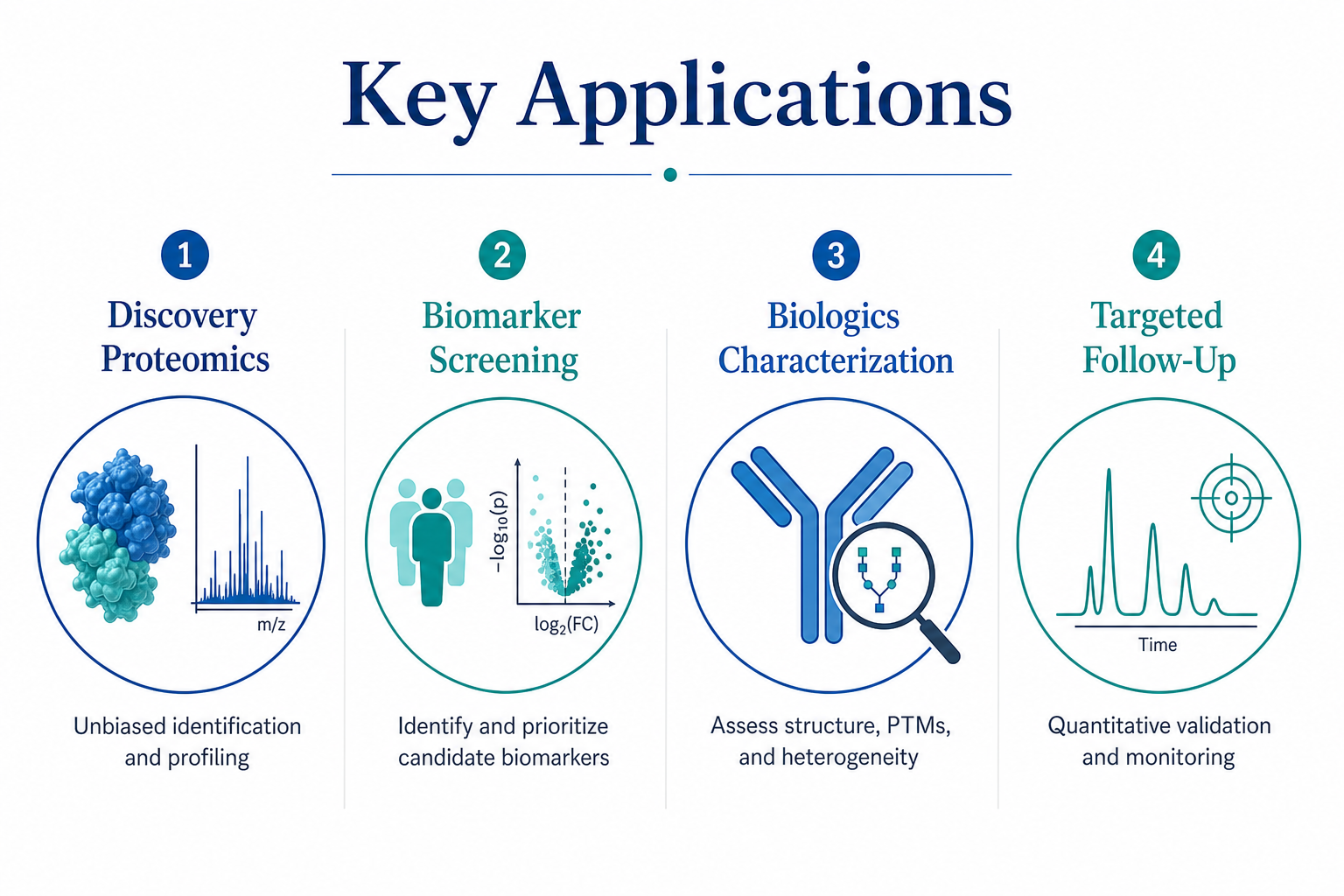
Figure 3. LC-MS proteomics supports discovery, biomarker screening, biologics characterization, and targeted protein follow-up.
Frequently Asked Questions
1. What is the difference between LC-MS and LC-MS/MS in proteomics?
LC-MS measures peptide precursor ions during chromatographic separation. LC-MS/MS adds a fragmentation step that generates product ions used for peptide sequence identification.
2. How are proteins identified if the instrument measures peptides?
Peptides are matched to protein sequences in a database through PSMs. Proteins are inferred from shared peptide evidence according to defined grouping rules.
3. How does LC-MS quantify proteins?
Quantitation is based on peptide ion intensities, spectral counts, isobaric reporter ions, metabolic labeling ratios, or targeted transition monitoring, then summarized at the protein level.
4. Is label-free quantitation enough for discovery studies?
Label-free quantitation is widely used for discovery comparison when replicate samples and consistent LC-MS performance are maintained across runs.
5. Why do quantitation results sometimes contain missing values?
Low-abundance peptides may not be fragmented or detected in every run, especially when acquisition time is shared between many precursors.
Conclusion
LC-MS and LC-MS/MS proteomics identify and quantify proteins through a linked series of separation, measurement, fragmentation, and data analysis steps. Liquid chromatography spreads peptide signals across retention time, mass spectrometry records precursor and fragment ion evidence, database searching assigns PSMs, and quantitation algorithms convert peptide measurements into protein abundance comparisons. Label-free, isobaric, metabolic labeling, and targeted PRM strategies each fit different study goals within the same analytical platform.
Reliable proteomics outcomes depend on matching acquisition mode, search parameters, and quantitation method to the sample matrix and biological question. Teams that understand how identification and quantitation are generated can evaluate report quality more effectively and design follow-up experiments with fewer repeat runs. Researchers planning LC-MS proteomics for protein identification and quantitation can contact MtoZ Biolabs to review sample type, workflow scope, and the reporting format required for the project.
How to order?




