






High Throughput MS Profiling
Introduction
A translational team may need to compare protein or metabolite profiles across dozens of clinical specimens before selecting candidates for follow-up validation. A functional genomics group may plan parallel knockout lines and require consistent molecular readouts across every sample batch. A biotech R&D manager may review service proposals that mention DIA, untargeted metabolomics, and cohort normalization without a clear view of what throughput actually changes in project design.
High throughput MS profiling uses standardized liquid chromatography and mass spectrometry workflows to measure many analytes across large sample sets in a reproducible batch format. The approach supports proteomics, metabolomics, and lipidomics when the research question requires broad molecular coverage across conditions rather than one-at-a-time target testing. Throughput depends on sample batching, acquisition mode, matrix complexity, and the level of quantitation required, not on instrument speed alone.
This article explains what high throughput MS profiling involves, how acquisition strategy affects depth and reproducibility, what outputs a profiling project should deliver, and which project decisions should be fixed before sample submission.
What High Throughput MS Profiling Means in Practice
High throughput MS profiling is the large-scale measurement of proteins, peptides, metabolites, or lipids from many samples using a shared analytical protocol. The term profiling indicates that the primary output is a comparative molecular map across sample groups. The term high throughput indicates that sample handling, LC-MS/MS acquisition, and data processing are organized for batch consistency rather than single-sample customization.
Profiling differs from targeted confirmation. A profiling experiment generates discovery-stage or monitoring-stage feature lists across a cohort. Targeted MRM or PRM assays later measure predefined analytes with higher selectivity when a smaller panel is already chosen.
Profiling also differs from deep structural characterization of one molecule. Intact mass analysis, peptide mapping for sequence confirmation, and PTM site mapping answer identity and structure questions on defined materials. High throughput MS profiling answers which molecular features change across many samples under defined conditions.
The same LC-MS/MS platform can support both goals, but project design, sample amount, and reporting format are not interchangeable.
Scientific Principles That Enable Throughput
Throughput in MS profiling comes from three linked design choices: standardized sample preparation, efficient acquisition, and batch-aware data processing.
Standardized sample preparation reduces run-to-run variation when many lysates, biofluids, tissue extracts, or culture supernatants enter the same workflow. Digestion, extraction, cleanup, and loading amounts are matched across the cohort so intensity differences reflect biology rather than prep drift.
Efficient acquisition determines how many analytes are measured per injection. Data-dependent acquisition supports discovery depth through dynamic precursor selection. Data-independent acquisition supports more reproducible quantitation across large batches. Untargeted small-molecule profiling relies on feature alignment and annotation tiers rather than full MS/MS coverage for every compound in every sample.
Batch-aware data processing converts raw files into comparable tables with false discovery control, missing value rules, and normalization matched to the study design.
Standard Workflow From Sample Cohort to Profiling Matrix
Most high throughput MS profiling projects follow a linked workflow regardless of omics layer.
Sample intake defines the matrix, group structure, and replicate plan. A serum cohort, cell-line panel, tissue biopsy set, or microbial culture collection each requires a matched extraction strategy.
Sample preparation converts the matrix into an LC-compatible extract. Proteins are digested to peptides for proteomics profiling. Polar metabolites and lipids are extracted under conditions matched to chemical class and downstream annotation goals.
Batch LC-MS/MS separates analytes and records survey and tandem spectra or DIA windows across the sample queue. Queue design matters because bracketing standards, pooled QC samples, and injection order influence drift correction.
Data processing assigns features to peptides, proteins, metabolites, or lipids and builds a sample-by-feature matrix with statistical filters applied consistently.
Biological review links the matrix to pathways, candidate lists, or follow-up assay design. Profiling output is exploratory or semi-targeted until orthogonal validation is performed.
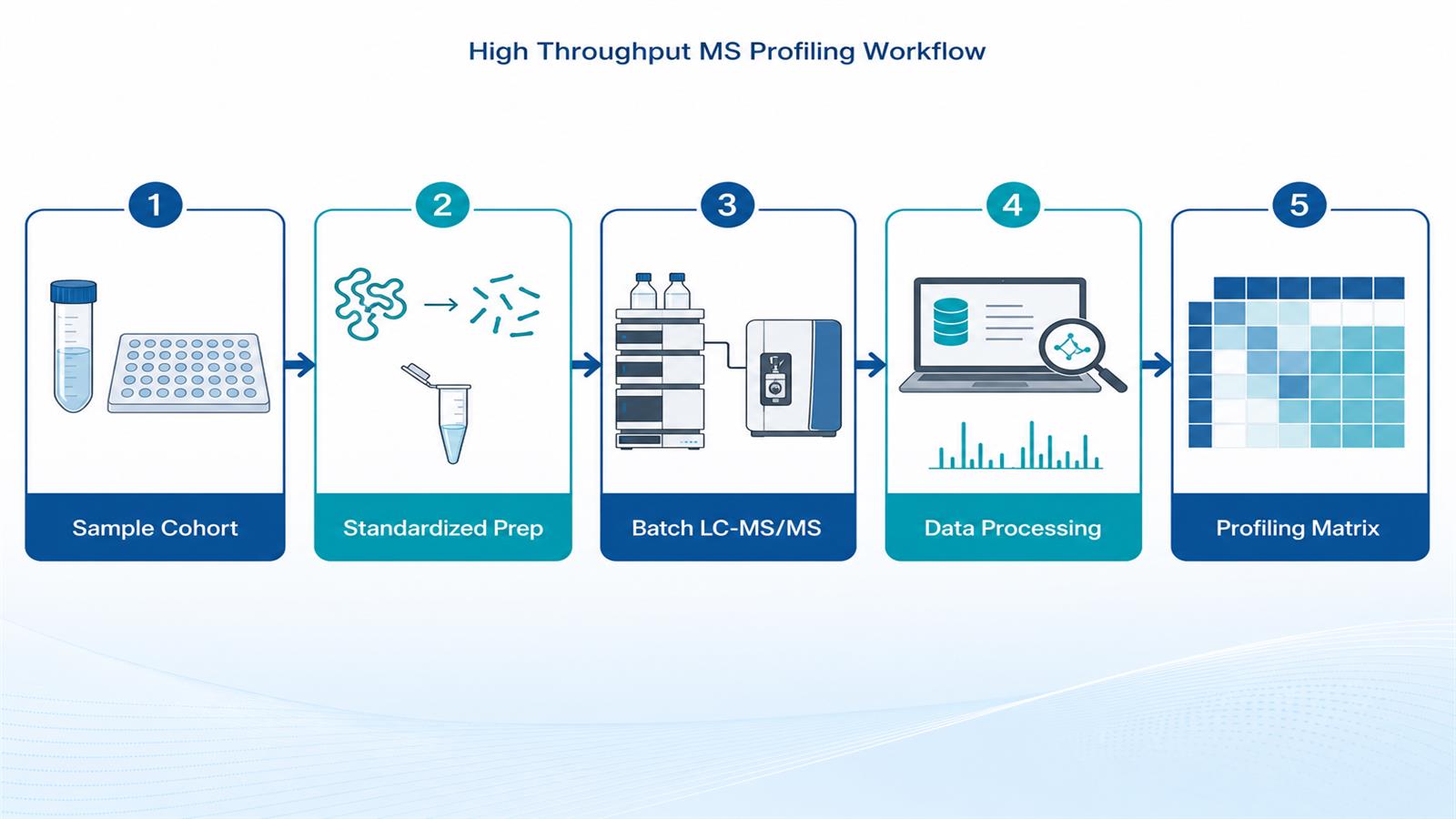
Figure 1. High throughput MS profiling links cohort intake, standardized preparation, batch LC-MS/MS, and a comparable profiling matrix.
Related Services
Untargeted Metabolomics Service
DIA based Protein Quantitative Service
Untargeted Lipidomics Analysis Service
Integrative Proteomics-Metabolomics Analysis Service
Researchers planning a cohort profiling project can review sample type, acquisition mode, and expected deliverables with MtoZ Biolabs before the first batch is queued.
Acquisition Strategies and Where Each Fits
Acquisition mode is the main technical fork in high throughput MS profiling because it defines the balance between coverage, reproducibility, and follow-up effort.
Data-dependent acquisition is suited to discovery when the goal is to identify as many proteins or features as possible in complex mixtures. Precursor selection varies by run, so low-abundance features may be missed in some samples even when the same workflow is repeated.
Data-independent acquisition records fragment information across defined windows and supports more consistent peptide or precursor quantitation across large cohorts. DIA-based profiling is often chosen when group comparison matters as much as identification depth.
Label-based multiplexing strategies combine samples using isobaric tags or stable isotope labeling when controlled mixing and channel correction are built into the design. These approaches increase the number of comparisons per instrument day but require upfront labeling QC and careful ratio normalization.
Untargeted metabolomics and lipidomics profiling rely on feature alignment and annotation confidence tiers rather than peptide database searching. Retention time, accurate mass, and MS/MS match levels should be reported with clear annotation boundaries.
Targeted MRM or PRM assays are usually a second phase. They measure a defined panel after profiling or literature review narrows the candidate set.
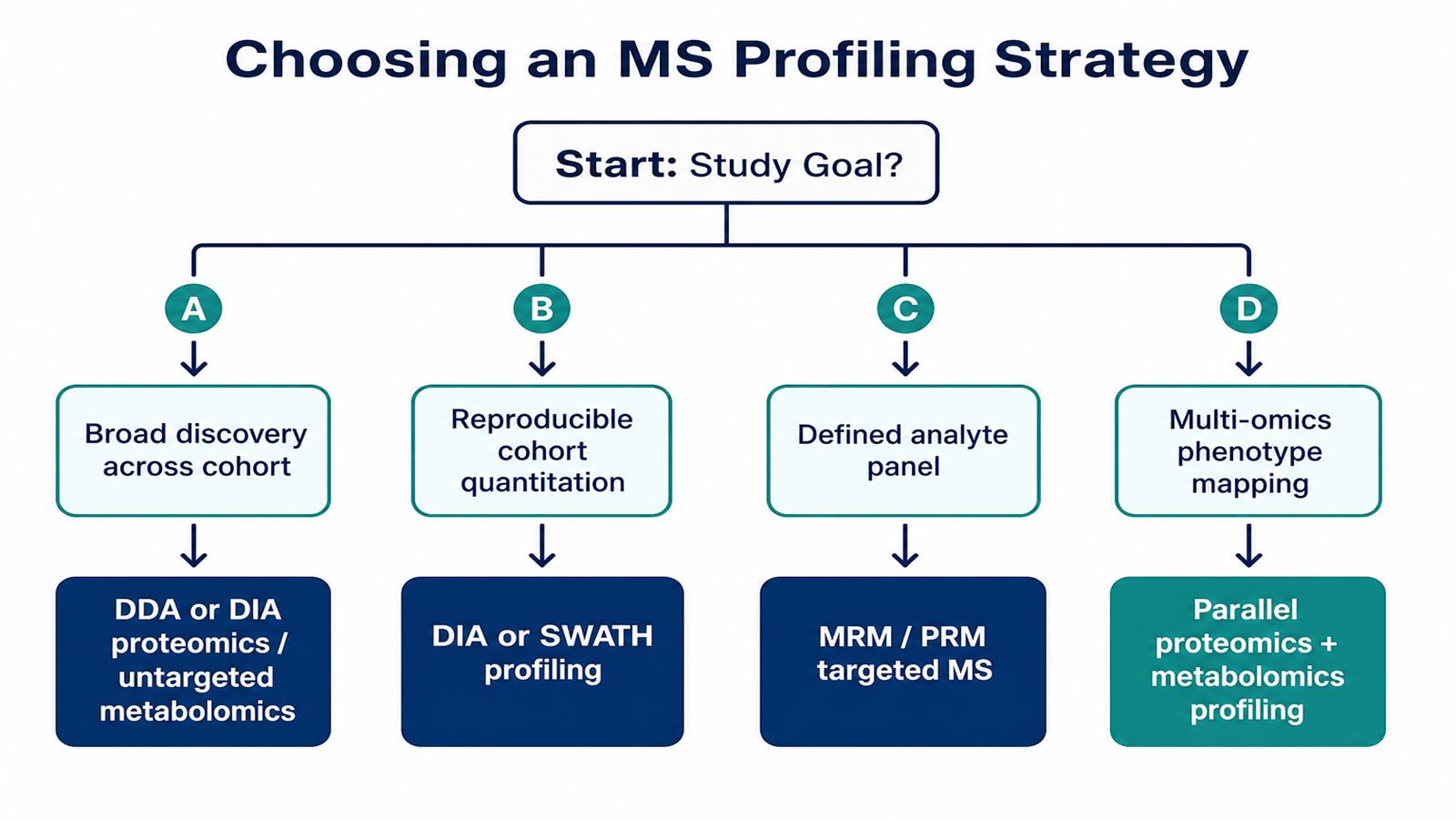
Figure 2. Acquisition strategy in high throughput MS profiling should follow study goal, cohort size, and follow-up validation plan.
Comparison of Common Profiling Approaches
|
Profiling Goal |
Typical Acquisition |
Primary Output |
Best Follow-Up |
|---|---|---|---|
|
Broad protein discovery in complex lysate |
DDA LC-MS/MS |
Protein and peptide ID tables |
Targeted PRM on shortlisted proteins |
|
Reproducible protein comparison across many samples |
DIA or SWATH |
Quantitative protein matrix |
Pathway review and selected validation |
|
Polar metabolite phenotype mapping |
Untargeted LC-MS |
Annotated feature tables |
Targeted metabolite assay on key features |
|
Lipid class remodeling across conditions |
Untargeted lipidomics |
Lipid feature and class summaries |
Targeted lipid panel where needed |
|
Defined monitoring after discovery |
MRM or PRM |
Panel quantitation report |
Longitudinal or expanded cohort testing |
The table summarizes common starting points. Final method choice should reflect matrix complexity, sample amount, and whether the project stops at profiling or continues into validation.
Critical Parameters That Affect Profiling Quality
Sample amount and matrix complexity set the practical depth ceiling. Plasma, serum, and tissue extracts differ in dynamic range and chemical background, so a cohort design that works for cell lysate may need revised cleanup for biofluid profiling.
Biological replicates should be planned before the batch queue is built. Pooled QC injections support drift monitoring but do not replace biological replication. Missing value rules, annotation level, and batch randomization should also be defined before statistics begin because profiling matrices often contain incomplete features across samples.
Data Outputs and Interpretation Boundaries
A useful high throughput MS profiling report should contain more than a raw feature export.
Typical deliverables include a filtered sample-by-feature matrix with clear missing value and normalization notes. Identification tables should separate peptide evidence from protein inference. Metabolomics and lipidomics outputs should report annotation level and adduct form where applicable. Group comparison summaries should state the statistical test, multiple testing correction, and effect size metric used. A shortlist of candidates for follow-up should distinguish high-priority features from exploratory hits.
Interpretation should remain aligned with project stage. Profiling identifies candidates and patterns across groups. It does not by itself establish mechanistic causation, clinical utility, or regulatory claim support. Validation by targeted MS, orthogonal chemistry, or independent cohort testing is required when conclusions must extend beyond the profiling dataset.
Technical Value and Current Limitations
Technical Value
Parallel molecular readouts across many samples support hypothesis generation in disease modeling, treatment response studies, and multi-condition screens.
Standardized batch workflows improve comparability when sample queues are large enough to benefit from shared preparation and acquisition templates.
DIA-style acquisition improves quantitative consistency across cohorts when discovery depth and group comparison are both required.
Current Limitations
Low-abundance analytes in complex matrices may remain below detection in profiling mode even when the batch workflow is well controlled.
Annotation confidence varies by chemical class and database completeness, especially in untargeted metabolomics.
Batch effects can persist after normalization when study design does not include appropriate QC structure.
High throughput design trades some per-sample customization for queue efficiency, which may not suit one-off structural confirmation projects.
Profiling results require follow-up validation before they should be treated as confirmed targets in translational or CMC decision documents.
Research Scenarios That Commonly Use High Throughput MS Profiling
Drug treatment studies profile proteome or metabolome shifts across dose or time conditions before narrowing to a monitoring panel. Gene knockout panels connect genetic perturbation with molecular phenotype across many lines. Biofluid studies screen plasma, serum, or cerebrospinal fluid for candidate changes before assay development. Multi-omics programs combine protein and metabolite profiling when one molecular layer is unlikely to explain the observed phenotype.
Project Planning Checklist Before Service Evaluation
Define the biological question in comparison terms, including groups, replicates, and whether the project requires identification only, relative quantitation, or both. Fix the sample matrix early because extraction, storage history, and allowable sample amount differ for cells, tissues, biofluids, and culture supernatants. Choose the omics layer that matches the decision, and decide whether the project ends at profiling or continues to targeted validation. A concise sample manifest with group labels and handling constraints reduces rework before the first LC-MS/MS batch is scheduled.
Frequently Asked Questions
Is high throughput MS profiling the same as quantitative proteomics?
No. Quantitative proteomics refers to measuring relative or absolute abundance changes for proteins or peptides. High throughput MS profiling describes the batch-oriented project format used to generate those comparisons, or analogous metabolite and lipid maps, across many samples. A profiling project may include quantitative proteomics, untargeted metabolomics, or lipidomics depending on the study goal.
When should a project use DDA instead of DIA for profiling?
DDA is often chosen when maximal identification depth in complex mixtures is the primary goal and some run-to-run variability in precursor selection is acceptable. DIA is often chosen when reproducible quantitation across a large cohort matters as much as discovery breadth. The better choice depends on matrix complexity, sample number, and whether follow-up targeted assays are already planned.
How many samples are needed for a meaningful profiling study?
There is no universal number because effect size, matrix noise, and downstream statistics all matter. Profiling studies should include biological replicates within each group and, when possible, pooled QC samples for drift monitoring. Consultation before sample submission helps match replicate count to the comparison the study must support.
Can one profiling dataset support biomarker claims?
Profiling can generate candidate features for follow-up, but candidate status and validated biomarker status are not the same. Additional targeted measurement, independent cohort testing, and fit-for-purpose analytical validation are required before biomarker claims should be advanced beyond exploratory findings.
What information should be ready before requesting a quote?
Prepare sample type, number of samples and groups, preferred omics layer, expected output such as identification tables or group comparison matrices, and whether follow-up targeted assays may be needed. Those details allow a service scope review without unnecessary rework.
Closing Summary
High throughput MS profiling supports large-scale molecular comparison when standardized LC-MS/MS workflows, clear acquisition choices, and batch-aware data processing are matched to the research question. The value lies in generating a comparable profiling matrix across a cohort, not simply running more injections in sequence.
For proteomics, metabolomics, or combined multi-omics profiling projects, MtoZ Biolabs can review sample matrix, cohort design, acquisition mode, and expected deliverables before the first batch enters the queue. Share your sample type, group structure, target omics layer, and validation goal through the project inquiry form to start a scope discussion.
How to order?




