






Guide to PHIP-Seq: Experimental Design, Workflow, and Execution Standards
Introduction
PHIP-Seq experimental design often determines whether an antibody profiling project produces interpretable candidates or a difficult list of enriched peptides. In autoimmune disease research, infectious disease serology, vaccine response studies, and biomarker discovery, researchers may have valuable serum or plasma samples but limited tolerance for repeat experiments. A weak cohort structure, mismatched peptide library, inconsistent sample handling, or missing control can affect the entire dataset before sequencing begins.
The main challenge is that PHIP-Seq connects biological recognition with several technical layers. A phage display peptide library defines the searchable antigen space. Antibody-containing samples drive binding specificity. Immunoprecipitation captures antibody-bound phage particles. Sequencing and enrichment analysis convert recovered phage DNA into peptide-level signals. Each layer must be planned before execution, because late-stage bioinformatics cannot fully correct poor sample grouping or inadequate negative controls.
For teams preparing antibody profiling, epitope discovery, or exploratory serology projects, MtoZ Biolabs can review PHIP-Seq experimental design before precious samples are committed to a full run. A technical review can help align the research question, sample set, library strategy, workflow controls, QC readouts, and validation plan.
Related Services
| Research Need | Recommended Service |
| Need broad antibody reactivity profiling from serum or plasma | PhIP-Seq Antibody Analysis Service |
| Need peptide-level epitope discovery after screening | Antibody Epitope Mapping Service |
| Need targeted validation of candidate peptide regions | Peptide Array-Based Epitope Mapping Service |
| Need antibody sequence support for discovery programs | Antibody Sequencing Service |
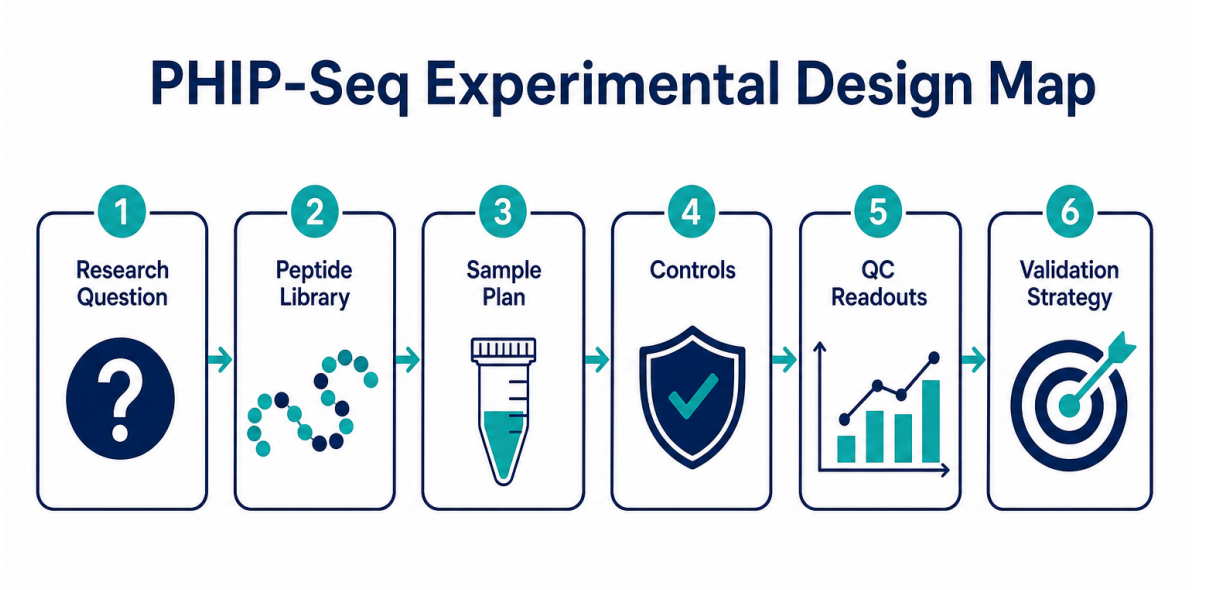
Start with the Research Question
A useful PHIP-Seq study begins with a specific experimental question. A project designed to identify candidate autoantigens does not need the same library, cohort structure, or validation plan as a vaccine response study. A study comparing exposed and unexposed groups also differs from a focused epitope mapping project for one pathogen protein.
The research question should define three items. First, the antibody source should be clear, such as serum, plasma, or another antibody-containing fluid. Second, the antigen space should be defined, such as a viral proteome, human proteome, pathogen panel, allergen panel, tumor- associated antigen set, or custom peptide library. Third, the comparison should be explicit. Researchers may compare disease and control groups, baseline and post-treatment samples, vaccinated and unvaccinated cohorts, or responder and non-responder groups.
If the project cannot state the comparison, PHIP-Seq may still produce data, but interpretation becomes fragile. Enriched peptides need a reference point. Without matched controls, baseline samples, or technical replicates, a peptide signal may reflect background binding, library imbalance, or cohort-specific noise—not meaningful antibody recognition.
Choose a Library That Matches the Biological Scope
The phage display peptide library is the boundary of the experiment. PHIP-Seq can only detect antibody binding to peptide sequences represented and displayed in the library. This makes library selection one of the most important design decisions.
A broad human proteome library can support autoantibody discovery, but the resulting dataset may require careful filtering and strong controls. A viral or pathogen library can support infection- history research or vaccine response analysis. A custom tiled library can focus on proteins, domains, variants, or regions linked to a specific hypothesis. The best library is not always the largest library. The best library is the one that covers the relevant antigen space with enough resolution and manageable background.
Library design should consider peptide length, tiling overlap, sequence redundancy, clone representation, and expected epitope type. Short peptides can improve localization of linear epitopes, while longer peptides may retain more sequence context. Dense tiling can increase mapping resolution but may raise cost and data complexity. Researchers should also remember that peptide libraries are less suitable for conformational epitopes, glycan-dependent epitopes, lipid antigens, or structure-dependent binding.
Build the Sample Plan Before Execution
Sample planning should be completed before laboratory work begins. Serum and plasma are common inputs because circulating antibodies are accessible and usually compatible with antibody profiling. However, sample history still matters. Collection tube, storage temperature, freeze-thaw cycles, hemolysis, lipemia, contamination, and storage duration can affect assay behavior.
Groups should be balanced during processing. If all disease samples are handled on one day and all control samples on another day, batch effects can resemble biological differences. Sample randomization, consistent input volume, matched processing conditions, and metadata tracking reduce this risk.
Controls are part of the sample plan, not an optional add-on. A no-serum control helps detect bead and phage background. Input library sequencing helps measure starting representation. Healthy or baseline controls help define expected background reactivity. Technical replicates show whether enrichment is reproducible. Positive controls, when available, confirm that the workflow can recover expected antibody-peptide interactions.
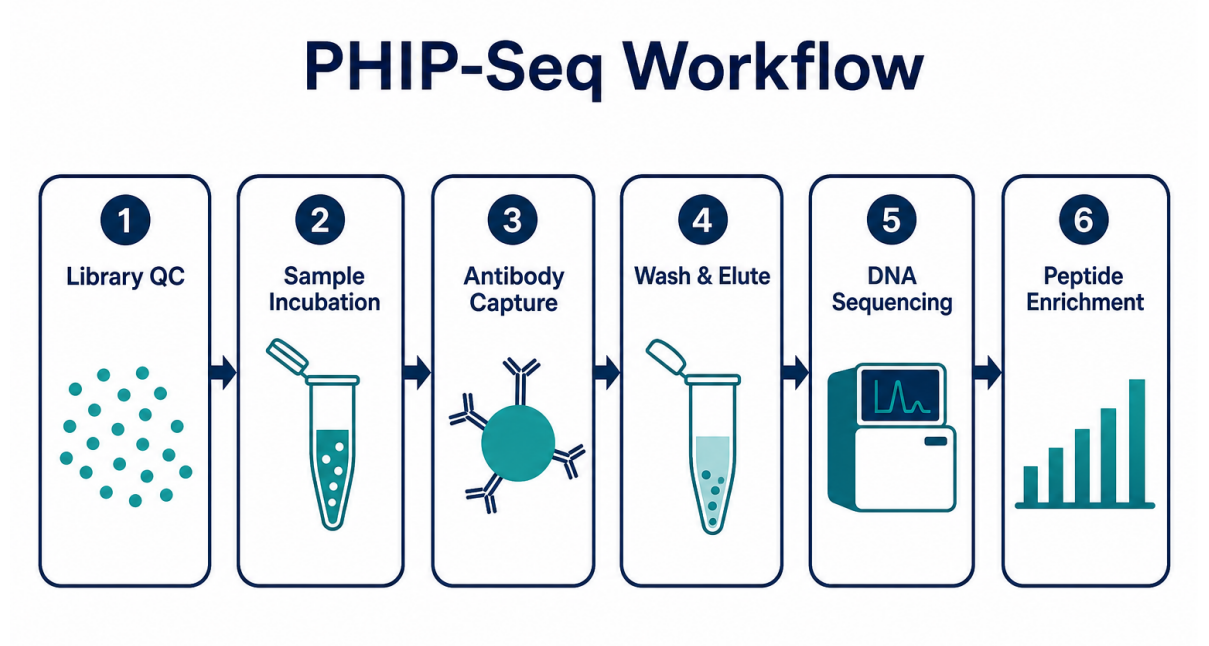
Figure 2. A controlled PHIP-Seq workflow moves from library QC and sample setup to antibody binding, capture, sequencing, and enrichment analysis.
Execute the Workflow as a Controlled Chain
The PHIP-Seq workflow should be treated as a controlled chain rather than a set of isolated steps. Library preparation, antibody binding, immunoprecipitation, washing, amplification, sequencing, and analysis all influence the final enrichment profile.
During antibody-library incubation, conditions should support specific binding without encouraging nonspecific interactions. Incubation time, temperature, mixing, buffer composition, serum dilution, and library input should be consistent across the study. A focused pilot can help evaluate whether the planned condition preserves signal and controls background before the full cohort is processed.
Immunoprecipitation converts antibody binding into recovered phage DNA. Capture reagent selection, bead capacity, blocking strategy, wash number, wash stringency, and elution conditions affect sensitivity and specificity. Mild washes may preserve weak binders but increase background. Harsh washes may reduce carryover but lose low-affinity antibody-peptide interactions. The best condition depends on the project goal and expected antibody signal.
Sequencing must provide enough depth for the library and study design. Low sequencing depth can produce unstable enrichment estimates, especially for large libraries or low-abundance signals. Read mapping should use the correct library reference, and analysis should account for input distribution, negative controls, replicate behavior, and multiple testing.
Define QC and Acceptance Standards
Execution standards should include measurable QC checkpoints. Without predefined acceptance criteria, teams may spend too much time interpreting data that should first be evaluated for technical quality.
Useful QC readouts include library diversity, clone representation, recovered DNA yield, sequencing library quality, total reads, mapped read rate, peptide coverage, background enrichment, replicate correlation, and positive-control recovery. None of these metrics should be interpreted alone. High recovered DNA may indicate strong capture, but high recovery can also reflect nonspecific pull-down. A smaller yield with cleaner enrichment and stable replicates may be more useful.
Acceptance standards should match the project. A discovery study may tolerate broader candidate lists if controls and validation are planned. A comparison study requires stronger replicate behavior and group-level consistency. A focused epitope study needs enough peptide coverage to localize candidate regions. In every case, QC should answer the same question: can the dataset support the intended biological interpretation?
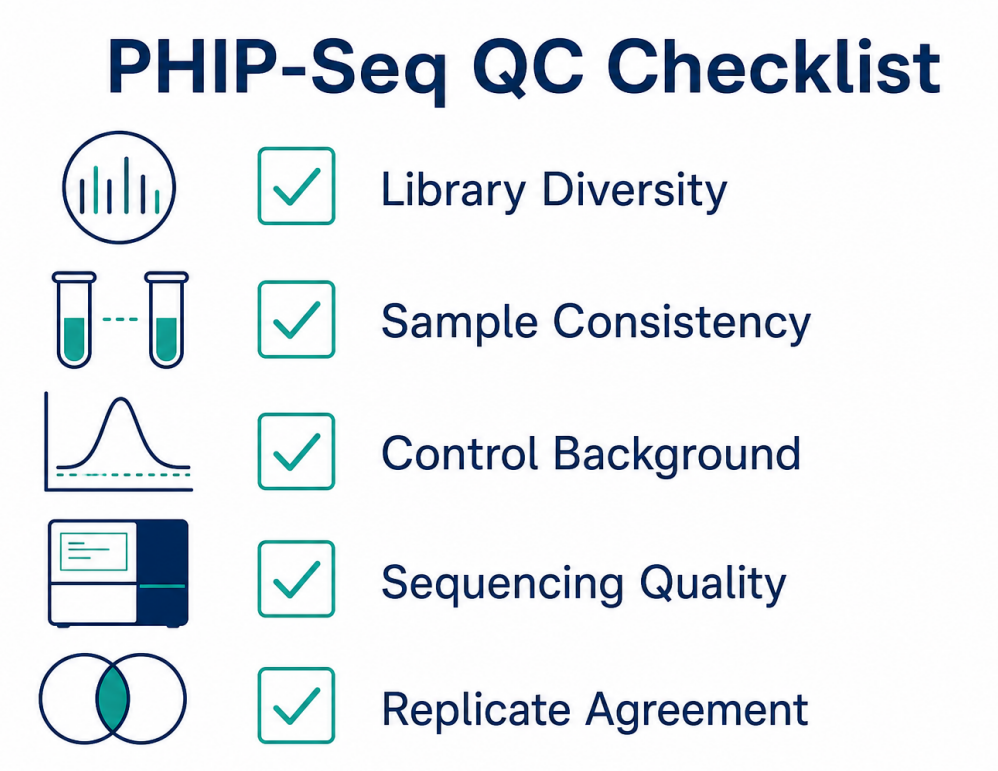
Figure 3. Practical PHIP-Seq QC standards should evaluate library quality, sample consistency, capture performance, sequencing quality, and enrichment reliability.
Interpret Results with Validation in Mind
PHIP-Seq results are strongest when they are treated as discovery or prioritization data. Enriched peptides can point to candidate epitopes, antigen regions, pathogen proteins, cross-reactive motifs, or sample-group signatures. However, enriched peptides are not automatically validated biomarkers or confirmed causal targets.
Candidate prioritization should consider enrichment strength, background behavior, replicate consistency, neighboring peptide support, biological plausibility, cohort metadata, and statistical significance. A single high-ranking peptide in one sample may be interesting, but a reproducible region across multiple samples or related peptides is usually more actionable.
Validation should be planned early. Depending on the question, follow-up may include peptide arrays, ELISA, Western blotting, targeted immunoassays, competition assays, or protein-based binding tests. If the suspected epitope is conformational, structure-aware methods may be needed because a linear peptide library may not represent the native binding surface.
Common Execution Mistakes to Avoid
One common mistake is choosing a broad library without a clear interpretation plan. A broad library can be powerful, but the result may become difficult to prioritize if the cohort design is weak or metadata are incomplete.
Another mistake is treating controls as expendable when sample volume is limited. Removing controls may preserve sample volume, but the dataset becomes harder to trust. In many projects, a smaller but well-controlled design is more useful than a larger uncontrolled run.
Researchers should also avoid changing multiple execution parameters during troubleshooting without a defined comparison. Changing serum dilution, bead amount, wash stringency, and sequencing depth at the same time may produce better data, but the reason for improvement remains unclear. A staged pilot is more informative.
Finally, teams should avoid overclaiming results. PHIP-Seq can support antibody profiling and candidate discovery, but downstream validation is still necessary when the goal is biomarker development, diagnostic translation, or mechanistic proof.
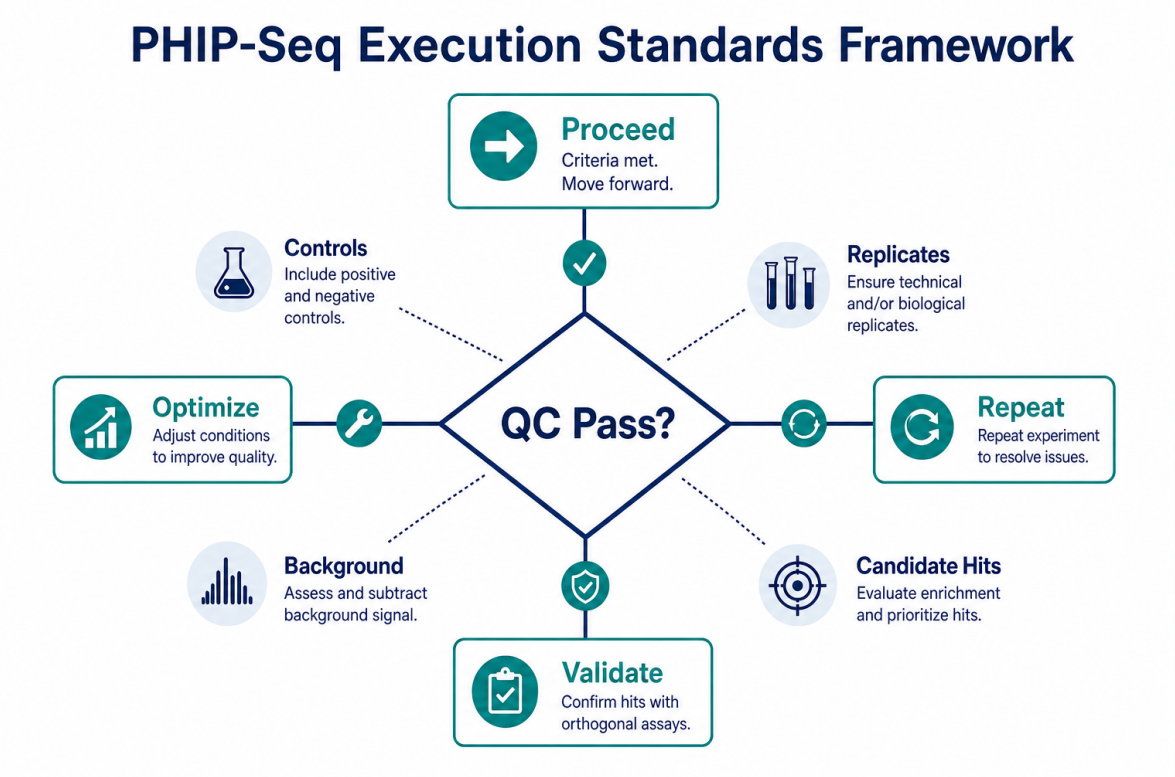
Figure 4. A practical execution framework helps teams decide whether to proceed, optimize, repeat, or validate based on QC and study goals.
What a Strong PHIP-Seq Report Should Include
A useful report should include more than a ranked peptide table. Researchers should expect a clear description of the library, sample groups, controls, workflow conditions, sequencing metrics, mapping strategy, enrichment method, QC results, statistical comparisons, and candidate interpretation.
For publication-oriented studies, the report should make the evidence chain easy to review. The report should show how raw sequencing reads become peptide counts, how peptide counts become enrichment signals, and how enrichment signals become candidate regions or biological patterns. Transparent reporting supports manuscript preparation, internal review, and follow-up experiment planning.
MtoZ Biolabs supports PHIP-Seq projects with attention to study design, sample handling, workflow execution, sequencing analysis, and candidate interpretation. Researchers can use this support to evaluate feasibility, reduce avoidable reruns, and plan validation before full-scale antibody profiling begins.
Frequently Asked Questions
1. What is the most important part of PHIP-Seq experimental design?
The most important part is matching the research question to the peptide library, sample groups, controls, and validation plan. A technically successful run can still be difficult to interpret if the design does not support the comparison.
2. How many controls are needed for a PHIP-Seq workflow?
The exact number depends on the project, but most studies benefit from input library sequencing, no-serum controls, biological controls, technical replicates, and positive controls when available. Controls help separate antibody-specific enrichment from background.
3. Can PHIP-Seq identify conformational epitopes?
PHIP-Seq is generally strongest for linear epitopes and motif-like recognition because the method uses displayed peptides. Conformational epitopes usually require protein-based, structural, or orthogonal validation methods.
4. Should PHIP-Seq be run as a pilot before a full cohort?
A pilot is useful when the library is new, sample volume is limited, expected signal is weak, or assay conditions are uncertain. A pilot can test sample quality, capture behavior, background, sequencing depth, and replicate consistency.
5. How should PHIP-Seq hits be validated?
Candidate peptides can be validated with peptide arrays, ELISA, Western blotting, targeted immunoassays, or protein-based binding tests. The validation method should match the final research or translational goal.
Conclusion
PHIP-Seq experimental design should begin before the first sample is processed. A reliable study connects the research question, peptide library, sample plan, control structure, workflow conditions, QC standards, sequencing analysis, and validation strategy. When these elements are aligned, PHIP-Seq can provide useful antibody profiling data and prioritize candidate peptide regions for follow-up.
For researchers planning autoimmune, infectious disease, vaccine response, or biomarker discovery studies, the next step is to evaluate whether the sample set and library strategy can support the intended comparison. Contact MtoZ Biolabs to discuss PHIP-Seq workflow feasibility, execution standards, and validation planning before launching a full-scale study.
How to order?




