






Glucomannan Analysis Service
- Molecular weight and distribution results
- Quantitative monosaccharide composition and ratio table
- Glycan chain structure and glycosidic linkage analysis data
- Sample purity and impurity evaluation report
- Comprehensive analytical conclusions and spectral attachments
Glucomannan is a natural high-molecular-weight polysaccharide mainly composed of glucose and mannose linked by β-1,4-glycosidic bonds. It is widely found in konjac, bamboo shoots, taro, lily, and in the cell walls of certain microorganisms. As a water-soluble dietary fiber, glucomannan has strong water absorption and viscosity characteristics and is widely used in the food industry, pharmaceutical formulations, biomaterials, and functional health products.
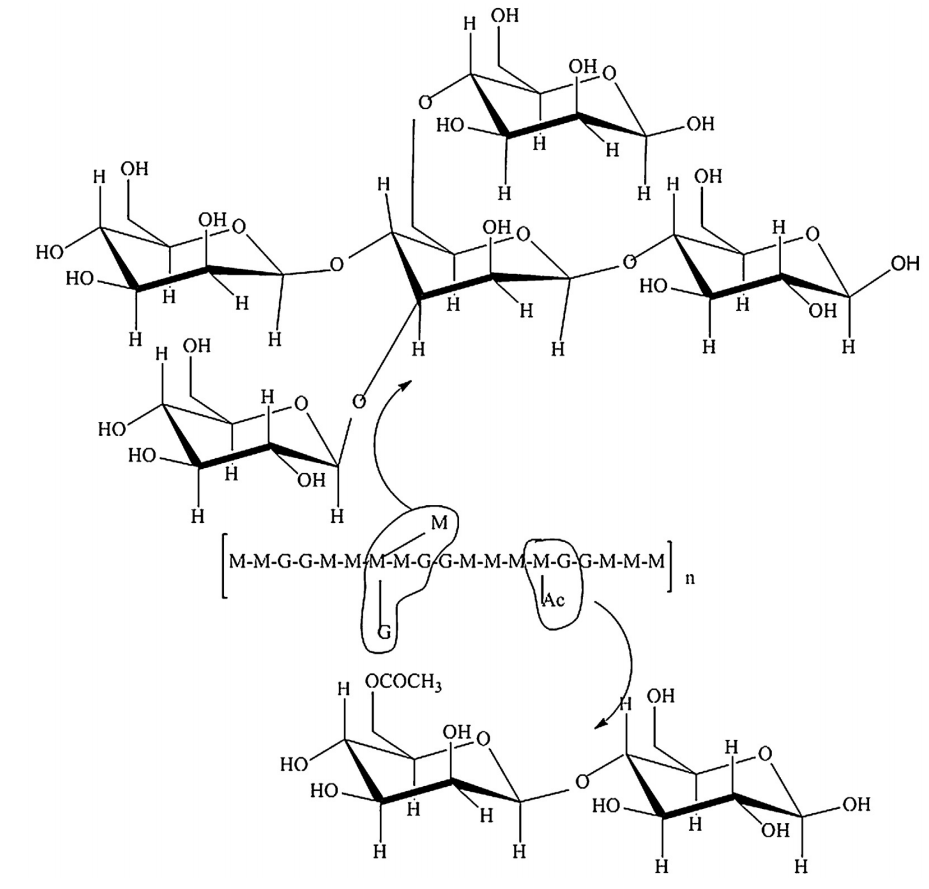
In life sciences and food chemistry research, systematic analysis of the structural and physicochemical properties of glucomannan is of great significance for understanding its physiological functions, evaluating its quality, and developing new applications. Its molecular weight, branching structure, and glycosidic linkage types directly determine its solubility, viscosity, gel properties, and biological activity. Therefore, glucomannan analysis is not only an important means of quality control but also a key step in revealing its structure–function relationship.
Leveraging advanced analytical platforms, MtoZ Biolabs offers a high-resolution and reproducible glucomannan analysis service that enables accurate molecular weight determination, detailed glycan structural characterization, and precise purity evaluation of glucomannan samples. This service delivers comprehensive and dependable analytical data to support research institutions, food manufacturers, and functional product developers.
Services at MtoZ Biolabs
The glucomannan analysis service of MtoZ Biolabs aims to help clients comprehensively understand the structural composition and physicochemical characteristics of glucomannan, providing scientific basis for research, development, and quality control. Our main services include the following:
1. Molecular Weight Determination and Distribution Analysis
Using gel permeation chromatography (GPC) or size-exclusion chromatography coupled with multi-angle light scattering (SEC-MALS), the number-average molecular weight (Mn), weight-average molecular weight (Mw), and polydispersity index (PDI) of samples are measured to evaluate their degree of polymerization and molecular distribution characteristics, providing a basis for studying solubility and physical properties.
2. Monosaccharide Composition and Ratio Analysis
After acid or enzymatic hydrolysis, the samples are analyzed by HPLC-RID/ELSD or GC-MS to accurately determine the molar ratio of glucose and mannose, evaluating the compositional purity and consistency of raw materials.
3. Glycan Chain Structure and Glycosidic Linkage Analysis
Fourier-transform infrared spectroscopy (FT-IR), one- and two-dimensional nuclear magnetic resonance (1D/2D NMR), and mass spectrometry fragmentation analysis are used to analyze the glycan chain structure of glucomannan, confirming the main β-1,4 linkage and possible branching or substituent structures, providing structural basis for understanding its viscosity and gel properties.
4. Purity and Impurity Analysis
HPLC-UV and UPLC-ELSD methods are used to detect proteins, ash, residual small molecules, and other polysaccharide components in the samples to ensure that the sample quality meets research and application standards.
Analysis Workflow
1. Sample Pretreatment: According to the sample type (powder, extract, or purified product), deproteinization, decolorization, lyophilization, or dialysis is performed.
2. Hydrolysis or Enzymatic Digestion: Acid hydrolysis or specific mannanase digestion is used to obtain monosaccharide or oligosaccharide components.
3. Chromatographic Detection and Separation: HPLC, GC-MS, and SEC-MALS are used for separation and quantitative detection of hydrolysates or original polysaccharides.
4. Structural Analysis: NMR, FT-IR, and mass spectrometry fragmentation data are combined to analyze glycan chain structures, glycosidic linkages, and branching characteristics.
5. Result Verification and Report Generation: Data are reviewed by experienced analysts, and a standardized and structured analysis report is produced.
Service Advantages
1. Multi-Platform Integrated Analysis
MtoZ Biolabs utilizes HPLC, GC-MS, LC-MS/MS, SEC-MALS, and NMR systems within the glucomannan analysis service to provide comprehensive analysis, from molecular weight and monosaccharide composition to spatial structure. The integration of multiple complementary technologies enhances accuracy and depth, catering to the varied needs of research and industry.
2. Targeted Analytical Design
Based on sample source (plant tissue, microbial product, or food raw material) and research objectives (structural characterization, process comparison, or quality control), MtoZ Biolabs provides customized analytical strategies, saving experimental time and improving data value for clients.
3. Experienced Technical Team
Our team has extensive experience in polysaccharide chemistry and mass spectrometry analysis, can accurately interpret complex spectra, and provides professional result interpretation and research suggestions to help clients better understand the scientific meaning behind the data.
4. One-Time Charge
Our pricing is transparent, with no hidden fees or additional costs.
Applications
☑️ Food Science and Nutrition Research: Used to study the composition and functional characteristics of glucomannan under different raw materials and process conditions.
☑️ Pharmaceutical and Biomaterial Development: Evaluates structure–performance relationships in sustained-release carriers, gel systems, or tissue engineering materials.
☑️ Functional Health Product Evaluation: Used to characterize raw material consistency and correlation with biological activity.
☑️ Process Optimization and Quality Control: Compares the effects of different extraction and purification methods on polysaccharide molecular structure and purity.
☑️ Basic Biochemical Research: Explores the synthesis mechanism and metabolic regulation of glucomannan in plants and microorganisms.
Deliverables
If you are conducting glucomannan-related research or wish to perform systematic characterization of the structure and performance of your samples, please contact MtoZ Biolabs. We will provide scientific analytical processes and reliable data support to assist your research and product development.
Contact us now to learn more about glucomannan analysis service.
How to order?




