






Glucan Analysis Service
MtoZ Biolabs provides a high-sensitivity and comprehensive glucan analysis service that integrates multiple analytical platforms to achieve precise quantification, structural elucidation, and purity evaluation of glucans, helping clients fully characterize the composition and functional properties of their samples and offering reliable data support for research in food science, biopharmaceuticals, and biomaterials.
What is Glucan?
Glucans are polysaccharides composed of glucose monomers linked by different glycosidic bonds such as β-1,3, β-1,6, or α-1,4. They are widely distributed in plants, fungi, yeast, bacteria, and algae. Based on their structural characteristics, glucans can be classified into β-glucans, α-glucans, and mixed-type glucans. Different types of glucans perform various functions in living organisms. β-glucans are major components of fungal and yeast cell walls and exhibit physiological activities such as immune regulation, anti-tumor, and lipid-lowering effects. α-glucans serve as important energy storage forms in plants and animals, such as starch and glycogen.
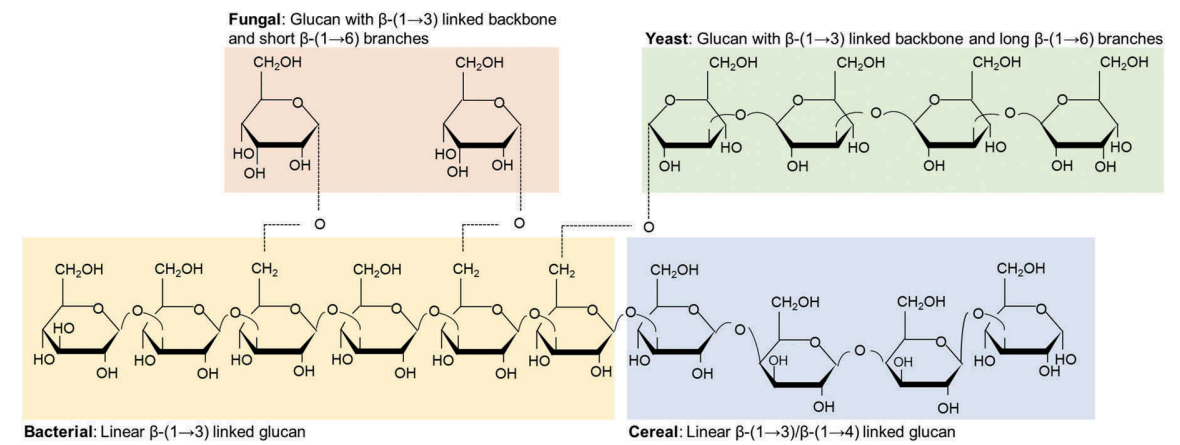
Figure 1. Glucans and Their Chemical Structures
With the advancement of food science, biopharmaceuticals, and immunology, the demand for research on glucan content, structural characteristics, and functional relationships continues to grow. Quantitative and structural analyses not only help elucidate the biological functions of glucans but also provide essential data support for drug development, food formulation, and quality control of polysaccharide-based biomaterials.
Services at MtoZ Biolabs
MtoZ Biolabs’ glucan analysis service is designed to comprehensively analyze glucan content, structure, and distribution characteristics in samples. The main services include:
1. Quantitative Analysis of Glucan Content
Multiple complementary strategies, including enzymatic assays, colorimetric methods, and HPAEC-PAD, are used to accurately quantify total β-glucans or α-glucans. The enzymatic method is based on the specific hydrolysis of β-1,3/β-1,6 glycosidic bonds and is suitable for food, fungal extracts, and fermentation samples. The colorimetric method, such as the phenol-sulfuric acid assay, allows rapid evaluation of total polysaccharides and glucan proportions. The HPAEC-PAD method provides high sensitivity and resolution, enabling the differentiation of various types of glucans in complex matrices.
2. Monosaccharide Composition and Glycan Structure Analysis
After acid hydrolysis and derivatization, HPLC-RID and GC-MS are used to quantify monosaccharide ratios, which define the structural features and branching patterns of glucans.
3. Molecular Weight and Degree of Polymerization Determination
Gel permeation chromatography (GPC) or light scattering techniques are applied to determine average molecular weight (Mw, Mn) and polydispersity, providing insights into glucan homogeneity and polymerization degree.
4. Glycosidic Linkage Type Analysis
FTIR and NMR spectroscopy are employed to analyze glycosidic linkages such as β-1,3, β-1,6, or α-1,4, and to identify branching structures and their proportions.
5. Purity and Impurity Evaluation
HPLC-RID or GC-FID is used to detect accompanying sugars such as galactose and mannose, allowing evaluation of sample purity and identification of non-target polysaccharides.
Analysis Workflow
1. Sample Pretreatment: Defatting, deproteinization, impurity removal, or lyophilization is performed based on the sample characteristics to ensure analytical effectiveness.
2. Hydrolysis and Enzymatic Digestion: Depending on the target glucan, acid hydrolysis, enzymatic digestion, or a combination of both is used to release monosaccharides.
3. Quantitative Detection:
Enzymatic Assay: Specific β-glucanase or α-amylase is used to measure the released glucose, reflecting glucan content.
Colorimetric Assay: The total polysaccharide content is determined through color development reactions.
HPAEC-PAD or HPLC Quantification: Enables monosaccharide-level resolution and structural differentiation.
4. Structural Analysis: FTIR, NMR, and LC-MS/MS are used to analyze glycosidic linkages, branching patterns, and spatial conformations.
5. Data Processing and Report Generation: Quantitative and structural data are integrated to produce a comprehensive report including spectra, tables, and interpretations.
Service Advantages
1. Multidimensional Analytical Platforms
MtoZ Biolabs possesses advanced LC-MS/MS, HPAEC-PAD, GC-FID, GPC-MALS, and NMR integrated analytical platforms. The complementary use of multiple platforms enables simultaneous glucan quantification, structural elucidation, and functional verification, greatly enhancing data accuracy and completeness.
2. High-Sensitivity Quantitative Analysis
High-resolution LC-MS/MS and HPAEC-PAD technologies provide nanogram-level sensitivity. This ensures precise detection even in complex matrices such as plant extracts, fungal cell walls, and fermentation samples.
3. Accurate Structural Characterization
The combination of FTIR and NMR spectroscopy distinguishes β-1,3/β-1,6 and α-1,4 glycosidic linkages, accurately determining branching features and offering essential data for functional polysaccharide studies.
4. Personalized Service
MtoZ Biolabs has a team of experts in polysaccharide research and mass spectrometry analysis who can customize analytical solutions according to research objectives and provide one-on-one interpretation and technical consultation.
Applications
✔️ Food and Functional Ingredient Research: Quantification of β-glucan content in cereals, mushrooms, and yeast for functional food development and nutritional evaluation.
✔️ Pharmaceutical Development and Quality Control: Quality assessment and batch consistency verification of polysaccharide-based drugs, vaccine adjuvants, and immunomodulators.
✔️ Fungal and Plant Cell Wall Studies: Investigation of structural polysaccharide composition, spatial distribution, and roles in maintaining cellular integrity.
✔️ Bioengineering and Metabolic Research: Tracking glucan biosynthesis pathways and metabolic regulation to construct carbohydrate metabolic models.
✔️ Biomaterials and Bioenergy Development: Structural evaluation of biodegradable polysaccharide materials and biofuel feedstocks.
Sample Submission Suggestions
1. Sample Form: Powder, lyophilized material, liquid extract, or solution.
2. Sample Purity: Avoid high levels of proteins, lipids, or salts that may interfere with hydrolysis and detection.
3. Recommended Quantity: At least 5 mg for solid or 1 mL for liquid samples.
4. Storage and Transportation: Lyophilized samples can be shipped at room temperature; liquid samples should be stored at low temperature and protected from light.
5. Additional Information: Provide sample source, extraction method, and target analysis focus (total content, structure, or function) to optimize the analytical strategy.
MtoZ Biolabs offers detailed sample submission guidelines and pre-analysis consultation to ensure optimal compatibility between the analytical approach and sample characteristics.
Deliverables
1. A complete analytical report.
2. Quantitative results for total and β/α-glucans.
3. Monosaccharide composition and ratio table.
4. Glycosidic linkage and branching structure analysis results.
5. Optional summary report correlating structural and functional features.
Contact the professional team at MtoZ Biolabs to obtain a customized glucan analysis service that provides solid scientific support for your research and product development.
How to order?




