






Galactan Analysis Service
Relying on advanced analytical platforms, MtoZ Biolabs provides a high-sensitivity and comprehensive galactan analysis service that covers quantitative analysis, structural characterization, and purity evaluation of galactans, helping clients gain an in-depth understanding of the chemical composition and biological properties of their samples, and providing solid data support for polysaccharide research and product development.
What is Galactan?
Galactans are a class of polysaccharides formed by galactose monomers (D-galactose) linked through different glycosidic bonds such as β-1,3, β-1,4, or β-1,6. They are widely found in plant cell walls, microbial exopolysaccharides, and animal glycoconjugates. According to their structural characteristics, galactans can be divided into neutral galactans and acidic galactans. The former often serves as a structural component of the plant cell wall, while the latter exists as side chains or branches in polysaccharides such as pectin and arabinogalactans. Due to their high structural diversity and complex polymerization patterns, galactans play important roles in cell wall construction, signal recognition, carbon storage, and stress response in living organisms.
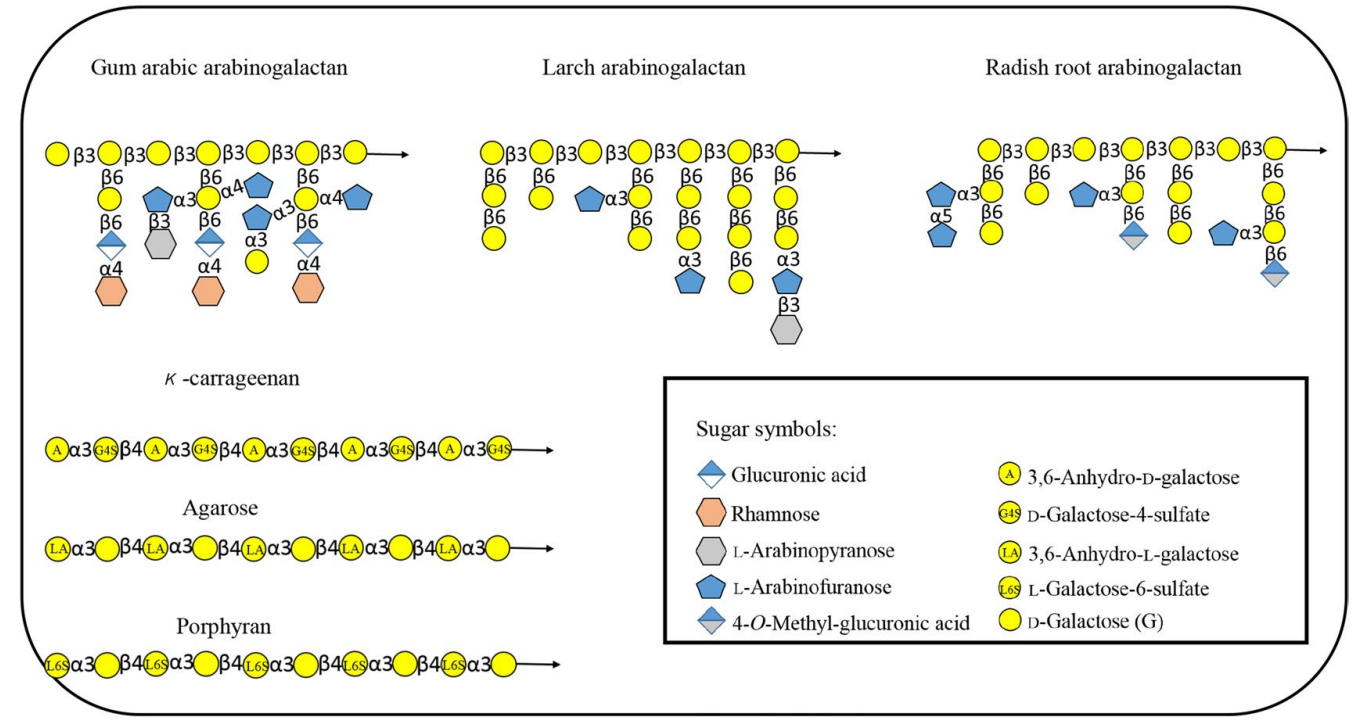
Figure 1. Structure Diversities of Four Kinds of Galactans from Different Plant Sources
In the fields of plant science, food chemistry, and bioengineering, Galactan Analysis is of great significance for elucidating polysaccharide structures, evaluating physicochemical properties, and exploring their biological functions. Through accurate compositional and structural analysis, the diversity of galactans from different sources can be revealed, providing reliable evidence for food quality evaluation, drug development, and plant cell wall research.
Services at MtoZ Biolabs
The galactan analysis service of MtoZ Biolabs combines multidimensional analytical technologies to comprehensively analyze galactan samples from multiple aspects including chemical composition, structural characteristics, and physical properties. The main service contents include:
1. Monosaccharide Composition and Content Analysis
Acid hydrolysis combined with HPLC-RID, HPAEC-PAD, or GC-MS is used to determine the relative proportions of galactose and other monosaccharides (such as arabinose, rhamnose, and glucose) in the sample, thereby identifying the main components and branch characteristics of galactans. This analysis can be used to evaluate sample purity, distinguish neutral and acidic galactans, and assess the effects of different extraction processes.
2. Determination of Molecular Weight and Degree of Polymerization
Gel permeation chromatography (GPC) or multi-angle light scattering (MALS) is used to measure the average molecular weight (Mw, Mn) and distribution range of the samples, assessing their degree of polymerization and uniformity. This parameter is important for studying the solubility, viscosity, and film-forming properties of galactans.
3. Analysis of Glycosidic Bond Types and Branch Structures
FT-IR and nuclear magnetic resonance (¹H-NMR, ¹³C-NMR) are used to analyze the glycosidic linkage types (such as β-1,3 or β-1,6) and branching sites in galactans, further revealing the internal molecular conformation and chain arrangement characteristics.
4. Characterization of Functional Groups and Purity
HPLC and elemental analysis are used to assess the contents of functional groups such as carboxyl, hydroxyl, and methoxy groups in the samples, and to detect the proportions of impurities such as proteins, lipids, and inorganic salts to ensure the reliability of analytical data.
5. Analysis of Galactan Derivatives and Complexes
For complex samples such as food colloids, pectin, and glycoconjugates, MtoZ Biolabs can perform structural confirmation and quantitative analysis of galactan derivatives (such as arabinogalactans and methoxy galactans), providing data support for product development and quality control.
Through the above multidimensional comprehensive analysis, MtoZ Biolabs can systematically evaluate galactan samples from different sources and types, revealing their structural features and functional properties at the molecular level.
Analysis Workflow
1. Sample pretreatment: remove proteins, lipids, and other interfering substances
2. Hydrolysis and derivatization: perform acid or enzymatic hydrolysis to generate monosaccharides, followed by derivatization to enhance detection sensitivity
3. Quantitative detection: use HPAEC-PAD, HPLC, or GC-MS for quantitative analysis
4. Structural analysis: use FT-IR and NMR to confirm glycosidic bond types and branch structures
5. Data integration and report generation: summarize quantitative, structural, and physical property data, and generate standardized analytical reports
Service Advantages
1. Multi-Platform Collaboration
MtoZ Biolabs is equipped with international advanced analytical platforms, including LC-MS/MS, HPAEC-PAD, GC-MS, NMR, and FT-IR. According to sample types, flexible analytical schemes can be selected to achieve comprehensive analysis from quantification to structure, meeting various research needs.
2. High Sensitivity and Accuracy
We use high-resolution detection instruments and low-noise signal acquisition systems to achieve accurate quantification and structural identification of galactans in complex matrices, ensuring the authenticity and reliability of data.
3. Systematic Structural Analysis
MtoZ Biolabs combines FT-IR and NMR techniques to verify from functional groups to glycosidic bonds, realizing systematic analysis of polymerization patterns, branch structures, and spatial conformations, providing a solid structural basis for functional studies.
4. Customized Service
Our analytical team has rich experience in polysaccharide chemistry and mass spectrometry analysis, providing customized analytical schemes and data interpretation based on research goals, ensuring results that meet scientific or industrial requirements.
Applications
☑️ Plant cell wall research: analyze the composition and structural characteristics of galactans in plant tissues, revealing their roles in cell wall formation and signal transduction
☑️ Food science and nutrition research: evaluate galactan content and properties in food, providing data support for dietary fiber functional studies
☑️ Pharmaceutical and biomaterial development: optimize and control the structure and quality of galactan derivatives used in drug delivery systems and tissue engineering materials
☑️ Microbial polysaccharide research: study the structural diversity and biological functions of galactans in bacterial or fungal exopolysaccharides
☑️ Cosmetic and functional ingredient testing: evaluate galactan content and activity correlations in moisturizing and antioxidant products
Sample Submission Suggestions
1. Sample type: solid powder, lyophilized sample, or liquid extract
2. Recommended quantity: solid sample ≥10 mg, liquid sample ≥2 mL
3. Purity requirements: avoid large amounts of proteins, lipids, or inorganic salts
4. Storage and transportation: lyophilized samples can be transported at room temperature, liquid samples are recommended to be stored and transported at low temperature and protected from light
5. Additional information: please provide sample source, extraction method, and intended analytical objectives
MtoZ Biolabs can also provide sample preparation and pre-treatment recommendations according to customer requirements to ensure optimal experimental design and result comparability.
Deliverables
1. Complete analytical report
2. Monosaccharide composition and ratio analysis results
3. Structural and glycosidic bond type analysis results
4. Molecular weight and degree of polymerization distribution report
5. Functional group and purity analysis results
Please contact the professional team at MtoZ Biolabs to obtain a customized galactan analysis service. We will provide precise and efficient data support and technical assurance for your research and project.
How to order?




