






Can mass spectrometry be used in proteomics?
Introduction
Researchers planning a proteomics study sometimes ask whether mass spectrometry is actually required. A collaborator may suggest antibody-based assays because they are familiar and fast. A grant panel may want justification for an LC-MS/MS budget line. A biologics team may wonder whether peptide mapping by mass spectrometry is necessary when other QC tests already exist. The question is practical: can mass spectrometry be used in proteomics, and is it the right tool for the project at hand?
The short answer is yes. Mass spectrometry is not only compatible with proteomics but serves as the central measurement platform behind most modern protein identification, quantitation, and modification mapping workflows. From discovery-scale cell lysate analysis to targeted peptide monitoring and biologics characterization, mass spectrometry converts peptide or protein ions into sequence evidence and abundance data that software can interpret into protein-level results.
This article explains why mass spectrometry is used in proteomics, what it can measure, how it compares with other protein analysis methods, and when an MS-based workflow is the appropriate choice.
The Direct Answer: Yes, Mass Spectrometry Is Used in Proteomics
Mass spectrometry can be used in proteomics because it measures the mass and abundance of peptide or protein ions with sufficient accuracy to support identification and comparison across samples. In bottom-up workflows, proteins are digested into peptides, separated by liquid chromatography, and analyzed by LC-MS/MS. Fragment ions provide sequence evidence that is matched against protein databases. In targeted workflows, selected peptide transitions are monitored repeatedly for quantitation. In biologics projects, peptide mapping and intact mass analysis confirm sequence coverage and product heterogeneity.
Proteomics is defined by the study of the full protein complement in a biological system. Mass spectrometry provides the analytical depth needed to identify many proteins in complex mixtures, detect post-translational modifications, and compare abundance across conditions without requiring a separate antibody for every target. For these reasons, mass spectrometry has become the standard measurement technology in academic, translational, and biopharmaceutical proteomics laboratories.
Why Mass Spectrometry Fits Proteomics
Mass spectrometry addresses several core requirements of proteomics research.
It provides sequence-level evidence. LC-MS/MS fragmentation generates product ions that reflect peptide sequence, supporting confident protein identification in complex samples. It enables multiplexed measurement. One experiment can detect hundreds to thousands of proteins without pre-selecting individual targets. It supports quantitation. Peptide ion intensities can be compared across samples using label-free, isobaric, metabolic labeling, or targeted acquisition modes. It detects modifications. Mass shifts and altered fragmentation patterns reveal phosphorylation, glycosylation, acetylation, and other post-translational changes. It handles diverse sample types. Cell lysates, tissues, plasma, immunoprecipitation eluates, exosomes, and purified biologics can all be adapted to MS-based workflows.
These capabilities make mass spectrometry well suited to proteomics questions that require broad coverage, structural confirmation, or flexible comparison across experimental groups.
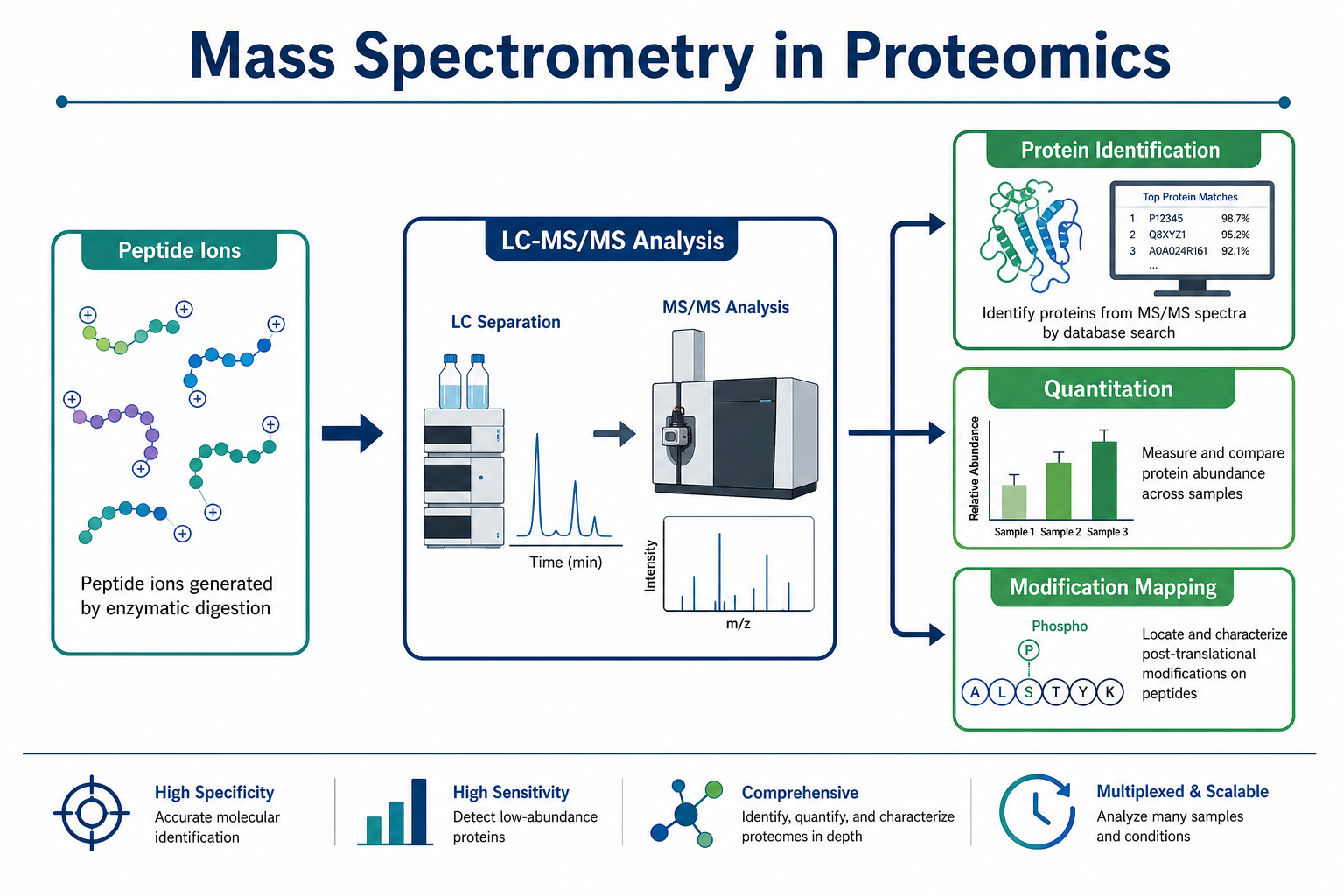
Figure 1. Mass spectrometry is used in proteomics to measure peptide ions, generate MS/MS sequence evidence, and produce protein identification, quantitation, and modification results.
How Mass Spectrometry Is Applied in Proteomics Workflows
Mass spectrometry enters proteomics at different stages depending on project design.
In discovery proteomics, digested peptides are analyzed by LC-MS/MS in data-dependent or data-independent acquisition modes. Database search software assigns peptide-spectrum matches and infers protein identities. In quantitative proteomics, peptide intensities are compared across sample groups to identify proteins that change in abundance. In PTM proteomics, enrichment steps isolate modified peptides before LC-MS/MS so site-level modification maps can be generated. In targeted proteomics, PRM or MRM monitors defined peptide panels with assay-style reproducibility. In biologics characterization, peptide mapping, disulfide analysis, and intact mass measurement provide structural evidence for therapeutic proteins and antibodies.
Each workflow uses mass spectrometry as the measurement step that links prepared samples to interpretable protein-level reports.
Mass Spectrometry Compared with Other Proteomics Methods
Proteomics can include several analytical approaches. Mass spectrometry is one of them, but it is not the only protein measurement tool available.
|
Method |
Main Strength |
Typical Limitation in Proteomics |
|---|---|---|
|
LC-MS/MS proteomics |
Broad protein coverage with sequence evidence |
Requires specialized instrumentation and bioinformatics |
|
Western blot |
Fast target confirmation with antibodies |
Limited multiplexing; antibody dependent |
|
ELISA |
Quantitative measurement of known proteins |
Restricted to pre-defined targets |
|
Protein microarray |
High-throughput antibody-based profiling |
Coverage limited to array content |
|
Gel-based proteomics |
Visual comparison of protein patterns |
Lower throughput; limited sequence detail |
Mass spectrometry is often selected when the project requires identification of unknown or many proteins, site-resolved modification mapping, or flexible comparison without developing new immunoassays for each target. Antibody-based methods remain valuable when a qualified reagent exists and a single protein must be measured routinely at low cost.
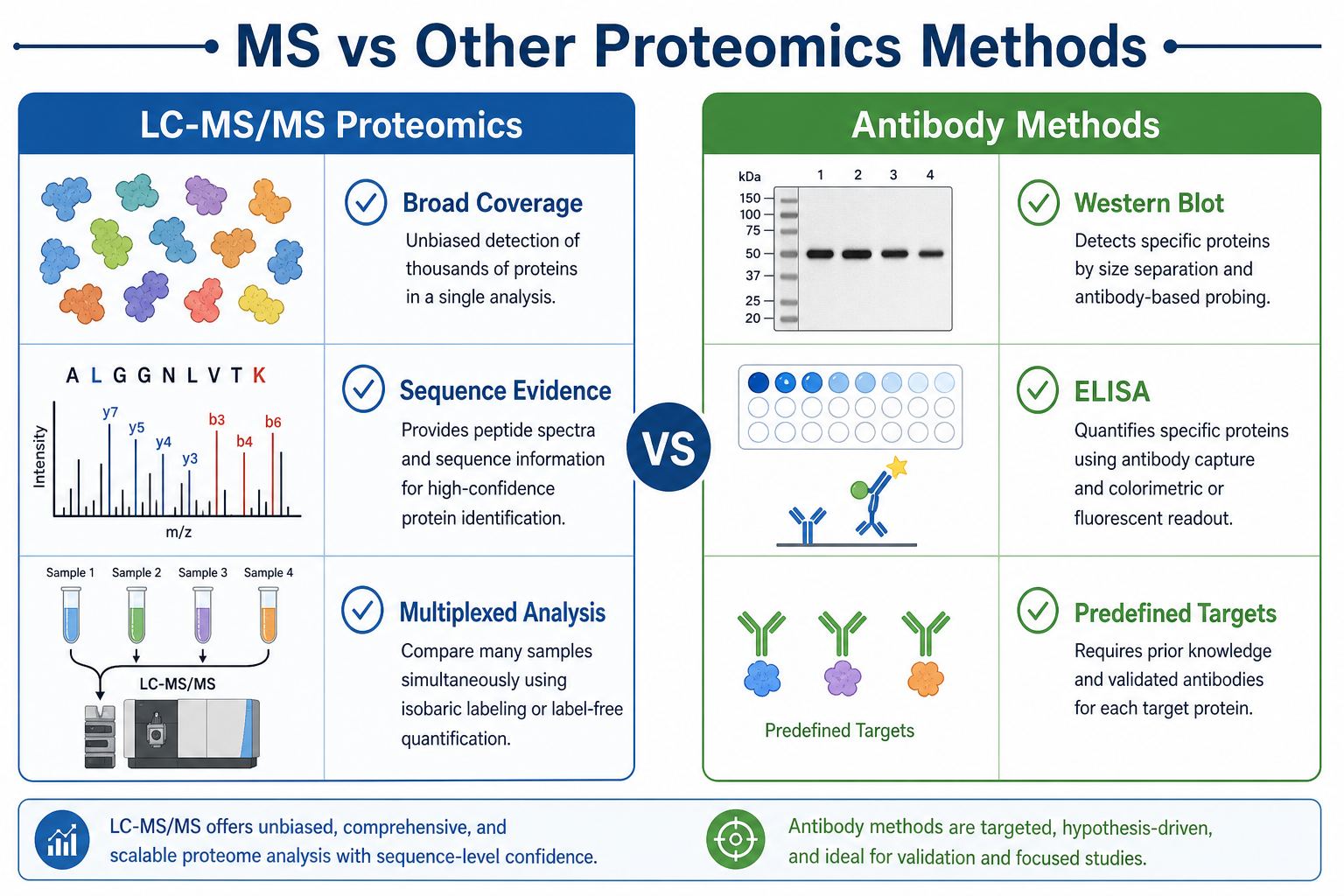
Figure 2. Mass spectrometry proteomics provides broad sequence-based coverage, while antibody methods such as western blot and ELISA focus on predefined targets.
Related Services
Mass Spectrometry-Based Protein Identification Service
Protein Identification Service by Tandem Mass Spectrometry
Quantitative Proteomics Service
Protein Identification Service by Shotgun Proteomics
Researchers evaluating whether mass spectrometry fits their proteomics goal can consult MtoZ Biolabs to review sample type, required outputs, and the MS workflow best matched to identification, quantitation, or structural characterization.
When Mass Spectrometry Is the Right Choice
Mass spectrometry is appropriate in proteomics when sequence evidence, broad coverage, or modification mapping is required.
Discovery projects that aim to identify proteins altered by treatment, disease, or genetic perturbation benefit from LC-MS/MS because many proteins can be measured in one experiment. Biomarker programs that need unbiased screening followed by targeted validation often begin with MS discovery and transition to PRM monitoring. Biologics teams that must confirm peptide coverage, detect sequence variants, or map disulfide bonds rely on mass spectrometry for documentation-grade structural evidence. PTM studies that require site localization across many modified peptides depend on MS/MS fragmentation patterns that immunoassays cannot provide at the same resolution.
Mass spectrometry may be less necessary when only one well-characterized protein must be measured repeatedly and a validated antibody assay already exists. In that setting, ELISA or western blot may be faster and more cost-effective for routine monitoring.
What Mass Spectrometry Can Deliver in Proteomics
The outputs of an MS-based proteomics project depend on workflow design, but several result types are common.
Protein identification lists report which proteins were detected with supporting peptide evidence. Quantitative comparison tables show proteins that differ in abundance between sample groups. Modification maps assign phosphorylation, glycosylation, or other PTMs to specific residues. Peptide coverage maps confirm percent sequence coverage for biologics. Targeted panel reports provide reproducible intensity values for selected peptides across many samples.
All of these deliverables begin with mass spectrometry measurements. Bioinformatics and expert review convert raw spectral data into tables and figures that support biological interpretation or quality documentation.
|
Proteomics Goal |
MS Workflow Type |
Typical Output |
|---|---|---|
|
Identify proteins in a lysate |
Bottom-up LC-MS/MS discovery |
Protein list with peptide evidence |
|
Compare treatment groups |
Label-free or isobaric quantitation |
Differential abundance table |
|
Map phosphorylation sites |
Enrichment plus LC-MS/MS |
Site-level PTM table |
|
Confirm antibody sequence |
Peptide mapping LC-MS/MS |
Coverage map and variant report |
|
Monitor candidate biomarkers |
Targeted PRM |
Panel intensity values |
Practical Considerations and Limitations
Mass spectrometry can be used in proteomics across many settings, but project success depends on realistic expectations about sample quality, complexity, and analysis depth.
Sample preparation strongly affects results. Poor digestion, incomplete cleanup, or protein loss during enrichment reduces identification depth and quantitative accuracy. Instrument time and data analysis requirements are greater than for single-target immunoassays. Low-abundance proteins in complex matrices may require fractionation or depletion before detection. Quantitative conclusions require appropriate replication, normalization, and statistical review.
These factors do not limit the applicability of mass spectrometry to proteomics. They define how workflows must be designed to match the biological question and reporting standard.
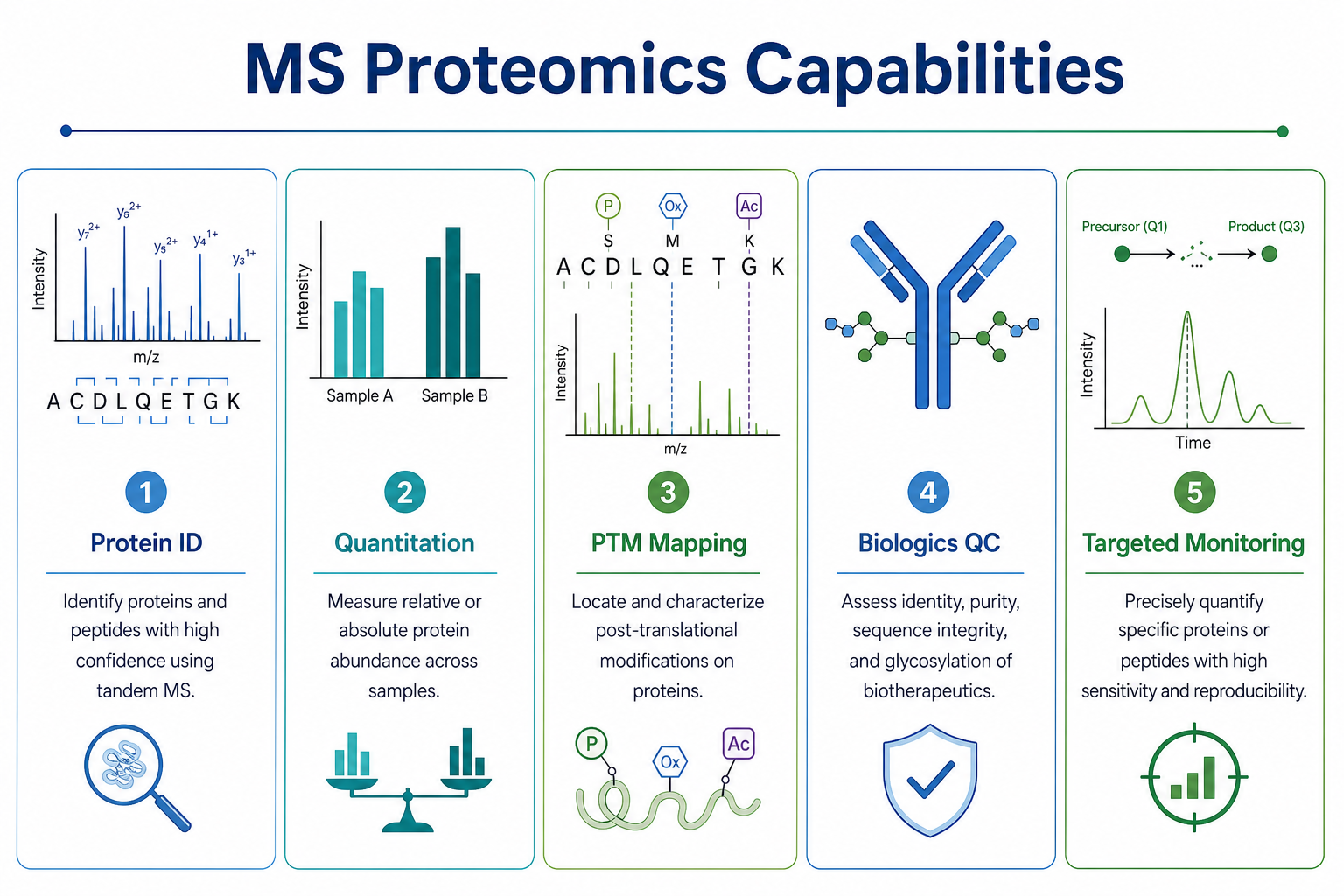
Figure 3. Mass spectrometry supports proteomics capabilities including protein identification, quantitation, PTM mapping, biologics characterization, and targeted monitoring.
Sample Types Compatible with MS Proteomics
Mass spectrometry has been applied to a wide range of proteomics sample types.
Cell and tissue lysates support discovery and quantitative comparison projects. Plasma and serum require adapted preparation to manage abundant proteins and improve detection of lower-abundance candidates. Immunoprecipitation samples allow focused analysis of protein complexes or signaling pathways. Exosome and membrane preparations benefit from enrichment strategies matched to sample complexity. Purified proteins and therapeutic antibodies support peptide mapping, PTM analysis, and intact mass characterization.
The same LC-MS/MS platform can be configured for these sample types when preparation protocols and acquisition parameters are adjusted accordingly.
Frequently Asked Questions
1. Can mass spectrometry be used in proteomics?
Yes. Mass spectrometry is widely used in proteomics to identify proteins, compare abundance across samples, map modifications, and characterize biologics with sequence-level evidence.
2. Is mass spectrometry required for all proteomics projects?
No. Some proteomics questions can be addressed with antibody-based methods when targets are known and qualified reagents exist. Mass spectrometry is most valuable when broad coverage, sequence confirmation, or modification mapping is needed.
3. What is the most common mass spectrometry workflow in proteomics?
Bottom-up LC-MS/MS is the most common workflow. Proteins are digested into peptides, separated by liquid chromatography, and identified through tandem mass spectrometry and database searching.
4. Can mass spectrometry both identify and quantify proteins?
Yes. LC-MS/MS supports protein identification, and peptide ion intensities from the same or related runs support relative or absolute quantitation depending on the labeling strategy.
5. What samples can be analyzed by mass spectrometry proteomics?
Common samples include cell lysates, tissues, plasma, serum, immunoprecipitation eluates, exosomes, and purified proteins or biologics.
Conclusion
Mass spectrometry can be used in proteomics and is the primary analytical platform behind most modern protein identification, quantitation, and modification studies. It provides sequence evidence, multiplexed coverage, and flexible workflow options that antibody-based methods cannot replicate at the same scale. At the same time, project design, sample preparation, and data interpretation determine whether an MS-based approach delivers the depth and reproducibility a study requires.
Teams evaluating proteomics options can contact MtoZ Biolabs to discuss whether mass spectrometry is the right fit for their sample type, analytical goal, and expected reporting format.
How to order?




