






Bottom-Up vs. Top-Down Proteomics: How to Choose the Right Strategy for Protein Characterization
Introduction
Protein characterization projects often begin with a strategy question that is easy to state but difficult to answer in practice. A biologics team may need primary structure evidence for a therapeutic protein. A research group may need to compare modification patterns between batches. A structural biology program may need to know whether two post-translational modifications occur on the same molecule or on different proteoforms. Bottom-up and top-down proteomics can both contribute to protein characterization, but they do not provide the same type of evidence.
Bottom-up proteomics digests proteins into peptides and builds protein-level conclusions from peptide-spectrum matches. Top-down proteomics analyzes intact proteins or large fragments to characterize proteoforms more directly. For protein characterization, the better strategy depends on sample purity, required structural resolution, modification complexity, throughput needs, and whether peptide inference is sufficient for the decision at hand.
Choosing the wrong route can waste sample, extend timelines, and produce data that do not support the intended QC, comparability, or mechanistic conclusion. The sections below compare bottom-up and top-down proteomics for protein characterization and outline how to select the strategy that fits the project goal.
When Protein Characterization Requires a Strategy Choice
This comparison usually appears when a project needs more than a protein name list or a single intact mass value.
Common characterization scenarios include recombinant protein or antibody identity confirmation, where peptide coverage may be enough when a reference sequence exists; proteoform analysis of purified proteins, where co-occurring modifications on one molecule must be resolved; biologics comparability after process change, where both peptide-level and intact-level differences may matter; clipped variant or unexpected mass investigation, where intact protein evidence can clarify whether modifications coexist; PTM mapping on purified enzymes or histones, where localization and proteoform context are both important; and follow-up after a bottom-up characterization run, when specific features require intact-level confirmation.
In each case, the key question is whether peptide-level evidence is enough or whether intact proteoform information is required for the characterization decision.
Four Comparison Dimensions That Matter Most
A useful comparison should focus on characterization needs rather than platform popularity alone.
Structural resolution.
Bottom-up proteomics resolves peptides and infers protein-level conclusions. Top-down proteomics resolves intact proteins or large fragments and reports proteoforms more directly.
Sample purity and complexity.
Bottom-up proteomics tolerates complex mixtures and is widely used for lysates and multi-protein samples. Top-down proteomics usually performs best on purified proteins or after extensive fractionation.
Modification and proteoform context.
Bottom-up proteomics localizes many modifications at the peptide level but may not show whether they coexist on one molecule. Top-down proteomics can preserve proteoform relationships when intact analysis succeeds.
Reporting goal in characterization.
Bottom-up proteomics supports scalable identification, coverage mapping, and quantitative comparison. Top-down proteomics supports intact mass confirmation, proteoform assignment, and selected PTM coexistence questions.
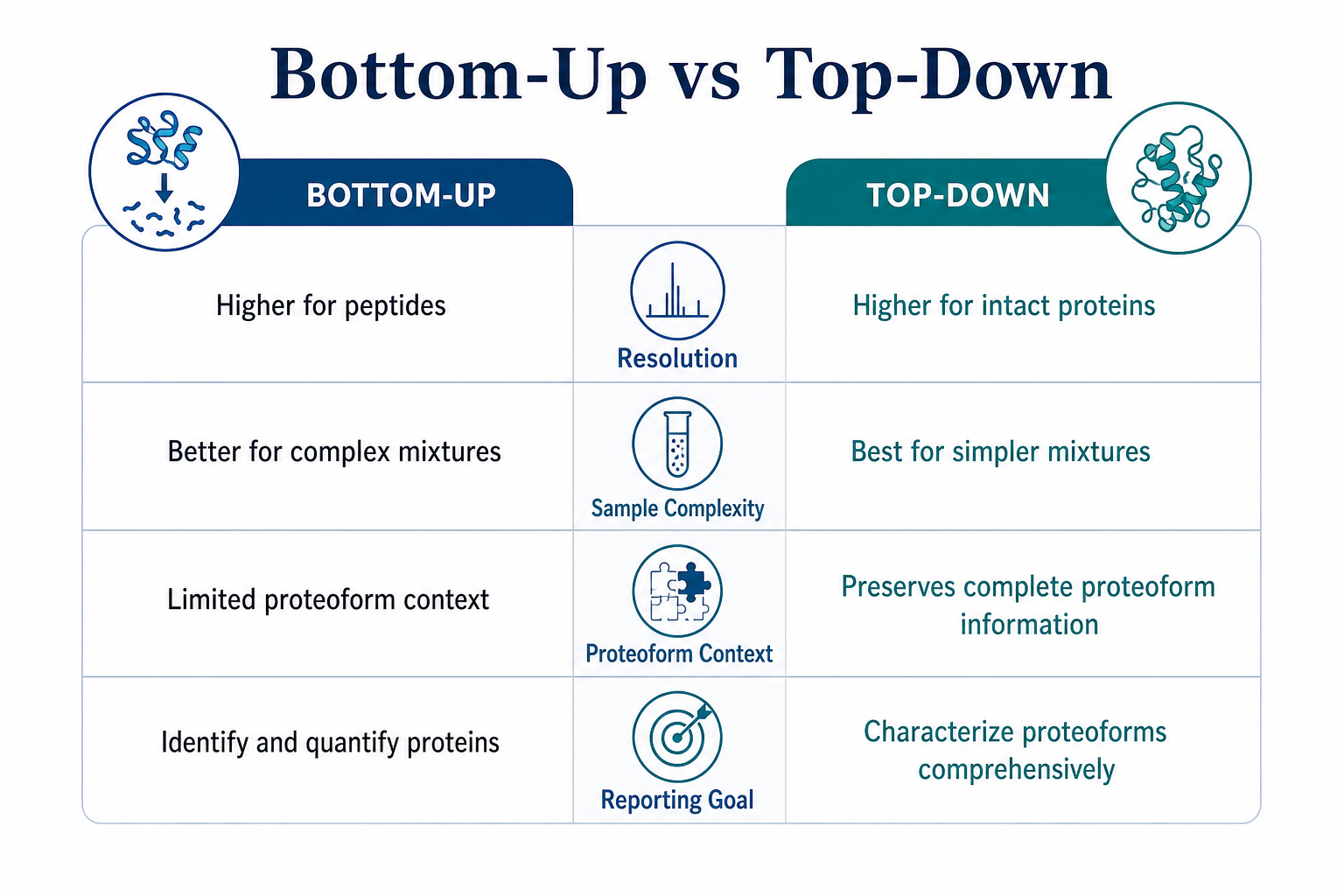
Figure 1. Bottom-up and top-down proteomics differ in structural resolution, sample complexity tolerance, proteoform context, and characterization reporting focus.
How Bottom-Up Proteomics Supports Protein Characterization
Bottom-up proteomics is a peptide-centric workflow. Proteins are digested, peptides are separated by LC and analyzed by tandem mass spectrometry, and identifications are made by database searching or spectral library matching. For characterization, the value lies in sequence coverage, PTM localization, quantitative comparison, and scalable analysis of complex samples.
Bottom-up proteomics is often the first choice when a reference sequence is available, when many proteins must be characterized in a mixture, or when peptide-level comparability evidence is sufficient for QC review. Its main limitation is inference. Protein conclusions are assembled from peptides, and co-occurring modifications on the same molecule may not always be resolved without additional intact-level evidence.
How Top-Down Proteomics Supports Protein Characterization
Top-down proteomics analyzes intact proteins or large fragments with minimal digestion. Intact mass measurement and fragmentation of the whole protein or defined large segment provide direct proteoform information. For characterization, this route is valuable when sample purity is high and the question depends on intact mass differences, proteoform assignment, or modification coexistence.
Top-down proteomics is often selected for purified antibodies, enzymes, histones, or other defined proteins when peptide mapping alone cannot explain an observed mass shift or when proteoform heterogeneity must be described at the molecule level. Its main limitation is sample complexity. Highly complex mixtures and very large proteins can reduce success rates without specialized separation and instrumentation.
Related Services
Protein characterization programs often evaluate bottom-up and top-down routes together with adjacent analytical services. Relevant options include:
Top-Down Proteomics Analysis Service
Top Down and Bottom Up Proteomics Service
Protein Identification Service
Protein Full Sequence Coverage Analysis Service
Researchers choosing a protein characterization strategy can consult MtoZ Biolabs to review sample type, reporting goal, and whether bottom-up, top-down, or a combined workflow is the better fit.
Side-by-Side Comparison for Protein Characterization
The descriptions above show why the two strategies are complementary. The table below summarizes practical differences for protein characterization planning.
|
Dimension |
Bottom-Up Proteomics |
Top-Down Proteomics |
|---|---|---|
|
Starting material |
Complex mixtures or purified proteins |
Best on purified or enriched proteins |
|
Main evidence type |
Peptide-spectrum matches and coverage |
Intact proteoform mass and fragmentation |
|
Characterization strength |
Sequence coverage, PTM localization, quantitation |
Proteoform assignment, modification coexistence |
|
Throughput |
High for large studies |
Lower and more sample-specific |
|
Protein inference |
Required from shared peptides |
Reduced when proteoform is directly observed |
|
Best fit |
Discovery, coverage, comparability at peptide level |
Purified protein proteoform review |
|
Main limitation |
Inference and modification context loss |
Complexity and size constraints |
Which Strategy Fits Different Characterization Goals
Choose bottom-up proteomics when
the sample is complex, a reference sequence is available, the goal is protein identification or peptide-level comparability, PTM localization at the residue level is central, or the project requires scalable quantitative comparison across many samples.
Choose top-down proteomics when
the sample is relatively pure, proteoform differences must be characterized directly, intact mass shifts need explanation, modification coexistence on one molecule is important, or peptide-level data leave ambiguity that intact analysis can resolve.
Use a combined strategy when
bottom-up characterization identifies the protein and localizes modifications, while top-down analysis confirms proteoform patterns, clipped variants, or intact mass differences that peptide tables alone cannot fully explain.
Researchers should define whether the immediate characterization decision depends on peptide coverage, proteoform identity, or both. That distinction usually clarifies the strategy faster than instrument availability alone.
Decision Recommendations by Characterization Project
|
Characterization Project |
More Suitable First Strategy |
Why |
|---|---|---|
|
Recombinant protein identity check |
Bottom-up proteomics |
Reference-based peptide coverage is efficient |
|
mAb peptide mapping and comparability |
Bottom-up proteomics |
Peptide-level evidence supports routine QC |
|
Unexpected intact mass difference |
Top-down proteomics |
Direct proteoform analysis clarifies mass shifts |
|
Histone proteoform profiling |
Top-down proteomics |
Co-occurring modifications matter at molecule level |
|
Cell lysate protein identification |
Bottom-up proteomics |
Complex mixtures are better suited to digestion-based ID |
|
Purified enzyme modification review |
Combined workflow |
Peptide localization plus intact proteoform confirmation |
|
Biosimilar primary structure package |
Bottom-up first, top-down selective |
Peptide evidence is core; intact review supports selected gaps |
|
Low-abundance proteoform in mixture |
Top-down after enrichment |
Purification or enrichment usually required first |
These recommendations are starting points. Sample amount, protein size, modification pattern, and reporting urgency can shift the final plan.
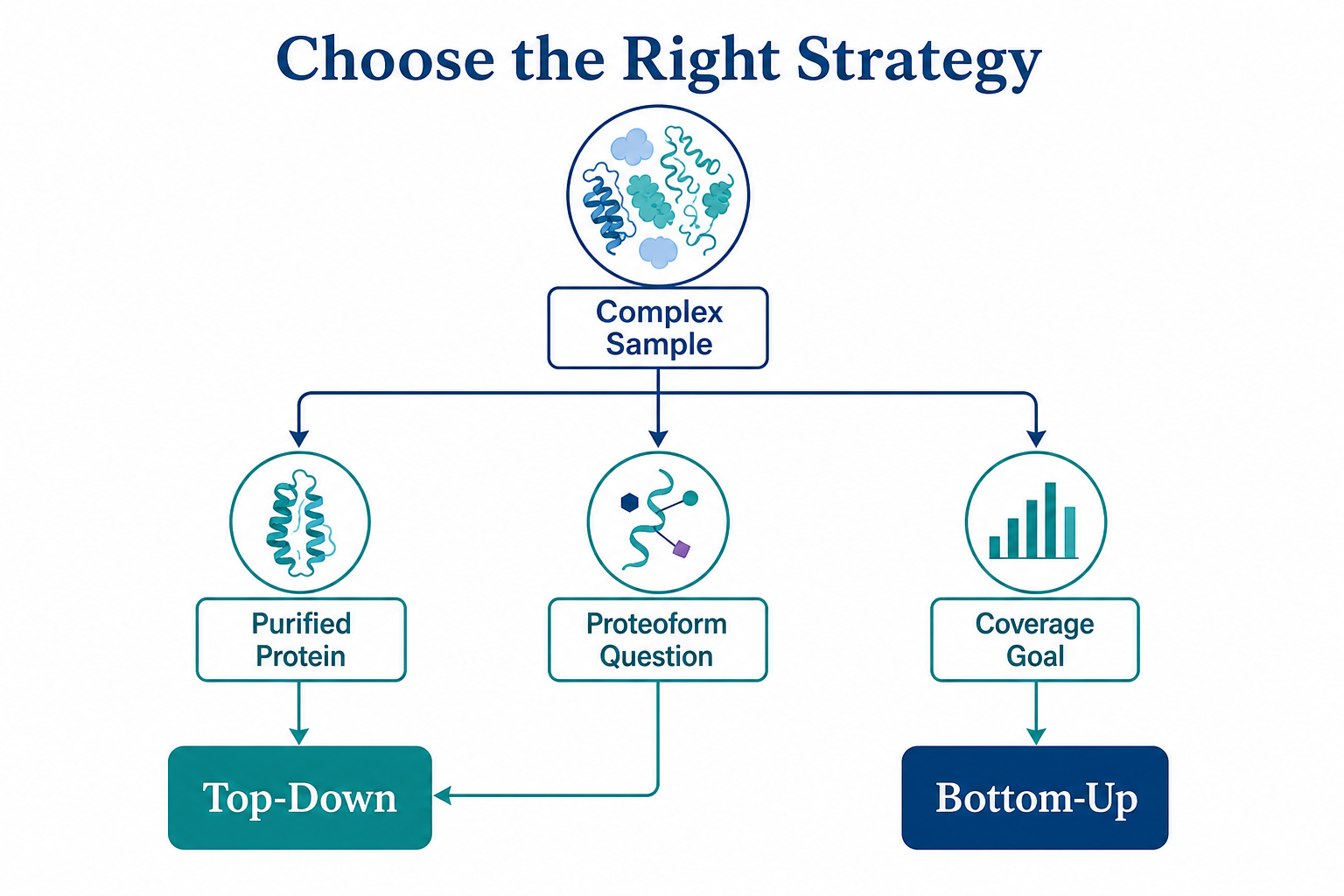
Figure 2. Sample purity and characterization goal are the main factors in choosing bottom-up or top-down proteomics.
Combined Workflows and Practical Limits
Many characterization programs use bottom-up proteomics as the primary route and add top-down analysis for selected questions. Bottom-up data may define sequence coverage, localize modifications, and support batch comparison. Top-down data may then confirm whether specific proteoforms account for an intact mass difference or whether multiple modifications coexist on one molecule.
Bottom-up proteomics is not a substitute for intact proteoform analysis when the decision depends on molecule-level context. Top-down proteomics is not the most efficient first step for large-scale identification in complex lysates. The better strategy is the one that produces the evidence type required for the next characterization milestone with the least rework.
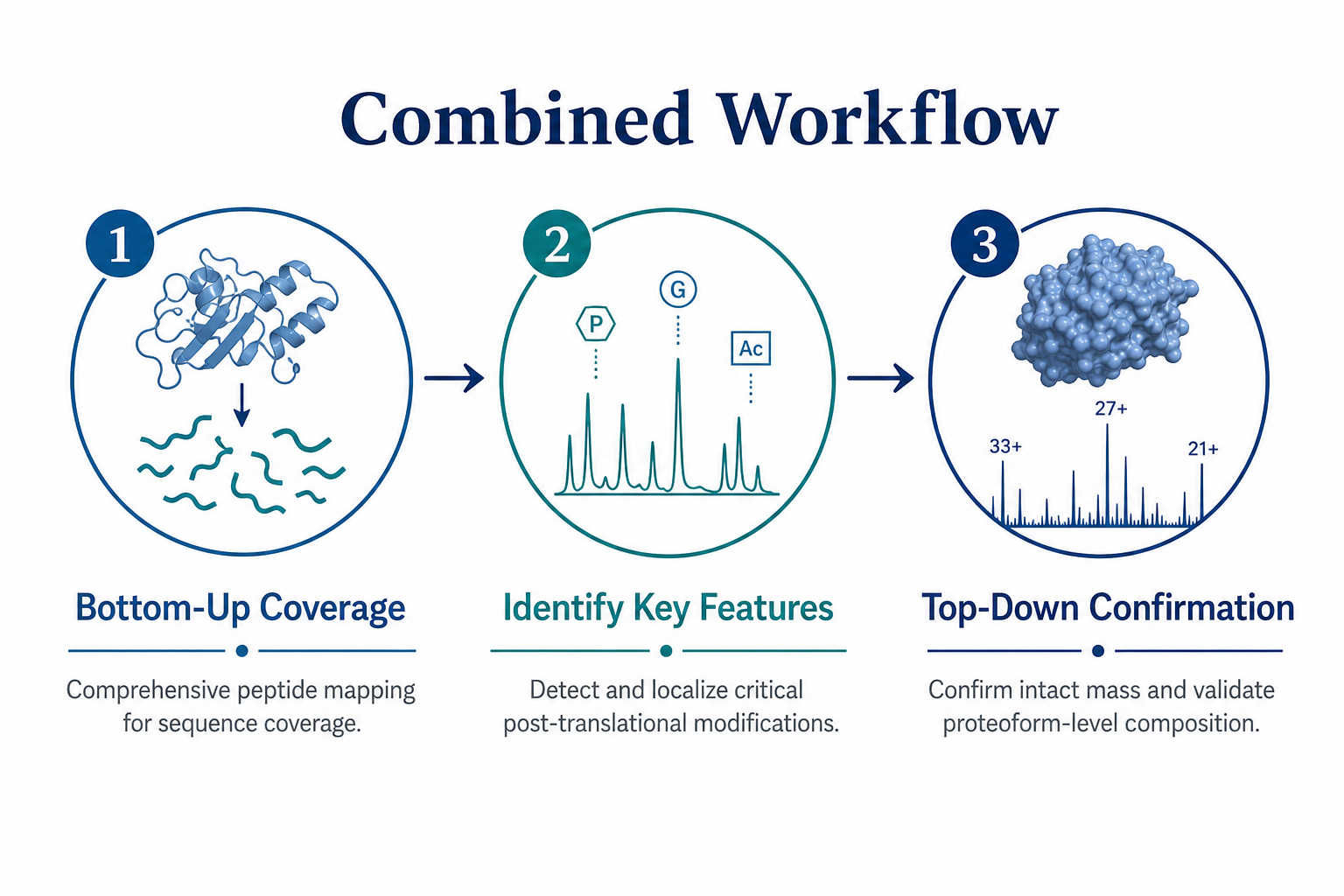
Figure 3. A combined protein characterization workflow often uses bottom-up proteomics first and top-down analysis for selected proteoform questions.
Frequently Asked Questions
1. What is the main difference between bottom-up and top-down proteomics for protein characterization?
Bottom-up proteomics characterizes proteins through digested peptides and inferred protein evidence. Top-down proteomics characterizes intact proteins or large fragments to define proteoforms more directly.
2. Is bottom-up proteomics enough for biologics characterization?
Often yes for routine peptide mapping, coverage review, and comparability when a reference sequence is available. Top-down analysis may still be useful when intact mass differences or proteoform questions remain unresolved.
3. When is top-down proteomics the better first choice?
Top-down proteomics is often better for purified proteins when proteoform assignment, intact mass explanation, or modification coexistence is central to the characterization decision.
4. Can one project use both strategies?
Yes. Many characterization projects use bottom-up proteomics for broad peptide evidence and top-down proteomics for targeted intact proteoform confirmation.
5. What sample information is most important before choosing a strategy?
Sample purity, protein size, reference sequence availability, modification complexity, and the reporting goal for the characterization decision are the most important planning inputs.
Conclusion
Bottom-up and top-down proteomics support protein characterization at different structural levels. Bottom-up proteomics is usually the better first strategy for complex samples, reference-based coverage, PTM localization, and scalable comparability. Top-down proteomics is often the better choice for purified proteins when proteoform identity, intact mass differences, or modification coexistence must be resolved directly. Many successful characterization programs combine both routes rather than relying on one strategy alone. The most suitable approach becomes clear once sample purity, reporting goal, and required structural resolution are defined. Researchers choosing between bottom-up and top-down proteomics for protein characterization can contact MtoZ Biolabs to review sample type, characterization goal, and the reporting format required before the next project phase.
How to order?




