






Top 6 Tools for Bottom-Up Proteomics Data Analysis: MaxQuant, FragPipe, Proteome Discoverer, and More
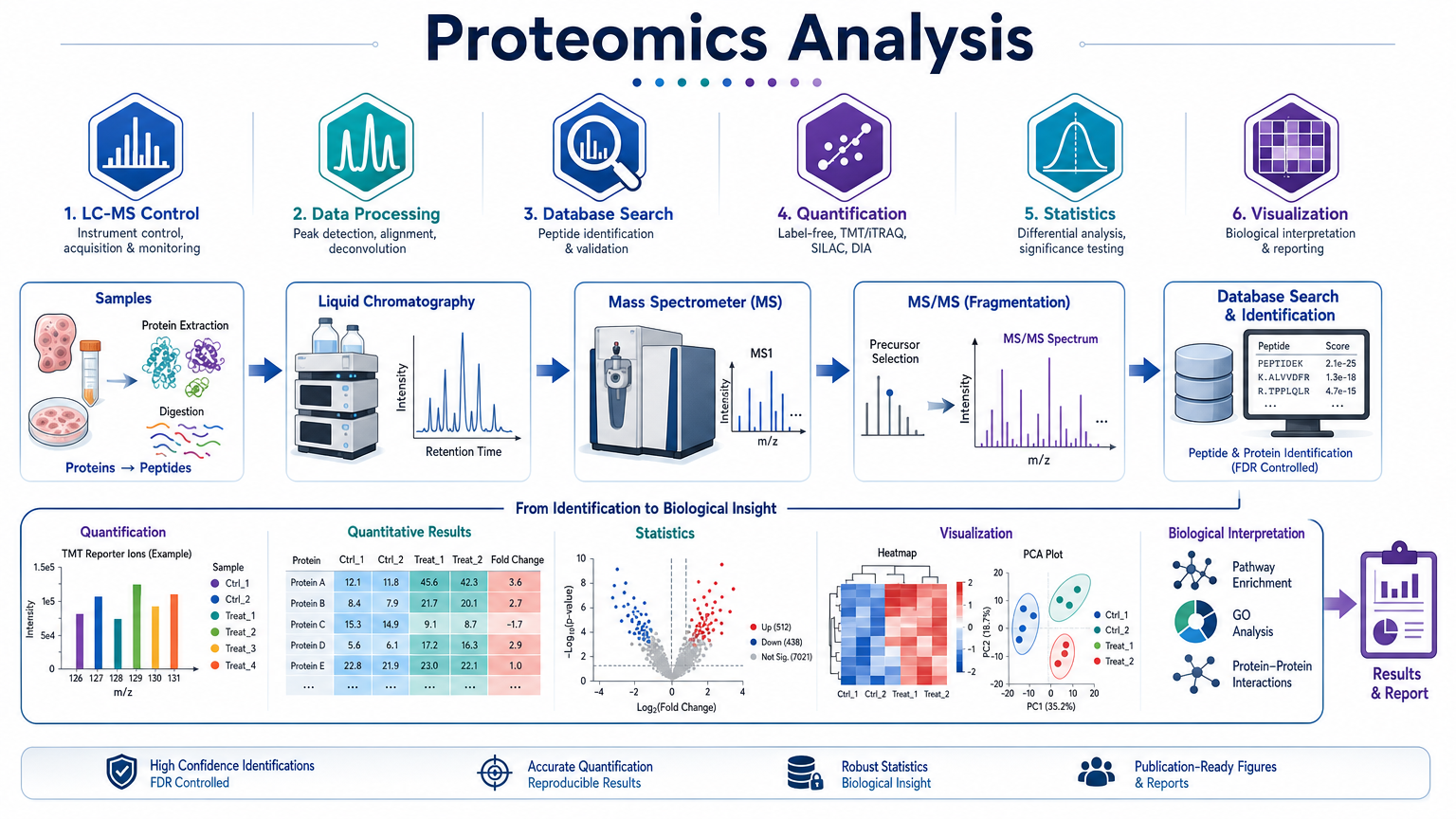
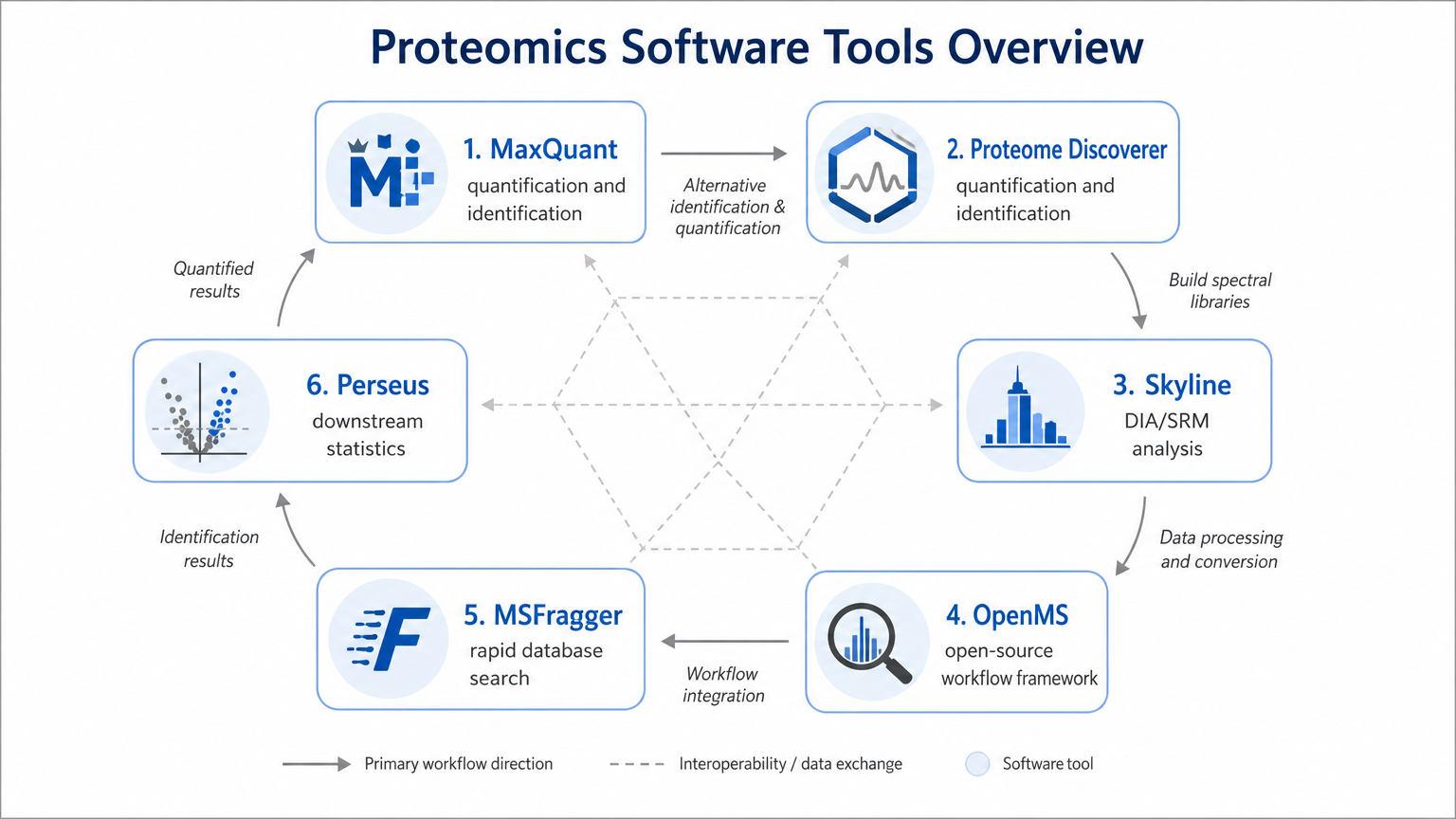
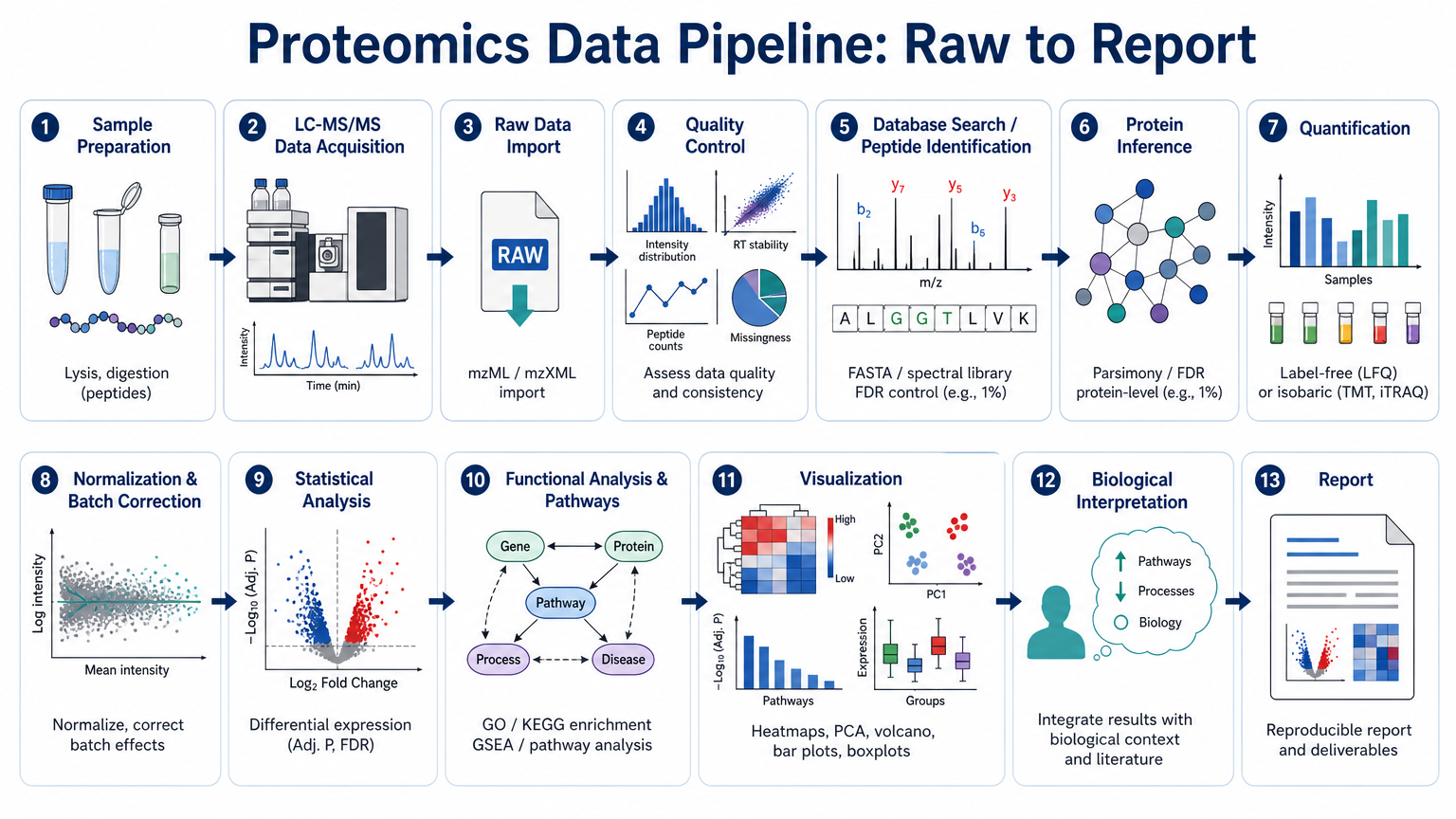
Bottom-up (shotgun) proteomics infers proteins from digested peptides. After LC-MS/MS acquisition, software choice drives search depth, quantification quality, and PTM reporting. Six platforms cover most laboratory needs.
Key Takeaways
-
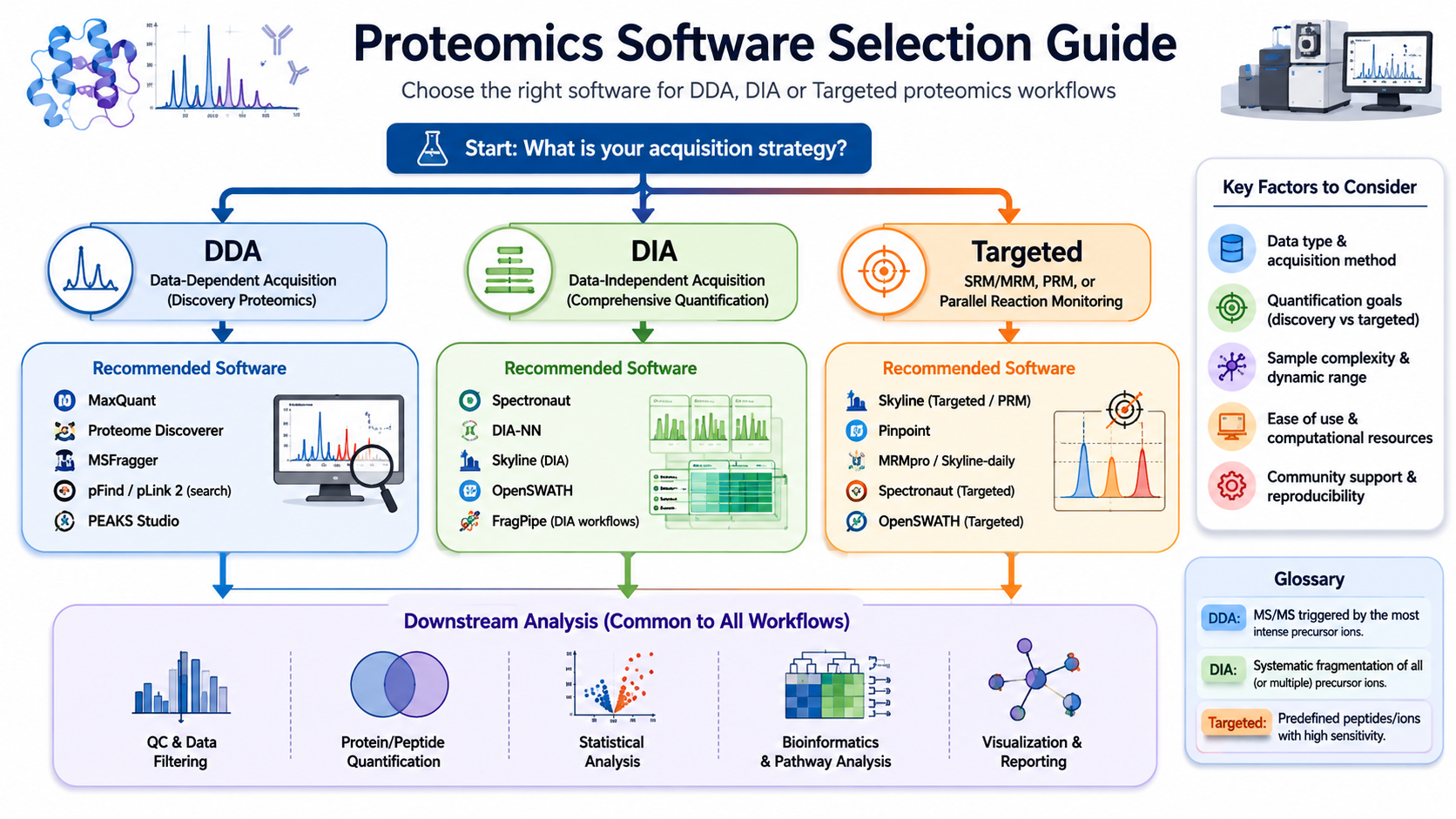
Match tools to acquisition mode (DDA, DIA, PRM) and quant strategy (LFQ, TMT, SILAC).
-
MaxQuant and FragPipe excel at large-scale LFQ and fast DDA/DIA processing.
-
Proteome Discoverer integrates multiple engines for Thermo-centric workflows.
-
PEAKS adds de novo support; Skyline anchors targeted quantification.
-
OpenMS supports modular custom pipelines.
Related Services
Bottom-Up MS-Based PTM Analysis Service
Top Down and Bottom Up Proteomics Service
Proteomics Analysis Services, Biopharmaceutical Characterization Services, Bioinformatics Services
Tool Comparison
| Tool | Best for | Quant Modes |
|---|---|---|
| Proteome Discoverer | Thermo multi-engine search | TMT, SILAC, LFQ |
| MaxQuant | LFQ and PTM studies | LFQ, labeled |
| FragPipe | Fast DDA/DIA scale | LFQ, TMT |
| PEAKS Studio | De novo + database ID | Label-free, labeled |
| OpenMS | Modular workflows | LFQ, TMT |
| Skyline | Targeted PRM/SRM/DIA | Targeted |
How to Choose?
Use FragPipe or MaxQuant for large discovery cohorts; Proteome Discoverer for Thermo-native multi-engine workflows; PEAKS when de novo adds value; OpenMS for automation; Skyline for targeted validation panels.
FAQ
1. Which tool is best for label-free quantification?
MaxQuant and FragPipe are widely used; choice depends on DDA versus DIA.
2. Can one project use multiple tools?
Yes, discovery plus Skyline validation is common.
Conclusion
Efficient bottom-up analysis aligns software with experimental design rather than treating all tools as interchangeable.
How to order?




