






A Beginner's Guide to Mass Spectrometry-Based Proteomics
Introduction
Starting in mass spectrometry-based proteomics can feel overwhelming because the field combines biochemistry, instrumentation, and data analysis in one project. A beginner may receive a quote mentioning bottom-up LC-MS/MS, peptide-spectrum matches, and label-free quantitation without knowing which decisions matter most. Another researcher may inherit a protein table from a collaborator and struggle to judge whether the data support the biological claim. A first-time biologics scientist may need peptide mapping but be unsure how sample amount, digestion, and reporting format affect the final deliverable.
A beginner's guide to mass spectrometry-based proteomics should reduce confusion before experiments begin. The method measures peptides and proteins using liquid chromatography and tandem mass spectrometry, then converts spectral data into protein identification and optional quantitation results. Most entry-level projects use a bottom-up workflow in which proteins are digested into peptides before LC-MS/MS analysis.
This guide explains what beginners should understand first, how to plan an initial project, what a standard workflow looks like, how to read common report tables, and which mistakes are easy to avoid when starting out.
What Beginners Should Know First
Mass spectrometry-based proteomics is not a single button-press assay. It is a workflow that links sample preparation, peptide measurement, database searching, and protein-level reporting.
Three ideas help beginners orient quickly.
Proteomics is the biological question about proteins in a sample. Mass spectrometry is the measurement technology that generates peptide evidence to answer that question.
Bottom-up proteomics is the usual starting route. Proteins are digested into peptides, peptides are analyzed by LC-MS/MS, and proteins are inferred from the peptides identified.
Identification and quantitation are related but different outputs. A protein can be identified from peptide-spectrum matches while quantitation depends on reproducible peptide intensity comparison across samples.
Beginners do not need to master every instrument parameter before starting. They do need a clear project goal, an appropriate sample type, and realistic expectations about what the report will contain.
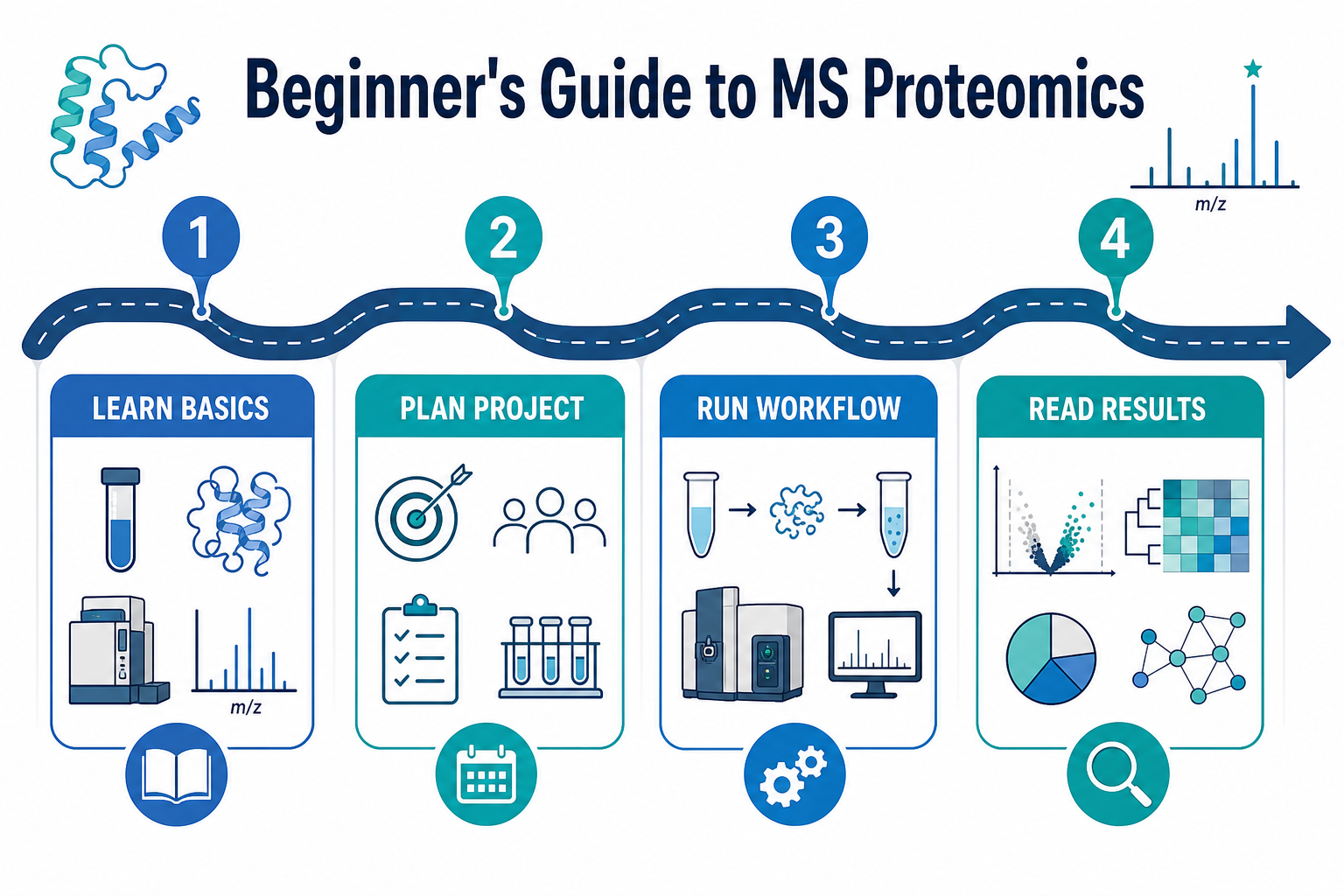
Figure 1. A beginner's path in mass spectrometry-based proteomics moves from core concepts to project planning, workflow execution, and result interpretation.
Start With the Biological Question
The workflow choice becomes easier when the question is defined before methods are discussed.
A beginner should ask whether the project requires protein identification only, relative quantitation between groups, modification mapping, or targeted follow-up on selected proteins. Each goal places different demands on sample number, preparation, and acquisition time.
Common first-project questions include which proteins differ between treated and control cells, whether a purified protein sample contains expected sequence coverage, which plasma proteins change across patient groups, or whether a phosphorylation site appears after pathway stimulation.
If the question is vague, the experiment often returns data that are technically usable but biologically difficult to interpret. Beginners benefit from writing one sentence that defines the comparison and the decision the data should support.
First Project Planning Checklist
Use the checklist below before sending samples or approving a service quote.
Define the comparison clearly. Specify treatment versus control, time point A versus time point B, or batch X versus reference batch Y.
Choose the sample type and expected protein amount. Cell lysate, tissue, plasma, and purified protein each require different preparation paths.
Set biological replicates. Proteomics quantitation usually needs replicates to separate real change from technical noise. One sample per condition is rarely enough for confident comparison.
Decide whether identification, quantitation, or both are required. This affects run time, analysis depth, and report format.
Confirm the reference database or organism. Database choice affects which proteins can be identified.
Define the deliverable format. A discovery project may need protein tables and optional pathway context. A biologics project may need coverage maps and modified peptide evidence.
Plan follow-up early. Discovery results often lead to targeted PRM assays or orthogonal confirmation, so beginners should know whether the first run is exploratory or decision-critical.
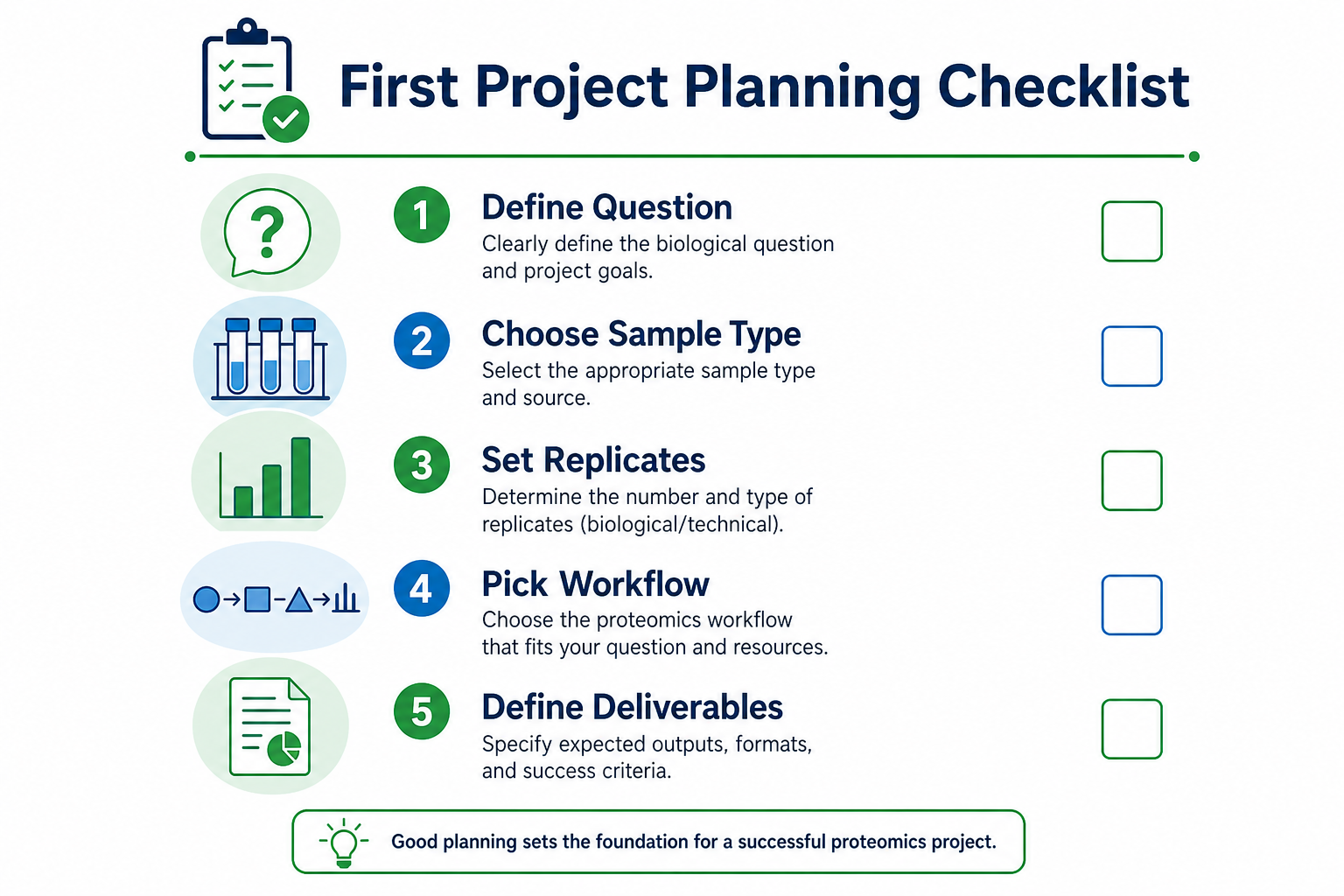
Figure 2. Beginners should define the comparison, sample type, replicates, workflow goal, and deliverables before starting a proteomics project.
A Standard Bottom-Up Workflow for Beginners
Most first projects follow the same bottom-up LC-MS/MS path.
Sample preparation extracts proteins under conditions compatible with digestion. Reduction and alkylation are common when disulfide bonds or cysteine chemistry affect peptide recovery.
Trypsin digestion converts proteins into peptides suited to reversed-phase LC and tandem mass spectrometry.
Peptide cleanup removes salts, detergents, and other interferents that reduce chromatography and ionization performance.
LC-MS/MS acquisition separates peptides online and records precursor and fragment ion spectra.
Database searching matches experimental spectra to peptide sequences from a protein reference set.
Reporting groups peptides into protein identifications and, when requested, quantitative comparisons across sample groups.
Beginners should treat these steps as one chain. Weak sample preparation cannot be fully corrected later by longer instrument time alone.
Related Services
Protein Identification Service
Label-Free Quantitative Proteomics Service, MS Based
Quantitative Proteomics Service
Proteomics Bioinformatic Analysis Service
Researchers starting their first mass spectrometry-based proteomics project should define sample type, replicate design, and reporting goals before phase 1 sample submission and phase 2 data acquisition begin.
How to Read Your First Proteomics Report
Beginners often open a report and focus only on the protein name list. The useful evidence is usually distributed across several tables.
The peptide-spectrum match table shows which peptide sequences match observed MS/MS spectra. Reviewers use scores and false discovery rate filtering to judge confidence.
The protein table summarizes proteins inferred from peptide evidence. Shared peptides across protein families may lead to conservative protein grouping.
The quantitation table, when present, compares peptide or protein abundance across conditions. Beginners should check how many values are missing and whether replicates agree before interpreting fold changes.
The methods and QC notes explain digestion conditions, acquisition mode, database version, and filtering thresholds. These details matter when comparing one project to another.
A practical reading order is QC and methods first, then peptide evidence, then protein summaries, then quantitative comparisons.
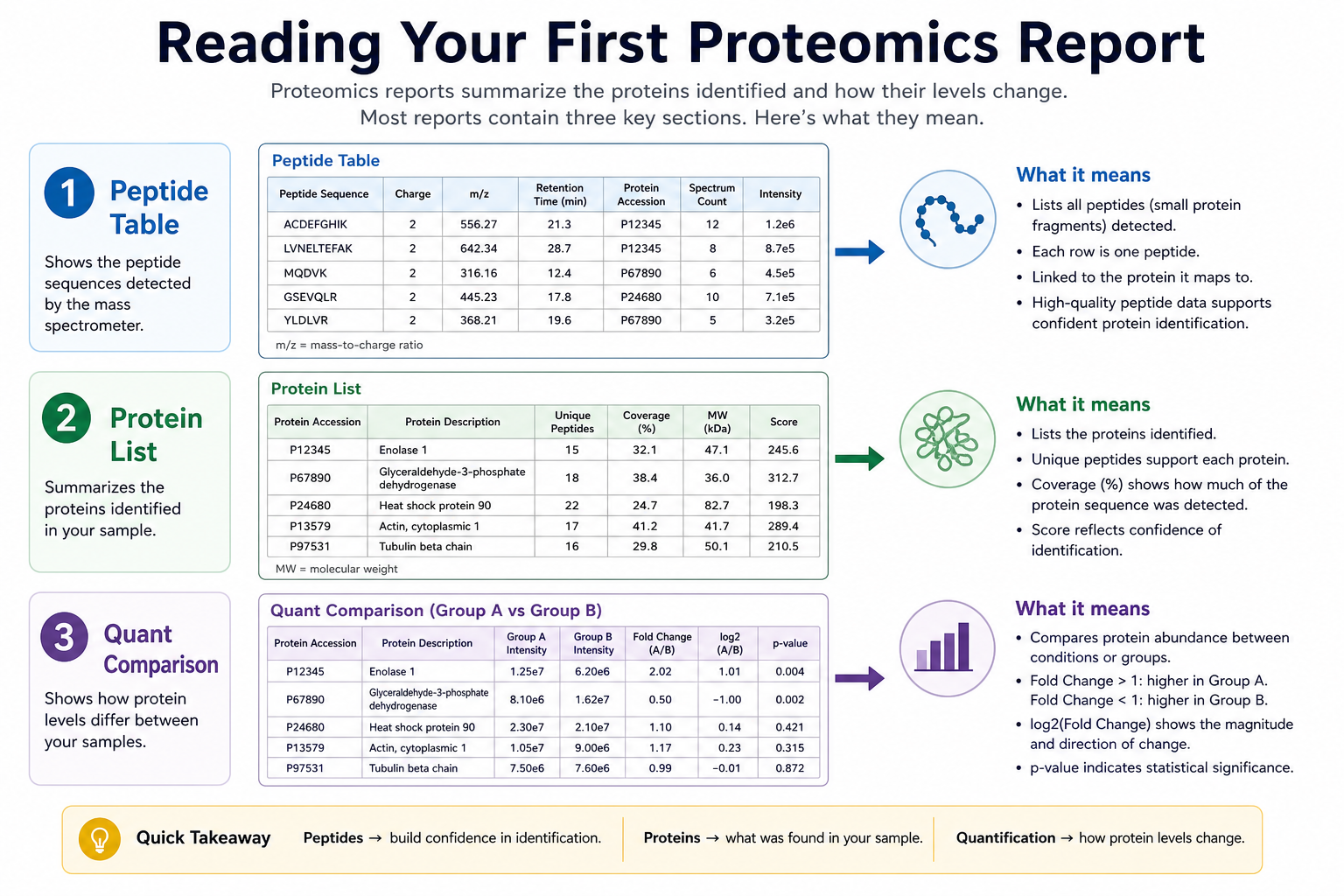
Figure 3. Beginners should read peptide evidence, protein summaries, and quantitative tables together rather than relying on protein names alone.
Sample Requirements Beginners Often Overlook
Sample quality shapes proteomics results more than many first-time users expect.
Use consistent collection and storage conditions across all samples in a comparison set. Freeze-thaw cycles, delayed processing, and detergent carryover can alter peptide recovery.
Provide enough material for the planned depth. Complex lysates may need more protein input or fractionation than purified protein samples.
Avoid submitting highly contaminated or degraded material when the goal is quantitative comparison. Discovery identification may tolerate more variability than cohort quantitation.
Document metadata clearly. Treatment condition, collection time, storage temperature, and replicate identity should travel with the sample list.
These details are not administrative extras. They directly affect whether quantitative differences are believable.
Common Beginner Mistakes to Avoid
Several mistakes appear repeatedly in first proteomics projects.
Running one sample per condition and treating the result as a full quantitative conclusion.
Changing sample preparation between batches without noting the difference in metadata.
Requesting quantitation but providing samples collected under inconsistent conditions.
Assuming a long protein list equals strong biological insight without reviewing peptide evidence or replicate behavior.
Ignoring missing values in quantitation tables and over-interpreting single-peptide protein calls.
Choosing an overly broad project scope for the available sample number or instrument time.
Skipping a clear deliverable definition and then discovering the report format does not fit the next decision step.
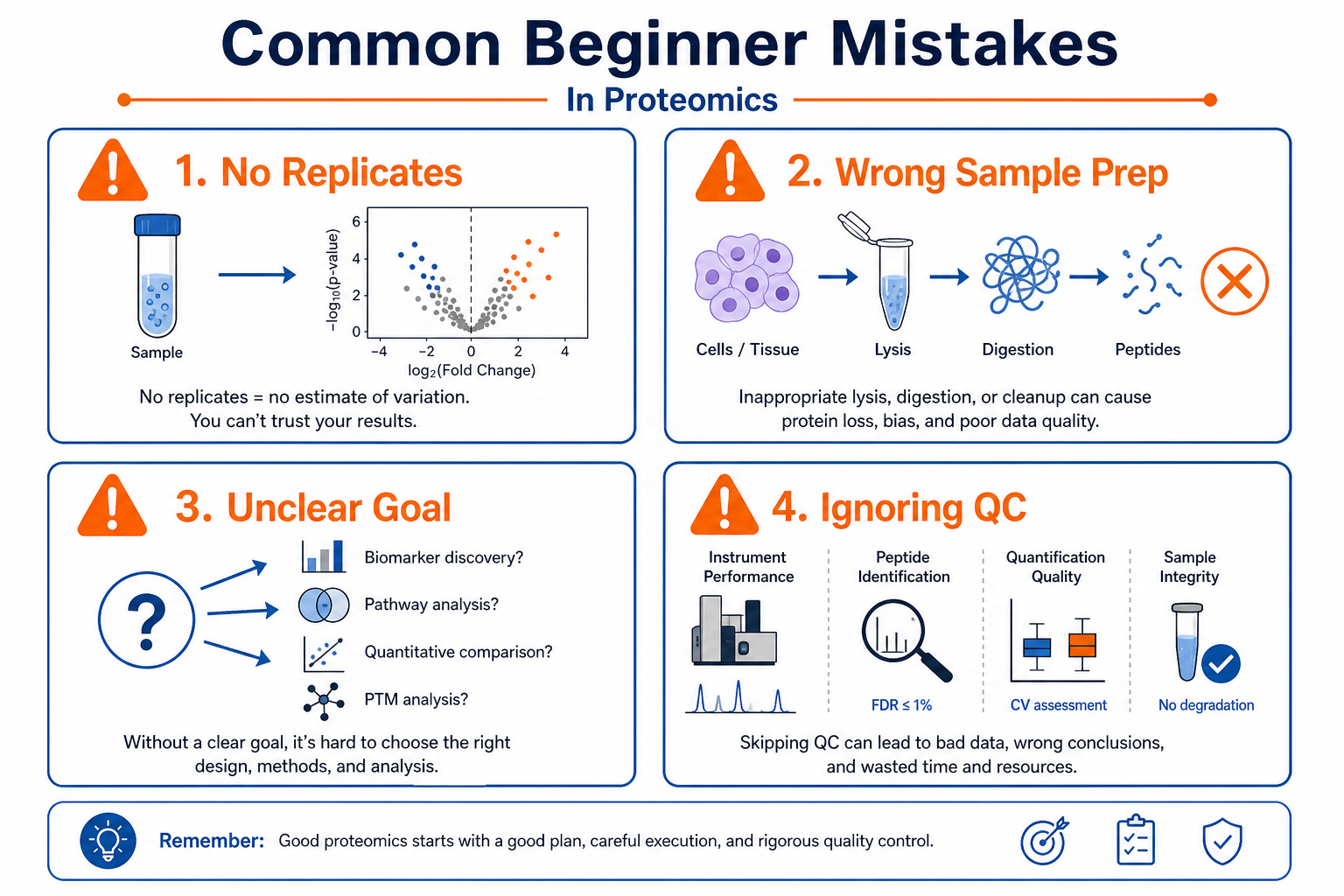
Figure 4. Common beginner mistakes in mass spectrometry-based proteomics include weak replicate design, inconsistent sample handling, and unclear project goals.
Beginner Glossary in Plain Language
|
Term |
Plain-Language Meaning |
|---|---|
|
LC-MS/MS |
Liquid chromatography combined with tandem mass spectrometry for peptide separation and fragmentation |
|
Bottom-up proteomics |
Protein digestion into peptides before mass spectrometry analysis |
|
Peptide-spectrum match (PSM) |
Assignment between an experimental MS/MS spectrum and a peptide sequence |
|
Protein inference |
Grouping identified peptides into protein-level results |
|
False discovery rate (FDR) |
Statistical filter that limits false positive identifications |
|
Label-free quantitation |
Comparing peptide intensities across runs without chemical labels |
|
PRM |
Targeted monitoring of selected peptides after discovery |
|
Coverage |
How much of a protein sequence is supported by identified peptides |
These terms appear in nearly every introductory proteomics report. Knowing them makes service quotes and result tables easier to review.
When to Move Beyond a Beginner Workflow
A beginner workflow is enough when the goal is exploratory identification, a first treatment comparison with modest sample number, or initial peptide mapping on a defined product.
A more advanced design may be needed when the project requires deep low-abundance coverage, large clinical cohort quantitation, specialized PTM enrichment, intact proteoform analysis, or assay-style targeted monitoring across many batches.
The transition usually happens after the first dataset clarifies which proteins or modifications matter most.
Frequently Asked Questions
Is mass spectrometry-based proteomics suitable for a first protein experiment?
Yes, when the question, sample type, and replicate design are defined clearly. Bottom-up LC-MS/MS is a standard entry point for many laboratories.
How many replicates does a beginner project need?
Biological replicates are strongly recommended for quantitative comparison. The exact number depends on sample variability and project goals, but single samples per condition are usually insufficient.
What is the difference between a protein list and peptide evidence?
The protein list is a summary inference. Peptide evidence shows the underlying spectral matches that support each protein call.
Do beginners need bioinformatics support?
Basic interpretation can be done by reviewing protein tables, peptide matches, and QC notes. Pathway analysis or complex statistics may require additional support.
When should a beginner use a proteomics service instead of an in-house pilot?
A service is often useful when sample preparation, instrument access, or reporting format requirements exceed what the current laboratory can support reliably for the first project.
Conclusion
Mass spectrometry-based proteomics becomes much more approachable when beginners focus on the project question, replicate design, workflow logic, and report structure rather than on instrument details alone. A standard bottom-up path moves from sample preparation and digestion through LC-MS/MS to database searching and protein reporting. Strong first projects define deliverables early, avoid common planning mistakes, and read peptide evidence alongside protein summaries.
Beginners who plan carefully usually obtain data that support the next biological or quality decision instead of a disconnected protein list that requires repeat analysis.
Teams starting their first mass spectrometry-based proteomics project can contact MtoZ Biolabs to review sample type, replicate design, and reporting goals before experiments begin.
If a beginner project needs both identification and a publication-ready report format, MtoZ Biolabs can help define phase 1 sample scope and phase 2 analysis deliverables.
Researchers evaluating proteomics options for a first study can request a project assessment from MtoZ Biolabs to match workflow depth with the study question.
How to order?




