






Before You Submit: Peptide Mapping Service Essentials
Introduction
Peptide mapping service requests often arrive when a biologics team needs sequence coverage evidence on a fixed timeline. The sample may be ready to ship, the reference sequence may exist in an internal file, and the project may already be tied to lot release, comparability, or regulatory documentation. Yet many submissions still require repeat digestion, additional sample, or scope revision because key details were not confirmed before shipment.
Common pre-submission gaps include undefined reporting goals, incomplete reference sequence files, buffer compositions that interfere with digestion, and sample purity below what LC-MS/MS mapping can support reliably. These issues do not always appear during initial project discussion. They surface after the sample reaches the laboratory and feasibility review begins. A short pre-submission review can prevent most of these delays.
Why Peptide Mapping Submissions Fail or Require Rework
Most peptide mapping service delays trace back to a small set of recurring issues rather than instrument limitations alone.
Undefined reporting goal.
A team may request peptide mapping without specifying whether the priority is identity confirmation, PTM localization, comparability, or release-support documentation. Each goal requires a different digestion strategy, review depth, and report format.
Missing or outdated reference sequence.
Database searching and coverage mapping depend on an accurate reference sequence for each chain or domain. Missing signal peptides, incorrect chain pairing, or outdated construct files can reduce coverage confidence after analysis begins.
Sample purity and concentration problems.
Host cell proteins, aggregates, detergents, and low product concentration can suppress peptide detection or increase background interference during LC-MS/MS analysis.
Incompatible formulation buffer.
High salt, strong buffering agents, excipients, and stabilizers can interfere with digestion efficiency, chromatography performance, or peptide recovery.
Unrealistic coverage expectations without feasibility review.
Highly modified products, complex fusion formats, and difficult sequence regions may not reach full coverage in a single digestion route without prior method discussion.
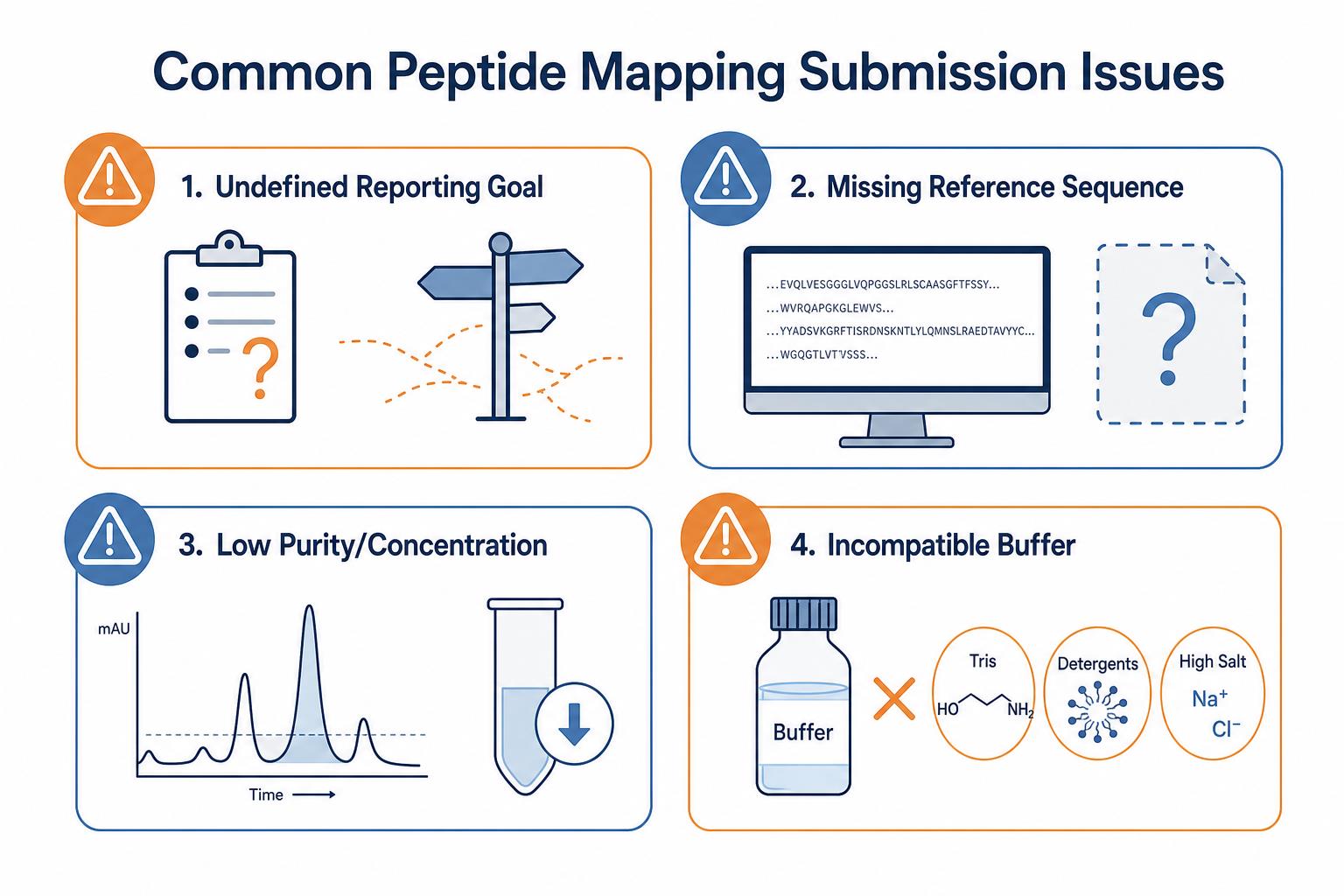
Figure 1. Most peptide mapping submission delays trace back to scope, sequence, sample, or buffer issues that can be reviewed before shipment.
Pre-Submission Checklist: Six Steps Before You Submit
A practical pre-submission review can be completed before the sample leaves the lab. The steps below translate common service requirements into an actionable checklist.
Define the reporting goal by stating whether the project requires identity confirmation, PTM localization, comparability between lots, or documentation for internal QC or regulatory support. Provide a complete reference sequence that includes mature chain sequences, fusion domain boundaries, expected modifications, and any known variants or clipped forms. Confirm sample purity and concentration by sharing purity estimates, SDS-PAGE or SEC results when available, and the approximate protein concentration. Document buffer composition by listing buffer type, pH, salts, detergents, excipients, and storage conditions that may affect digestion or LC-MS/MS performance. Align digestion strategy with product format by noting whether the product is a mAb, fusion protein, ADC, or other format that may require multi-enzyme mapping or modified-peptide enrichment. Set the validation standard early by defining whether the report must support release review, comparability assessment, or exploratory characterization so deliverables match the intended use.
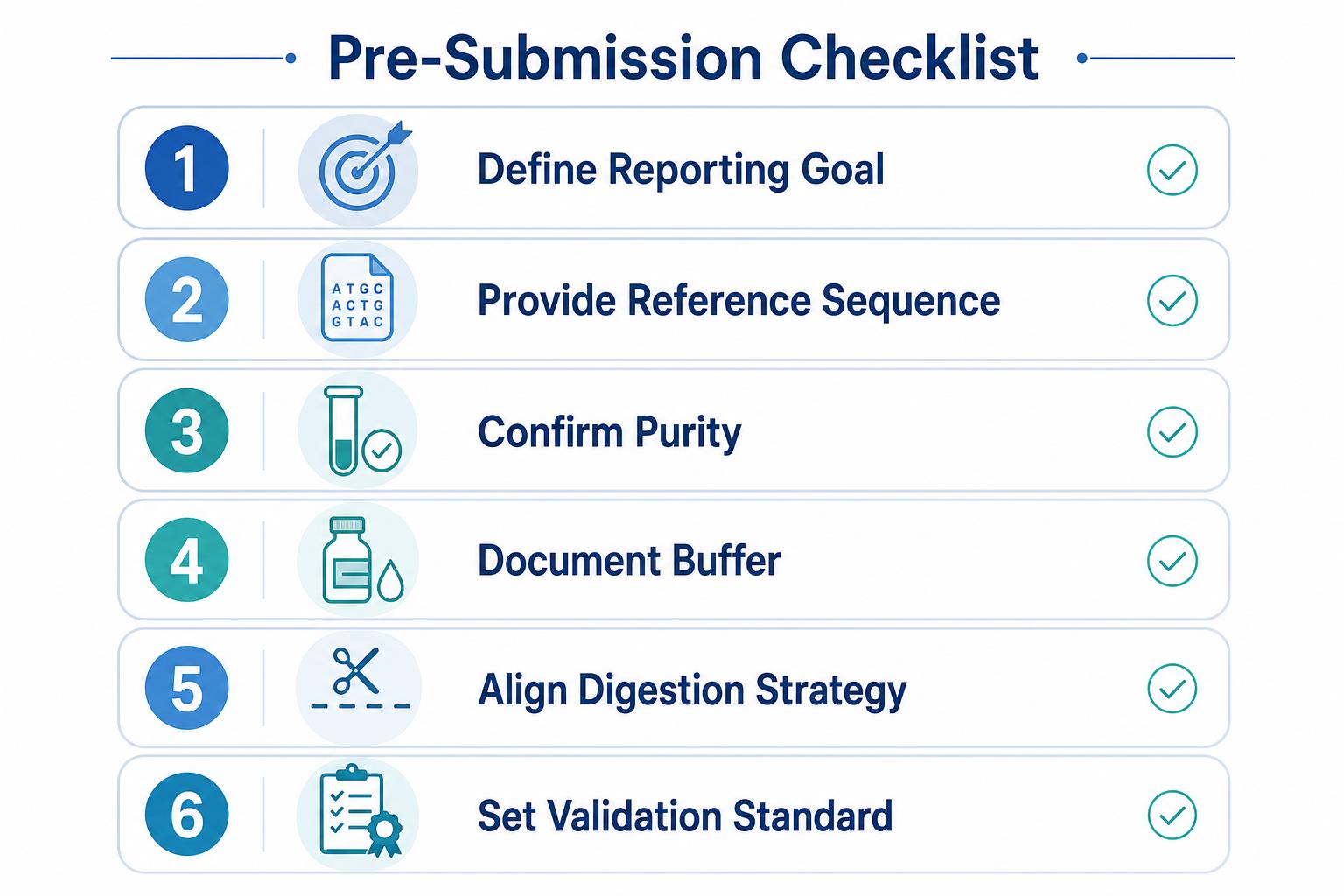
Figure 2. A pre-submission checklist helps align reporting goals, sample quality, and validation expectations before peptide mapping begins.
How to Prepare the Sample for Shipment
Sample handling before shipment affects whether the first analysis run produces usable peptide evidence.
Use the most representative material available.
For comparability projects, reference and test samples should reflect the lots or conditions under review. For release support, use material from the same manufacturing stage defined in the project scope.
Minimize unnecessary freeze-thaw cycles.
Repeated thawing can promote aggregation or modification changes that complicate peptide mapping interpretation.
Provide accurate concentration information.
Underreporting or overreporting sample concentration can lead to incorrect digestion input and weak peptide signals.
Label sample identity clearly.
Include product name, lot number, chain information, and any known modifications or formulation notes on the submission form and container label.
Share storage and shipping conditions.
Temperature control and transit time matter for labile products and modified biologics.
Include a short project note.
A brief note describing the decision behind the request helps the service team align digestion design and reporting format with the actual need.
Related Services
Teams preparing a peptide mapping submission often need adjacent primary structure support alongside core mapping. Relevant services include:
Biopharmaceutical Peptide Mapping Analysis Service
HPLC-Based Peptide Mapping Assays Service
Protein Full Sequence Coverage Analysis Service
Primary Structure Analysis Service
High-Resolution LC-MS Molecular Weight Identification Service
Researchers preparing a peptide mapping service submission can consult MtoZ Biolabs to review sample status, reference sequence files, and reporting goals before samples are shipped.
Sample and Documentation Readiness
The table below summarizes what a peptide mapping service provider typically needs at intake. It supports submission planning but does not replace project-specific feasibility review.
|
Submission Item |
What to Provide |
Why It Matters |
|---|---|---|
|
Reference sequence |
Mature sequence for each chain or domain |
Required for coverage mapping and PSM assignment |
|
Reporting goal |
Identity, PTM, comparability, or QC documentation |
Determines digestion depth and report format |
|
Sample type |
Drug substance, drug product, or purified research material |
Matrix composition affects digestion and LC-MS/MS performance |
|
Purity and concentration |
Estimated purity and mg/mL or similar measure |
Low purity or concentration can reduce peptide detection |
|
Buffer composition |
Full formulation or purification buffer details |
Salts, detergents, and excipients can interfere with workflow steps |
|
Comparison plan |
Reference lot plus test lot, if applicable |
Comparability projects require paired sample design |
|
Prior analytical data |
Intact mass, charge variant, or prior peptide map results |
Existing data can guide scope and reduce duplicate work |
If any item above is incomplete, feasibility review before shipment is preferable to sending material with assumptions that the service provider will infer the missing details later.
Expected Results and How to Validate Them
A well-scoped peptide mapping service submission should produce report elements that match the stated goal. Expected outputs often include:
- sequence coverage map for each chain or domain
- peptide identification table with retention time, mass, and search scores
- PTM summary with localization confidence notes when modification review is in scope
- comparability summary when multiple samples are analyzed
- QC comments on unsupported regions, ambiguous assignments, or matrix-related limitations
Validation should be defined before submission. A report intended for lot release may require tracked critical peptides and predefined review criteria. A report intended for early development may focus on identifying major coverage gaps or dominant modification patterns. Orthogonal data from intact mass analysis, N-terminal sequencing, or glycan profiling can strengthen interpretation when modifications or variants are central to the review.
Useful validation questions after report delivery include:
- Does observed coverage support the intended identity or comparability claim?
- Are unsupported regions explained with sufficient QC commentary?
- Are modified peptides assigned with evidence appropriate to the project standard?
- Does the report format meet internal QC or documentation requirements?
Teams unsure whether their documentation package meets intake requirements can contact MtoZ Biolabs for a pre-submission feasibility review before samples are shipped.
Key Considerations Before Final Submission
Several decisions are easier to make before the sample ships than after the first data review.
Match scope to the decision at hand.
A broad exploratory request and a release-support request require different digestion depth, review effort, and reporting detail.
Do not assume full coverage without feasibility review.
Complex products may need multi-enzyme mapping or follow-up analysis to address difficult regions.
Treat buffer and formulation details as required data.
Omitting excipient or detergent information often leads to digestion optimization delays.
Plan paired samples for comparability early.
Reference and test materials should be submitted with clear labeling and comparable handling history.
Reserve material for potential repeat analysis.
Low sample amount can limit options if a second digestion strategy or confirmatory run becomes necessary.
Clarify deliverable format in advance.
Some teams need searchable peptide tables, annotated spectra, or report language suited to internal QC or regulatory documentation.
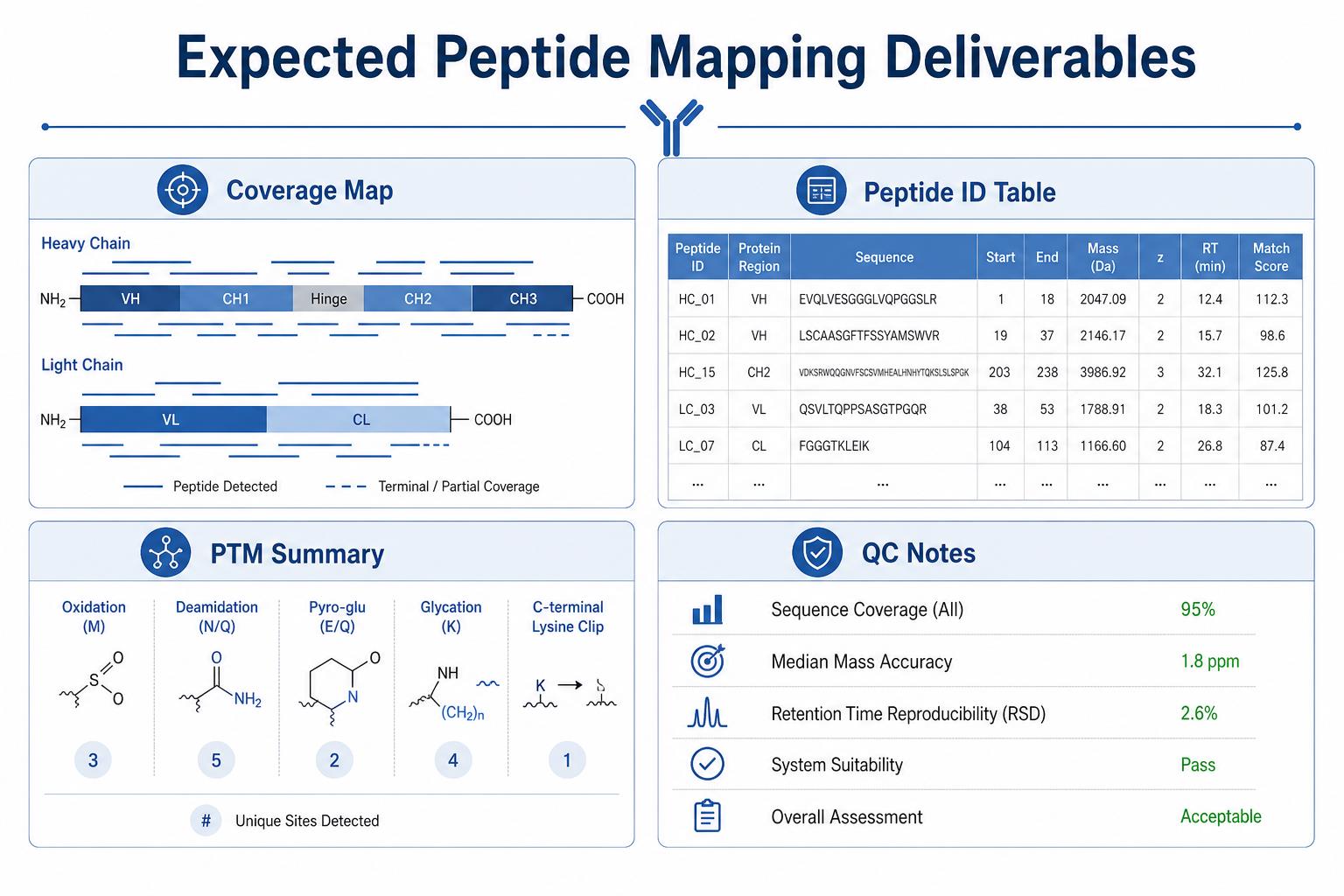
Figure 3. Expected peptide mapping deliverables should match the reporting goal defined before sample submission.
Frequently Asked Questions
1. What should I prepare before submitting to a peptide mapping service?
Define the reporting goal, provide a complete reference sequence, confirm sample purity and concentration, document buffer composition, and state whether comparability or PTM review is required. Feasibility review before shipment is recommended when any of these details are uncertain.
2. Can drug product formulations be submitted for peptide mapping?
Yes, when product concentration and matrix composition are compatible with digestion and LC-MS/MS analysis. Excipients and buffer components should be disclosed during feasibility review because they can affect peptide recovery and detection.
3. What reference sequence information is required?
Provide the mature amino acid sequence for each chain or domain included in the analysis scope. Include known fusion boundaries, expected modifications, and any sequence features that may affect digestion or coverage interpretation.
4. How do I know whether the report will meet my QC or comparability needs?
The validation standard should be defined before submission. Share the intended use of the report during project scoping so digestion strategy, review depth, and deliverable format can be aligned with that requirement.
5. What causes repeat analysis in peptide mapping projects?
Repeat analysis often results from incomplete reference sequence files, incompatible sample buffer, insufficient sample amount, undefined reporting scope, or coverage expectations that were not discussed during feasibility review.
Conclusion
Peptide mapping service submissions move faster and produce more usable reports when reporting goals, reference sequence files, sample quality, and validation standards are confirmed before shipment. Most rework traces back to missing scope definition, incomplete documentation, or matrix conditions that were not reviewed during feasibility assessment. A short pre-submission checklist covering project goal, sequence data, sample readiness, buffer composition, digestion strategy, and expected deliverables can prevent common delays and align the service output with the intended characterization use. Researchers preparing peptide mapping service submissions can contact MtoZ Biolabs to review sample status, documentation completeness, and the appropriate reporting path before samples are shipped.
How to order?




