






AP-MS vs Co-IP Which Method Fits Your Protein Interaction Study?
Introduction
A protein interaction study can fail before the first enrichment if the method route is wrong. A team may order AP-MS when the project only needs to test one suspected partner, while another group runs repeated Co-IP western blots while dozens of untested candidates remain invisible. Both AP-MS and Co-IP enrich a bait and look for associated proteins, but they answer different PPI questions and return different evidence types.
Co-IP is strongest when the project needs targeted co-enrichment evidence for selected partners. AP-MS is strongest when the project needs bait-centered discovery or comparative identification of many co-enriched proteins by LC-MS/MS. This article compares AP-MS vs Co-IP for protein interaction studies and helps you decide which method fits the current phase, when a sequential plan is better, and what each route requires before samples are submitted.
Start With the PPI Question, Not the Method Name
Method choice should follow the interaction claim the study must support, not the method name that appeared in a nearby paper. If the question is whether Protein X co-enriches with a defined bait under specific conditions, Co-IP is often the better first route when bait and prey readouts are available. When the goal is to discover which proteins co-enrich with a bait and should enter a validation shortlist, AP-MS is usually the better starting point.
AP-MS also fits well when interaction neighborhoods must be compared after mutation, drug treatment, or stimulation, because many partners need to be evaluated under matched capture conditions. Co-IP, in contrast, is often the better follow-up when a candidate from discovery data must be tested for true co-enrichment with the bait. Framing the PPI question this way keeps the evidence level aligned with the current project phase.
What Co-IP Contributes to a PPI Study
Co-immunoprecipitation captures a bait protein with an antibody, then tests whether one or more prey proteins co-purify under the chosen lysis and wash conditions. The readout is usually targeted: western blotting, immunoassay detection, or related antibody-based analysis of selected prey proteins. Co-IP can be combined with MS, but in many project discussions it refers to candidate-focused enrichment with targeted detection rather than open discovery.
Co-IP fits PPI studies that already have a short list of partners to test, confirmation work after AP-MS or other discovery data when bait and prey detection reagents are available, and pairwise interaction claims when the project does not need an unbiased proteome-scale partner list. Its main limitation is prey coverage: partners without a detection strategy remain invisible regardless of whether they co-purify.
What AP-MS Contributes to a PPI Study
AP-MS enriches a bait through an affinity handle and identifies co-purifying proteins by LC-MS/MS, usually with control-based filtering. The readout is discovery-oriented, with typical outputs including protein identification tables, enrichment ranking against controls, and candidate interactor shortlists.
AP-MS fits PPI studies that need bait-centered partner discovery without antibodies for every prey protein, comparative interaction analysis across mutant baits, treatment arms, or time points when capture chemistry is matched, and shortlist generation before reciprocal Co-IP, domain mapping, or functional validation. AP-MS does not by itself prove direct binary binding; co-enrichment under defined capture conditions supports candidate nomination, not final PPI proof.
AP-MS vs Co-IP: Decision Dimensions That Matter
The useful comparison is not instrument brand or generic sensitivity language. It is project fit across question scope, reagent demand, output type, control logic, and project phase. Co-IP is candidate-driven and usually requires a bait antibody plus prey detection reagents for targeted readouts. AP-MS is bait-centered and discovery-oriented, returning ranked candidate lists from proteomics analysis without prey-specific antibodies for initial screening.
Both methods require appropriate controls, but AP-MS discovery depends heavily on empty-tag, bead-only, or equivalent background models to filter sticky proteins. In practice, discovery favors AP-MS and confirmation favors Co-IP, though many strong PPI programs use both in sequence rather than treating them as interchangeable substitutes.
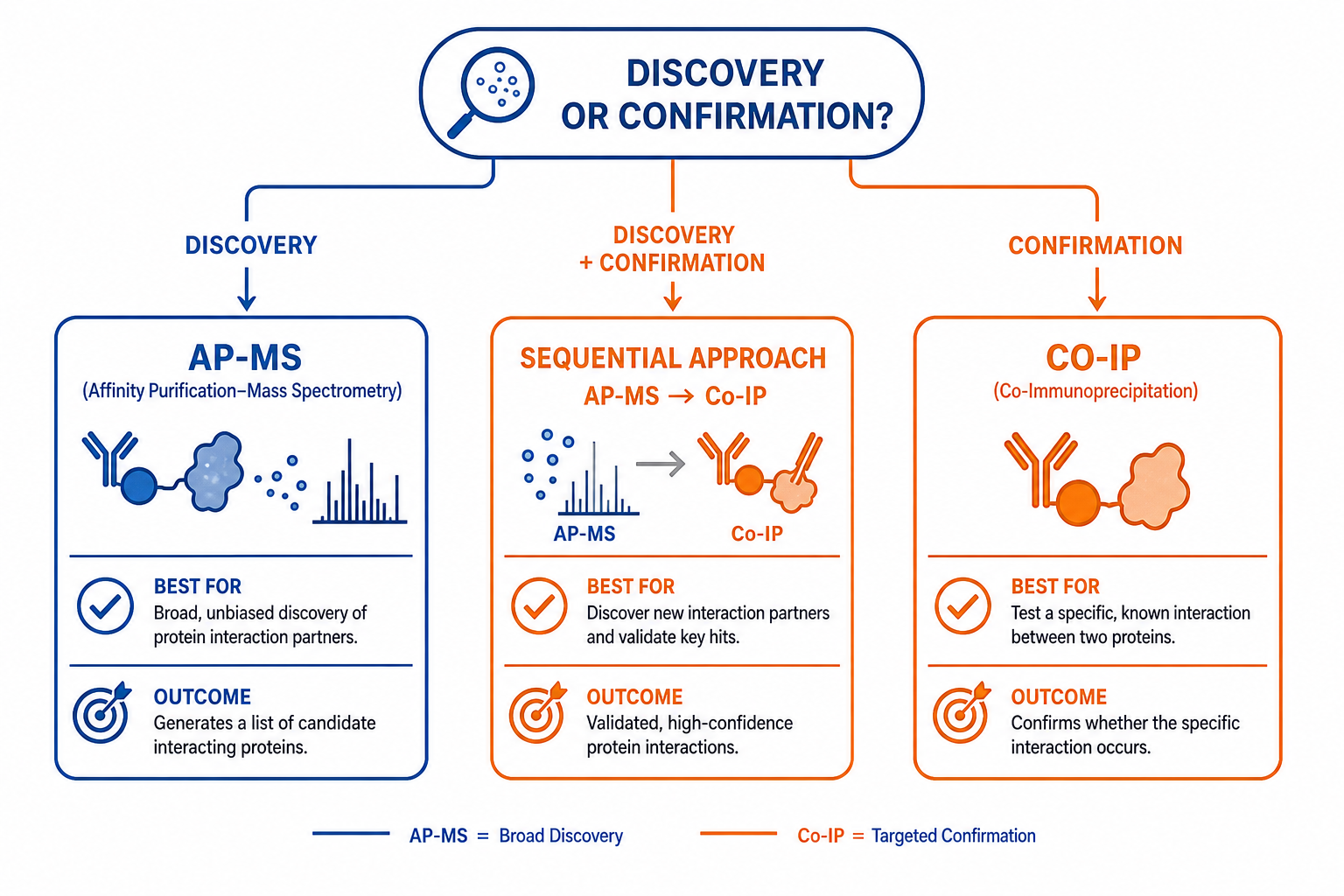
Figure 1. AP-MS fits bait-centered discovery and comparison, while Co-IP fits targeted confirmation and pairwise PPI testing.
Side-by-Side Comparison for PPI Study Selection
|
Decision factor |
Co-IP |
AP-MS |
|---|---|---|
|
Primary PPI goal |
Confirm selected partners |
Discover or compare bait-associated proteins |
|
Typical readout |
Targeted WB or immunoassay |
LC-MS/MS identification and ranking |
|
Prey antibody need |
Usually required for targeted detection |
Not required for initial discovery |
|
Partner coverage |
Limited to assayed prey proteins |
Broader bait-centered survey |
|
Best project phase |
Confirmation or pairwise testing |
Discovery or comparative screening |
|
Main risk |
Missing unassayed partners |
Background proteins without strong controls |
|
Common next step |
Functional assay on validated pair |
Co-IP validation of shortlisted candidates |
The table supports method selection at project start. It does not mean AP-MS and Co-IP are interchangeable if the PPI question stays the same.
When Co-IP Fits Better Than AP-MS
Co-IP is usually the better first choice when the PPI study already has defined partners to test and reliable bait and prey detection reagents, or when the project goal is a yes-or-no co-enrichment result for one or two proteins rather than an unbiased partner survey. It is also the efficient route after AP-MS discovery has produced a shortlist and the current phase is validation of top candidates.
Co-IP often makes sense when sample amount, timeline, or reporting needs favor a focused interaction test over proteomics-scale discovery. When the scientific decision depends on a small number of known proteins rather than ranking dozens of candidates, targeted co-enrichment is usually the more direct path.
When AP-MS Fits Better Than Co-IP
AP-MS is usually the better entry point when the PPI study needs to discover which proteins co-enrich with a bait and prey-specific antibodies are not available for broad screening. It also fits mutant, treatment, or stimulation contrasts that require comparison of many potential partners under matched enrichment conditions, or when multiple baits in a pathway or complex must be analyzed with comparable capture chemistry.
When the deliverable must be a ranked candidate list for downstream validation rather than a single pairwise result, AP-MS avoids the need for many separate Co-IP experiments to probe an unknown partner space.
When a Sequential AP-MS to Co-IP Plan Is the Best Fit
AP-MS and Co-IP are often complementary rather than competing options within one PPI program. A common sequential plan uses AP-MS for bait-centered discovery or comparative screening, then Co-IP to validate selected candidates with targeted co-enrichment readouts. This approach fits when the team needs both breadth and defensible confirmation, or when publication or internal review requires MS-based discovery followed by orthogonal enrichment evidence on prioritized pairs.
Sequential planning works best when validation targets are defined before AP-MS begins, even if the exact prey list is not yet known. Decide in advance how many candidates will move forward and what confirmation standard they must meet.
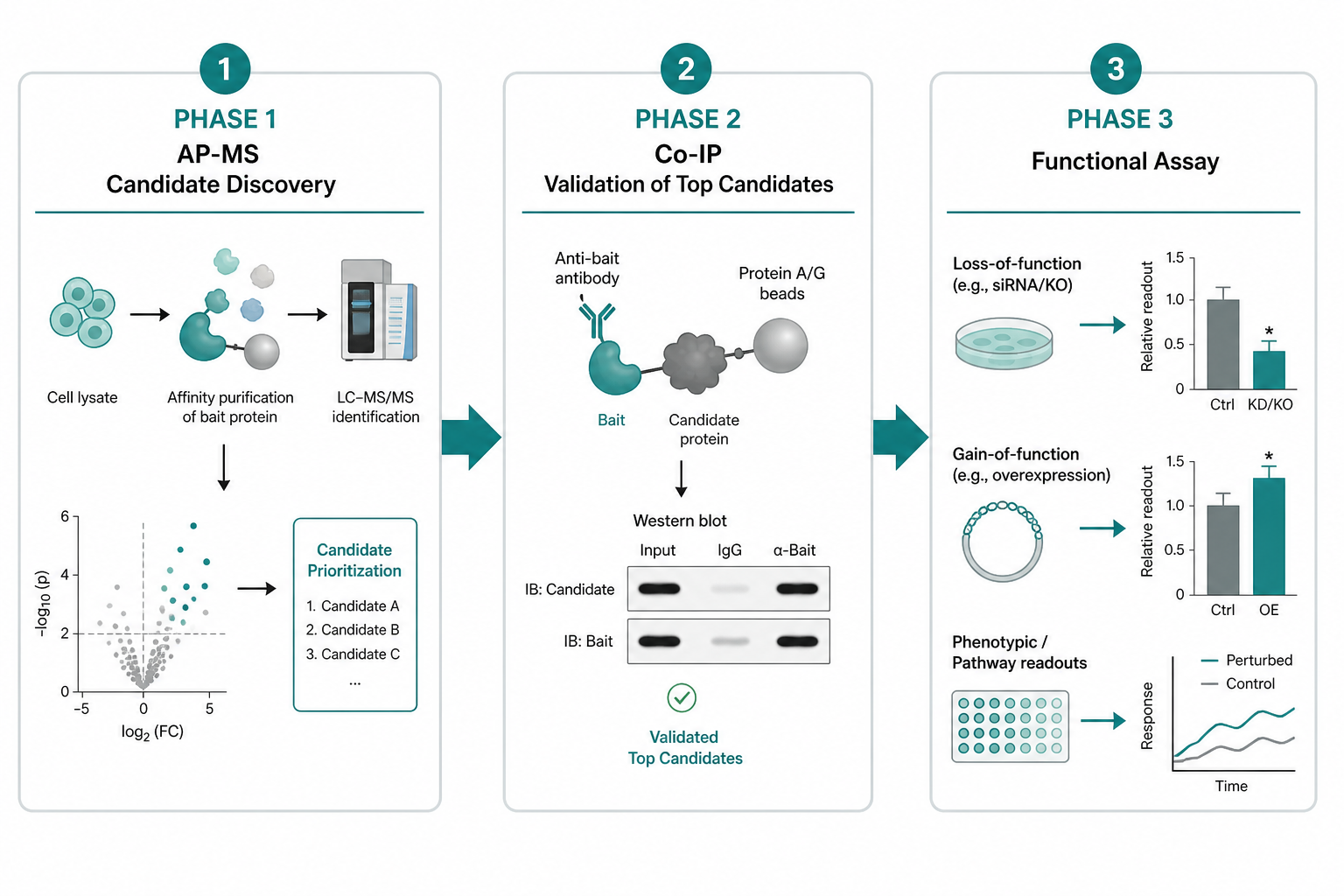
Figure 2. Many PPI studies use AP-MS for discovery or comparison and Co-IP for targeted validation of shortlisted partners.
Affinity Purification-Mass Spectrometry Service
Co-Immunoprecipitation Protein Interaction Analysis Service
Related Services
Alternative
Co-Immunoprecipitation Protein Interaction Analysis Service
Use when the PPI study requires targeted confirmation of selected partners rather than bait-centered discovery.
Complementary
Co-Immunoprecipitation Protein Interaction Analysis Service
Use after AP-MS to validate prioritized candidates with reciprocal or targeted co-enrichment assays.
Next Step
Affinity Purification-Mass Spectrometry Service
Review AP-MS scope when discovery or comparative interactome analysis is the current PPI phase.
Red Flags That Indicate the Wrong Method Choice
Several project signals suggest the current route should be reconsidered. If the team is running AP-MS but only cares about one prey protein, targeted Co-IP may be simpler. If the team is repeating Co-IP blots for many untested candidates, AP-MS discovery may be more efficient. If AP-MS results are being reported as final PPI proof without validation, the project phase has skipped Co-IP or an equivalent confirmation step.
Other warning signs include Co-IP failure due to weak prey antibodies when broad partner information is still needed, and AP-MS plans with no controls, which may produce a list that cannot support meaningful PPI interpretation regardless of discovery depth. These red flags are method-routing problems. Fixing them early avoids wasted samples and unclear interaction claims.
What to Prepare Before Requesting Method Guidance
Prepare project details that allow a meaningful AP-MS vs Co-IP recommendation. State whether the current PPI phase is discovery, comparison, or confirmation, and identify bait format plus whether a validated bait antibody or tagged construct is available. List known prey proteins if the project is confirmation-focused, describe comparison arms such as mutant, treatment, or time-point contrasts if the project is discovery-focused, and define the validation standard required for top candidates if a sequential plan is possible.
MtoZ Biolabs can use this information to recommend AP-MS, Co-IP, or a combined workflow matched to the current protein interaction study.
Frequently Asked Questions
1. Is AP-MS just Co-IP with mass spectrometry?
Not exactly. Co-IP often refers to targeted enrichment with selected prey detection. AP-MS usually refers to bait-centered enrichment followed by LC-MS/MS identification of many co-purifying proteins with control-based filtering.
2. Which method is better for protein interaction discovery?
AP-MS is usually better for bait-centered discovery because it does not require prey-specific antibodies for every candidate protein. Co-IP is better when the partners of interest are already defined.
3. Can Co-IP validate AP-MS candidates?
Yes. A common PPI workflow uses AP-MS for discovery or comparison and Co-IP for targeted validation of shortlisted partners.
4. Do I need controls for both methods?
Yes. Both methods require appropriate negative controls. AP-MS discovery especially depends on control contrast to filter background binders and tag-associated proteins.
5. When should I choose both AP-MS and Co-IP?
Choose both when the project needs a broad candidate list and later confirmation of selected pairs under a defined evidence standard.
Conclusion
AP-MS and Co-IP both enrich bait-associated proteins, but they fit different protein interaction study phases. AP-MS is usually the better choice for bait-centered discovery and comparative screening. Co-IP is usually the better choice for targeted confirmation and pairwise PPI testing. Many successful PPI programs combine them sequentially rather than treating the methods as interchangeable substitutes.
The best choice depends on the current PPI question, antibody availability, required output, and validation plan. Researchers comparing AP-MS vs Co-IP for a protein interaction study can review the Affinity Purification-Mass Spectrometry Service and Co-Immunoprecipitation service pages or contact MtoZ Biolabs with bait details, study phase, and confirmation requirements for method routing support.
How to order?




