






AP-MS Sample Preparation Before LC-MS/MS Analysis
Introduction
AP-MS projects often fail at the handoff between affinity enrichment and LC-MS/MS. Bait and control eluates may look acceptable on a gel yet remain poorly suited for digestion because of detergent carryover, incompatible buffer salts, or mismatched handling between arms. A weak preparation step can reduce peptide recovery, increase contaminant ion interference, and weaken the control contrast that interaction analysis depends on.
AP-MS sample preparation before LC-MS/MS analysis is the stage that converts enrichment material into MS-compatible peptides while preserving the relationship between bait samples and matched controls. This article explains what should be checked after elution, how to prepare AP-MS samples for digestion and LC-MS/MS, and which preparation risks most often undermine protein interaction analysis.
What Sample Readiness Means for AP-MS
Sample readiness for AP-MS is not the same as successful bait pull-down alone. Readiness means bait and control enrichments were generated with matched handling and can be processed into peptides under the same digestion and cleanup strategy. It also means eluate composition is compatible with proteolysis and downstream LC-MS/MS rather than blocking enzyme activity or column performance.
Readiness requires sample metadata that clearly identify bait arm, control type, replicate number, and any treatment or mutant contrast so LC-MS/MS results can support interaction filtering later. The team should also have checked bait recovery well enough to know whether low prey signal reflects biology, preparation loss, or empty enrichment. If these conditions are not met, LC-MS/MS may still run, but the data may not support meaningful protein interaction analysis.
Post-Enrichment Material That Can Enter LC-MS/MS Prep
AP-MS sample preparation usually begins after affinity capture and elution. Typical starting material includes eluted protein from tagged bait purifications, eluted protein from empty-tag or bead-only controls, and parallel enrichments from mutant, treatment, or time-point arms in comparative studies.
Some projects submit bead-bound material for on-bead digestion rather than eluted protein. That can be valid when the digestion strategy is matched across all arms, but the preparation plan must be fixed before samples are processed. Starting material should be labeled at the enrichment stage with arm identity and replicate information, because relabeling after pooling or cleanup increases the risk of swapped bait-control assignments. Teams outsourcing only LC-MS/MS should confirm whether the service expects eluates, digested peptides, or intact enrichment material before shipment.
Step 1. Confirm Matched Bait and Control Handling
The first preparation checkpoint is parity between bait and control samples. Bait and control enrichments intended for comparison should share lysis conditions, incubation time, wash stringency, elution method, and storage handling. If control samples were processed on a different day with different bead lots or wash volumes, preparation cannot fully restore comparability later.
Before digestion, review whether each bait arm has the intended control counterpart and whether replicates were generated independently rather than split after enrichment. Matched handling at the preparation stage protects the specificity filtering that AP-MS depends on after LC-MS/MS.
Step 2. Assess Eluate Quality and Buffer Compatibility
Eluate quality strongly affects digestion success and LC-MS/MS performance. Check for detergent or buffer components that may inhibit trypsin or interfere with peptide cleanup; high detergent carryover, strong denaturants not removed before digestion, or incompatible chelators are common problems in enrichment eluates.
Review whether elution strategy matches the downstream prep plan, since some elution chemistries require buffer exchange, protein concentration, or precipitations before proteolysis. Inspect whether bait protein is visible by an appropriate QC method when available. Very low bait recovery may still produce MS identifications, but many may represent background rather than bait-specific interactors. Document any visible differences between bait and control material such as volume loss, unusual precipitation, or low total protein relative to expected recovery. Buffer compatibility problems should be corrected before digestion rather than compensated by longer LC-MS/MS acquisition alone.
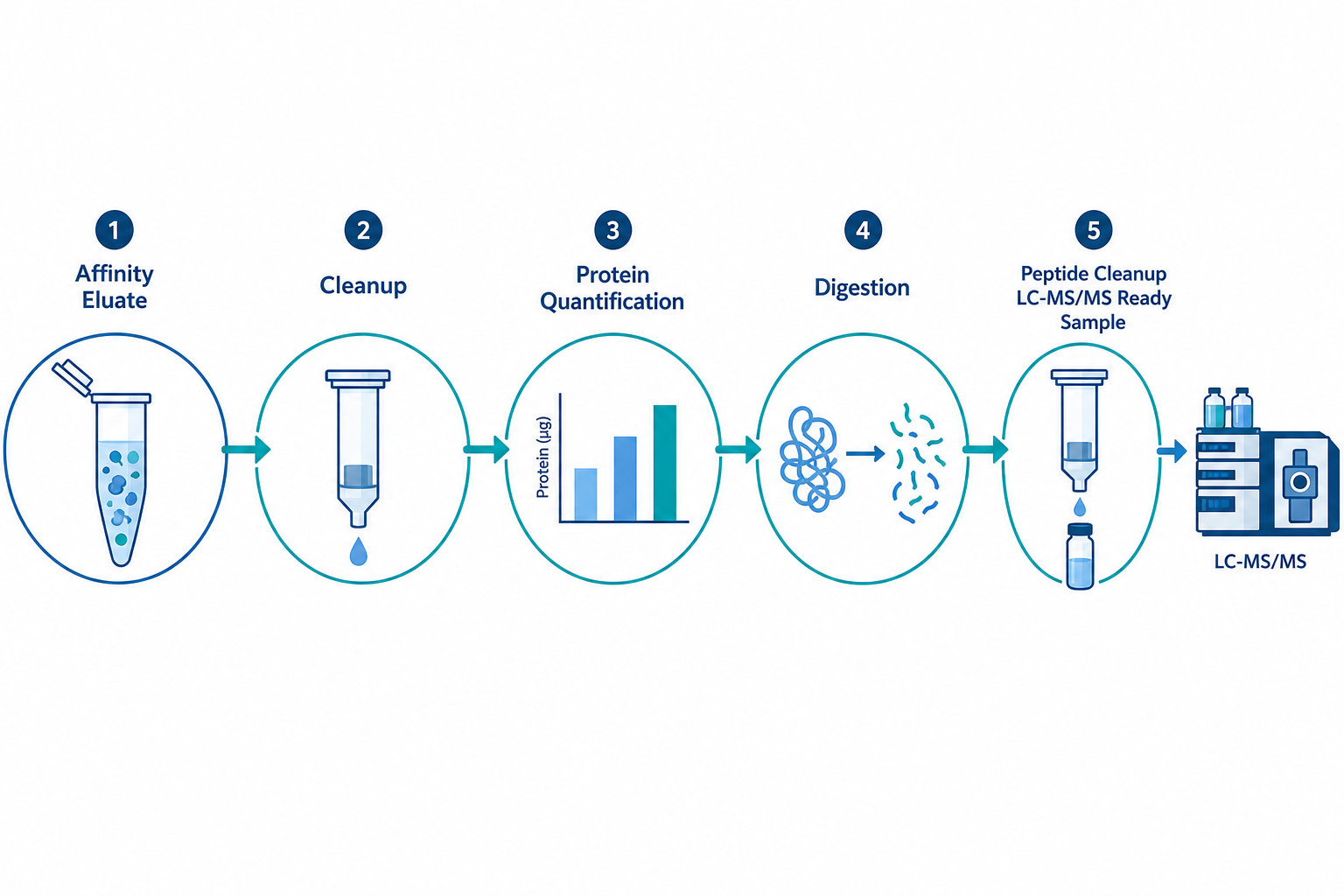
Figure 1. AP-MS sample preparation before LC-MS/MS includes eluate QC, cleanup, digestion, and peptide readiness checks.
Step 3. Prepare Samples for Digestion
Digestion preparation converts enriched protein material into peptides suitable for LC-MS/MS. Reduce and alkylate disulfide bonds when the prep workflow requires intact peptide solubility and consistent enzymatic access. Choose a protease strategy appropriate to the project; trypsin is common for interaction proteomics because it generates peptides compatible with standard database searching, but project-specific digestion choices should remain matched across compared arms.
Apply the same digestion time, enzyme ratio, and quench method across bait and control samples in a comparison set. Avoid introducing preparation differences such as extra freeze-thaw cycles, unequal cleanup steps, or selective pooling that apply to only some arms. If on-bead digestion is used, confirm that all arms follow the same on-bead protocol and that bead type does not differ between bait and control purifications unless that difference is part of the defined design.
Step 4. Peptide Cleanup Before LC-MS/MS
Peptide cleanup removes salts, detergents, and other contaminants that can suppress ionization or distort chromatography. Use a cleanup approach matched to the sample matrix and the receiving LC-MS/MS platform requirements, and process bait and control peptides with the same cleanup chemistry and handling time.
Track sample identity through cleanup, because this is a common point where bait-control swaps or replicate mislabeling occur in busy prep workflows. Evaluate whether peptide material is sufficient for the planned injection strategy. Extremely low input may still be analyzed, but missing values and unstable enrichment ranking become more likely. Peptide cleanup is the final wet-lab checkpoint before LC-MS/MS; errors here propagate directly into false interaction candidates or lost control contrast.
Step 5. Lock Metadata Before LC-MS/MS Submission
Metadata quality determines whether LC-MS/MS output can support interaction analysis. Each sample should record bait identity, control type, replicate number, treatment or mutant status, and enrichment date or batch identifier when relevant. Record the elution and digestion strategy used so downstream analysis can account for preparation differences across projects, and note any deviations from the planned protocol such as low bait recovery, repeated cleanup, or sample pooling.
If multiple arms will be analyzed in one LC-MS/MS batch, define run order and blocking logic in advance so technical variation does not align falsely with biological contrasts. Incomplete metadata often forces downstream analysis to treat all identifications as equally meaningful, which weakens AP-MS specificity review.
Sample Preparation Risks That Most Affect Interaction Analysis
Several preparation problems recur in AP-MS projects:
- Detergent carryover that reduces digestion efficiency and increases nonspecific background peptides.
- Unequal cleanup or storage handling between bait and control arms that creates artificial enrichment differences.
- Low bait recovery combined with deep MS analysis that over-reports sticky contaminants.
- Keratin and lab dust contamination introduced during late-stage open handling before LC-MS/MS.
- Missing or mismatched control samples that prevent bait-specific filtering after identification.
- Pooling replicates before analysis without preserving replicate identity needed for ranking robust prey proteins.
These risks are preparation problems. They should be corrected before LC-MS/MS when possible rather than interpreted away during bioinformatics.
Preparation Readiness by Sample Submission Type
Different submission formats require different readiness checks.
|
Submission material |
Readiness focus before LC-MS/MS |
|---|---|
|
Eluted protein |
Buffer compatibility, bait recovery, matched control eluates |
|
Bead-bound enrichment |
On-bead digestion plan matched across arms |
|
Pre-digested peptides |
Cleanup completeness, label integrity, injection readiness |
|
Outsourced enrichment plus MS |
Handoff documentation and matched control shipment |
The table helps teams confirm that the material arriving at the LC-MS/MS stage matches the intended interaction comparison.
Affinity Purification-Mass Spectrometry Service
LC-MS Analysis of Pull-down Proteins
AP-MS Sample Readiness Checklist
Use this checklist before LC-MS/MS analysis begins.
- Bait and matched control enrichments were processed with the same enrichment and elution strategy.
- Eluate or bead-bound material is labeled with arm, replicate, and contrast information.
- Buffer and detergent composition are compatible with the planned digestion workflow.
- Bait recovery was assessed enough to interpret low prey signal realistically.
- Digestion and cleanup conditions are matched across compared samples.
- Peptide material is free of known prep failures such as precipitation loss or repeated failed cleanup.
- Metadata and run submission records are complete for each sample.
- Late-stage contamination control was applied during open peptide handling.
Completing this checklist improves the chance that LC-MS/MS data can support protein interaction filtering rather than only raw identification.
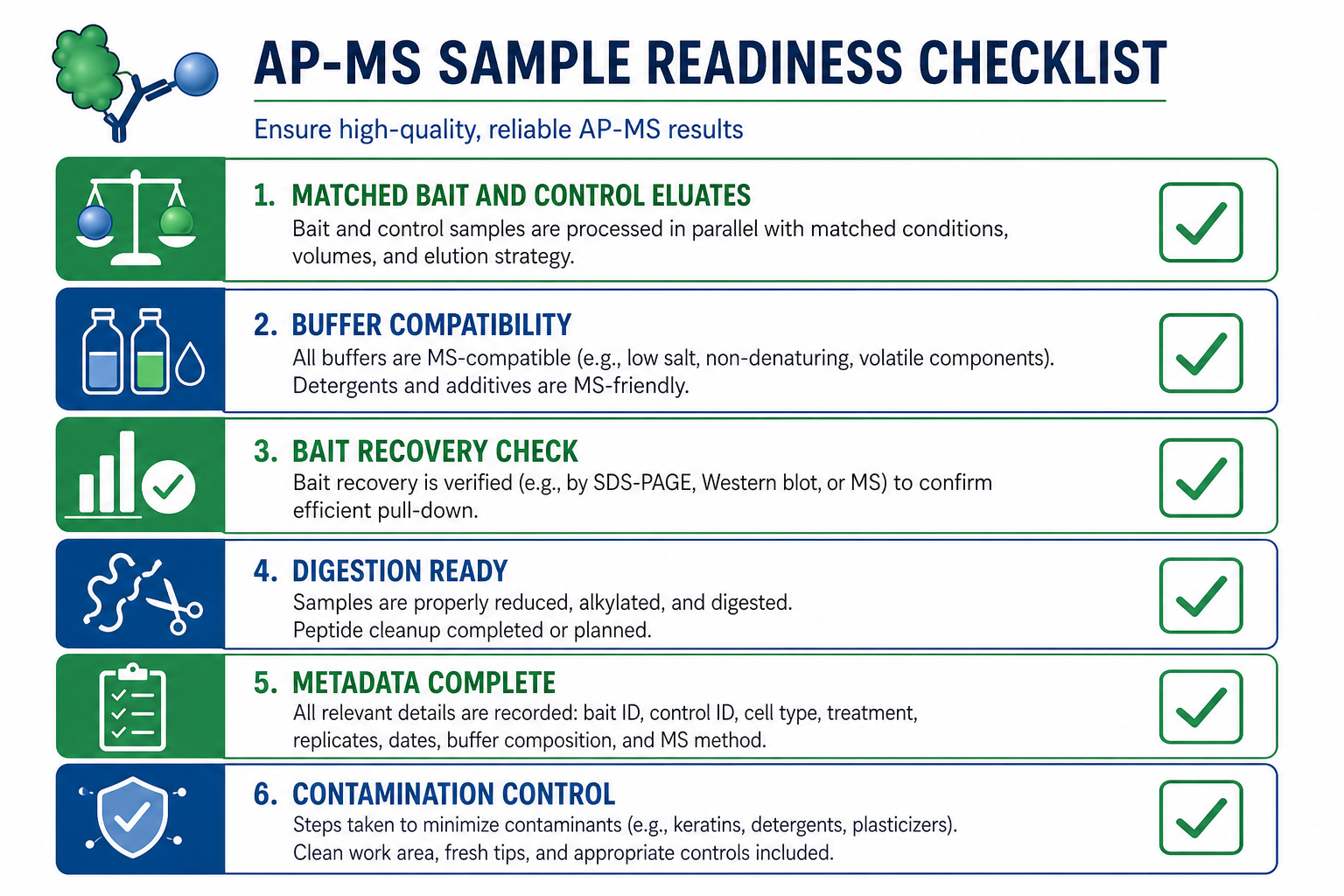
Figure 2. Sample readiness before LC-MS/MS depends on matched bait-control handling, digestion compatibility, and complete metadata.
Related Services
Complementary
LC-MS Analysis of Pull-down Proteins
Use when enrichment is complete and the project needs LC-MS/MS analysis of prepared pull-down or AP-MS material.
Next Step
Affinity Purification-Mass Spectrometry Service
Review full AP-MS support when enrichment, sample preparation, and LC-MS/MS should be planned as one interaction project.
Alternative
Pull Down based Protein Analysis Service with Mass Spectrometry
Use when the project requires pull-down based interaction analysis with a different service scope than standard tagged AP-MS enrichment.
What to Report Before Sending AP-MS Material for LC-MS/MS
A useful submission note should include more than sample names. List bait and control arm definitions for every tube or well, state enrichment format such as eluate, bead-bound material, or pre-digested peptides, and describe buffer components that may affect digestion or LC if cleanup was not fully completed. Report bait recovery observations and any protocol deviations, confirm replicate structure and intended comparison groups, and indicate whether the project requires discovery-only identification or quantitative contrast against controls.
MtoZ Biolabs can review this information to determine whether AP-MS material is ready for LC-MS/MS analysis or whether preparation should be adjusted first.
Frequently Asked Questions
1. Can AP-MS eluates go directly to LC-MS/MS without digestion?
Standard AP-MS protein interaction analysis uses proteolytic digestion to generate peptides for LC-MS/MS. Intact protein analysis is a different workflow and is not interchangeable with routine interaction identification.
2. Do control samples need the same preparation steps as bait samples?
Yes. Bait and control material intended for comparison should follow the same elution, digestion, cleanup, and handling steps.
3. What if bait recovery looks low before LC-MS/MS?
Low bait recovery should be documented before analysis. MS may still identify proteins, but specificity interpretation becomes harder and background proteins may dominate the list.
4. Is on-bead digestion acceptable for AP-MS samples?
Yes, when the same on-bead digestion strategy is applied consistently across bait and control arms and the protocol is defined before processing begins.
5. When should sample preparation be reviewed by a service provider?
Review is most useful before LC-MS/MS submission when buffer composition, control matching, or bait recovery is uncertain.
Conclusion
AP-MS sample preparation before LC-MS/MS analysis determines whether enrichment material can support protein interaction filtering after data acquisition. Matched bait-control handling, buffer-compatible digestion prep, peptide cleanup, and complete metadata are the main readiness requirements.
Preparation errors often appear later as weak control contrast, unstable candidate ranking, or excessive background identifications. Checking eluate quality and sample parity before LC-MS/MS is one of the most practical ways to protect AP-MS specificity. Researchers preparing AP-MS material for LC-MS/MS can review the Affinity Purification-Mass Spectrometry Service page or contact MtoZ Biolabs with enrichment format, control matching, and preparation details for readiness assessment.
How to order?




