






Antibody Peptide Mapping by LC-MS/MS: Workflow, Applications, and Quality Attributes
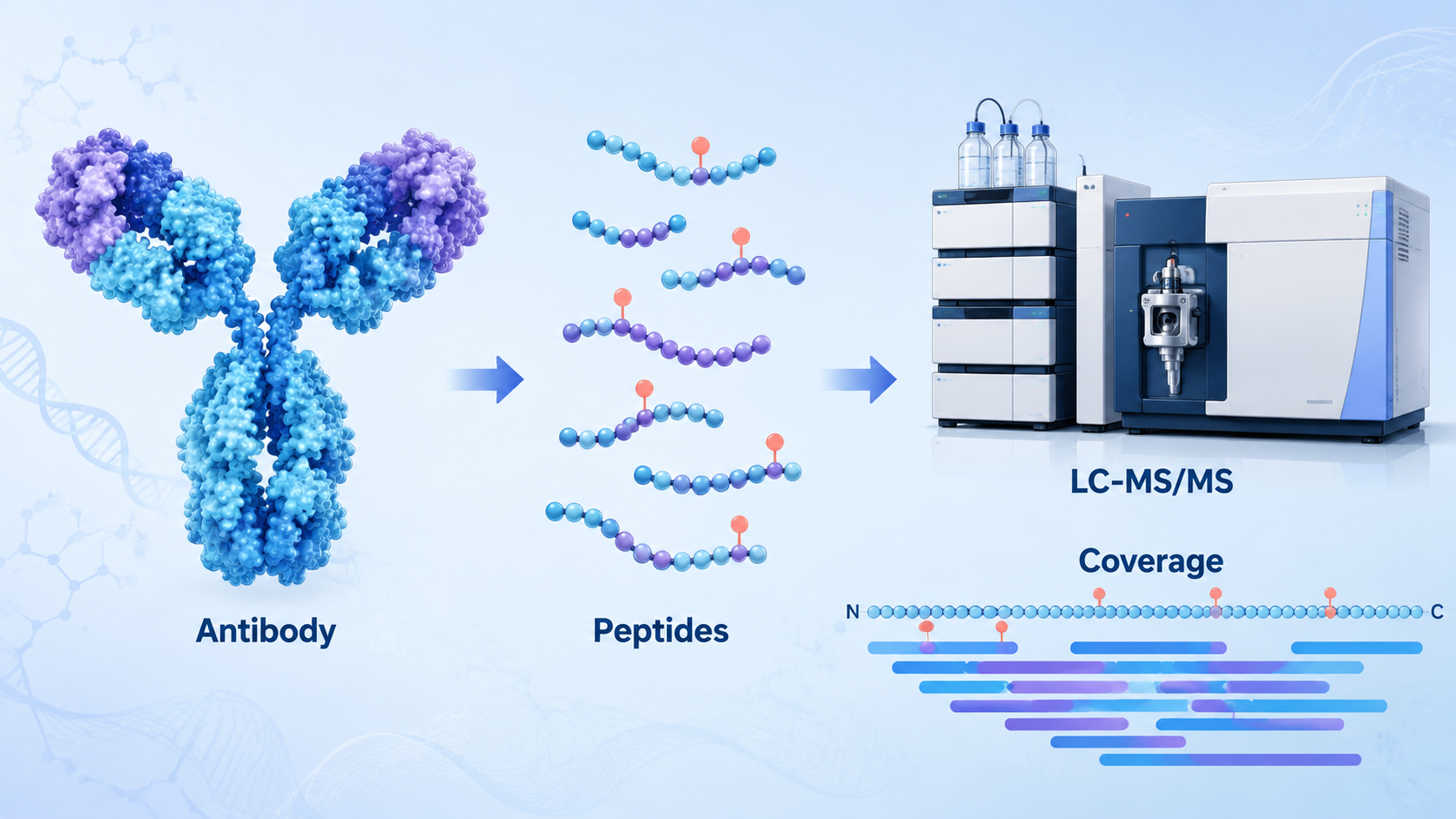
Antibody peptide mapping is an LC-MS/MS-based characterization method that digests an antibody into peptides and compares the resulting peptide map with the expected sequence. It is widely used in antibody drug development and quality control because it can confirm sequence coverage, identify post-translational modifications, monitor degradation products, locate sequence variants, and support batch or biosimilar comparability.
Key Takeaways
- Antibody peptide mapping connects peptide-level MS evidence to antibody sequence and quality attributes.
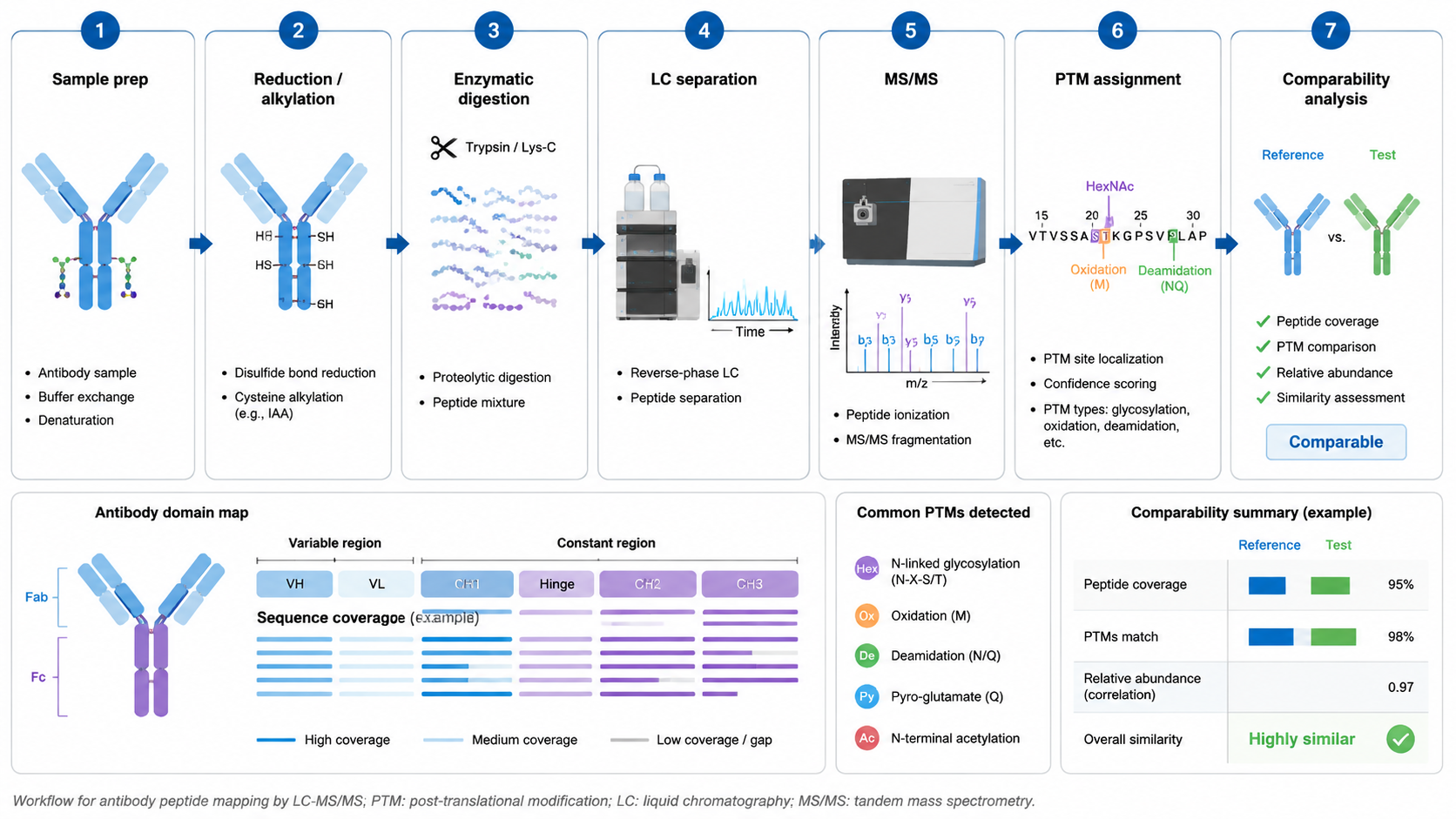
- The core workflow is denaturation, reduction/alkylation if needed, enzymatic digestion, LC separation, MS/MS detection, and data interpretation.
- It can detect oxidation, deamidation, glycosylation, clipping, sequence variants, disulfide-related peptides, and other structural features.
- Peptide mapping is often combined with intact mass analysis, glycan analysis, disulfide mapping, and charge heterogeneity analysis for full antibody characterization.
What Antibody Peptide Mapping Measures?
Peptide mapping measures the peptide fragments generated from an antibody after controlled enzymatic digestion. Each peptide has a predictable mass and sequence. By comparing measured peptide masses and MS/MS spectra with the theoretical antibody sequence, analysts can confirm identity and detect modifications or unexpected variants.
Related Services
Biopharmaceutical Peptide Mapping Analysis Service
Comprehensive Peptide Mapping Service
Peptide Mapping Analysis Service
Antibody Characterization Service
Core Workflow
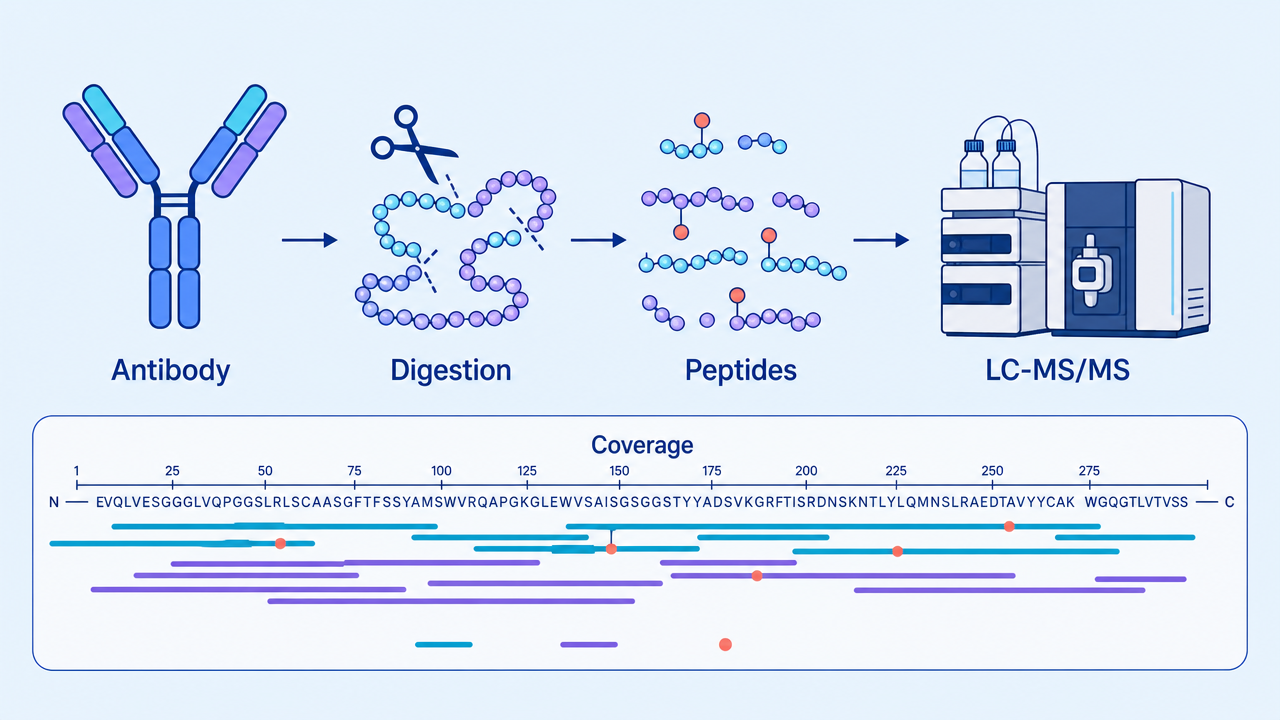
The workflow begins with antibody preparation under controlled conditions. Depending on the question, the antibody may be denatured, reduced, alkylated, buffer exchanged, or kept under non-reducing conditions for disulfide-related mapping. Proteases such as trypsin, Lys-C, Glu-C, or chymotrypsin are selected to generate useful peptide coverage.
After digestion, peptides are separated by reversed-phase LC and analyzed by high-resolution MS/MS. Data analysis matches observed peptides to the antibody sequence, assigns modifications, estimates sequence coverage, and compares peptide maps across samples or lots.
Quality Attributes Detected by Peptide Mapping
Antibody peptide mapping can detect chemical modifications such as methionine oxidation, asparagine deamidation, aspartate isomerization, lysine glycation, N-terminal pyroglutamate formation, C-terminal lysine clipping, and glycosylation-related peptides. It can also reveal unexpected peptides from sequence variants, impurities, host-cell proteins, or degradation products.
Applications in Antibody Development and QC
Peptide mapping supports identity confirmation, process development, stability studies, forced degradation studies, formulation screening, release testing, lot-to-lot comparability, biosimilar comparability, and investigation of out-of-specification results.
Limitations
Peptide mapping is powerful but not automatic. Incomplete digestion, missed cleavages, peptide coelution, low-abundance modifications, hydrophobic peptide loss, and ambiguous MS/MS assignment can affect interpretation. Some regions may require alternative enzymes or complementary methods.
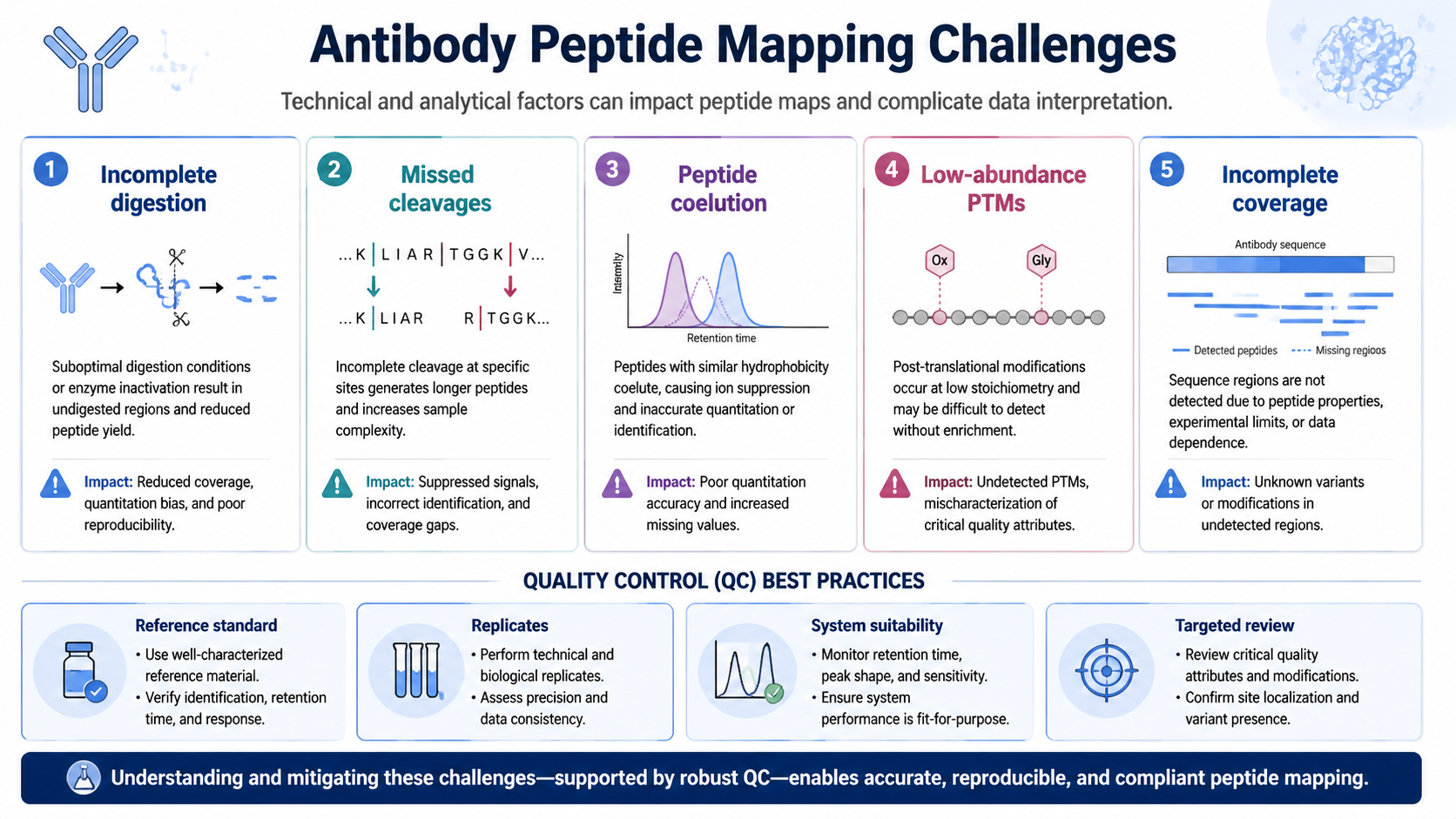
Good studies include reference standards, digestion controls, replicate injections, system suitability checks, sequence coverage review, and targeted inspection of critical quality attributes.
How Peptide Mapping Fits into Antibody Characterization?
| Question | Method contribution | Complementary method |
|---|---|---|
| Is the antibody sequence correct? | Confirms peptide-level sequence coverage | Intact mass, N/C-terminal sequencing |
| Are PTMs present and where? | Identifies modified peptides and sites | Targeted MS, intact or subunit analysis |
| Are disulfide bonds correct? | Non-reduced or specialized peptide mapping | Disulfide bond analysis |
| Is glycosylation consistent? | Detects glycopeptides and site context | Released glycan analysis |
| Are lots comparable? | Compares peptide maps and modification levels | Charge heterogeneity, intact mass, bioassays |
FAQ
1. What is antibody peptide mapping?
Antibody peptide mapping is an analytical method that digests an antibody into peptides and uses LC-MS/MS to confirm sequence, locate modifications, and compare quality attributes.
2. Why is peptide mapping important for antibody drugs?
It supports identity confirmation, PTM monitoring, degradation assessment, batch comparability, stability studies, and biosimilar quality evaluation.
3. Which modifications can antibody peptide mapping detect?
Common targets include oxidation, deamidation, glycosylation, glycation, N-terminal pyroglutamate, C-terminal lysine clipping, isomerization, and sequence variants.
4. Is peptide mapping enough for complete antibody characterization?
No. It is a core method, but full characterization usually also uses intact mass analysis, glycan analysis, disulfide mapping, charge variant analysis, and functional testing.
Conclusion
Antibody peptide mapping is a central tool for connecting antibody sequence to quality attributes. When digestion, LC-MS/MS acquisition, and data interpretation are well controlled, it provides actionable evidence for identity confirmation, PTM monitoring, degradation analysis, process optimization, and biosimilar comparability.
How to order?




