






Activity-Based Protein Profiling in Drug Discovery: Target Identification, Selectivity, and Mechanism Studies
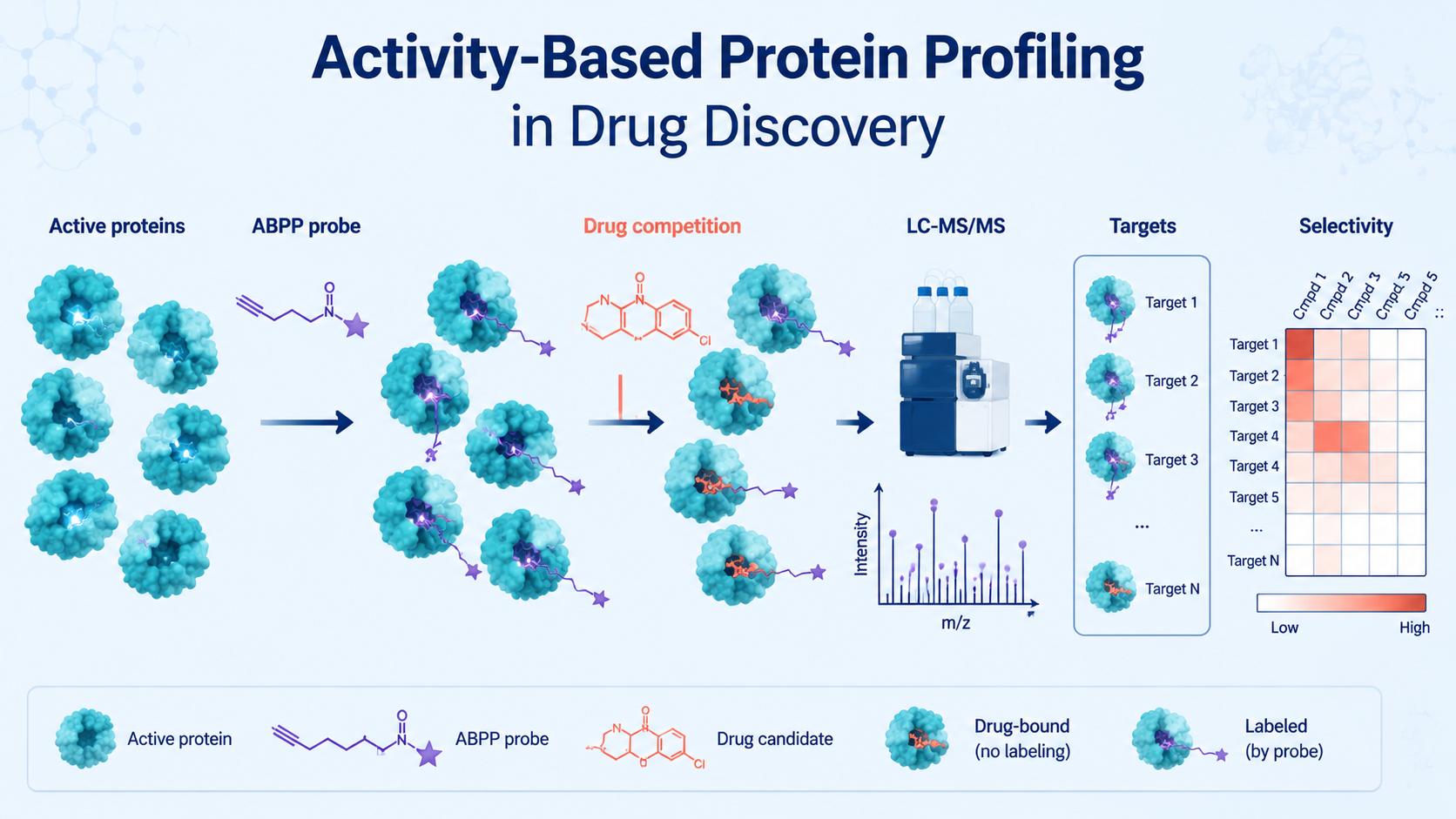
Activity-based protein profiling (ABPP) is a chemical proteomics strategy that measures protein activity, not just protein abundance. It uses activity-based probes to label active enzymes or functional protein classes in cells, tissues, or lysates, then identifies labeled proteins by LC-MS/MS. In drug discovery, ABPP helps find targets, test compound engagement, compare selectivity, and explain mechanism of action.
Key Takeaways
-
ABPP measures functional protein activity, which can reveal drug effects that static expression profiling may miss.
-
Competitive ABPP can show whether a small molecule blocks probe labeling of a target, supporting target engagement evidence.
-
ABPP is especially useful for enzyme families such as serine hydrolases, cysteine proteases, kinases, phosphatases, and oxidoreductases when suitable probes are available.
-
LC-MS/MS-based chemical proteomics can identify active proteins, off-targets, pathway effects, and biomarker candidates.
What Does ABPP Measure in Drug Discovery?
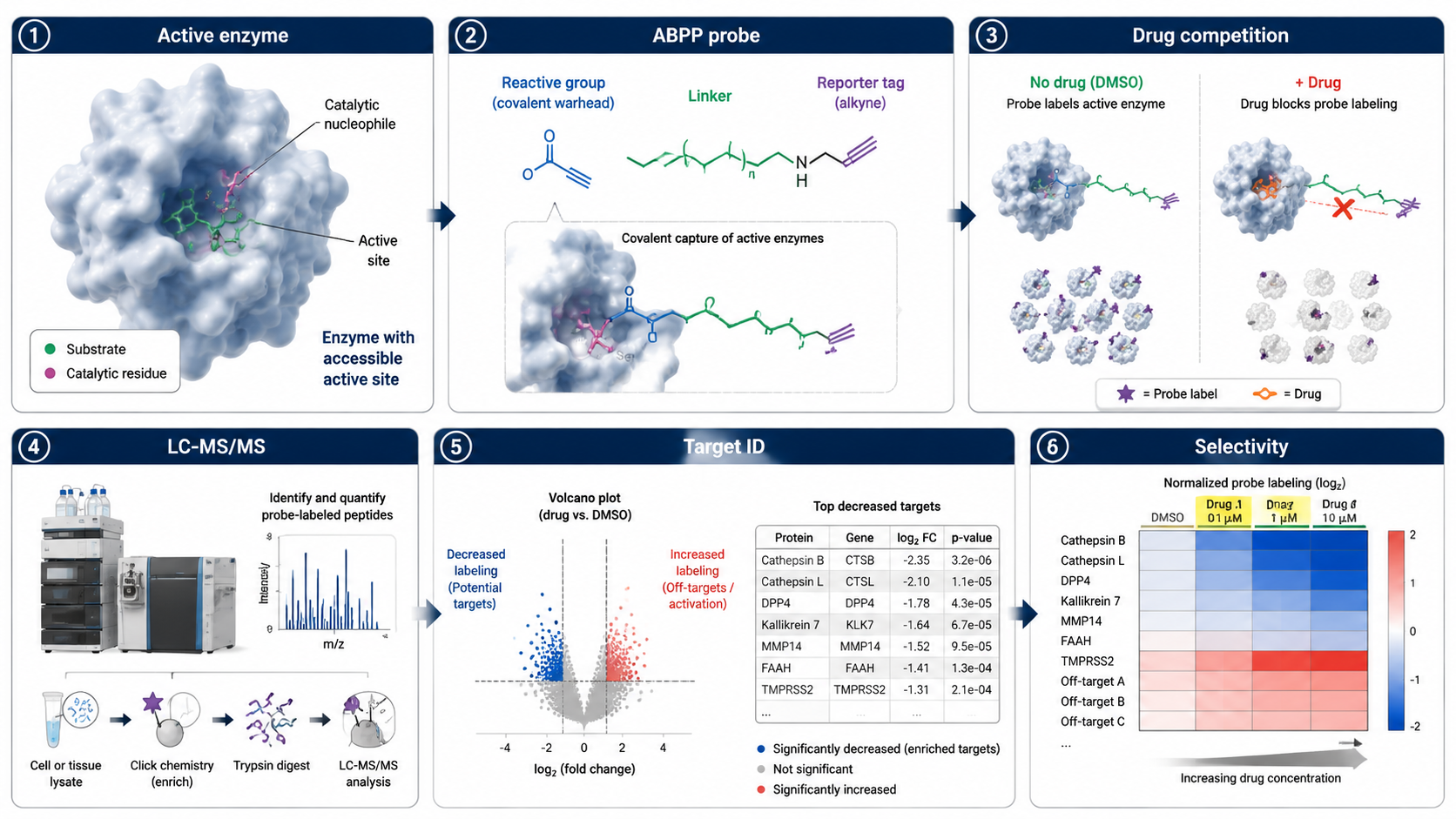
ABPP measures the active fraction of proteins that react with a chemical probe. This matters because a protein can be present but inactive, inhibited, modified, mislocalized, or inaccessible. By focusing on activity, ABPP connects compound treatment to functional proteome changes.
Related Services
Activity-Based Protein Profiling (ABPP) Service
Competitive Activity-Based Protein Profiling (ABPP) Service
Small Molecule Drug Targets Identification Service | ABPP
Drug Target Discovery and Selection Services
Drug Target Identification and Validation Services
Core Workflow
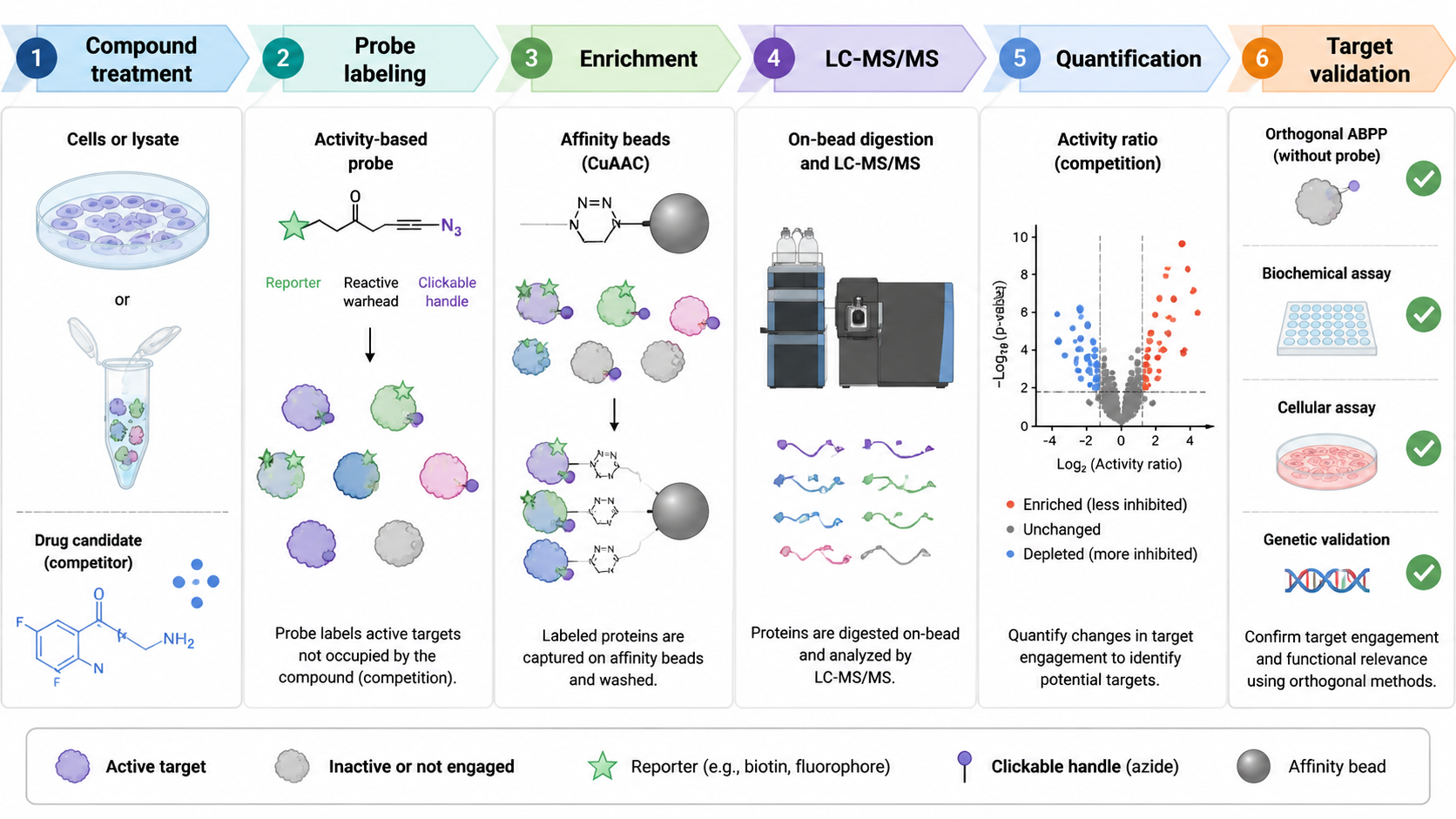
An ABPP workflow usually includes sample preparation, compound treatment, activity-based probe labeling, enrichment or fluorescence detection, LC-MS/MS analysis, protein identification, quantitative comparison, and target validation. In competitive ABPP, the compound is applied before the probe. Reduced probe labeling suggests that the compound engages the active site or blocks probe access.
How Does ABPP Support Drug Discovery?
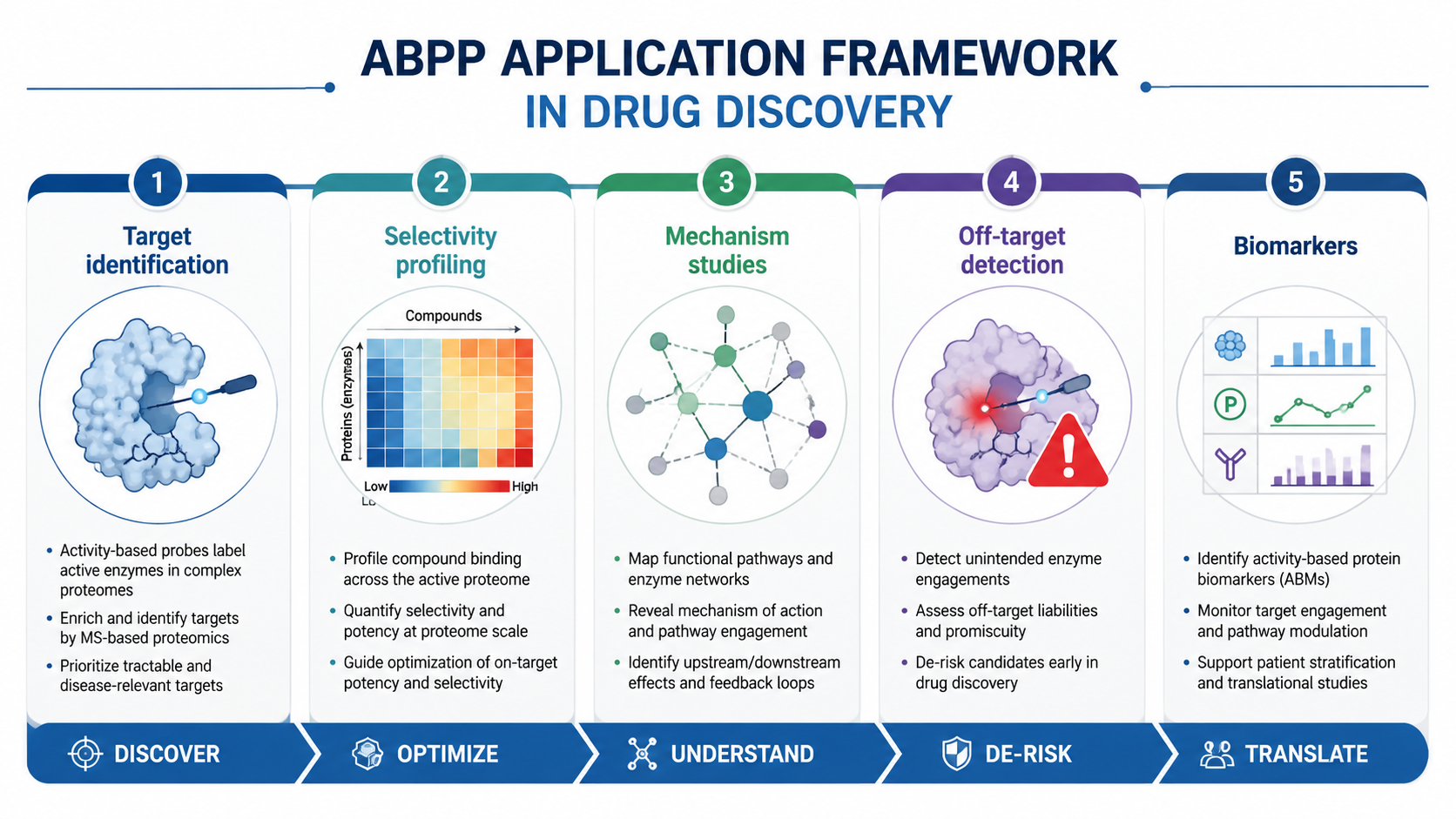
1. Target Identification
ABPP can reveal which active proteins respond to a compound, including expected targets and unexpected binding proteins. This is useful when the mechanism is unknown or when phenotypic screening produces active compounds without a clear target.
2. Selectivity Profiling
Within an enzyme family, ABPP can compare how strongly a compound competes across related proteins. This helps distinguish target engagement from broad off-target inhibition.
3. Mechanism-of-Action Studies
ABPP can show whether a compound changes activity in a pathway, cell state, or disease model. These data can be paired with phosphoproteomics, metabolomics, or phenotypic assays to build a mechanism-of-action model.
4. Biomarker Discovery
Activity changes can nominate biomarkers that are closer to protein function than abundance alone. This can support pharmacodynamic marker selection or patient stratification studies.
Study Design Considerations
| Design Question | Practical Recommendation | Why Does It Matter? | Main Caution |
|---|---|---|---|
| Which probe should be used? | Match probe chemistry to the target class | Probe specificity defines what ABPP can see | Poor probe choice creates false negatives |
| How should competition be tested? | Use dose-response and time-course designs | Helps estimate engagement strength | Single-dose results can be misleading |
| Which sample format is best? | Compare lysate and live-cell settings when possible | Cell permeability and localization matter | Lysate activity may not match cellular activity |
| How are targets validated? | Use orthogonal assays, pull-down, PRM, or genetics | Confirms target relevance | Probe competition alone is not full validation |
Technical Limitations
ABPP depends on available probes, suitable reactive residues, and activity states that can be captured under the experimental conditions. Some proteins lack effective probes. Some compounds alter activity indirectly rather than binding the active site. Sample complexity, probe background, incomplete enrichment, and ion suppression can also affect interpretation.
FAQ
1. What is activity-based protein profiling?
Activity-based protein profiling is a chemical proteomics method that uses reactive probes to label active proteins and identify them by fluorescence, enrichment, or LC-MS/MS.
2. How does ABPP help drug discovery?
ABPP helps drug discovery by identifying targets, confirming target engagement, comparing selectivity, detecting off-target activity, and linking compounds to pathway-level activity changes.
3. What is competitive ABPP?
Competitive ABPP tests whether a compound reduces labeling by an activity-based probe. Reduced labeling suggests the compound competes with the probe or changes target accessibility.
4. How should ABPP hits be validated?
ABPP hits should be validated with orthogonal assays such as enzymatic activity tests, pull-down confirmation, targeted MS, genetic perturbation, structural analysis, or cellular phenotype rescue.
Conclusion
ABPP gives drug discovery a functional view of the proteome. Instead of asking only which proteins are present, it asks which proteins are active and which of those activities change after compound treatment. That makes ABPP especially useful for target identification, selectivity profiling, and mechanism studies when paired with rigorous validation.
How to order?




