






Activity-Based Protein Profiling in Drug Discovery: Workflow, Applications, and Method Selection
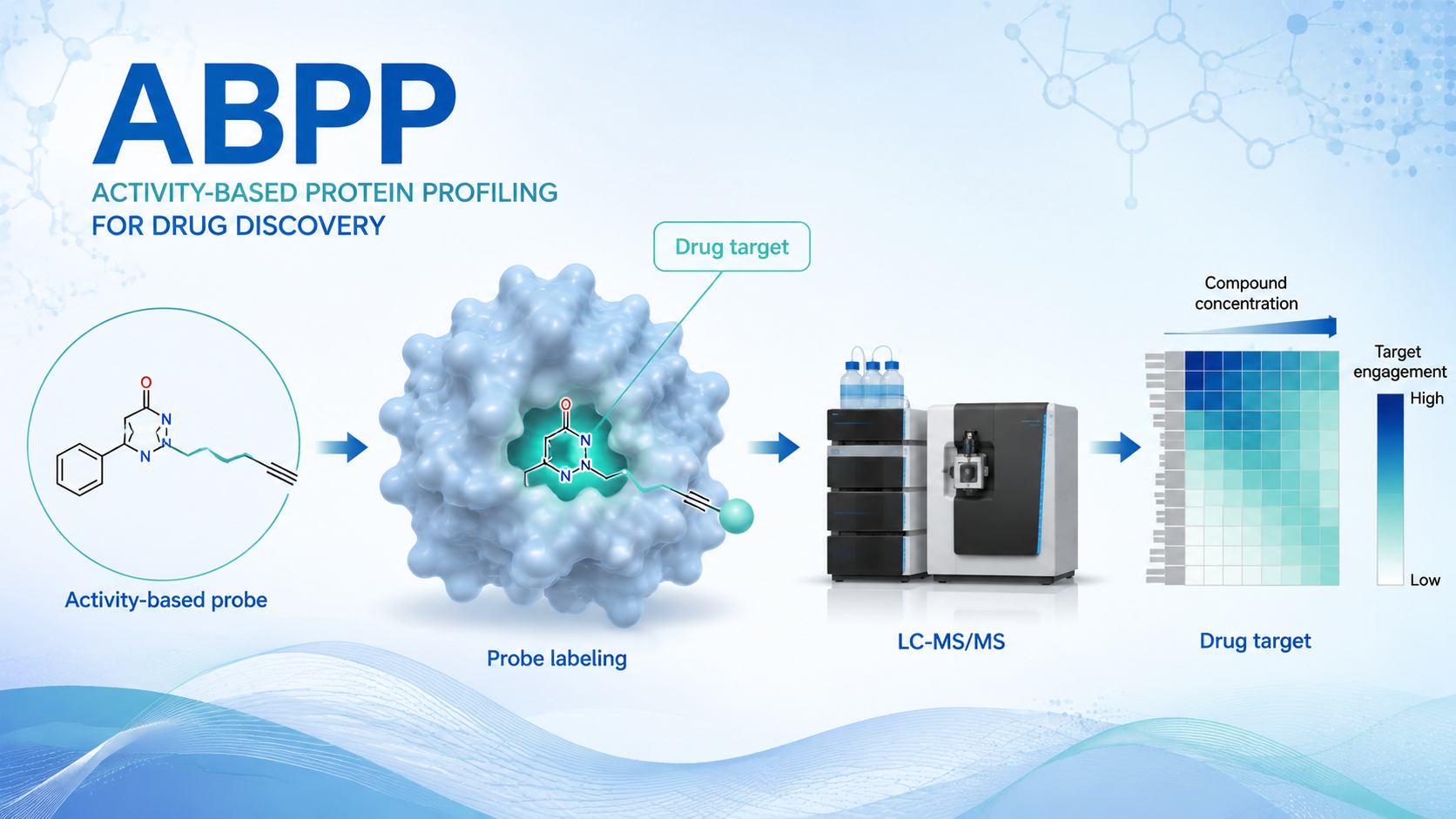
Activity-based protein profiling (ABPP) links proteomics with functional readouts by detecting proteins whose activity changes under disease, compound treatment, or stress. Instead of measuring abundance alone, ABPP captures catalytic turnover, probe reactivity, and binding engagement, which makes it useful for drug target identification, mechanism-of-action studies, and off-target discovery.
Key Takeaways
- ABPP monitors protein activity and engagement, not just expression, so it can reveal targets that abundance-based proteomics misses.
- Activity probes and chemical reporters label active enzymes or binding sites before LC-MS/MS identification.
- Competitive ABPP compares probe labeling with and without compound treatment to map target engagement and selectivity.
- LC-MS/MS and bioinformatics connect labeled proteins to pathways, biomarkers, and candidate drug targets.
What ABPP Measures in Drug Discovery?
ABPP measures which proteins are functionally accessible or enzymatically active in a biological system. In drug discovery, that usually means asking which enzymes or binding pockets a small molecule occupies, which pathways lose activity after treatment, and whether inhibition is selective across related protein families.
Related Services
Activity-Based Protein Profiling (ABPP) Service
Competitive Activity-Based Protein Profiling (ABPP) Service
Small Molecule Drug Targets Identification Service | ABPP
Chemical Proteomics Analysis Service
Core ABPP Workflow
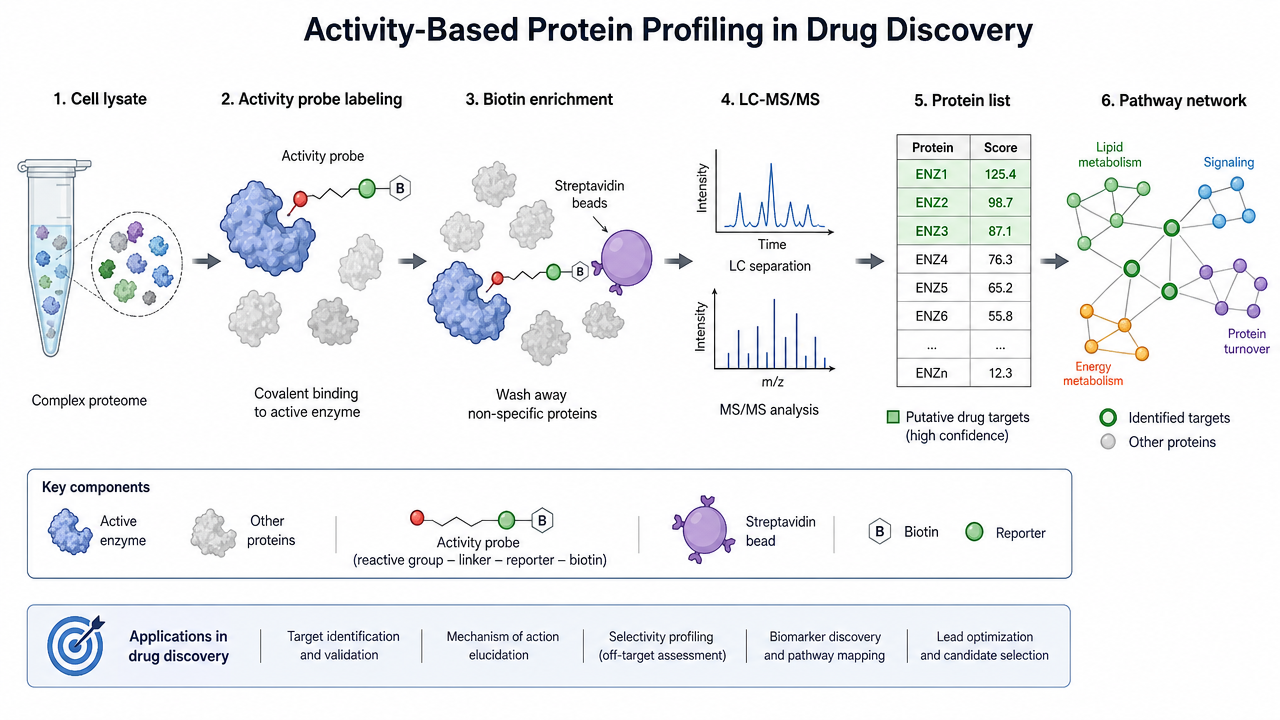
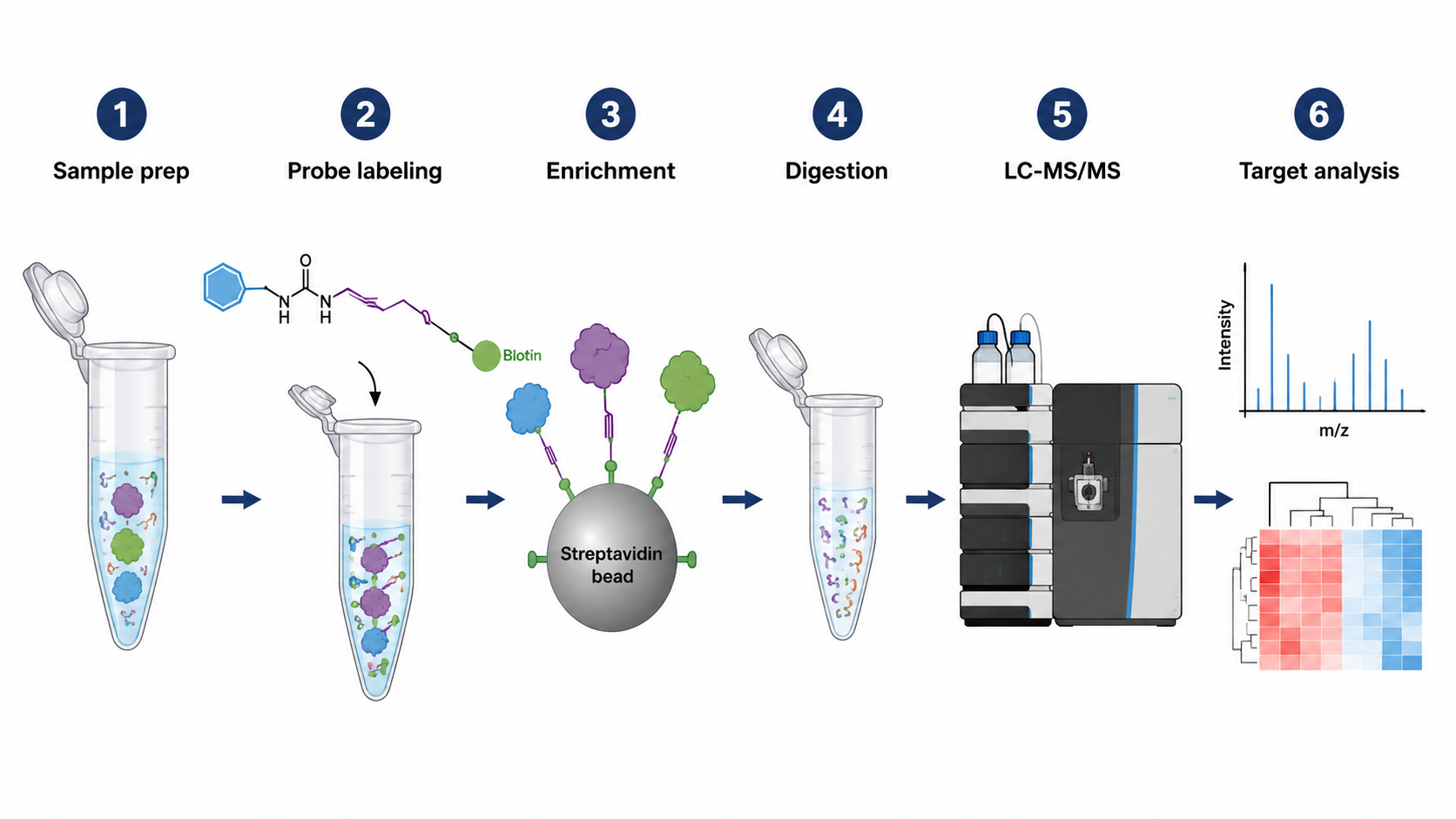
A typical ABPP workflow starts with lysate or live-cell labeling using an activity-based probe. Active or accessible proteins react with the probe, then samples move through enrichment, digestion, LC-MS/MS, and database search. Quantitative comparisons highlight proteins whose labeling changes after compound treatment, mutation, or disease state.
Probe stability, labeling time, pH, cofactors, and quenching must be controlled because over-labeling or incomplete quenching can create false positives. For drug studies, competitive ABPP adds compound pre-incubation so engaged targets show reduced probe labeling relative to vehicle controls.
Detection Strategies
1. Enzymatic Activity Assays
Substrate turnover assays remain useful when a purified enzyme or focused panel is available. They provide direct kinetic readouts but scale poorly across the whole proteome.
2. Activity-Based Probes
Chemical probes carry reactive warheads and affinity handles. Fluorescent or biotin tags enable gel-based visualization or streptavidin enrichment before MS. Probe class must match the target chemistry; serine hydrolases, cysteine proteases, kinases, and metalloenzymes each need different probe families.
3. Mass Spectrometry Readout
LC-MS/MS identifies probe-labeled peptides and proteins. MS/MS confirms sequence and modification state. Low-abundance targets benefit from enrichment, fractionation, and high-resolution instruments.
Applications in Drug Discovery
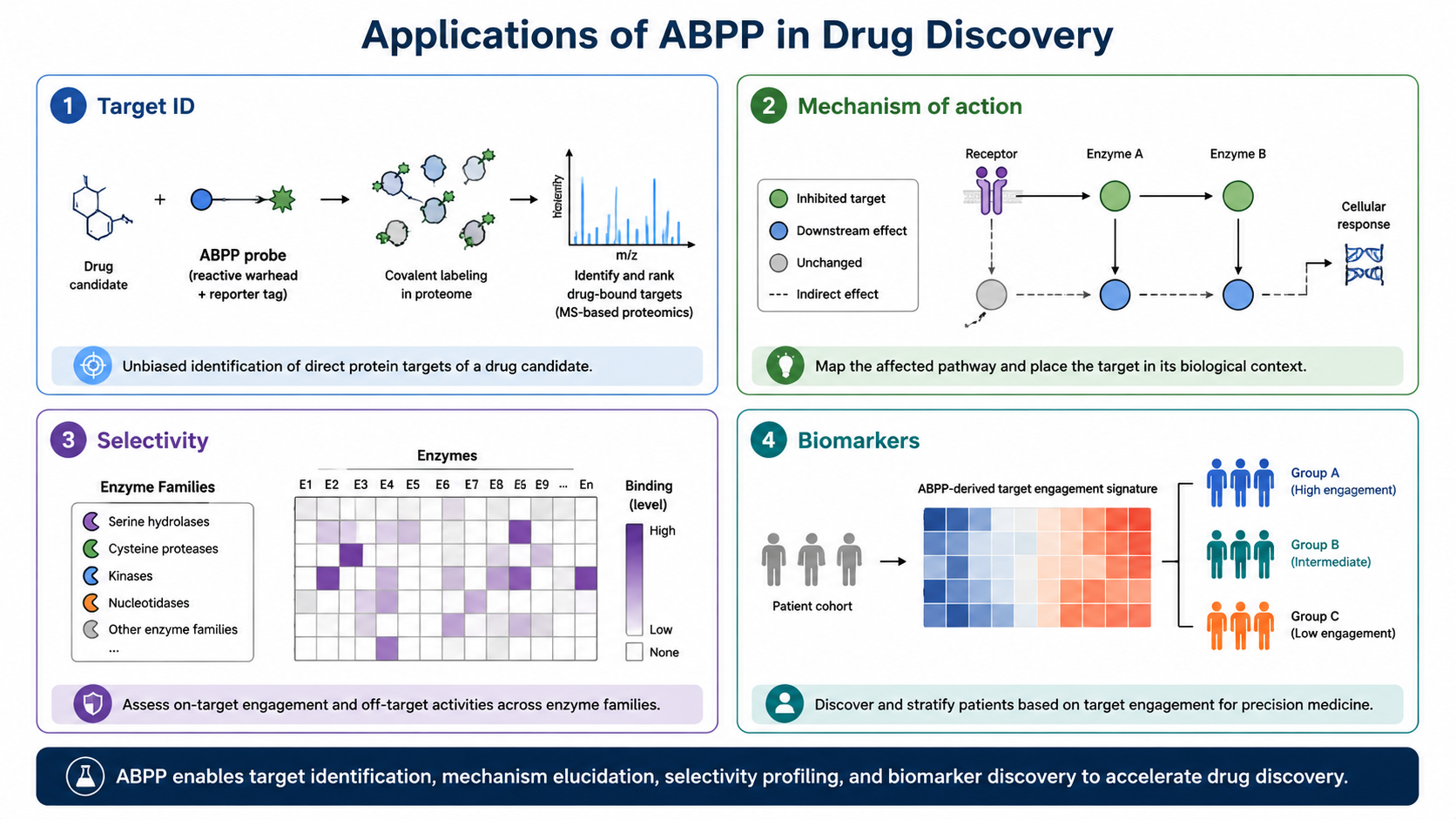
| Application | What ABPP reveals | Typical decision |
|---|---|---|
| Target identification | Proteins whose probe labeling drops after compound treatment | Prioritize on-target candidates |
| Mechanism of action | Pathway-wide activity shifts beyond the intended enzyme | Explain efficacy or resistance |
| Selectivity profiling | Related enzymes that retain or lose labeling | Flag off-target liabilities |
| Biomarker discovery | Disease-associated activity signatures | Support patient stratification |
Advantages and Disadvantages
ABPP excels when functional engagement matters more than expression level. It can detect low-abundance enzymes if the probe reacts efficiently, and competitive formats directly report compound-target occupancy in complex lysates.
Disadvantages include probe bias, incomplete proteome coverage, and difficult quantification when labeling is semi-stochastic. Highly complex samples may need fractionation, multiplexed TMT labeling, or DIA acquisition to stabilize peptide detection.
FAQ
1. What is activity-based protein profiling?
ABPP is a chemical proteomics approach that uses reactive probes to label active or accessible proteins, then identifies labeled proteins by mass spectrometry.
2. How is ABPP used in drug discovery?
It helps identify drug targets, confirm mechanism of action, profile selectivity, and discover activity-based biomarkers by comparing probe labeling across treatment conditions.
3. How does ABPP differ from standard quantitative proteomics?
Standard proteomics measures protein abundance. ABPP measures functional engagement or enzymatic activity, which can change without large expression differences.
4. What is competitive ABPP?
A compound is incubated with the proteome before probe labeling. Reduced probe signal on specific proteins suggests direct or indirect target engagement.
Conclusion
Activity-based protein profiling gives drug discovery teams a functional lens on the proteome. With thoughtful probe design, controlled labeling, and robust LC-MS/MS analysis, ABPP can accelerate target identification, clarify mechanisms, and highlight selective compound profiles earlier in the pipeline.
How to order?




