



Multiple reaction monitoring (MRM), often used interchangeably with selected reaction monitoring (SRM), is frequently preferred for accurate targeted quantification when a closed peptide panel must be measured repeatedly on a triple quadrupole. Accuracy means a controlled precursor-to-product transition assay for predefined analytes, not open-proteome discovery. Quadrupole 1 (Q1) isolates a precursor, the collision cell fragments it, and quadrupole 3 (Q3) monitors selected product ions as chromatographic peak areas. Relative same-peptide comparison is the default claim; absolute amount requires matched stable isotope-labeled standards (SIS) and a stated calibration model (Lange et al. 2008). That preference is conditional and does not replace parallel reaction monitoring (PRM) or discovery methods for every question.
Researchers who already have a closed peptide panel or a validation objective can also review the MtoZ Biolabs SRM-MRM Quantitative Proteomics Services for project-specific feasibility and assay planning.
Method Overview: SIM, SRM, and MRM
These names describe related but not identical monitoring strategies.
Method |
Instrument logic |
Typical role in quantification |
|---|---|---|
Selected ion monitoring (SIM) |
Monitor selected precursor m/z on a single quadrupole path |
Sensitive but lower selectivity in complex matrices |
SRM |
One precursor-to-product transition on a triple quadrupole |
Classic targeted pair monitoring |
MRM |
Multiple scheduled transitions in one method |
Routine multi-peptide / multi-transition panels |
In proteomics practice, SRM and MRM usually share the same Q1-collision-Q3 principle. MRM is the common laboratory name when many transitions are scheduled together. Calling MRM the preferred accurate method usually means preferred over SIM for complex digests, and preferred over open discovery when the peptide list is already closed.
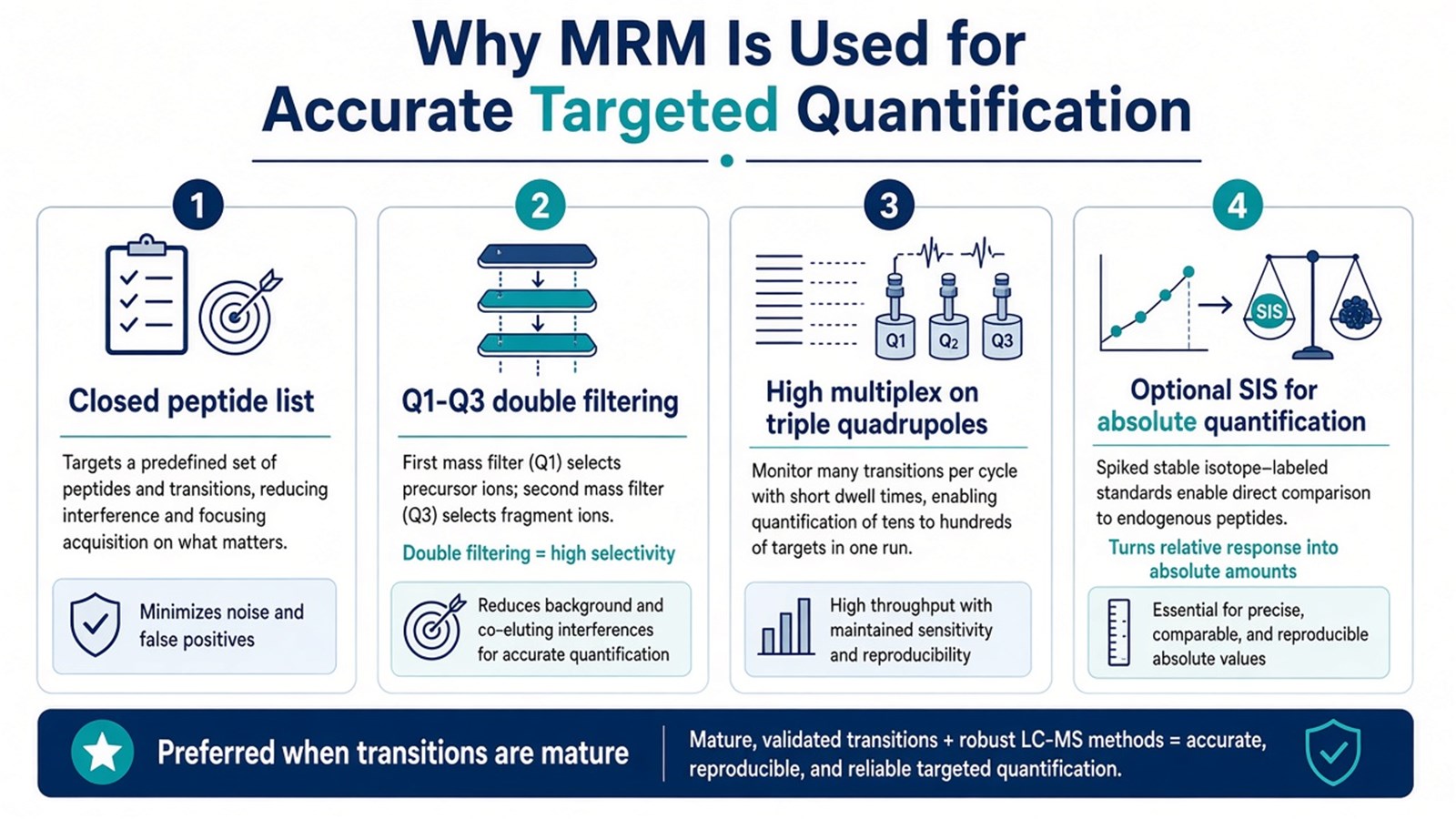
Figure 1. MRM is preferred for accurate targeted quantification when transitions are locked and the claim is a closed-panel measurement, optionally with SIS for absolute units.
MRM improves targeted selectivity; it does not survey proteins outside the inclusion list.
Why MRM Supports Accurate Targeted Quantification
Accuracy in an MRM assay is built from controls, not from the acronym alone.
1. Double mass filtering
Selecting both precursor and product ions rejects much of the matrix that would pass a precursor-only SIM window. That dual filter is why SRM/MRM usually outperforms SIM for complex samples.
2. Closed, optimizable transitions
Collision energy, dwell time, and retention-time scheduling can be tuned for each pair before the cohort runs. Quantitative and qualifier transitions support peak identity checks during review.
3. Multiplex efficiency on triple quadrupoles
Once transitions are mature, many peptides can be monitored in one method with high duty cycle. That production efficiency is a main reason MRM remains preferred for large locked panels.
4. Absolute claims only with SIS
Matched heavy peptides and a calibration model convert peak areas into defined units. Without SIS, accurate still means accurate relative comparison of the same peptide across samples, not concentration.
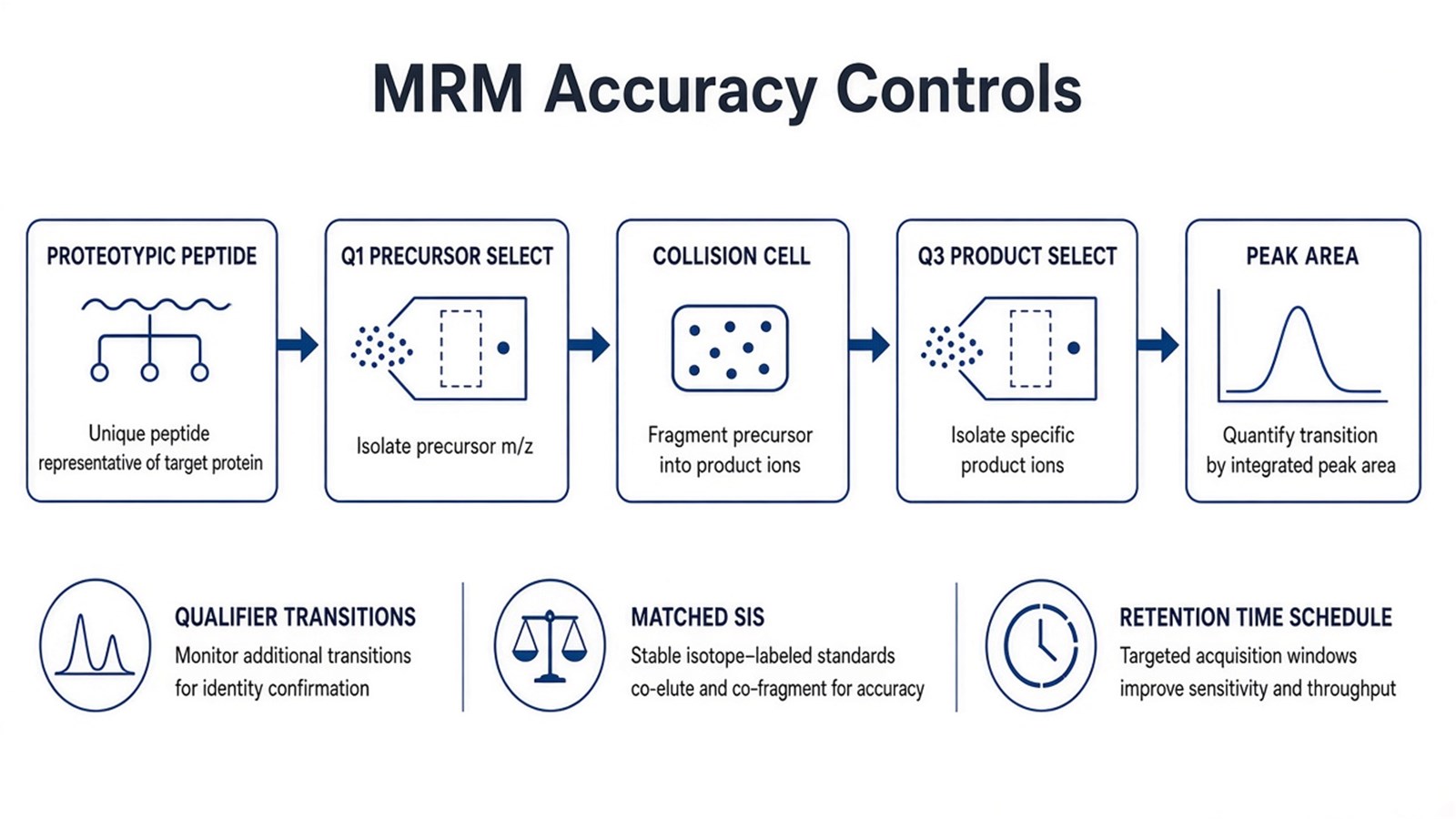
Figure 2. Accurate MRM quantification depends on transition design, scheduling, qualifier checks, and SIS when absolute units are required.
For the operating principle beyond this method-preference overview, researchers can refer to Principle of Multiple Reaction Monitoring. For platform choice versus PRM, see PRM vs. MRM: Comparative Analysis in Quantitative Proteomics.
Judgment Criteria: When MRM Is Preferred
Study need |
MRM often preferred |
Reassess before committing |
|---|---|---|
Target status |
Closed, mature peptide and transition list |
Open discovery inventory still required |
Accuracy need |
Selective quantification of scheduled analytes |
Full high-resolution fragment review during method refinement |
Throughput |
Large panel must run repeatedly on a triple quadrupole |
Early fragment inspection matters more than multiplex |
Matrix |
Transitions already shown clean in the matrix |
Severe unit-resolution interference persists |
Claim type |
Relative confirmation; absolute with SIS |
Clinical diagnostic cutoff without a validated assay framework |
Prefer MRM when transitions are locked and multiplex efficiency is the limiting need. Prefer PRM when the panel is still being refined and accurate-mass fragment inspection matters in a complex digest (Peterson et al. 2012). Prefer DDA or DIA while new protein names are still being discovered.
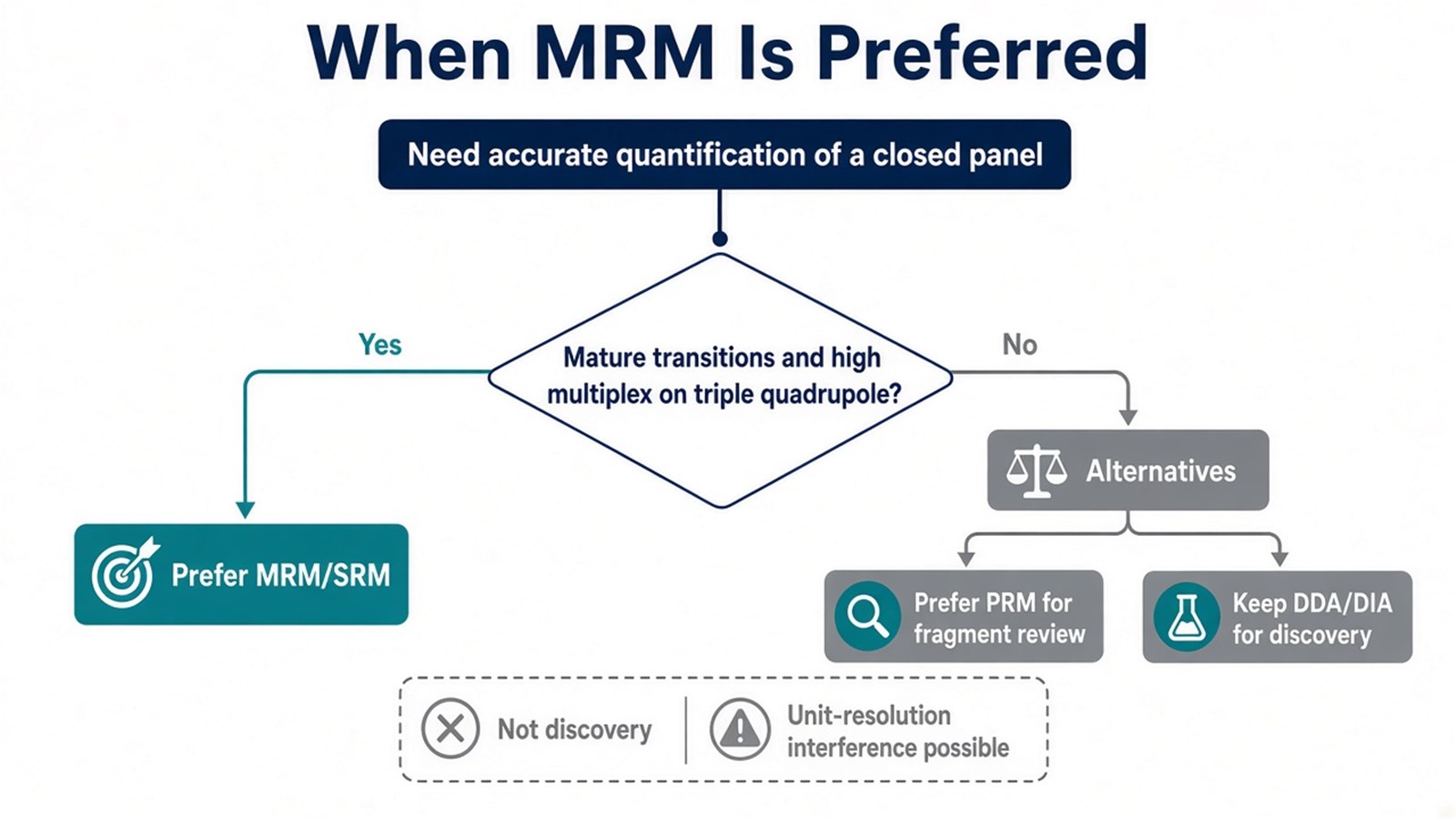
Figure 3. MRM is preferred for accurate closed-panel quantification on a triple quadrupole; keep PRM or discovery methods when those conditions are not met.
Limits and Application Boundaries
MRM cannot recover proteins that were never scheduled. Unit-resolution Q3 can still admit interfering ions that share nominal precursor and product masses. Dwell time and peak width limit how many transitions fit in one method. Calling MRM the gold standard for all mass spectrometry quantification overstates the claim; preference is conditional on a closed list, validated transitions, and the stated relative-versus-absolute design.
Typical applications are biomarker candidate validation, pathway-protein panels, pharmacodynamic monitoring, and selected modified-peptide assays when site-discriminating transitions can be defined. A common sequence is discovery by DDA or DIA, optional PRM confirmation, then MRM for a locked panel that must run at scale.
Once the peptide list, transition maturity, and relative-versus-absolute design are defined, the project can be evaluated as an MRM/SRM study. Researchers can review the MtoZ Biolabs SRM-MRM Quantitative Proteomics Services for sample evaluation, method feasibility, and workflow planning. For PRM-centered refinement, see the Parallel Reaction Monitoring (PRM) Service.
Frequently Asked Questions
1. Is MRM always better than SIM?
For complex matrices that need precursor-product selectivity, usually yes. SIM can still work for simpler analytes or cleaner backgrounds when interference is low.
2. Are MRM and SRM different methods?
In proteomics practice they usually describe the same triple-quadrupole transition principle. SRM emphasizes a selected pair; MRM emphasizes monitoring many pairs in one method.
3. Does MRM provide absolute quantification by itself?
No. Absolute amount requires matched SIS peptides and a calibration model. Without SIS, the default claim is relative.
4. Why is MRM sometimes preferred over PRM?
Because mature transition panels can run at very high multiplex on widely deployed triple quadrupoles. PRM is often preferred earlier when fragment review is the scarce resource.
5. Can MRM replace DDA or DIA discovery?
No. MRM measures only scheduled transitions. Keep discovery acquisition while new protein names are still needed.
Reference
- V. Lange, P. Picotti, B. Domon, R. Aebersold (2008). Selected reaction monitoring for quantitative proteomics: a tutorial. Mol. Syst. Biol., 4, 222. https://doi.org/10.1038/msb.2008.61
- A.C. Peterson, J.D. Russell, D.J. Bailey, M.S. Westphall, J.J. Coon (2012). Parallel reaction monitoring for high resolution and high mass accuracy quantitative, targeted proteomics. Mol. Cell. Proteomics, 11, 1475-1488. https://doi.org/10.1074/mcp.O112.020131
