






When Should You Add PTM Analysis to a Mitochondrial Proteomics Study?
Add PTM analysis when the research question depends on protein modification states rather than total protein abundance alone. Standard mitochondrial proteomics can identify proteins and compare their relative abundance across groups, but it may not show whether phosphorylation, acetylation, or another PTM differs between conditions. A PTM-focused workflow is more appropriate when modification-site evidence is central to candidate prioritization or when regulatory changes may occur without a substantial change in total protein abundance.
Before expanding the study, define whether you need total-protein abundance data, PTM-site evidence, or both. Contact MtoZ Biolabs for a free initial consultation and share your sample type, species, group design, biological replicate plan, and the PTM question you want to address. We can help assess whether an integrated mitochondrial proteomics and PTM analysis workflow fits your project.
When Conventional Mitochondrial Proteomics Is Enough
Standard mitochondrial proteomics answers protein presence and abundance questions in mitochondrial or mitochondria-enriched material.
Stay with the conventional path when the decision is mainly:
- Which proteins are detected in the mitochondrial preparation
- Which proteins change abundance between treatment, disease, or genotype groups
- Which abundance candidates deserve follow-up after a phenotype is already known from other assays
In those cases, LC-MS/MS identification and quantitative comparison are usually the right first package. Current planning references remain about 5×10^7 cells, about 200 mg animal tissue, or extracted mitochondrial protein of at least about 50 µg with about 80-100 µg commonly planned. Platform options for mitochondrial protein analysis include Orbitrap Exploris 480, timsTOF Pro, and Orbitrap Astral, with DDA paths processed through MaxQuant or Proteome Discoverer and DIA paths through Spectronaut or DIA-NN.
Abundance proteomics does not report modification occupancy. If the scientific sentence only needs “which mitochondrial-fraction proteins went up or down,” adding PTM too early can widen scope without changing the decision.
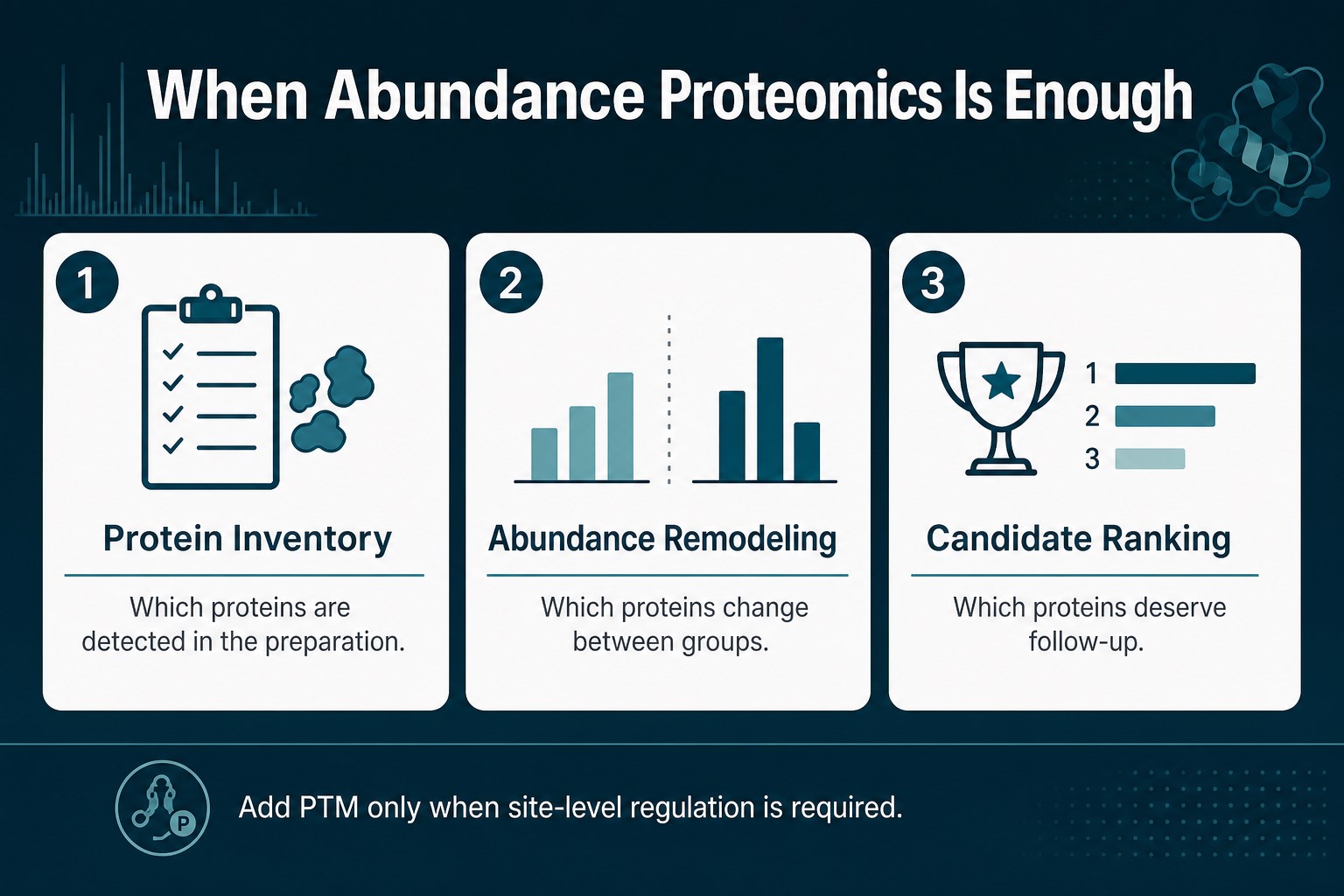
Figure 1. Keep a conventional mitochondrial proteomics package when the claim is inventory or abundance remodeling.
When Regulation Claims Point Toward PTM Extension
Add PTM analysis when the unresolved question is how mitochondrial proteins are regulated at the modification level.
Typical triggers include:
- Total protein abundance is stable, but a mitochondrial pathway phenotype still changes.
- Literature or prior data implicate phosphorylation, acetylation, or another PTM in the same pathway.
- You need site-level candidates for mechanistic follow-up, not only protein ranks.
- An inhibitor, kinase, deacetylase, or metabolic stress is expected to act through PTMs rather than through wholesale protein gain or loss.
Mitochondrial regulation often involves both abundance remodeling and PTM remodeling. The extension decision is whether the next evidence layer must be modification-resolved. If yes, treat PTM as a scoped add-on or companion study, not as a silent default inside standard mitochondrial proteomics.
PTM extension also does not replace functional assays. Respiration, membrane potential, ROS, enzyme activity, and imaging readouts remain outside the proteomics package and still need separate plans when the claim is phenotypic.
Decision Checks Before You Expand the Plan
Use four checks before converting a regulation interest into a PTM module.
First, name the modification class you actually need. “PTM” is too broad for kickoff. Phosphorylation, acetylation, and other modifications have different enrichment logic and interpretation limits. If the class is still unknown, keep the first study on abundance proteomics and reserve PTM for a second stage after candidates appear.
Second, confirm that abundance data alone cannot settle the claim. If a clear differential protein list already explains the contrast you care about, PTM may be optional follow-up rather than required extension.
Third, check sample readiness for a second analytical path. PTM work often needs dedicated enrichment and can consume additional material. Borderline amounts that are only just enough for abundance proteomics may not support a parallel PTM arm without a feasibility review.
Fourth, keep group design matched. PTM contrasts are as sensitive as abundance contrasts to unmatched isolation, unequal freeze-thaw, and group-linked handling. Extending the menu without matching design only multiplies technical risk.
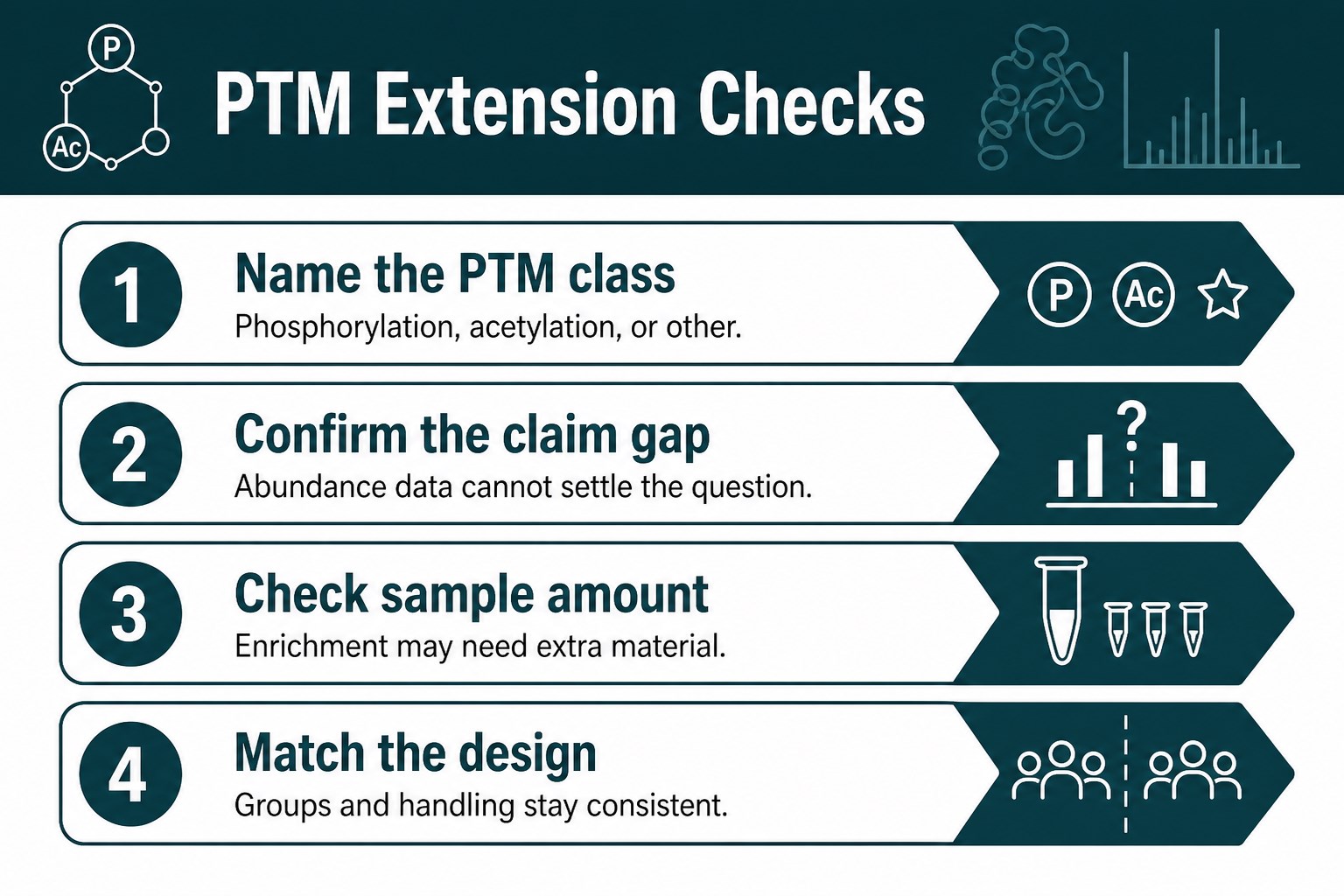
Figure 2. Confirm modification class, claim gap, sample amount, and matched design before expanding scope.
What Changes When PTM Is Added
Adding PTM analysis changes scope, sample planning, and deliverables.
Scope changes from protein abundance evidence to modification-site evidence for the selected PTM class. That usually means enrichment steps, PTM-aware search or quantification settings, and a report layer focused on modified peptides or sites rather than only protein matrices.
Sample planning may need more material or a split plan: one aliquot for abundance proteomics and one for PTM enrichment. Do not assume the same extracted mitochondrial solution automatically covers both at planning minima. Review total protein, concentration, and whether cells, tissue, or extracted mitochondria are being submitted.
Deliverables expand only for the modules you confirm. A conventional package still centers on raw files, identification outputs, quantification matrices when designed, differentials when groups are defined, and a project report. PTM tables and site lists belong in the package only when that extension is approved. Functional or pathway annotation remains confirm-per-project rather than automatic.
Planning guidance for turnaround on the core mitochondrial proteomics path is about 4 weeks. A PTM extension can change timeline and should be scheduled as its own confirmed module rather than assumed inside that planning figure.
Practical Ways to Sequence Abundance and PTM Work
There are three common sequencing choices during plan extension review.
|
Sequencing choice |
Best when |
Main risk if mistimed |
|---|---|---|
|
Abundance proteomics first |
The claim may be answered by protein remodeling |
Delayed PTM if site evidence was required from day one |
|
Parallel abundance + PTM |
Both layers are already required for the decision |
Higher sample demand and broader interpretation load |
|
PTM-focused companion after candidates appear |
Abundance hits point to a likely modified pathway |
Missing early PTM signals that never appear as abundance changes |
Choose sequencing from the claim, not from a desire to “add everything possible.” Many regulation projects start with mitochondrial protein analysis, then add phosphorylation or acetylation once the abundance map shows where site-level follow-up is worth the extra material.
When the extension decision is ready, send the claim sentence, suspected PTM class if known, sample type and approximate amounts, whether mitochondria are already extracted, group design, and whether you prefer staged or parallel work. MtoZ Biolabs can help separate what belongs in standard mitochondrial proteomics from what should be scoped as a PTM extension.
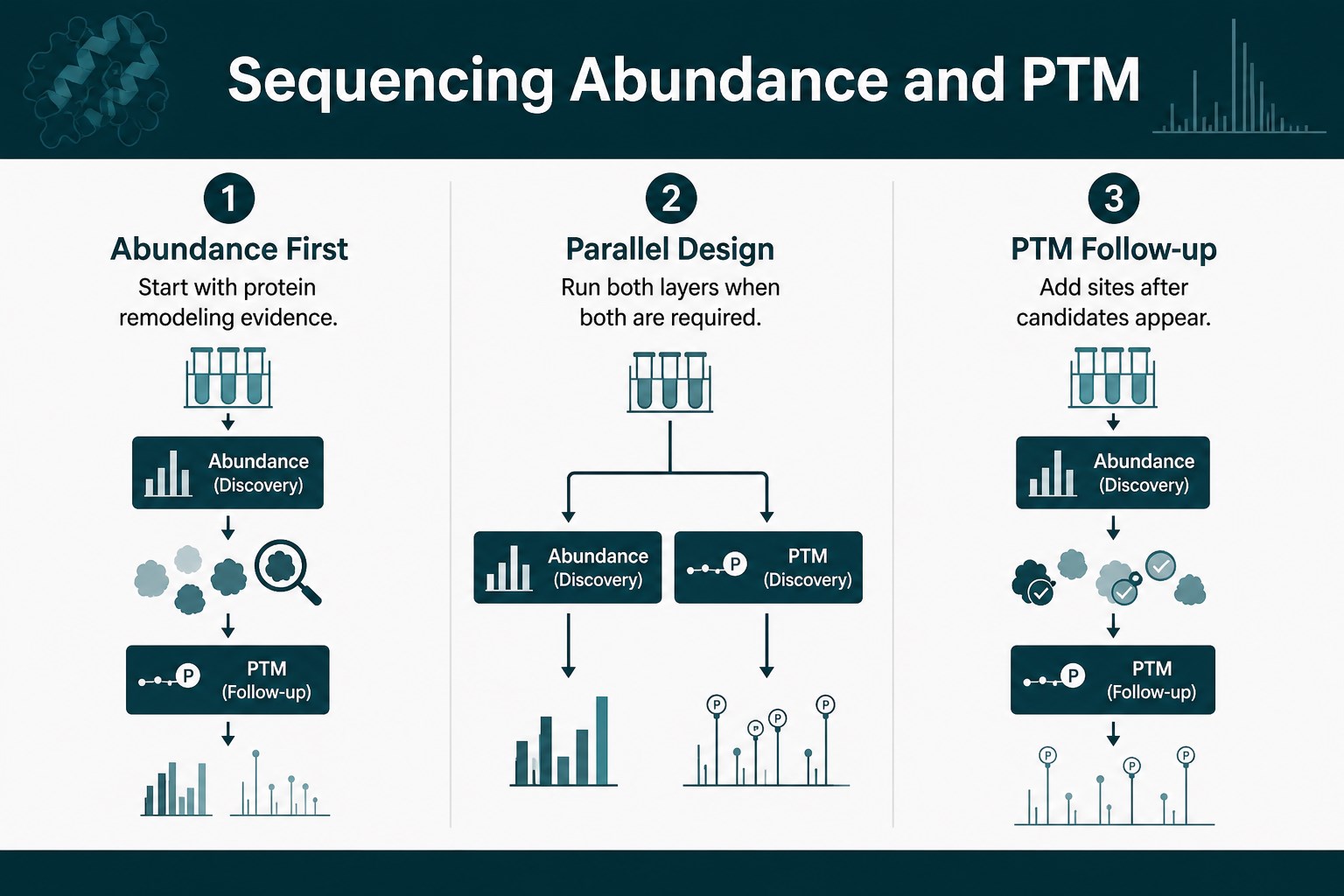
Figure 3. Sequence abundance and PTM work from the claim: staged first, parallel when both layers are required, or PTM follow-up after candidates appear.
Related Services
Teams comparing abundance-only and PTM-extended mitochondrial plans can review the services below while scope is still open.
Mitochondrial Proteomics Service
The core route for mitochondrial proteomics and mitochondrial protein analysis when the claim is protein inventory or abundance remodeling.
Mitochondrial Protein Posttranslational Modification Analysis Service
Use this when the study needs a broader mitochondrial PTM extension beyond abundance proteomics alone.
Mitochondrial Protein Phosphorylation Analysis Service
A focused option when phosphorylation-site evidence is the specific regulation layer under evaluation.
Frequently Asked Questions
1. When should you add PTM analysis to a mitochondrial proteomics study?
PTM analysis should be considered when the research question depends on protein modification states rather than total protein abundance alone. It is particularly relevant when phosphorylation, acetylation, or another supported PTM may differ between groups even if the corresponding protein abundance remains relatively stable.
2. Which PTM should I choose first?
Choose the PTM according to the biological hypothesis and the regulatory process under investigation. Phosphorylation, acetylation, or another supported modification should be selected because it is relevant to the study question, rather than adding multiple PTM workflows without a defined objective.
3. Does PTM Analysis Require Additional Sample Material?
It may. PTM-focused workflows often include modification-specific enrichment and may require additional material beyond a standard mitochondrial proteomics analysis. Final feasibility should be assessed according to the sample type, preparation status, target PTM, group design, and available protein amount.
4. Does adding PTM replace functional mitochondrial assays?
No. Respiration, membrane potential, ROS, and related phenotype assays remain outside proteomics and need separate plans.
Conclusion
Conventional mitochondrial proteomics is the right base when your question is which proteins are present or which abundances change. Add PTM analysis when regulation claims require site-level modification evidence that abundance tables cannot supply.
If the extension decision stays tied to a clear claim, a named PTM class, and realistic sample planning, the project is less likely to over-scope too early or under-scope a true mechanism question. Teams evaluating that boundary can review abundance-only versus PTM-extended options with MtoZ Biolabs before the final plan is locked.
How to order?




