






When Should Proteomics Follow Mitochondrial Functional Analysis?
Mitochondrial proteomics is useful after functional analysis has identified a reproducible phenotype, such as altered respiration, membrane potential, reactive oxygen species, or respiratory-chain activity, and the next question is which protein-abundance changes are associated with that phenotype. Functional assays establish what changed at the phenotype level, while mitochondrial proteomics can identify and compare proteins in a mitochondrial-enriched preparation to generate candidates for further investigation.
Proteomics should be considered when the study needs to move beyond confirming mitochondrial dysfunction and begin exploring the protein-level differences associated with it. The functional result can help define the most informative groups, treatment conditions, doses, and sampling time points, but proteomics alone cannot determine which protein caused the observed phenotype. Candidate proteins still require appropriate validation or perturbation experiments before causal conclusions are made.
Contact MtoZ Biolabs for a free consultation and share your model, functional findings, group design, sample type, biological replicate plan, and primary protein-level question. We can help assess whether mitochondrial proteomics is an appropriate next step for your project.
What Mitochondrial Functional Analysis Answers
Functional analysis reports mitochondrial state under a defined assay condition.
Typical readouts answer questions such as:
- Did respiratory activity change between groups?
- Did membrane potential shift?
- Did ROS burden rise or fall?
- Did a selected enzyme activity change?
Those results are powerful because they are phenotype-proximal. They tell you that something about mitochondrial performance moved. They do not, by themselves, list the proteins that remodeled with that movement, and they do not rank which protein candidates best explain the contrast.
Keep the functional result as the anchor phenotype. The proteomics decision is whether you now need protein-level evidence behind that anchor.
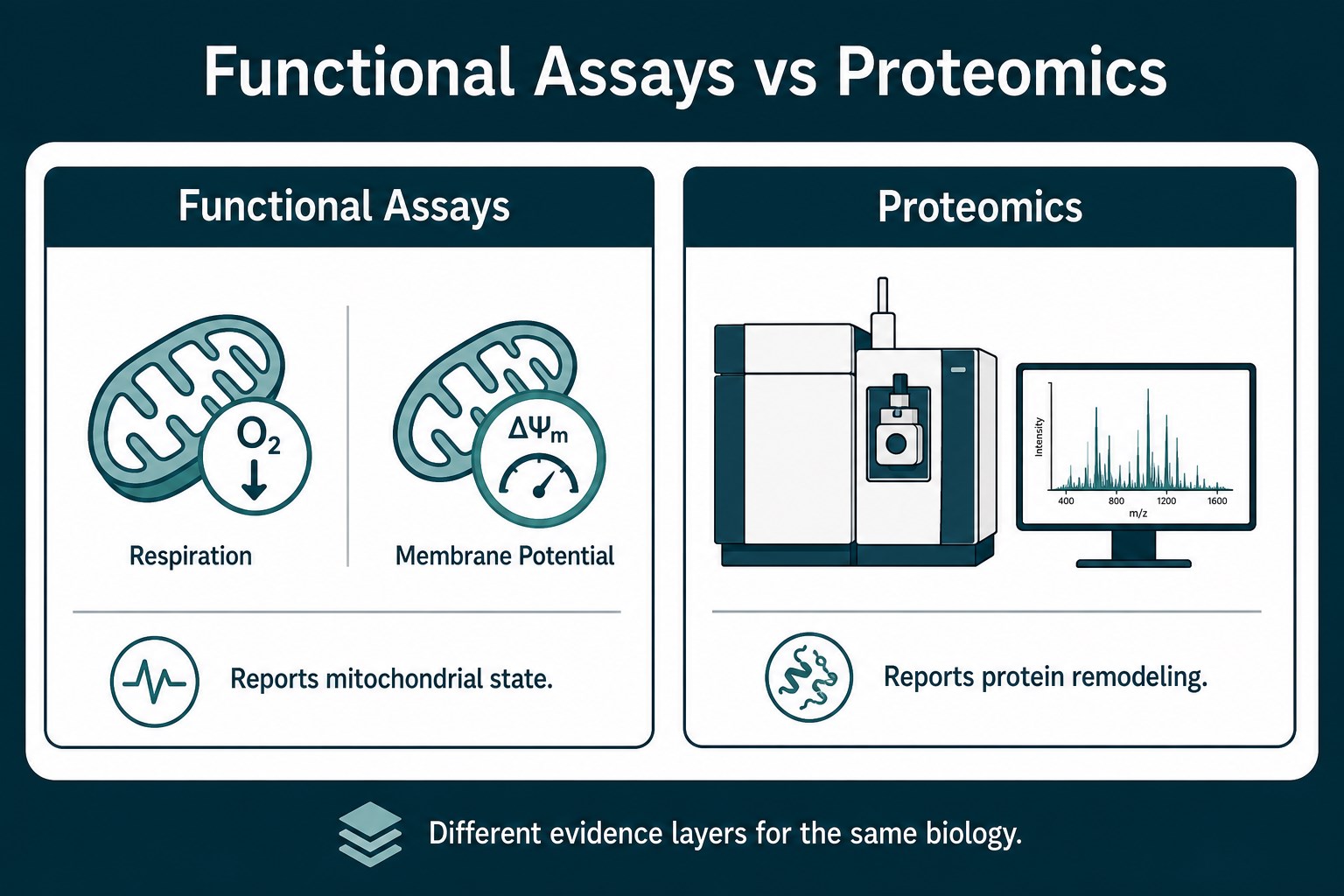
Figure 1. Functional assays report mitochondrial state; proteomics reports protein remodeling linked to that state.
What Mitochondrial Proteomics Answers Next
Mitochondrial proteomics answers protein presence and abundance questions in mitochondrial or mitochondria-enriched material.
After a functional abnormality is established, proteomics is useful when you need to know:
- Which proteins differ between the same biological groups used in the functional assay
- Whether expected pathway proteins moved with the phenotype
- Which candidates are worth targeted follow-up after the phenotype is already known
Current planning references for mitochondrial protein analysis are about 5×10^7 cells, about 200 mg animal tissue, or extracted mitochondrial protein of at least about 50 µg with about 80-100 µg commonly planned. Platform options include Orbitrap Exploris 480, timsTOF Pro, and Orbitrap Astral, with DDA paths processed through MaxQuant or Proteome Discoverer and DIA paths through Spectronaut or DIA-NN.
Proteomics does not re-measure respiration, membrane potential, ROS, or enzyme activity. It adds a protein evidence layer that can turn a phenotype into ranked molecular candidates.
Which Functional Abnormalities Suit Protein Follow-Up
Not every functional change needs immediate proteomics. Prioritize cases where protein remodeling is likely to change the next research decision.
Strong fit for follow-up proteomics:
- A reproducible functional difference between defined groups
- A phenotype stable enough to support matched sample collection for protein analysis
- A mechanistic question that now asks which proteins changed with the phenotype
- Enough material to meet proteomics planning amounts without destroying the only functional aliquots
Weaker fit for immediate proteomics:
- A single unreplicated functional outlier
- A phenotype still drifting with unmatched handling or unstable culture conditions
- A question that only needs confirmation of the same functional assay under a new dose or time point
- Material too limited for both retained functional work and proteomics input
|
Functional situation |
Proteomics follow-up? |
Why |
|---|---|---|
|
Reproducible respiration or enzyme-activity shift with clear groups |
Usually yes |
Protein remodeling can prioritize mechanism candidates |
|
Stable membrane-potential or ROS contrast across replicates |
Often yes |
Supports pathway-linked protein ranking |
|
One noisy functional run without matched controls |
Not yet |
Fix design and replication first |
|
Only need to retest the same functional endpoint |
Usually no |
Another functional experiment may be enough |
How to Design Treatment and Control Groups for the Follow-Up
The proteomics cohort should inherit the biological contrast that produced the functional result.
Practical design rules:
- Keep the same treatment, genotype, or disease logic used in the functional assay.
- Collect proteomics samples from the same biological state that showed the phenotype whenever possible.
- Match harvest timing, isolation or extraction handling, and storage across arms.
- Use biological replicates strong enough for differential claims, not only technical repeats of one lysate.
- Record the functional readout that defines each group so protein changes can be interpreted against a known phenotype.
If the functional assay used one seeding density, drug exposure window, or tissue region, do not silently switch those variables for proteomics. A new contrast creates a new experiment. The point of follow-up proteomics is to read proteins under the phenotype you already trust.
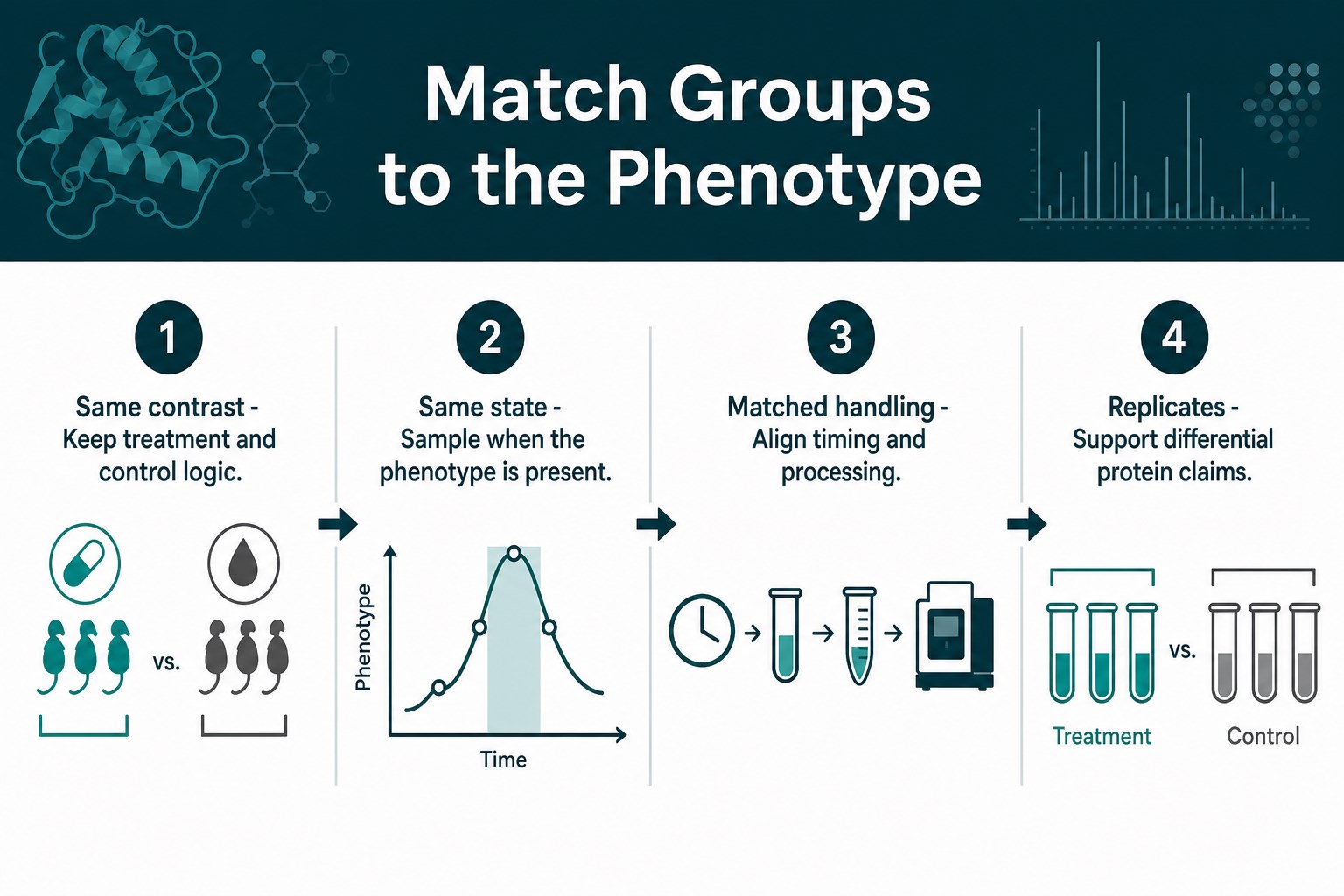
Figure 2. Carry the same biological contrast, timing, and matched handling from functional analysis into proteomics sampling.
How to Combine Functional Results With Protein Changes
Combine the layers as an evidence chain, not as interchangeable substitutes.
A useful joint reading looks like this:
- Functional result defines the phenotype.
- Proteomics ranks proteins that remodeled under the same contrast.
- Candidates are interpreted as hypotheses that may explain or accompany the phenotype.
- Follow-up experiments test the strongest candidates without treating the protein list as final mechanism proof.
Be cautious with over-interpretation. A protein change in the same direction as a functional shift is supporting association, not automatic causation. A strong phenotype with few protein changes can still be real if regulation is post-translational, metabolic, or otherwise outside abundance proteomics. A large protein list with a weak phenotype should not be narrated as settled mitochondrial dysfunction.
Planning guidance for the mitochondrial proteomics path is about 4 weeks once samples and design are accepted, with timing still dependent on sample condition and complexity. Use the functional summary at kickoff so interpretation stays phenotype-anchored.
Proteomics Cannot Replace Functional Validation
Mitochondrial proteomics cannot replace functional validation, and functional results cannot be rewritten as protein conclusions.
Keep the boundary clear:
- Functional assays remain the evidence for mitochondrial state under the chosen readout.
- Proteomics remains the evidence for protein remodeling in the submitted preparation.
- A differential protein table does not prove that respiration, membrane potential, ROS, or enzyme activity changed.
- A completed functional study does not automatically identify which proteins drove the phenotype.
If more functional measurements are still needed, plan them as functional work. If the phenotype is already solid and the missing layer is molecular ranking, plan mitochondrial proteomics. The two layers support each other; neither deletes the need for the other.
When the follow-up decision is ready, send the functional assay summary, the exact groups that differed, sample type and approximate amounts, whether mitochondria are already extracted, and the protein claim you need next. MtoZ Biolabs can help convert that phenotype package into a mitochondrial proteomics plan without treating protein data as a substitute for functional evidence.
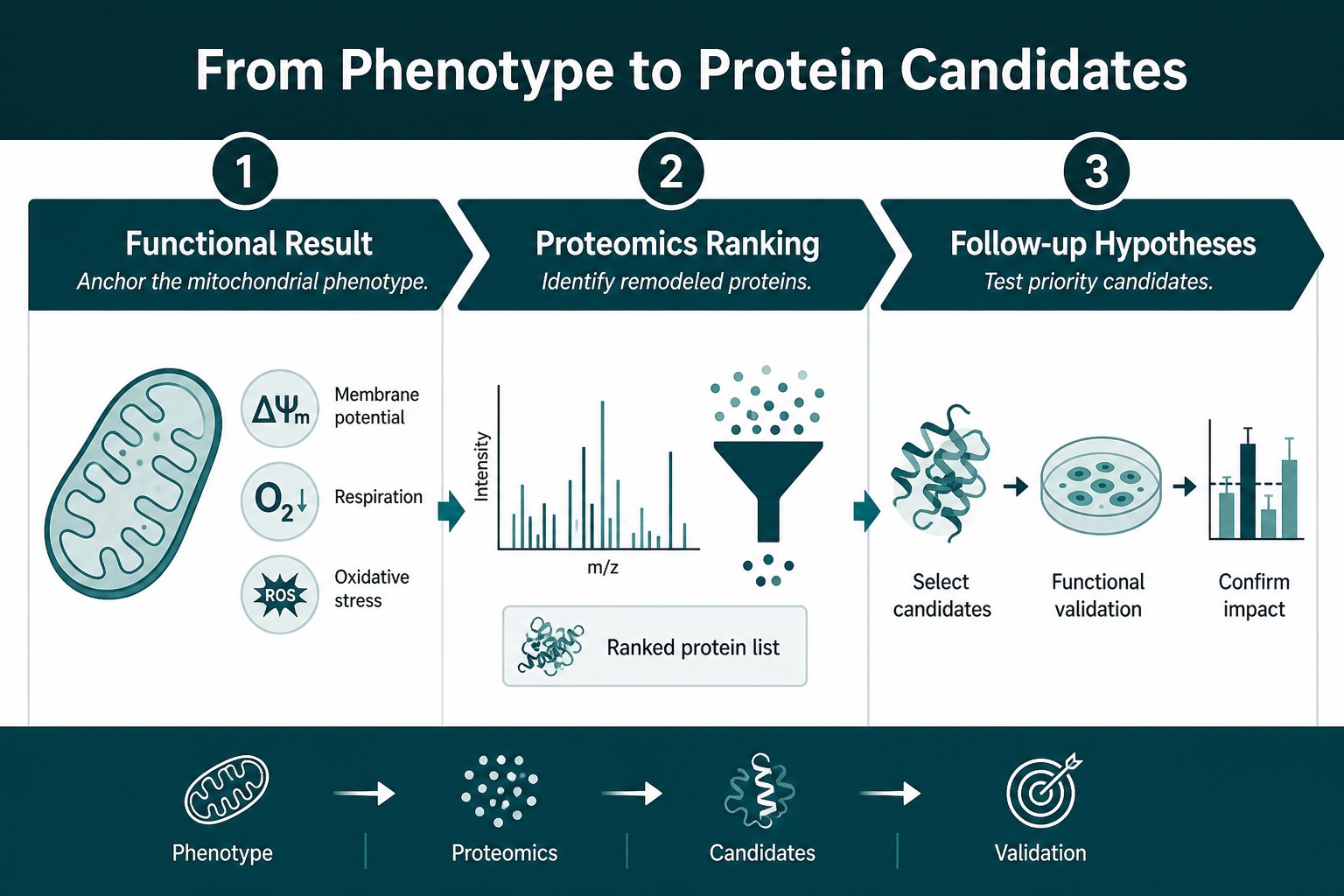
Figure 3. Use functional results to anchor phenotype, then use proteomics to rank protein candidates for follow-up.
Related Services
Teams moving from mitochondrial phenotype results into protein mechanism questions can review the services below while the next step is still open.
Mitochondrial Proteomics Service
The main route for mitochondrial proteomics and mitochondrial protein analysis once a functional phenotype needs protein-level follow-up.
Subcellular Proteomics Service
A broader option when the phenotype points beyond a mitochondria-only fraction and multi-compartment protein evidence is needed.
Frequently Asked Questions
1. When Should Proteomics Follow Mitochondrial Functional Analysis?
Mitochondrial proteomics is useful when functional analysis has identified a reproducible phenotype and the next question is which protein-abundance changes are associated with that phenotype.
2. What Does Proteomics Add After a Functional Result?
Proteomics can identify and compare protein-abundance differences across the same biological contrast, helping prioritize candidate proteins and pathways for further investigation.
3. Can Proteomics Replace Functional Validation?
No. Proteomics provides protein-level evidence and candidates for follow-up, but functional conclusions still require appropriate functional or validation experiments.
4. Which Functional Phenotypes Are Most Suitable for Proteomics Follow-Up?
Clear and reproducible phenotypes with well-defined groups, consistent experimental conditions, and sufficient biological replication are generally more informative for proteomics follow-up.
5. Should Proteomics Use the Same Groups as the Functional Study?
Whenever possible, keep the same biological contrast, treatment conditions, sampling time points, and matched handling used to establish the functional difference.
6. Can Mitochondrial Proteomics Explain Why a Functional Phenotype Occurred?
It can identify protein-abundance patterns associated with the phenotype and generate candidates for follow-up, but it does not by itself establish the cause of the functional change. Causal conclusions require appropriate validation or perturbation experiments.
Conclusion
Functional mitochondrial analysis tells you that mitochondrial state changed. Mitochondrial proteomics tells you which proteins changed with that state and which candidates deserve the next mechanistic test. Follow with proteomics when the phenotype is reproducible and the missing decision is protein-level ranking.
If group design, sample amounts, and interpretation rules stay tied to the functional result, phenotype-to-mechanism projects stay focused. Teams ready to convert a functional package into a protein analysis plan can review the next step with MtoZ Biolabs before acquisition begins.
How to order?




