






When Is Targeted Metabolomics More Appropriate than Broad Profiling?
Targeted metabolomics is more appropriate when the metabolites of interest are already defined and the study requires focused measurement of those compounds. If the research question centers on a predefined metabolite list or specific pathway, broad profiling may provide wider coverage than the study requires.
The practical rule is simple:
-
Go targeted when the question is "how do these predefined metabolites differ across my samples?"
-
Stay broad when the question is still "what is changing, and which molecules should I even be looking at?"
Two factors help determine whether a targeted metabolomics project can enter routine review. First, the target metabolites should be clearly defined rather than broadly suspected. Second, the proposed compounds should be reviewed against the current targeted metabolite list. Targets outside the current list require separate assessment or custom development where applicable.
The Real Question Behind the Choice
The decision between targeted metabolomics and broad profiling is not about which technique is more advanced. Both are mature. It is about which question your project is actually asking right now.
Broad, untargeted profiling is built for discovery. It profiles a broad range of detectable features and reports relative differences, which is ideal when the informative molecules are unknown. The trade-off is that its output consists of relative feature differences and candidate annotations rather than automatically providing confirmed molecular identities or validated absolute concentrations.
Targeted metabolite analysis starts from a predefined compound list and focuses measurement on those selected targets within the approved analytical scope.
The choice therefore depends on the stage and scope of the project. If candidate metabolites have not yet been defined, targeted analysis may be premature. If the relevant candidates are already defined, broad profiling may provide additional coverage that is not required for a narrowly focused research question.
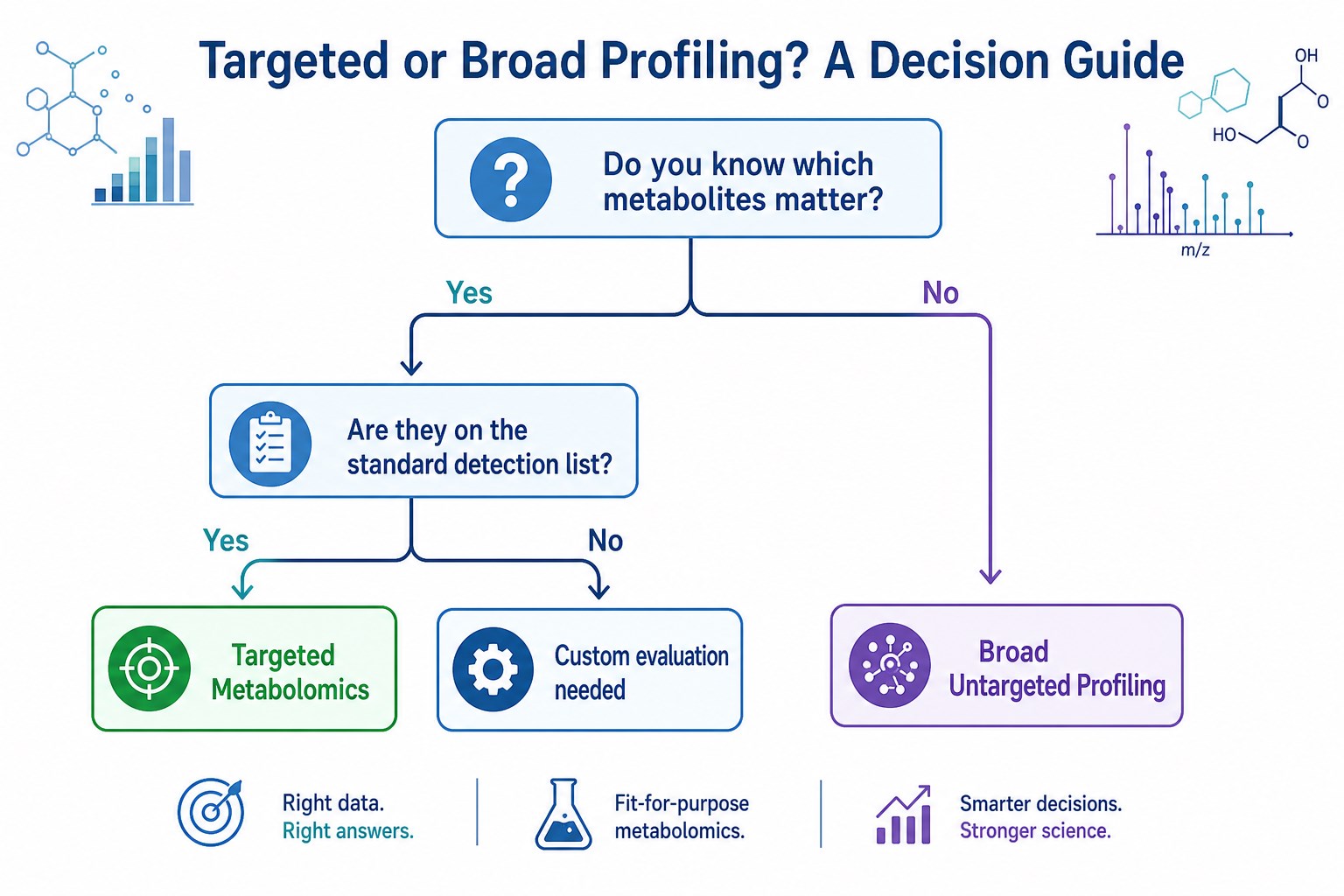
Figure 1. A short decision path: predefined targets supported by the current targeted metabolite list point toward targeted metabolomics, while unknown or exploratory questions point toward broad profiling.
Targeted vs Broad Profiling at a Glance
The table below compares the two approaches across the dimensions that usually drive the decision.
|
Dimension |
Targeted metabolite analysis |
Broad (untargeted) profiling |
|---|---|---|
|
Best for |
Defined candidates or predefined metabolites within a known pathway |
Open-ended discovery |
|
Output |
Focused measurements of predefined targets |
Relative differences across many features |
|
Target definition |
Predefined target compounds |
Candidate features with annotations where supported by available evidence |
|
Analytical focus |
Focused on selected targets |
Broad across detectable features |
|
Coverage |
Limited to the target list |
Broad across detectable features without a predefined target list |
|
Typical stage |
Focused measurement or hypothesis testing |
Hypothesis generation |
Read this as a fit guide rather than a ranking. Neither column is universally better. The right choice is the one that matches the stage your study is in and the kind of claim you eventually need to make.
When Targeted Metabolomics Is the Right Call
Targeted metabolite analysis is usually the more appropriate route in these situations:
-
You have a defined candidate list. Prior work, literature, or an earlier discovery run has already narrowed the molecules that matter.
-
Your study centers on a known pathway. When the biology points to a specific metabolic route, measuring its members directly is more efficient than scanning everything.
-
You need consistent measurements of predefined targets across a cohort. A focused analytical approach is more closely aligned with this type of study design.
-
You are following up earlier findings. Selected candidates from previous discovery work may be considered for targeted measurement when target coverage and project scope are suitable.
Across these situations, the common feature is that the metabolites of interest have already been defined before analysis begins.
When Broad Profiling Is Still the Better Choice
It is just as important to recognize when going straight to targeted analysis would be premature.
-
The informative metabolites are still unknown. If you cannot name your targets with confidence, a targeted panel may simply miss the real signal.
-
You expect unexpected biology. Exploratory questions benefit from coverage that a fixed list cannot provide.
-
Your candidate list is really a guess. A shortlist assembled from weak priors is a reason to discover first, not to commit to measurement.
One possible design is to use broad profiling first, prioritize candidate features, and then assess whether selected candidates are suitable for targeted follow-up. Whether this two-stage approach is appropriate depends on target coverage, study design, and project feasibility.
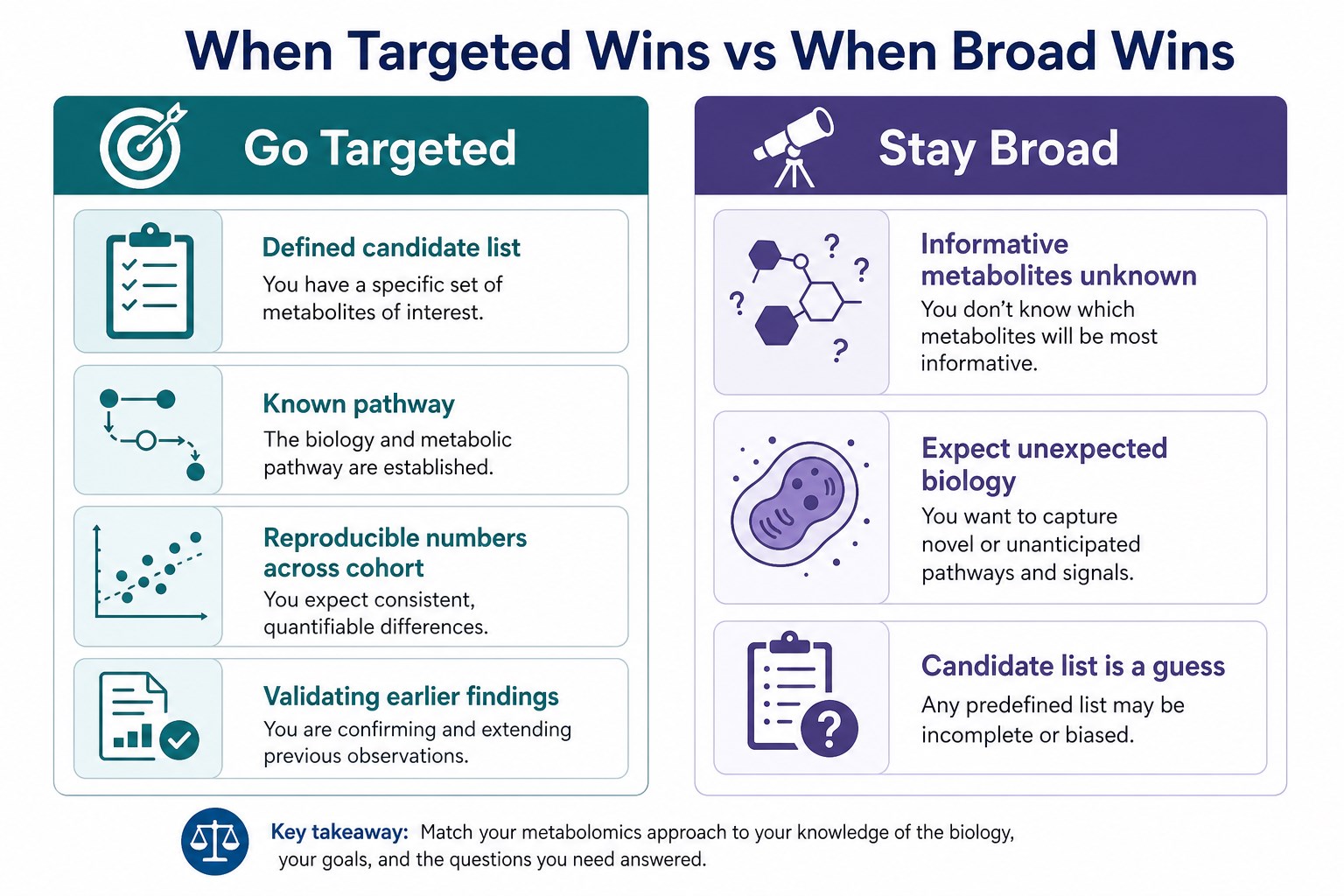
Figure 2. Targeted analysis fits predefined, focused questions, while broad profiling fits open, exploratory ones.
The Prerequisite Most Teams Overlook
Even when targeted metabolomics is clearly aligned with the research question, target coverage still needs to be reviewed before the project scope is confirmed.
Targets included in the current targeted metabolite list can enter routine project review. Targets outside the current list require separate assessment or custom development where applicable. Target coverage, development requirements, result scope, and delivery arrangements are confirmed before project initiation.
Checking the proposed metabolite list early helps determine whether the project can follow a routine targeted workflow or requires additional evaluation.
Matching Samples to a Targeted Design
Sample suitability and available amount should be reviewed against the proposed targeted workflow. Common biological matrices include serum or plasma, urine, feces, tissue, cells, and culture medium supernatant. The sample amounts provided by MtoZ Biolabs are basic project-planning references rather than fixed minimums or recommended amounts.
Unlisted biological samples require project-specific review to assess sample suitability and input requirements.
Consistency in collection, processing, and storage remains important when comparing predefined targets across a study cohort. Sample handling should be kept as consistent as possible across groups to reduce preanalytical variation.
Related Services
Metabolomics and Lipidomics Analysis Services
Targeted Metabolomics Analysis Service
Untargeted Metabolomics Service
Frequently Asked Questions
1. When is targeted metabolomics more appropriate than broad profiling?
When the metabolites of interest are already defined and the study requires focused measurement of those targets. If the informative molecules are still unknown, broad profiling is the better starting point.
2. Can I skip discovery and go straight to targeted metabolite analysis?
Yes, when the target metabolites are already well defined and their coverage has been reviewed. Targets included in the current targeted metabolite list can enter routine project review, while other targets require separate assessment.
3. What if my target compounds are not on the current targeted metabolite list?
Targets outside the current targeted metabolite list require separate assessment or custom development where applicable. Target coverage, development requirements, result scope, and delivery arrangements are confirmed during project review.
4. Does targeted analysis automatically provide confirmed metabolite identities?
Not automatically. Targeted metabolomics starts from predefined compounds and provides focused measurement within the approved analytical scope. The level of identification and quantitative evidence depends on the analytical method and supporting evidence available for each target.
5. Can one project use both approaches?
Yes. The two approaches may be used independently or sequentially. Candidates identified through broad profiling may be considered for targeted follow-up after target coverage and project feasibility are reviewed.
Conclusion
Choosing between targeted metabolomics and broad profiling depends on the stage and scope of the study. When the metabolites or pathway of interest are already defined and focused measurement is required, targeted metabolite analysis may be the more appropriate route. When the informative molecules are still unknown, broad profiling remains more suitable for discovery-oriented analysis.
Before finalizing the project, confirm that the target metabolites are clearly defined and review whether they are included in the current targeted metabolite list. MtoZ Biolabs can review the proposed targets, sample information, and study design to help determine the appropriate analytical scope before project initiation.
How to order?




