






When Is Mitochondrial Proteomics the Right Choice for Your Research?
A change in mitochondrial respiration, energy metabolism, redox balance, morphology, or treatment response often raises a second question: which protein-level changes may be associated with the observation or help explain it? Mitochondrial proteomics is relevant when the next stage of the study requires protein identification, relative abundance comparison, or pathway-oriented interpretation within a mitochondrial context.
The method is not automatically the right choice for every mitochondria-related project. Its suitability depends on whether the research question is genuinely protein-level, whether mitochondrial-focused sampling adds useful resolution, and whether the experimental design supports an interpretable comparison. These distinctions should be made before samples enter an LC-MS/MS workflow.
MtoZ Biolabs supports mitochondrial protein identification and quantitative comparison using high-resolution LC-MS/MS workflows. Researchers who already have an observed phenotype, proposed sample type, or preliminary group design can submit these details through our Mitochondrial Proteomics Project Inquiry Form for an initial feasibility assessment and workflow discussion.
Translate the Observation Into a Proteomic Question
1. Phenotypic and Metabolic Changes
(1) Treating the Observed Change as Starting Evidence
A mitochondrial phenotype indicates that a biological system has changed, but it does not identify the molecular events responsible for that change. Reduced oxygen consumption, altered ATP-associated measurements, shifts in redox status, changes in organelle morphology, or differences in metabolite abundance may arise from several biological processes.
Possible explanations include altered abundance of respiratory-chain components, changes in substrate transport, remodeling of metabolic enzymes, modified protein turnover, differences in mitochondrial content, or broader cellular stress. The phenotype defines the context for further investigation, while mitochondrial protein analysis examines whether detectable protein patterns differ in a manner consistent with that context.
(2) Identifying the Protein-Level Question
Mitochondrial proteomics is most informative when the study can formulate a specific protein-level question. One project may ask which proteins are detectable in a mitochondrial-enriched preparation. Another may ask which proteins differ between control and experimental groups. A third may examine whether altered proteins converge on particular mitochondrial processes.
Identification, quantification, and functional annotation answer related but distinct questions. Protein identification establishes analytical evidence for detected proteins. Quantification estimates relative abundance across samples or groups. Enrichment and pathway analysis organize protein patterns into biological categories but do not independently confirm pathway activity.
2. Drug and Treatment Responses
(1) Characterizing Condition-Dependent Protein Changes
Drug exposure, nutrient changes, oxidative stress, genetic perturbation, or other treatments may produce mitochondrial responses that vary by dose and time. Quantitative mitochondrial proteomics can compare predefined conditions and identify proteins showing reproducible abundance patterns associated with the treatment.
The design should reflect the biological response being investigated. An early time point may capture an initial stress or signaling response, while a later time point may reflect adaptation, toxicity, altered organelle abundance, or secondary cellular effects. Selecting biologically relevant conditions before proteomic analysis is therefore more useful than adding groups without a clear comparison logic.
(2) Avoiding Causal Overinterpretation
A differential protein is not automatically a direct drug target or a confirmed mediator of the observed phenotype. Changes may result from direct molecular interactions, compensatory regulation, altered protein import, degradation, changes in mitochondrial mass, or indirect effects elsewhere in the cell.
Proteomic results are best treated as comparative molecular evidence and a source of candidate pathways or proteins for further investigation. Establishing target engagement, causal mechanism, or functional consequence generally requires additional experiments designed around the specific hypothesis.
Determine Whether Mitochondrial-Focused Analysis Is Appropriate
1. Mitochondrial Context Versus Broader Proteome Profiling
(1) When Organelle-Enriched Analysis Adds Value
Mitochondrial-focused analysis can be advantageous when the research question centers on organelle-associated protein composition or when potentially relevant mitochondrial proteins are difficult to observe against the complexity of a whole-cell proteome. Enrichment may increase the analytical representation of mitochondrial proteins and support more focused interpretation of mitochondrial pathways.
This approach is particularly relevant when prior evidence already points toward mitochondrial remodeling. Examples include a consistent mitochondrial phenotype, treatment-dependent changes in mitochondrial metabolism, or a hypothesis involving mitochondrial transport, protein homeostasis, energy conversion, or redox regulation.
Enrichment does not create a perfectly isolated organelle proteome. Proteins from other subcellular compartments may remain in the preparation, and some proteins interact transiently with mitochondria. Detected proteins should therefore be interpreted in relation to enrichment quality, known localization evidence, and the biological question.
(2) When Whole-Cell Proteomics May Be More Informative
Whole-cell proteomics may be a better starting point when the response is not clearly localized to mitochondria or when the hypothesis involves communication among several cellular compartments. Drug exposure, metabolic stress, and genetic changes often affect signaling, translation, degradation, and organelle function simultaneously.
Restricting the analysis to a mitochondrial-enriched fraction could miss upstream regulators or broader cellular responses that explain the phenotype. In some studies, whole-cell and mitochondrial-focused proteomics answer complementary questions. The appropriate scope depends on whether the priority is system-wide response mapping or greater analytical focus on mitochondrial-associated proteins.
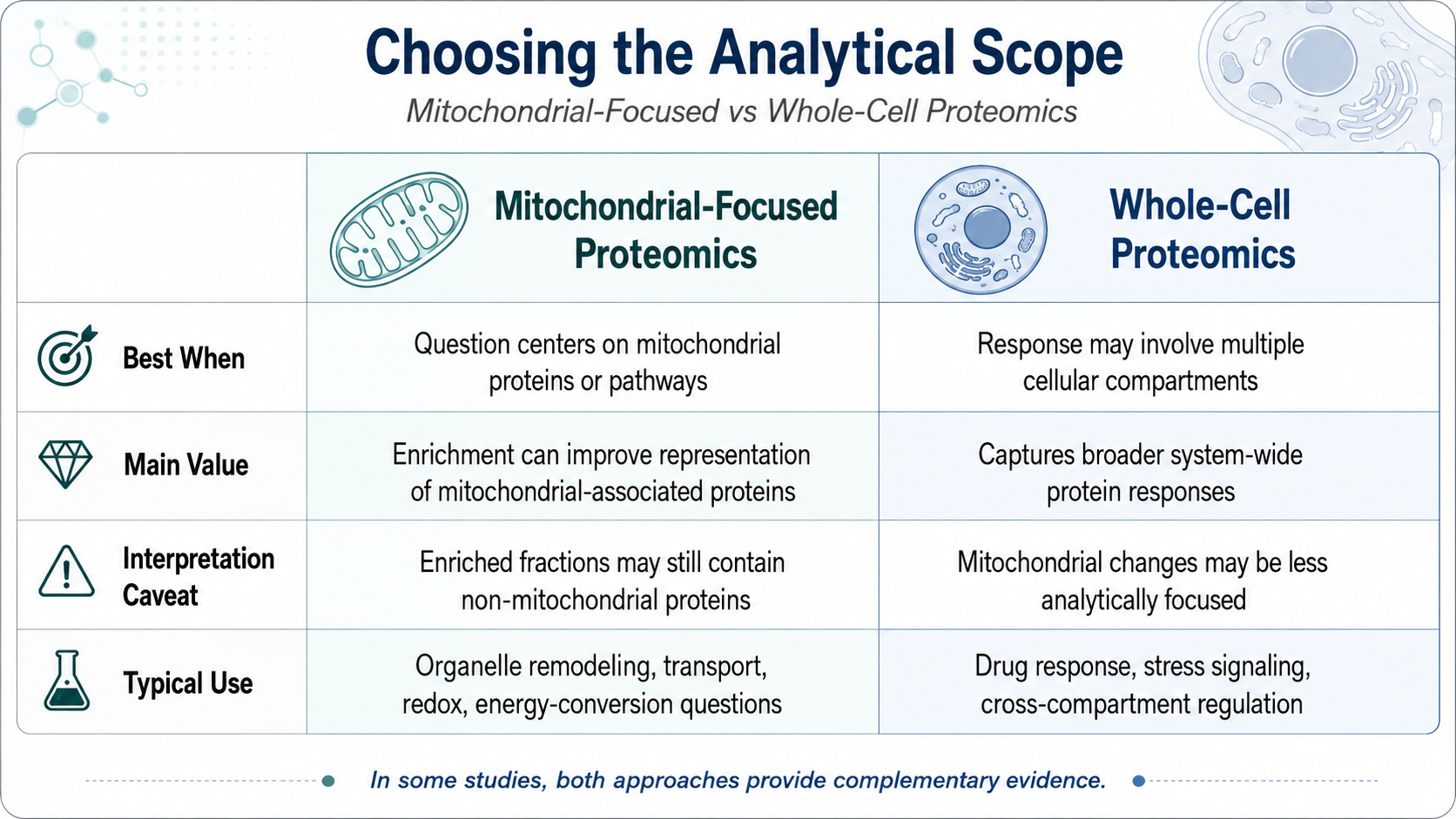
Figure 1. Comparison of mitochondrial-focused and whole-cell proteomics for analytical scope selection.
2. Sample and Study Design Readiness
(1) Choosing the Starting Material
A mitochondrial proteomics project may begin with cultured cells, animal tissues, isolated mitochondria, or a mitochondrial-enriched fraction. The choice affects sample preparation, analytical complexity, and interpretation. Cell and tissue projects require a reproducible enrichment strategy, while customer-prepared fractions require clear documentation of the isolation procedure and storage history.
Sample condition is as important as sample category. Collection consistency, storage, freeze-thaw exposure, buffer composition, enrichment quality, and available material can influence protein recovery and quantitative comparability. Tissue heterogeneity and differences in mitochondrial density may also affect interpretation across samples.
The sample route is suitable only when it supports the intended comparison. A technically detectable preparation may still be unsuitable for quantitative analysis if groups were collected, enriched, or stored under substantially different conditions.
(2) Building an Interpretable Comparison
Quantitative mitochondrial protein analysis requires biological replication and clearly defined groups. Biological replicates represent independently generated samples and support estimates of biological variation. Repeated injections of the same preparation mainly evaluate technical consistency and should not replace biological replication.
Matched controls, consistent sample processing, relevant treatment durations, and predefined comparisons strengthen interpretability. Dose and time-point selection should reflect the observed phenotype rather than being chosen solely to increase the number of conditions. Randomization and balanced sample handling also reduce the risk that preparation or acquisition order becomes confounded with the biological groups.
Judge What the Results Can Support
1. Protein-Level Outputs
(1) Identification and Quantitative Evidence
Protein identification reports which proteins are supported by peptide and protein-level evidence in the analyzed preparation. A protein may be detected without being reliably quantified across every sample. Conversely, quantitative comparison requires sufficient and consistent signal across the samples included in the statistical analysis.
A quantitative matrix supports comparisons among groups, while differential analysis prioritizes proteins according to predefined statistical and biological criteria. Missing values, shared peptides, protein grouping, normalization, variance, and replicate consistency can influence the resulting candidate list.
Failure to detect a protein does not prove that it is biologically absent. Low abundance, membrane association, peptide properties, extraction efficiency, digestion performance, chromatographic behavior, and acquisition depth can all affect detectability.
(2) Pathway and Process Interpretation
Functional annotation can organize identified proteins according to mitochondrial processes, complexes, and broader cellular functions, including energy metabolism, substrate transport, redox regulation, protein import, protein quality control, and organelle remodeling. For a defined set of differential or prioritized proteins, enrichment analysis can assess whether particular annotations are represented more strongly than expected against an appropriate analytical background.
An enriched pathway is not equivalent to a directly measured functional change. The result indicates that proteins assigned to a biological category are represented within the analyzed set more strongly than expected under the selected analysis model. Claims about activation, inhibition, or causal mechanism require evidence beyond enrichment statistics.
2. Evidence Boundaries and the Final Decision
(1) Questions Proteomics Cannot Answer Alone
Mitochondrial proteomics does not directly measure respiration, ATP production, membrane potential, reactive oxygen species, calcium handling, mitochondrial morphology, or mitophagy flux. A protein pattern may support a hypothesis related to one of these functions, but it does not substitute for a direct functional measurement.
Proteomics also cannot independently establish that a specific protein caused the phenotype. Causal interpretation generally requires perturbation, temporal evidence, targeted confirmation, and functional testing selected for the proposed mechanism. The proteomic result belongs primarily to the identification, comparison, and candidate-prioritization stages of research.
(2) A Practical Applicability Check
Mitochondrial proteomics is a strong technical fit when three conditions are present: the study has a defined protein-level question, the available samples can support a consistent mitochondrial-focused comparison, and the expected result is protein identification, relative quantification, or pathway-oriented interpretation.
It is less suitable as a standalone method when the primary objective is to measure mitochondrial function directly, validate a specific causal mechanism, or confirm that one protein is a direct drug target. In those situations, proteomics may contribute supporting molecular evidence, but the study design should include methods that directly address the main functional or causal question.
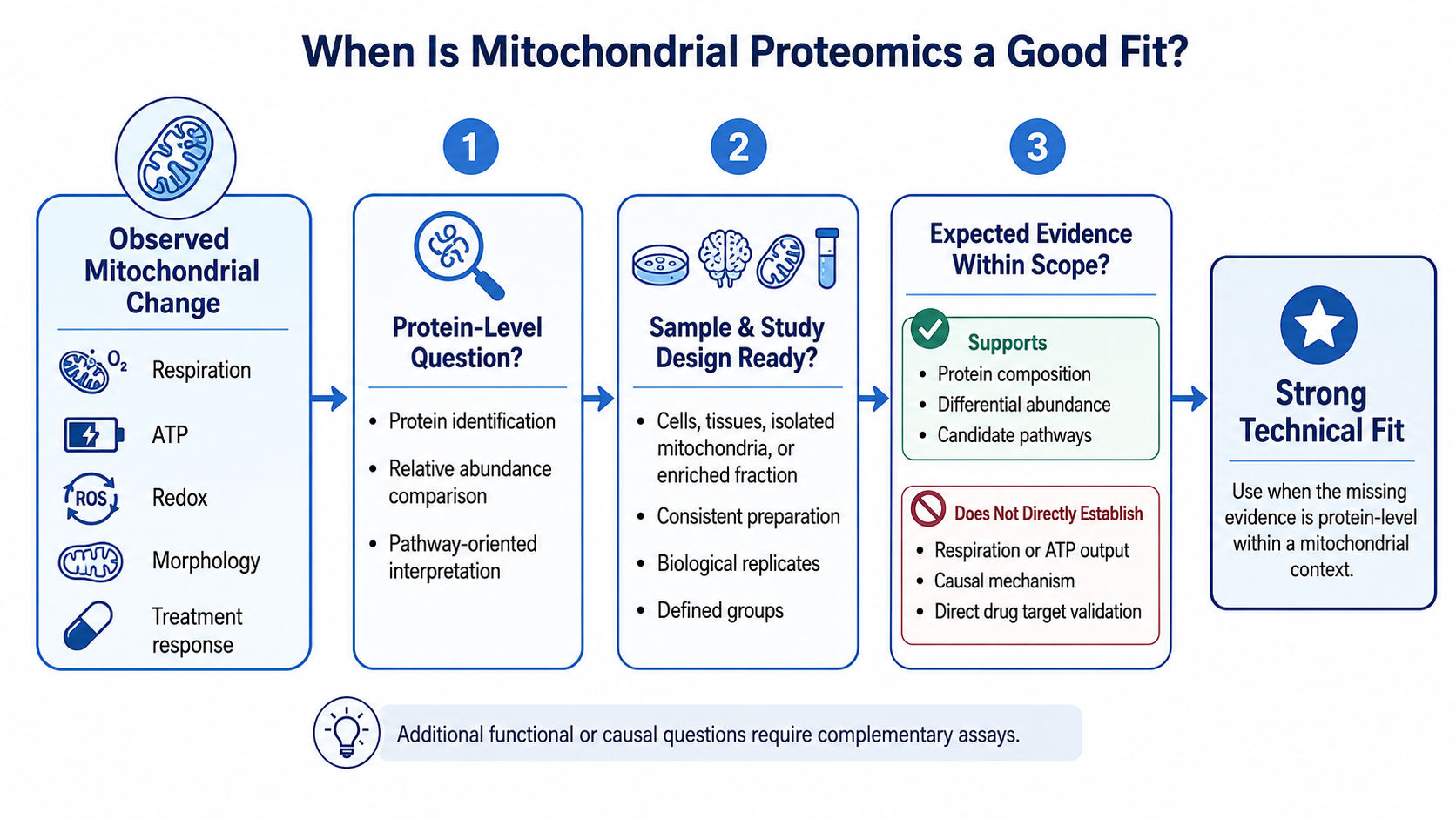
Figure 2. Practical applicability framework for mitochondrial proteomics.
Whether mitochondrial proteomics is appropriate should be determined by the observed biological change and the protein-level evidence still needed. When the study requires information on mitochondrial protein composition or condition-dependent protein abundance, MtoZ Biolabs can support project planning with high-resolution LC-MS/MS-based mitochondrial proteomics. Project evaluation can consider the sample type, preparation status, experimental groups, biological replicates, observed phenotype, and intended protein-level outputs. Submit your inquiry below for project evaluation.
MtoZ Biolabs, an integrated chromatography and mass spectrometry (MS) services provider.
Related Services
How to order?




