






What Is Histone Lactylation and How Is It Analyzed?
Histone lactylation is the covalent modification of lysine residues on histones by lactate molecules, forming lysine lactylation (Kla). This modification is closely linked to lactate, a product of glycolysis, and represents a novel type of histone modification following acetylation, methylation, and other canonical modifications. As an emerging post-translational modification (PTM), histone lactylation has gained attention in epigenetics and is increasingly recognized for its role in biological processes such as inflammatory responses, cell differentiation, and tumorigenesis.
Biological Significance and Research Frontiers of Histone Lactylation
1. A New Layer of Transcriptional Regulation
Histone lactylation promotes chromatin accessibility and enhances gene transcription, particularly influencing the expression of pro-inflammatory factors and glycolysis-related enzymes.
2. Association with Tumor Metabolism
In high-lactate environments, such as the tumor microenvironment, lactylation levels are generally elevated and may contribute to tumor progression via the metabolic-epigenetic axis.
3. Potential Therapeutic Target
Targeting lactylation-regulating enzymes or their substrate synthesis pathways may offer novel strategies for anti-inflammatory and anti-tumor interventions.
Analytical Strategies for Histone Lactylation
Due to its low abundance and dynamic regulation, histone lactylation is challenging to detect and analyze. Standard analytical approaches rely on high-resolution mass spectrometry (LC-MS/MS) combined with histone enrichment and modification-specific enrichment techniques. The workflow is outlined as follows:
1. Sample Preparation
-
Lyse cells or tissues to extract histones.
-
Employ acid extraction or commercial histone extraction kits.
-
Quantify protein to ensure consistent sample input.
2. Enrichment of Histone Lactylation
-
Immunoprecipitation using anti-Kla-specific antibodies.
-
Chemical derivatization (e.g., propionylation) to enhance modification detection.
-
In some studies, total histones are enriched directly for comprehensive modification profiling.
3. Protease Digestion
-
Trypsin is commonly used.
-
Multi-enzyme digestion strategies (e.g., Glu-C, chymotrypsin) may improve modification coverage.
4. LC-MS/MS Detection
-
High-resolution tandem mass spectrometers (e.g., Orbitrap Fusion Lumos, QE HF-X) are recommended.
-
Data acquisition using DDA or DIA modes.
-
Precise identification of lactylated peptides (+72.0211 Da) and their modification sites.
5. Data Analysis
-
Use software such as MaxQuant, PEAKS, or Spectronaut for modification site identification.
-
Configure lactylation-specific modification parameters.
-
Perform downstream analyses including functional annotation, pathway enrichment, and motif analysis.
Technical Challenges and Optimization Strategies
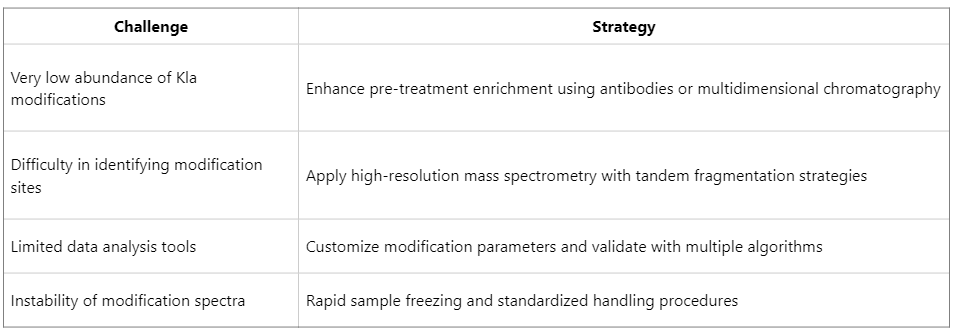
MtoZ Biolabs has established a dedicated mass spectrometry platform for histone lactylation analysis with the following capabilities:
-
Ultra-sensitive mass spectrometer (Orbitrap Fusion Lumos) capable of identifying extremely low-abundance Kla sites.
-
Multi-strategy sample pre-processing (acid extraction + antibody enrichment + multi-enzyme digestion) to maximize modification coverage.
-
Independently optimized lactylation databases and analysis workflows for accurate site identification and functional annotation.
-
Customized services including differential lactylation quantification, disease-related modification map generation, and integrative bioinformatics analysis.
Histone lactylation, as a newly emerging field at the intersection of metabolism and epigenetics, is providing researchers with novel perspectives. Leveraging high-precision mass spectrometry and robust analytical strategies allows comprehensive profiling of this modification, advancing studies in inflammation, tumorigenesis, and stem cell biology. Researchers investigating lactate metabolism, histone modifications, or tumor epigenetic mechanisms are encouraged to contact MtoZ Biolabs for high-quality, high-coverage histone lactylation analysis services to support scientific innovation.
MtoZ Biolabs, an integrated chromatography and mass spectrometry (MS) services provider.
Related Services
How to order?




