






What Is Exosome Proteomics Service and When Should You Use It?
Introduction
Many EV projects begin with a service search rather than a methods debate. A researcher may already know that exosomes or extracellular vesicles carry protein cargo, yet still need to confirm what proteomics can report from those vesicles and whether a dedicated Exosome Proteomics Service is the right request. Another team may see EV Proteomics Service listed beside bulk proteomics and wonder which option matches a biofluid or conditioned-media study. For EV studies focused on protein cargo, an exosome proteomics service can support LC-MS/MS-based protein identification and quantitative comparison.
Exosome proteomics is the mass spectrometry analysis of proteins recovered from isolated exosomes or broader extracellular vesicle preparations. This service type is used when the scientific question depends on vesicle-associated protein identity, abundance changes, or cargo comparison across conditions. This article explains what the analysis is, what questions it answers, and when it is the appropriate choice for EV-focused projects.
What Exosome Proteomics Means
Exosome proteomics analyzes the protein composition of vesicle fractions enriched from plasma, serum, urine, cerebrospinal fluid, or cell culture conditioned medium. The workflow usually combines vesicle isolation or enrichment, protein extraction, proteolytic digestion, and LC-MS/MS identification or quantification.
The biological target is vesicle cargo and membrane-associated proteins, not the entire cellular or plasma proteome. Marker proteins such as CD9, CD63, and CD81 may support vesicle characterization by Western blot, while differential proteomics can compare disease, treatment, or cell-type conditions. In service language, EV Proteomics Service often covers the same analytical goal when the sample is framed as extracellular vesicles rather than strictly as classical exosomes.
The method therefore answers vesicle-centered protein questions. It does not replace whole-sample proteomics when vesicle enrichment is unnecessary, and it should not be requested only because EV isolation is already planned.
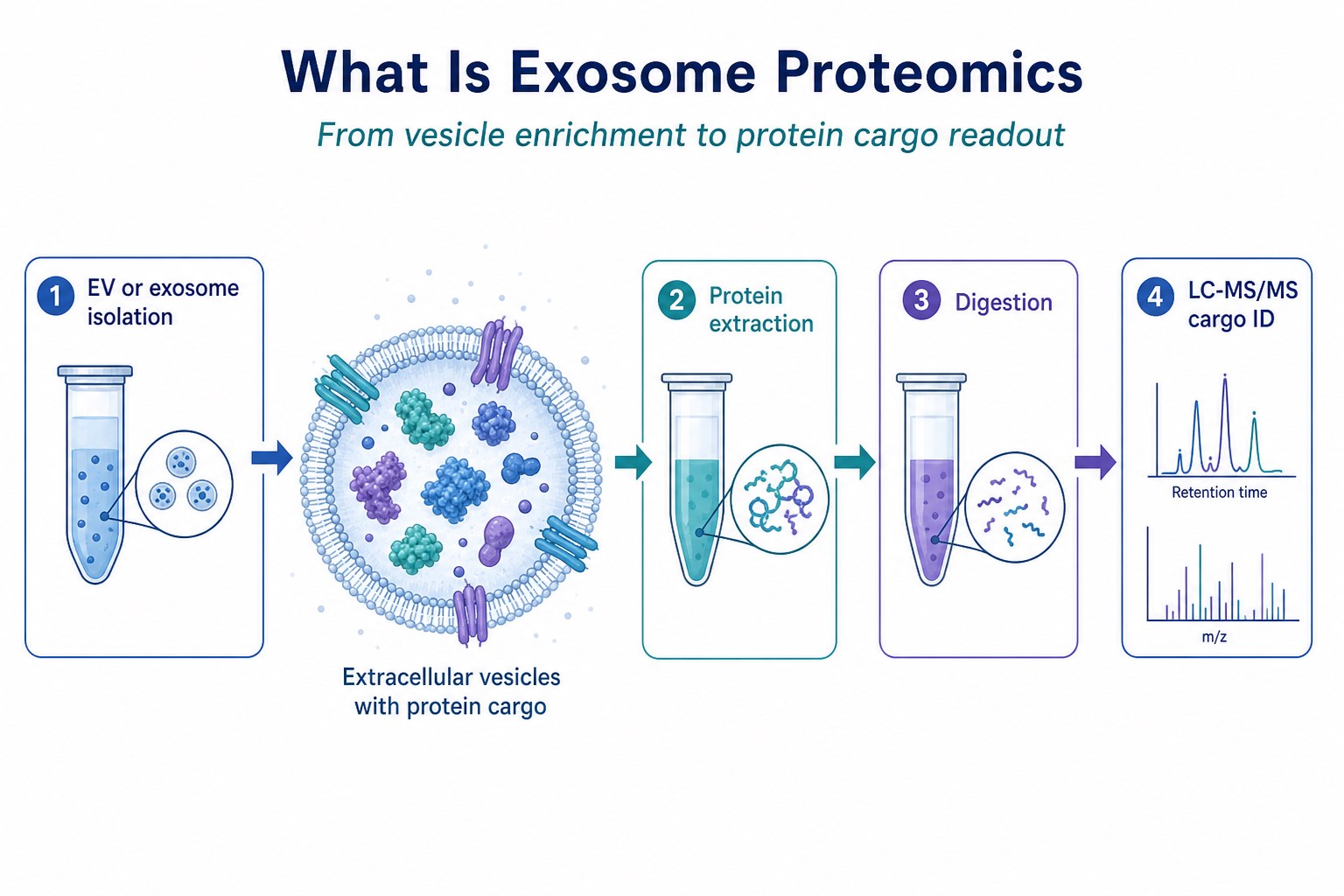
Figure 1. Exosome proteomics connects vesicle enrichment to LC-MS/MS identification or quantification of EV-associated proteins.
What This Service Can Support
A service request usually starts with the sample type and the analytical claim. Common inputs include plasma, serum, urine, cerebrospinal fluid, and conditioned media. The laboratory then applies an agreed isolation or enrichment strategy, prepares proteins for MS, and reports identified or quantified proteins with quality metrics.
Depending on project design, an Exosome Proteomics Service may include discovery identification, label-free quantification, TMT or iTRAQ quantification, or DIA quantification, plus comparison across groups. Related EV characterization steps such as NTA particle profiling, TEM or cryo-EM morphology review, or WB marker verification are often planned alongside proteomics when vesicle quality must be documented for interpretation.
The same vesicle-protein goal applies when proposals use extracellular vesicle wording. In practice, both naming styles point to vesicle-focused proteomics rather than bulk lysate analysis.
When You Should Use This Service
When the question is vesicle cargo, not bulk protein composition
Use vesicle proteomics when the hypothesis depends on proteins packaged in or associated with vesicles. Bulk proteomics of the parent biofluid can miss vesicle-enriched signals or dilute them below interpretation.
When comparing conditions at the EV protein level
Disease versus control, treated versus untreated, and cell-line versus primary-culture contrasts are common reasons to request an Exosome Proteomics Service. Matched isolation across arms is essential so technical recovery differences are not mistaken for biology.
When biomarker or mechanism work focuses on circulating EVs
Biofluid EV studies often need proteomic inventories or differential cargo maps. Vesicle proteomics supports those aims when enrichment quality is adequate for MS.
When multi-omics EV programs need a protein layer
Projects that already plan EV lipidomics, metabolomics, or RNA profiling may add proteomics to connect cargo classes. Protein data help interpret functional hypotheses that RNA or lipid changes alone cannot resolve.
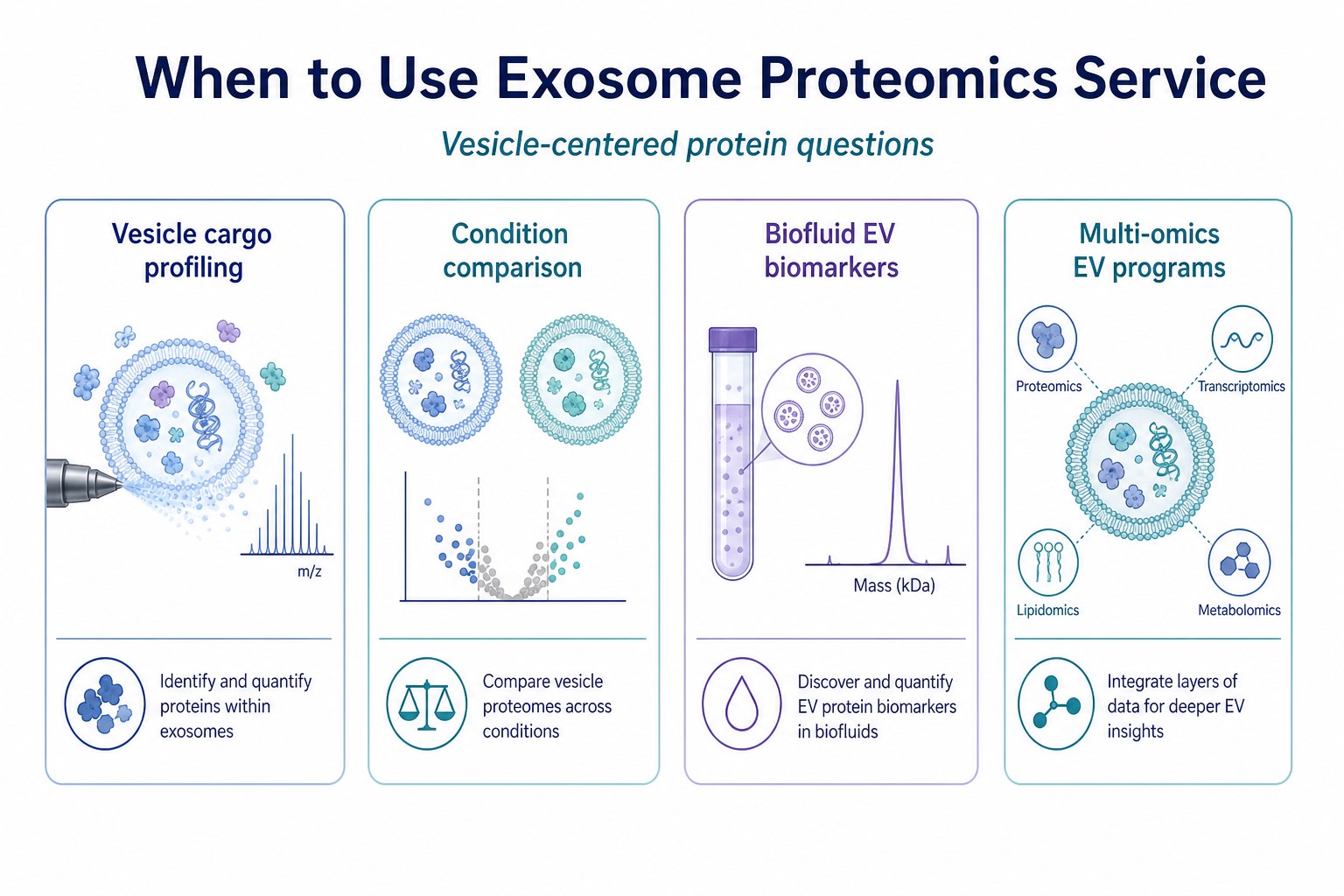
Figure 2. Vesicle proteomics is useful for cargo questions, condition comparisons, biofluid EV studies, and multi-omics EV programs.
When Another Approach May Fit Better
If the project only needs particle size, concentration, or a few Western blot markers such as CD9, CD63, or CD81, full proteomics may be unnecessary. NTA, TEM or cryo-EM, and WB characterization assays can answer those narrower questions first.
If the scientific claim is about total biofluid proteins rather than vesicle-associated proteins, bulk proteomics is the more direct service. Vesicle enrichment adds processing steps and can introduce isolation bias.
If the priority is lipids or metabolites inside EVs, lipidomics or metabolomics services are the primary fit. Proteomics can still be added later if protein cargo becomes relevant.
These boundaries help teams request the right assay instead of treating every EV project as an automatic proteomics order. A short consultation on sample class, isolation method, and the intended protein claim often prevents mismatched service requests and wasted vesicle material before submission.
Related Services
Exosome / Extracellular Vesicle Proteomics Service
Extracellular Vesicles Proteomics Service
Exosome Quantitative Proteomics Service
Extracellular Vesicle Profiling Services
Teams searching for vesicle protein analysis can consult MtoZ Biolabs to confirm sample readiness, isolation strategy, and whether discovery or quantitative proteomics fits the current study goal.
What to Confirm Before Requesting the Service
Define the analytical claim first. State whether the project needs identification, quantification, or differential comparison of EV proteins.
Describe the sample matrix and available volume. Suggested starting references for quantitative proteomics include about 1 mL plasma or serum, 50 mL urine, 2 mL CSF, and 50 mL cell culture supernatant. Larger volumes may be needed when NTA, TEM, and WB are included in the same package.
Agree on isolation and characterization expectations. Proteomics interpretation is stronger when vesicle enrichment quality is documented.
Plan matched processing across comparison groups. Unequal isolation recovery can create false differential cargo signatures.
Decide whether related EV assays are needed in the same package. Particle analysis, marker verification, or multi-omics layers should be scoped before submission when they affect study design.
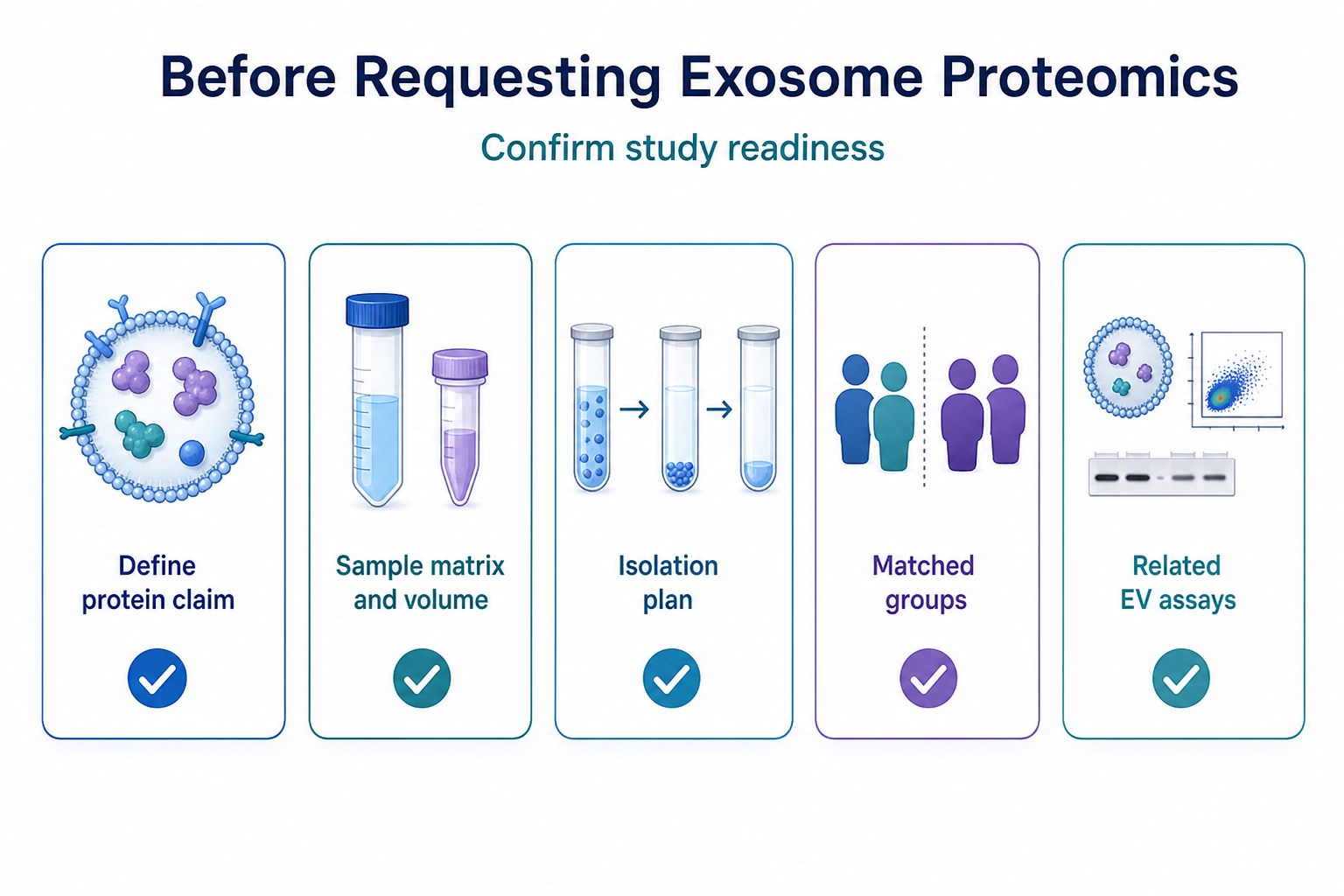
Figure 3. Before requesting vesicle proteomics, confirm the protein claim, sample matrix, isolation plan, and matched group design.
For projects that still need help matching EV sample type to proteomics scope, review whether the current materials are ready for vesicle proteomics or a broader EV analysis package with the laboratory before submission.
Frequently Asked Questions
1. What is exosome proteomics?
It is mass spectrometry analysis of proteins from enriched exosome or EV preparations, used to identify or quantify vesicle-associated protein cargo.
2. Does MtoZ Biolabs provide an Exosome Proteomics Service?
Yes. Related offerings also include extracellular vesicle proteomics and quantitative exosome proteomics options for vesicle-focused protein studies.
3. Is EV proteomics the same as exosome proteomics?
They share the same analytical goal of vesicle protein analysis. Naming often reflects whether the sample is framed as exosomes or as the broader EV class.
4. When should this service be chosen instead of bulk proteomics?
Choose it when the biological question depends on vesicle-associated proteins rather than the total protein composition of the parent sample.
5. What should be prepared before sample submission?
Prepare a clear protein claim, sample matrix details, isolation expectations, and a matched design for any group comparisons.
Conclusion
Exosome proteomics identifies and quantifies proteins from enriched vesicle preparations so EV cargo questions can be answered by mass spectrometry. An Exosome Proteomics Service is the right request when the study depends on vesicle-associated protein composition, differential cargo, or a protein layer within a broader EV program. The same need applies when the sample class is defined as extracellular vesicles and an EV-focused proteomics package is required.
The practical decision is claim-first: use vesicle proteomics for cargo-centered questions, and use bulk or non-protein EV assays when those questions are outside proteomics scope. Isolation quality, matched group design, and clear protein claims improve the chance that MS results support the intended biological interpretation. Teams evaluating EV protein analysis can contact MtoZ Biolabs to confirm which vesicle proteomics package fits the current project stage.
How to order?




