






What Controls Are Needed for Co-IP-MS and In-Cell Crosslinking MS?
Introduction
Protein interaction mass spectrometry can reveal binding partners, complex composition, and spatially constrained protein contacts. The main challenge is that interaction MS data can contain both true biology and technical background. A protein may appear in a Co-IP-MS dataset because the protein binds the bait, binds the antibody, binds beads, or survives washing because the protein is abundant. In-cell crosslinking MS adds another layer because crosslinker dose, cell viability, quenching, digestion, and search parameters can all affect detected crosslinks. For this reason, Co-IP-MS controls and in-cell crosslinking MS controls should be planned before samples are prepared. Good controls do not make the experiment complicated. Good controls make the final hit list interpretable.
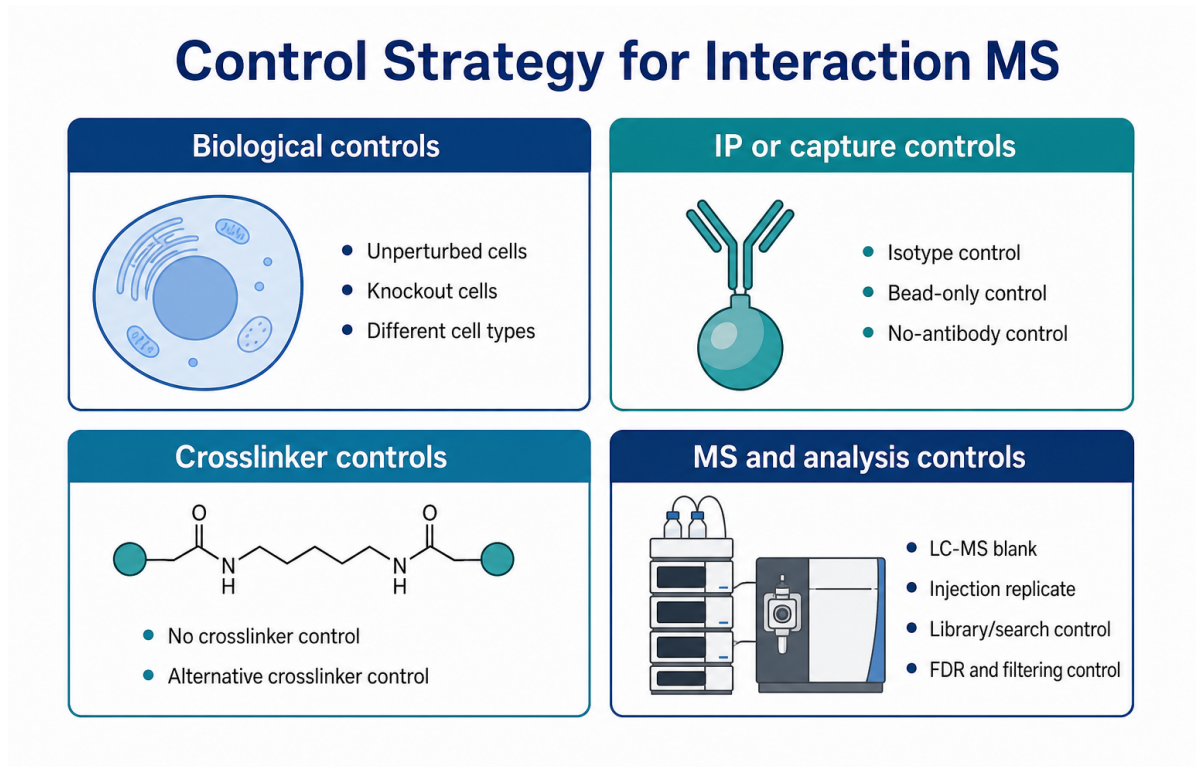
Figure 1. A control strategy for interaction MS should cover biological design, capture specificity, crosslinker behavior, and LC-MS/MS analysis.
Why Controls Matter in Interaction MS
Co-IP-MS and in-cell crosslinking MS answer related but different questions. Co-IP-MS asks which proteins are enriched with a bait under defined lysis and immunoprecipitation conditions. In-cell crosslinking MS asks which residues or protein regions are close enough to form chemical crosslinks in living cells. Both methods are useful, but neither method should be interpreted from a single experimental condition alone.
The key issue is enrichment. A detected protein is not automatically a specific interactor. A detected crosslinked peptide is not automatically a stable protein contact. Researchers need controls that estimate nonspecific binding, reagent-driven artifacts, sample handling effects, and search-space errors. Without these comparisons, the dataset may look rich but remain difficult to defend in a manuscript, grant report, or follow-up validation plan.
Related Services
| Service Area | Recommended Service | Relevance to This Topic |
| Protein interaction MS | Fusion Protein Interaction Analysis Service | Pull-Down and MS | Supports affinity capture experiments followed by LC-MS/MS identification. |
| Protein analysis | Protein Analysis Service | Provides broader mass spectrometry support for protein-level characterization. |
| Protein identification | Protein Identification Service | Helps confirm proteins detected in interaction or pull-down experiments. |
| Proteomics | Proteomics Analysis Service | Supports LC-MS/MS workflows, QC, and proteomic data interpretation. |
Core Controls for Co-IP-MS
Co-IP-MS controls should separate specific bait-associated enrichment from background proteins introduced by the matrix, antibody, resin, lysis condition, and LC-MS/MS workflow. The most important controls are not optional add-ons. The most important controls define the baseline against which candidate interactors are ranked.
Input Lysate Control
The input lysate control shows which proteins are present before immunoprecipitation. This control helps distinguish a true enrichment event from a protein that is simply abundant in the starting material. Input data also helps identify bait expression, sample degradation, and major shifts in proteome composition between groups.
Input lysate should be collected from the same biological material used for immunoprecipitation. If the project compares treatment and control cells, each condition should have matched input. A strong Co-IP-MS design uses the input to support interpretation, not as a replacement for IP- specific controls.
IgG or Isotype Control
An IgG or isotype control estimates proteins that bind nonspecifically to the antibody scaffold. This control is especially important when the bait antibody is not highly specific or when the target protein is low abundance. A species-matched and isotype-matched antibody is usually preferred because nonspecific Fc-mediated binding can vary across antibody types.
The IgG control should be processed under the same lysis, incubation, washing, digestion, and LC- MS/MS conditions as the target IP. If the target IP receives more sample, longer incubation, or different washing, the comparison becomes less reliable.
Beads-Only and No-Antibody Controls
Beads-only and no-antibody controls estimate proteins that bind to the resin, tube surface, or washing system. These controls are useful for sticky proteins, cytoskeletal proteins, ribosomal proteins, chaperones, and abundant metabolic enzymes. Such proteins often appear in affinity capture datasets even when no true bait-dependent interaction exists.
Researchers do not always need both beads-only and no-antibody controls in every project. However, at least one capture-background control should be included when the experiment is discovery-oriented. The control is also valuable when the expected interactors are low abundance.
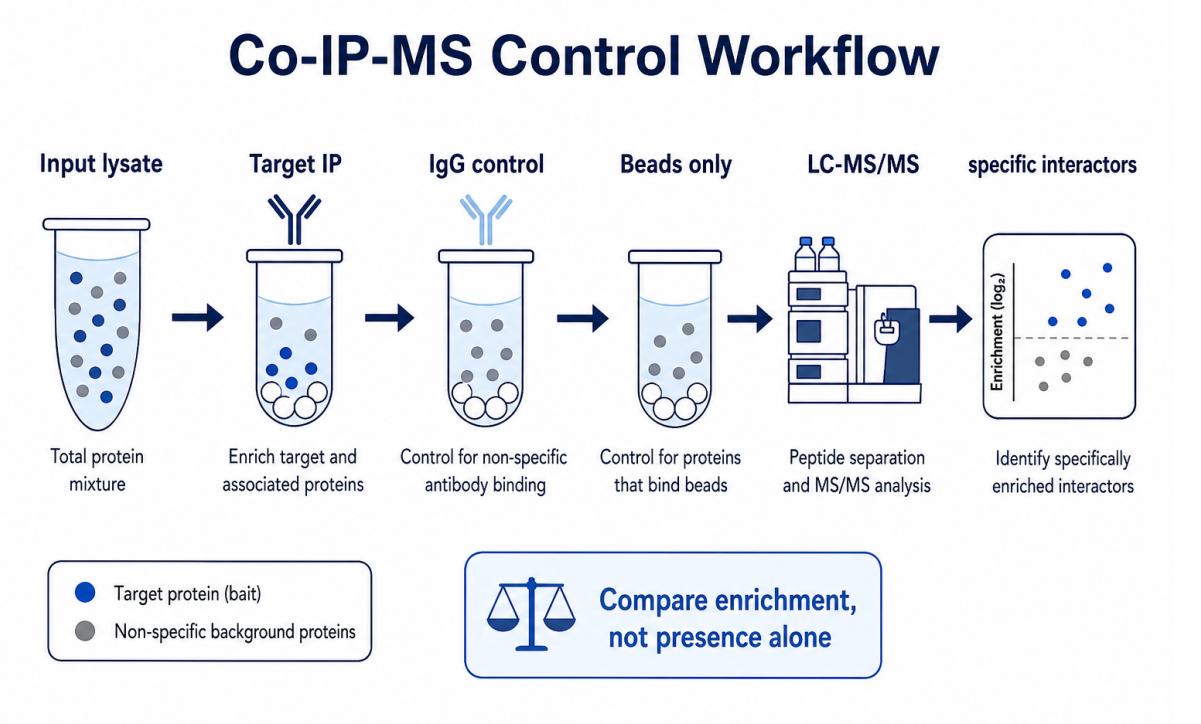
Figure 2. Co-IP-MS controls help distinguish bait-enriched proteins from antibody, bead, and background binders.
Knockout, Knockdown, or Tag-Only Controls
A knockout or knockdown control is one of the strongest biological controls for bait specificity. If a candidate interactor disappears or decreases when the bait is absent, the result becomes easier to interpret. For tagged bait systems, a tag-only control helps identify proteins that bind the tag, linker, or expression construct.
These controls are most useful when the bait can be genetically manipulated without major cell- state artifacts. If knockout changes cell viability, differentiation, or pathway activity, researchers should interpret lost interactions carefully. In that case, rescue experiments or orthogonal validation may be needed.
Replicates and Randomization
Biological replicates are required for statistical comparison. Technical replicates may help evaluate LC-MS/MS reproducibility, but technical replicates cannot replace independent biological samples. A practical discovery design often uses at least three biological replicates per condition, although the final number depends on cell availability, expected effect size, and project risk.
Sample processing should also be randomized when possible. If all bait IP samples are processed before all controls, batch effects can mimic enrichment. Randomized digestion, injection order, and balanced LC-MS/MS runs reduce this risk.
Core Controls for In-Cell Crosslinking MS
In-cell crosslinking MS controls need to address reagent behavior inside living cells. Crosslinkers can change protein solubility, cell permeability, membrane integrity, and digestion efficiency. Controls should therefore evaluate both biological preservation and chemical specificity.
1. No-Crosslinker Control
The no-crosslinker control is the baseline for peptides and proteins detected without chemical crosslinking. This control helps identify conventional peptides, carryover signals, and apparent crosslinks caused by search artifacts. The no-crosslinker control is especially important when the database search space is large.
This control should go through the same cell handling, lysis, digestion, enrichment if used, and LC- MS/MS acquisition. The only missing step should be the active crosslinker treatment.
2. Quenched-Crosslinker Control
A quenched-crosslinker control tests whether crosslinker-derived signals depend on active chemistry. In this control, the reagent is inactivated before exposure to the biological sample. If crosslink-like signals remain high in the quenched condition, the workflow may contain reagent impurities, sample handling artifacts, or search-level false positives.
This control is useful for method development and for new crosslinker chemistries. It can also support troubleshooting when crosslink identifications are unexpectedly high in low-complexity regions or highly abundant proteins.
3. Dose and Time Series
Crosslinker concentration and treatment time should be optimized before large-scale experiments. Too little crosslinker may yield few informative links. Too much crosslinker may reduce viability, alter native complexes, and generate over-crosslinked material that digests poorly.
A short dose and time series can identify a workable range. Researchers should monitor total protein recovery, digestion quality, cell morphology, viability, and crosslink identification rate. The goal is not to maximize the number of crosslinks at any cost. The goal is to capture interpretable proximity information under conditions that preserve the biological state.
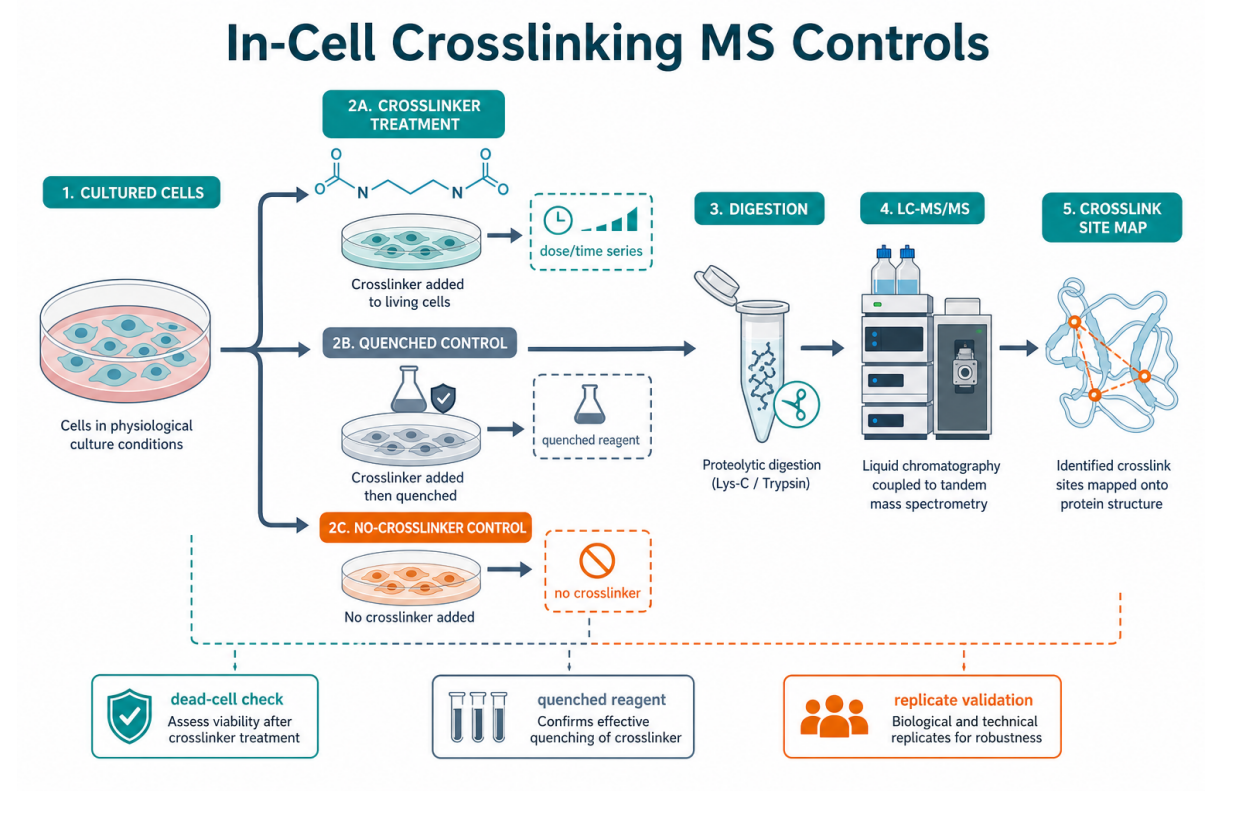
Figure 3. In-cell crosslinking MS controls should test crosslinker dose, quenching, viability, replicate stability, and LC-MS/MS detection.
Cell Viability and State Controls
Cell viability checks are essential because damaged cells may expose proteins to nonphysiological crosslinking. Viability assays, morphology review, and marker protein monitoring can help confirm that the treatment does not create a stress state unrelated to the research question.
For stimulation or drug-treatment studies, researchers should include matched untreated or vehicle-treated cells. These controls help distinguish a biological change in protein contacts from a chemical or handling effect.
Search and FDR Controls
Crosslinking mass spectrometry uses specialized database searching. The search space grows quickly because peptide pairs must be considered. Search settings, decoy strategy, crosslink-level false discovery rate, peptide-spectrum match filtering, and manual spectrum review all affect confidence.
A practical in-cell crosslinking MS control plan should include LC-MS blanks, injection replicates, defined search parameters, and independent filtering criteria. When possible, high-confidence crosslinks should be consistent across biological replicates and structurally plausible based on protein domain organization or known complex architecture.
Comparing Control Priorities
The right control set depends on the question. A targeted validation experiment may need fewer conditions than a discovery project. A new crosslinker workflow needs more chemistry controls than a mature Co-IP-MS protocol. The table below summarizes practical priorities.
| Control Type | Co-IP-MS Priority | In-Cell Crosslinking MS Priority | Main Question Answered |
| Input sample | High | Medium | What proteins were present before enrichment? |
| IgG or isotype control | High | Low | What binds nonspecifically to antibody? |
| Beads-only control | High | Low | What binds resin or tubes? |
| No-crosslinker control | Low | High | What signals occur without crosslinking chemistry? |
| Quenched- crosslinker control | Low | High | Are signals dependent on active reagent? |
| Biological replicates | High | High | Are findings reproducible across samples? |
| LC-MS blank and injection QC | Medium | Medium | Are carryover and acquisition effects controlled? |
How to Interpret Controlled Results
A controlled interaction MS result should be evaluated through fold enrichment, replicate consistency, known biology, and technical plausibility. In Co-IP-MS, a candidate interactor is stronger when the protein is enriched in target IP compared with IgG, beads-only, and input- normalized background. Spectral count, MS1 intensity, or label-free quantification can support ranking, but no single metric proves direct binding.
In in-cell crosslinking MS, a candidate contact is stronger when the crosslink is absent or strongly reduced in no-crosslinker controls, reproducible across biological replicates, and consistent with protein topology. Crosslinks can indicate proximity, but proximity does not always mean stable direct interaction. Protein crowding, transient contacts, and local concentration effects can contribute to the signal.
MtoZ Biolabs can support project planning for interaction-focused LC-MS/MS studies, including sample preparation, protein identification, and control-aware data interpretation. Researchers can use this type of consultation before committing rare samples to a full discovery workflow.
Common Mistakes to Avoid
One common mistake is using only a target IP and then calling every identified protein an interactor. This approach often inflates false positives. Another common mistake is using an IgG control but processing the IgG control with less starting material or fewer LC-MS/MS injections. The control then becomes too weak to estimate background.
For in-cell crosslinking MS, a common mistake is choosing the condition with the highest number of crosslinks without checking viability or digestion quality. Another mistake is treating a crosslink site map as a complete structural model. Crosslinking MS provides distance-constrained evidence, not a full atomic structure.
Practical Checklist Before Starting
Before starting Co-IP-MS, confirm the bait antibody or tag system, input lysate collection, IgG or tag-only controls, beads-only controls, replicate number, wash stringency, and LC-MS/MS acquisition plan. Define how enriched proteins will be ranked before seeing the data.
Before starting in-cell crosslinking MS, confirm the crosslinker chemistry, dose and time range, no-crosslinker control, quenched-crosslinker control, viability readout, digestion strategy, replicate design, and search criteria. Define what level of evidence is needed for downstream validation.
Frequently Asked Questions
1. Are IgG controls enough for Co-IP-MS?
IgG controls are important, but IgG controls are usually not enough for discovery Co-IP-MS. Beads-only, input lysate, tag-only, knockout, or knockdown controls may be needed depending on the bait system and expected background.
2. Does Co-IP-MS prove direct protein binding?
Co-IP-MS does not always prove direct binding. Co-IP-MS can identify proteins associated with a bait under specific lysis and immunoprecipitation conditions. Direct binding should be validated with orthogonal methods such as reciprocal IP, pull-down, mutagenesis, or structural assays.
3. What is the most important control for in-cell crosslinking MS?
The no-crosslinker control is usually essential because it defines signals that occur without active crosslinking chemistry. Quenched-crosslinker controls, dose and time series, and viability controls are also important during method setup.
4. How many replicates are needed?
Many discovery projects use at least three biological replicates per condition. More replicates may be needed when the effect size is small, the sample is heterogeneous, or the expected interaction is weak.
5. Should crosslinking MS replace Co-IP-MS?
Crosslinking MS should not be viewed as a direct replacement for Co-IP-MS. Co-IP-MS is useful for identifying enriched protein partners. Crosslinking MS adds residue-level proximity information. In many projects, the two methods are complementary.
Conclusion
Co-IP-MS controls and in-cell crosslinking MS controls determine whether interaction data can support a clear biological conclusion. Co-IP-MS needs controls for antibody binding, bead background, input abundance, bait specificity, and replicate stability. In-cell crosslinking MS needs controls for reagent activity, cell state, crosslinker dose, quenching, search confidence, and LC- MS/MS quality. A strong control plan reduces false positives and makes follow-up validation more efficient. For projects involving rare samples, low-abundance interactors, or unfamiliar crosslinker chemistry, MtoZ Biolabs can help evaluate the experimental design and build a control-aware workflow before sample submission.
How to order?




