






What Can Plant Proteomics Reveal About Plant Traits and Stress Responses?
Plant proteomics links protein abundance patterns to traits, treatments, and stress responses in crops, model plants, and specialty species. It is often used when a research team wants to know which proteins differ between genotypes, developmental stages, or stress conditions and which biological processes those differences may involve. The output is usually a quantitative protein comparison plus functional interpretation, not direct proof of genetic causality or a standalone prediction of field performance.
The most useful plant proteomics projects start with a clear biological contrast. Once that contrast is defined, proteomics can help reveal candidate proteins and pathway-level changes associated with yield-related traits, quality differences, drought or salt response, pathogen challenge, or treatment effects.
If you are deciding whether plant proteomics fits your trait or stress question, share the plant system, tissue type, comparison design, and the claim the data need to support with MtoZ Biolabs while study planning is still open.
What Plant Proteomics Measures
Plant proteomics focuses on the protein layer of biology in a defined tissue or preparation. Depending on project design, it can support:
-
Protein identification in a sample type or condition
-
Quantitative comparison of protein abundance between groups
-
Differential protein screening associated with a trait, genotype, treatment, or stress state
-
Functional annotation and pathway-level organization of changed proteins
Downstream analysis may include differential analysis, functional annotation, pathway enrichment, and protein interaction context depending on the species and analytical scope.
Plant proteomics does not by itself:
-
Prove that a protein change causes a trait
-
Replace metabolite measurements when the claim depends on chemical products
-
Identify a genetic locus without separate genetic analysis
-
Ensure that a laboratory result will repeat across field environments
Results should therefore be interpreted as candidate proteins and biological priorities until phenotype linkage and follow-up experiments support stronger conclusions.
What It Can Reveal About Plant Traits
Trait-focused plant proteomics compares materials that differ in a measurable phenotype. Examples include:
-
High-yield versus lower-yield breeding lines at a defined developmental stage
-
Quality-related contrasts involving seed storage proteins or metabolic enzymes
-
Developmental transitions such as flowering, ripening, or seed filling
-
Specialty traits in medicinal plants or industrial crops
In these settings, proteomics can reveal:
-
Constitutive protein differences present between materials
-
Abundance shifts in enzymes, transporters, storage proteins, or regulatory proteins associated with the trait contrast
-
Pathway themes involving primary metabolism, secondary metabolism, transport, or development-related processes
Trait interpretation is strongest when the phenotype is measured consistently across compared materials. A protein that changes consistently with the phenotype across independent biological replicates is generally a stronger candidate than one driven mainly by a single outlier sample.
Breeding and germplasm projects may use proteomics to generate candidate proteins for further marker exploration, parent comparison, or validation. Proteomics supports prioritization but does not replace field trials or genetic mapping when those are required to establish trait performance or genetic basis.
What It Can Reveal About Stress Responses
Stress-focused plant proteomics asks how protein abundance changes under abiotic or biotic stress or how contrasting genotypes respond to the same stress condition.
Common settings include:
-
Drought, salt, heat, cold, or nutrient stress
-
Pathogen infection or elicitor treatment
-
Chemical or hormone treatment related to stress response
-
Recovery after stress removal
Proteomics can help reveal:
-
Early protein-abundance responses before severe damage develops
-
Later adjustment or damage-associated protein patterns
-
Genotype-dependent differences under matched stress conditions
-
Pathway themes involving antioxidant defense, osmotic adjustment, photosynthesis-related remodeling, cell wall changes, or other stress-related processes
Stress interpretation depends heavily on harvest timing. Early time points may capture early protein-abundance responses, while rapid signaling events may require phosphoproteomics for more direct analysis. Later time points may reflect metabolic adjustment, acclimation, growth effects, or accumulating damage.
Early and late samples should not be merged into one stress group unless the study question intentionally treats those stages as equivalent.
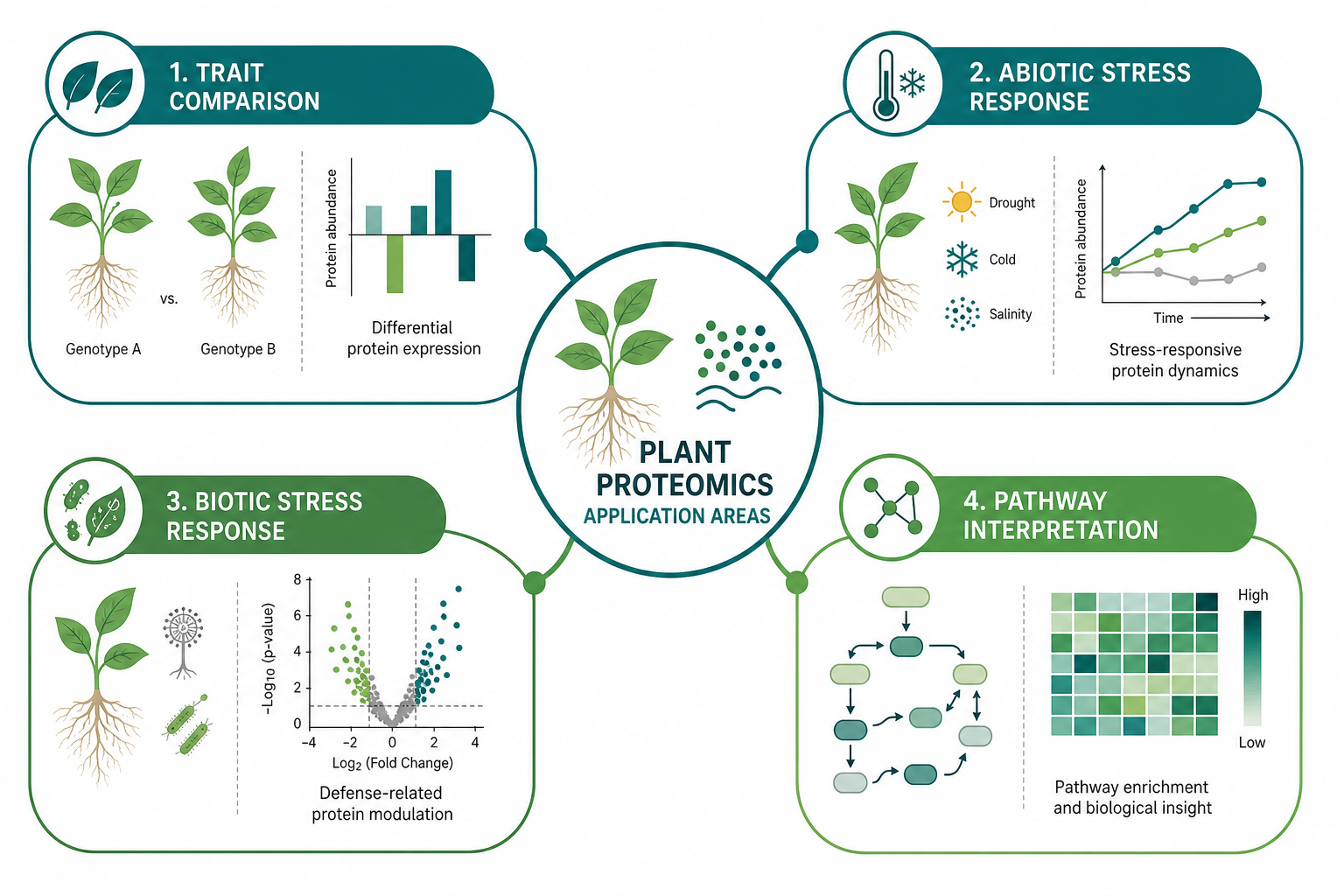
Figure 1. Plant proteomics can support trait comparison, stress-response analysis, and pathway-level candidate review across matched study designs.
From Protein Lists to Biological Interpretation
A differential protein list is only the starting point. Useful interpretation asks three linked questions:
-
Does the protein fit the trait or stress question?
-
Is the change consistent across independent biological replicates?
-
Does functional and pathway context support a cautious biological interpretation?
Replicate behavior should be reviewed before candidates are ranked by statistics alone. A moderately changed protein with a consistent direction across samples may be more informative than a large fold change driven by one outlier.
Pathway and annotation results can then be used to organize candidates:
-
GO terms for biological process and molecular function context
-
KEGG or other supported pathway resources for biological themes
-
Protein interaction context for network-level review
Pathway enrichment helps prioritize biological themes. It does not prove that a pathway or individual protein controls the trait or stress response.
Phenotype and treatment records collected at harvest can further strengthen interpretation. Proteins that consistently align with measured trait scores, stress indices, or treatment conditions are generally stronger candidates for follow-up than proteins appearing only in uneven samples.
| Question Type | What Plant Proteomics Can Reveal | What Still Needs Separate Evidence |
| Trait contrast between lines | Candidate proteins and pathway themes associated with the phenotype | Causal role, field performance, marker validation |
| Stress versus matched control | Stress-responsive protein changes within a defined genotype | Proof of tolerance mechanisms across environments |
| Tolerant versus sensitive genotypes | Genotype-associated protein differences under stress | Separation of baseline genotype effects and stress responses |
| Developmental stage comparison | Stage-associated protein remodeling | Direct connection to final traits without appropriate stage design |
| Treatment response | Treatment-associated abundance shifts | Mechanistic proof without orthogonal experiments |
Design Choices That Shape What You Can Learn
The proteins that can be interpreted depend on decisions made before harvest.
Define the main comparison in one sentence. Examples include drought-treated versus matched control leaf at a defined harvest point, resistant versus susceptible cultivars under the same infection protocol, or a high-quality seed line versus a comparison line at the same developmental stage.
When comparing tolerant and sensitive or resistant and susceptible genotypes, matched controls for each genotype are important when the goal is to distinguish baseline genotype differences from stress-induced responses.
Choose tissue deliberately:
-
Leaves for many canopy stress and photosynthesis-related questions
-
Roots for drought, salt, or nutrient-related questions
-
Seeds for quality, storage protein, or seed-filling traits
-
Flowers, bark, pollen, or other organs when the trait is organ-specific
Match non-target factors across groups whenever possible:
-
Plant age and developmental stage
-
Growth environment and nutrition
-
Stress dose, duration, and application method
-
Sampled organ and harvest window
-
Time of day at collection
Define biological replicates according to the experimental unit to which the treatment is independently applied. A plant or pot can serve as a biological replicate only when it represents an independent treatment unit. Multiple samples from the same shared tray, tank, or other treatment unit should not automatically be counted as independent biological replicates.
Sample requirements depend on tissue type, water content, extraction difficulty, and analytical scope. Confirm the required amount for the specific material before collection. Degraded, contaminated, or repeatedly freeze-thawed samples should be avoided, and acceptance requirements for infectious, regulated, or unusual plant materials should be confirmed before shipment.
Choosing the Analytical Workflow
Once the biological comparison and tissue plan are clear, choose the workflow according to the project goal.
Protein identification is appropriate when the primary objective is to characterize which proteins are present in a tissue, genotype, or condition. Quantitative proteomics is required when the question depends on protein abundance differences between traits, genotypes, treatments, or stress groups.
DDA and DIA can both support plant proteomics. The acquisition strategy should be selected according to the quantitative objective, required data consistency, study scale, and overall analytical workflow. An appropriate mass spectrometry platform can then be selected according to the finalized study design and analytical requirements.
Plant proteomics projects typically include protein extraction, digestion, LC-MS/MS analysis, and downstream bioinformatics according to the selected analytical scope.
When the research question also depends on metabolite pools, hormone-related chemistry, or secondary metabolite changes, plant metabolomics may provide complementary information. When rapid signaling regulation is central to the question, phosphoproteomics may be considered as a follow-up or companion strategy.
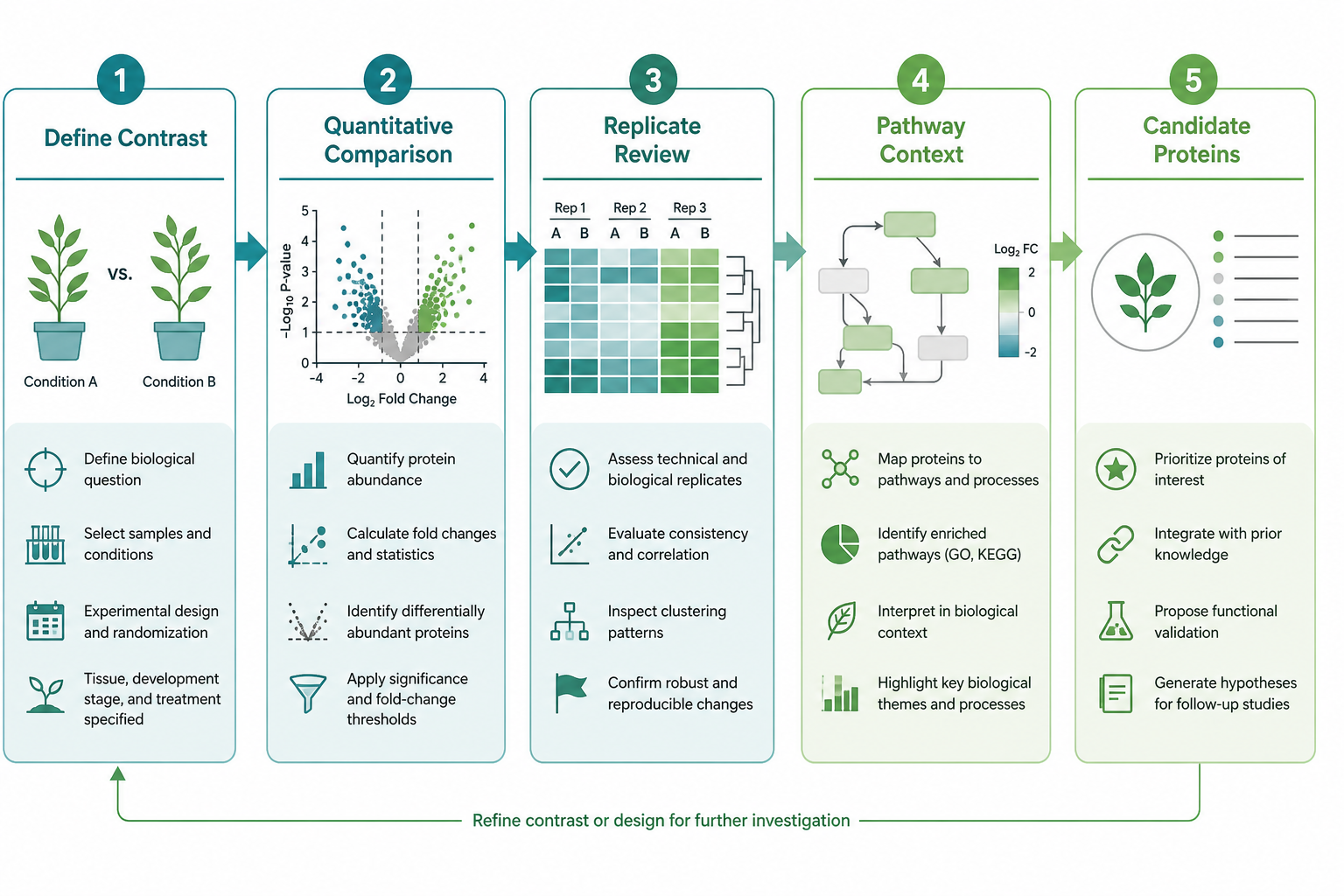
Figure 2. Define the biological contrast, review replicate consistency, and then use functional context to prioritize candidate proteins.
Common Limits and Misinterpretations
Common problems include:
-
Treating every differential protein as a trait or stress marker without phenotype support
-
Mixing organs, developmental stages, or stress severities within one comparison group
-
Comparing stressed genotypes without appropriate genotype-matched controls
-
Using pathway enrichment as final proof of mechanism
-
Assuming protein abundance changes directly represent downstream metabolite changes
-
Ignoring harvest timing and interpreting damage-stage patterns as tolerance mechanisms
-
Scaling to many genotypes or time points before the main biological contrast is clearly defined
Avoiding these problems helps keep conclusions aligned with the evidence generated by proteomics.
A Practical Planning Checklist
Before sample collection:
-
Write the trait or stress comparison in one sentence.
-
Choose the tissue and developmental stage.
-
Define treatment conditions, experimental units, and biological replicates.
-
Include genotype-matched or time-matched controls when required by the study design.
-
Define the harvest timing and relevant phenotype records.
-
Match growth and sample-handling conditions across comparison groups.
-
Decide whether identification or quantitative comparison is needed.
-
Confirm sample requirements before collection.
-
Plan metabolomics, phosphoproteomics, or validation experiments when additional evidence is needed.
When the study plan is ready, share the plant species, tissue type, comparison design, and the biological question with MtoZ Biolabs so the analytical strategy can be reviewed before harvest.
Related Services
Frequently Asked Questions
1. What can plant proteomics reveal about plant traits?
Plant proteomics can reveal candidate proteins and pathway themes associated with measurable trait differences between genotypes, developmental stages, or other plant materials.
2. What can plant proteomics reveal about stress responses?
It can identify stress-associated protein abundance changes, compare genotypes under matched stress conditions, and prioritize candidate proteins and biological processes for follow-up.
3. Is plant proteomics enough for every plant research question?
No. When a research question depends on metabolite changes, genetic causality, rapid phosphorylation signaling, or field performance, additional methods may be required.
4. Do differential proteins prove trait control or stress tolerance?
No. Differential proteins are candidates until consistent replicate behavior, phenotype linkage, and follow-up evidence support stronger conclusions.
5. Which tissues can be used for plant proteomics?
Leaves, roots, seeds, flowers, pollen, and other plant tissues can be analyzed when the selected tissue matches the biological question. Sample requirements should be confirmed for the specific project before collection.
6. What information should be provided before starting a plant proteomics project?
Provide the plant species, tissue type, trait or stress condition, comparison groups, harvest timing, and the biological question the project is intended to address.
Conclusion
Plant proteomics can reveal candidate proteins and biological pathway themes associated with plant traits and stress responses when the comparison, tissue, replicate structure, and harvest design are clearly defined. It supports trait comparison, stress-response analysis, and candidate prioritization, but conclusions should remain at the association or candidate level until phenotype linkage and follow-up experiments provide stronger evidence.
To evaluate what plant proteomics can reveal for a specific trait or stress question, contact MtoZ Biolabs with the plant system, tissue choice, comparison design, harvest plan, and expected analytical objective.
How to order?




