






What Can Plant Proteomics Reveal About Plant Growth and Stress Response?
Plant proteomics can reveal how protein abundance shifts during growth transitions and during stress exposure in a defined tissue at a defined harvest time. Growth-related projects compare developmental stages or biomass-associated remodeling. Stress-related projects compare treated versus control plants or tolerant versus sensitive genotypes under matched pressure. The two questions overlap when stress is applied during active growth, but they should not be merged without controls that separate development from treatment.
The useful output is a contrast-matched set of candidate proteins and pathway themes—not proof of yield gain, stress tolerance in the field, or causal gene function.
If you are deciding what plant proteomics can reveal about growth or stress response in your system, share the species, tissue type, growth stage, stress protocol if any, and comparison design with MtoZ Biolabs while study planning is still open.
What Plant Proteomics Measures in Growth and Stress Contexts
Plant proteomics quantifies proteins after extraction, digestion, and LC-MS/MS in a prepared tissue sample. Depending on the study design and available species annotation, downstream analysis may include functional annotation, pathway enrichment, and interaction-network analysis.
In growth and stress studies, proteomics typically supports:
-
Protein identification in a stage, tissue, or treatment group
-
Quantitative abundance comparison between predefined groups
-
Candidate proteins linked to developmental transition or stress contrast
-
Pathway organization of changed proteins for hypothesis building
Plant proteomics does not by itself:
-
Measure growth rate or biomass directly unless paired with phenotype data
-
Prove tolerance, yield, or survival in every environment
-
Separate developmental change from stress response without appropriate controls
-
Replace hormone, metabolite, or ion measurements when those define the mechanism claim
Results should be read as candidate proteins and pathway priorities until replicate behavior, phenotype records, and follow-up work support stronger wording.
What It Can Reveal About Plant Growth
Growth-focused proteomics compares developmental stages or growth conditions under defined non-stress or baseline growth.
Examples include:
-
Seedling versus vegetative leaf in the same genotype
-
Stem elongation stage versus reproductive transition tissue
-
Fast-growing versus slow-growing line under matched nutrition and light
Proteomics can help highlight:
-
Stage-specific remodeling in primary metabolism, cell wall, transport, or development-related processes when annotation supports it
-
Constitutive abundance differences between lines before stress is applied
-
Candidate proteins whose abundance patterns can be reviewed alongside biomass or developmental measurements collected at harvest
Growth interpretation is strongest when stage was scored consistently—by days after planting, phenological stage, or organ maturity rule—rather than by approximate visual labels alone. A protein that tracks the recorded growth stage across replicates is a stronger lead than a hit significant only in aggregate statistics.
Growth proteomics alone does not prove which protein drives vigor or final yield. It prioritizes candidates for breeding, physiology, or follow-up experiments.
What It Can Reveal About Stress Response
Stress-focused proteomics compares matched groups under abiotic or biotic pressure.
Common settings include drought, salt, heat, cold, nutrient limitation, pathogen challenge, or combined stresses under explicit design.
Proteomics can help highlight:
-
Early abundance changes in proteins associated with signaling or stress-response processes before severe visible injury
-
Later adjustment or damage-associated patterns at defined harvest windows
-
Genotype-dependent differences between tolerant and sensitive materials under the same protocol
-
Pathway themes in antioxidant defense, osmotic adjustment, photosynthesis-related remodeling, transport, or cell-wall adjustment when supported by annotation
Stress interpretation depends on harvest timing. Early sampling may capture acclimation-associated changes. Late sampling may reflect injury or senescence-associated remodeling. Those windows should remain separate groups unless the question intentionally combines them.
Stress proteomics does not by itself establish a tolerance gene, marker, or field recommendation.
Growth and Stress Together: What Changes in Combined Designs
Many projects ask how growth stage influences stress response, or how stress alters growth-associated proteomes. These require explicit controls.
Useful combined designs include:
-
Same genotype at two growth stages, each with stress and control arms
-
Same stress protocol applied to genotypes that differ in growth rate, with phenotype notes at harvest
-
Recovery sampling after stress removal at a defined growth stage
Without stage-matched unstressed controls, proteins that change with age can be misread as stress-responsive. Without stress-matched controls across genotypes, developmental differences can be misread as tolerance biology.
| Research Question | Comparison Structure | What Proteomics Can Support | What It Cannot Support Alone |
| Developmental remodeling | Stage A versus Stage B under standard growth | Stage-linked candidate proteins and pathway themes | Final yield or vigor causation |
| Stress response | Stress versus control at one stage | Treatment-linked candidate proteins in sampled tissue | Field tolerance proof |
| Tolerance contrast | Tolerant versus sensitive under the same stress and stage | Genotype-linked candidates under matched pressure | Marker status without validation |
| Growth stage × stress | Stage-by-treatment design with appropriate controls | Stage-, treatment-, and interaction-related protein patterns when the design supports separation | Separating effects without appropriate controls |
| Recovery | Post-stress time points versus continued stress | Recovery-phase candidate proteins | Permanent resilience claims |
These rows are planning frameworks, not guarantees for every crop or protocol.
Starting-material requirements depend on the plant species, tissue type, sample condition, and analytical objective. Sample requirements should therefore be evaluated for the specific project before large-scale collection.
Independent biological replicates should come from separate plants or experimental units, not repeated subsamples from one individual when the claim is population-level.
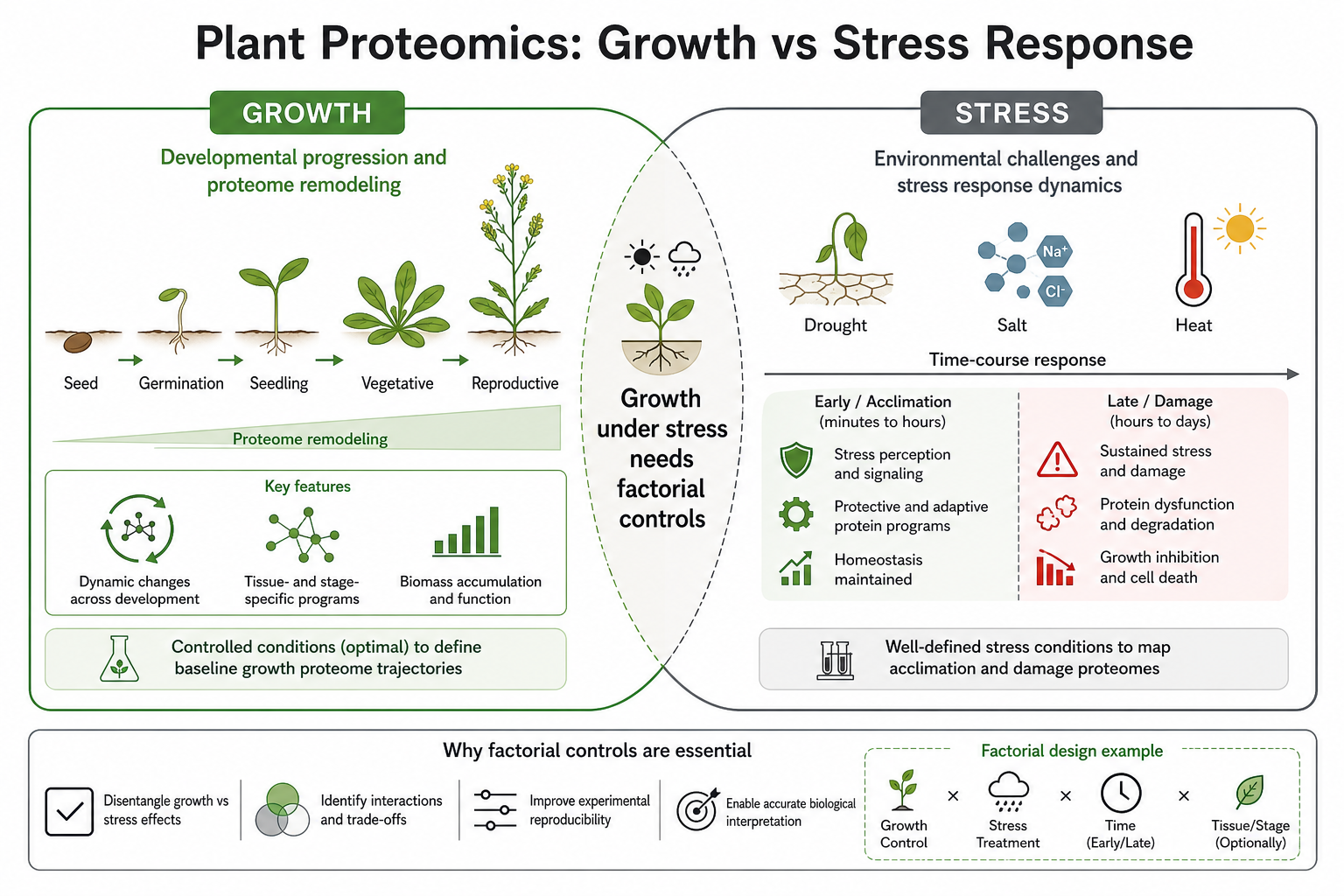
Figure 1. Growth stage, stress protocol, and tissue choice determine whether proteomics answers development, stress, or interaction biology.
Design Choices That Shape Growth and Stress Interpretation
The proteins you can interpret depend on decisions made before harvest.
Define the comparison sentence first. Examples include vegetative leaf at 21 days versus 35 days under control conditions, drought-treated versus control seedling root at 48 h, or tolerant versus sensitive line under matched heat stress at flowering.
Choose tissue deliberately:
-
Leaf for many canopy growth and shoot stress phenotypes
-
Root for uptake, root-zone stress, or seedling establishment questions
-
Seed or fruit when growth and quality transitions occur in reproductive tissue
Match non-target factors across groups:
-
Genotype background and planting date
-
Nutrition, pot size, and light environment
-
Stress dose, duration, and application method when treatment-linked
-
Sampled organ, developmental stage, and time of day at harvest
Record metadata at collection:
-
Growth stage score or days after planting
-
Stress score, wilting index, or injury note if applicable
-
Treatment label and harvest clock
-
Tissue position within the plant
Quantitative comparison is required when the claim depends on abundance differences between growth stages, stress arms, or genotypes. Identification-first work may fit early screening in a new tissue or species.
Both DDA and DIA can support plant protein identification and quantitative analysis. The acquisition strategy and mass spectrometry platform should be selected according to the study objective, sample number, quantitative requirements, sample characteristics, and overall project design.
The analytical strategy should follow the biological question rather than being selected solely by cohort size or a preferred acquisition method.
From Candidate Proteins to Cautious Biological Wording
After LC-MS/MS, review proteins against the contrast and metadata before using growth or tolerance language.
Prioritize proteins with replicate consistency, detection across the relevant samples, and alignment with stage or stress notes at harvest. Use functional annotation, pathway-level analysis, and interaction context where appropriate to organize candidate proteins and prioritize follow-up questions. These analyses support interpretation but do not prove mechanism.
Avoid calling differential proteins growth regulators, tolerance genes, or stress markers without orthogonal evidence. Candidate protein wording matches what a single matched proteomics contrast can support.
When a project spans both growth and stress, report whether a protein tracks stage, treatment, or both only if the experimental design supports that separation.
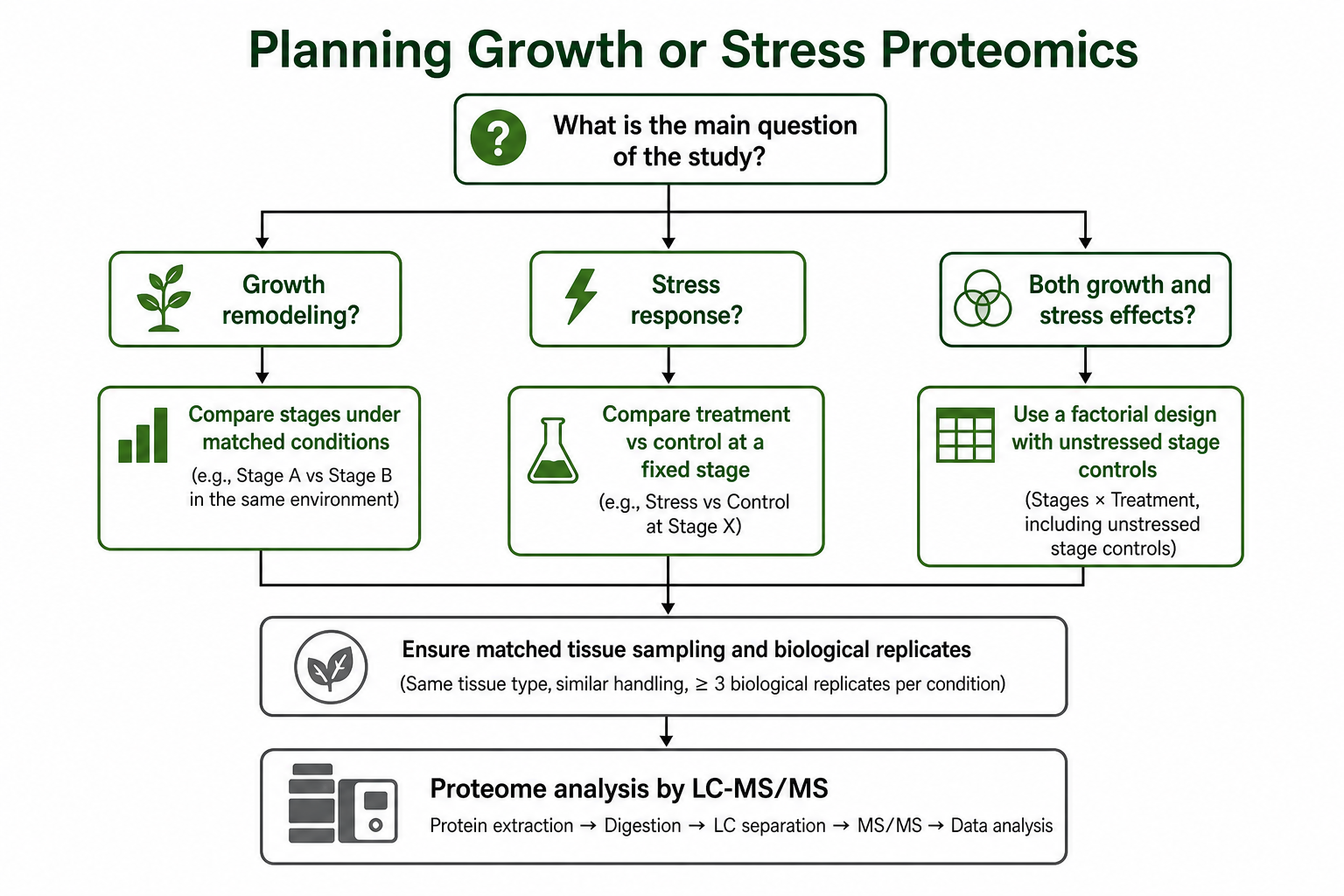
Figure 2. Separate growth and stress claims with stage-matched controls before interpreting combined proteome changes.
Common Misinterpretation Risks
-
Reading developmental change as stress response without unstressed stage controls
-
Comparing genotypes at different growth stages because of unequal maturity
-
Mixing early acclimation and late damage samples in one stress group
-
Using pathway enrichment as proof of tolerance or vigor
-
Expecting proteomics to replace growth measurements or field trials
-
Switching tissue mid-project without revisiting the comparison sentence
Related Services
Plant and Animal Multi-Omics Analysis Service
Frequently Asked Questions
1. Can plant proteomics measure plant growth directly?
No. It measures protein abundance in sampled tissue. Growth rate or biomass still requires appropriate phenotype measurement.
2. Can one proteomics run answer both growth and stress questions?
Only when the design includes the needed stage and treatment controls. A single stress-versus-control contrast at one stage answers stress response, not full developmental remodeling.
3. Which tissue is best for seedling stress studies?
Use the organ tied to the claim—often root for root-zone stress or leaf for shoot injury—while keeping stage matched across groups.
4. Do stress-responsive proteins prove tolerance?
No. They are candidates linked to the tested contrast until validation and phenotype linkage support stronger claims.
5. How should growth stage be controlled in stress proteomics?
Growth stage should be matched across comparison groups or explicitly included as a study factor. Otherwise, developmental differences may be mistaken for stress-responsive protein changes.
6. What should be shared before starting a growth or stress proteomics project?
Share species, tissue type, growth stage rule, stress protocol if any, comparison design, and planned replicate number.
Conclusion
Plant proteomics can reveal candidate proteins and pathway themes linked to growth remodeling and stress response when tissue, stage, and treatment are matched to the question. Development and stress effects are easiest to interpret when unstressed stage controls and explicit harvest metadata separate age-related change from treatment biology.
To review whether plant proteomics fits a growth or stress question in your crop system, contact MtoZ Biolabs with the species, comparison design, and biological claim the study must support.
How to order?




