






What Can Lipidomics Analysis Reveal About Lipid Composition?
Lipidomics analysis characterizes detectable lipid features and annotated lipid classes or species in a sample, while showing how their relative abundance differs between conditions.
-
What can be detected: which lipid classes and candidate lipid species are observed under the selected analytical workflow.
-
How they change: how their relative abundance differs between groups, such as treated versus control or one biological condition versus another.
-
What may deserve follow-up: which lipid features stand out as candidates when the analytical results are interpreted alongside the study biology.
What lipidomics does not do on its own is prove a final structure for every feature. Some untargeted lipid features may receive candidate annotations based on available spectral libraries, lipid databases, and structural evidence, but these annotations do not automatically represent confirmed molecular identities.
Why Lipid Composition Is Worth Measuring
Many studies notice lipids indirectly. A phenotype changes, a membrane behaves differently, or a metabolic readout drifts, and the team suspects lipids are involved. The problem is that a single assay rarely shows the full picture.
Two samples can hold similar total lipid amounts yet differ sharply in which species dominate. That difference often carries the biology, because chain length, saturation, and head group all shape how a lipid behaves in a membrane or a signaling pathway.
Lipidomics gives a structured way to see that composition instead of guessing at it. When the research question involves lipid change, measuring it directly is usually more defensible than inferring it from a downstream effect.
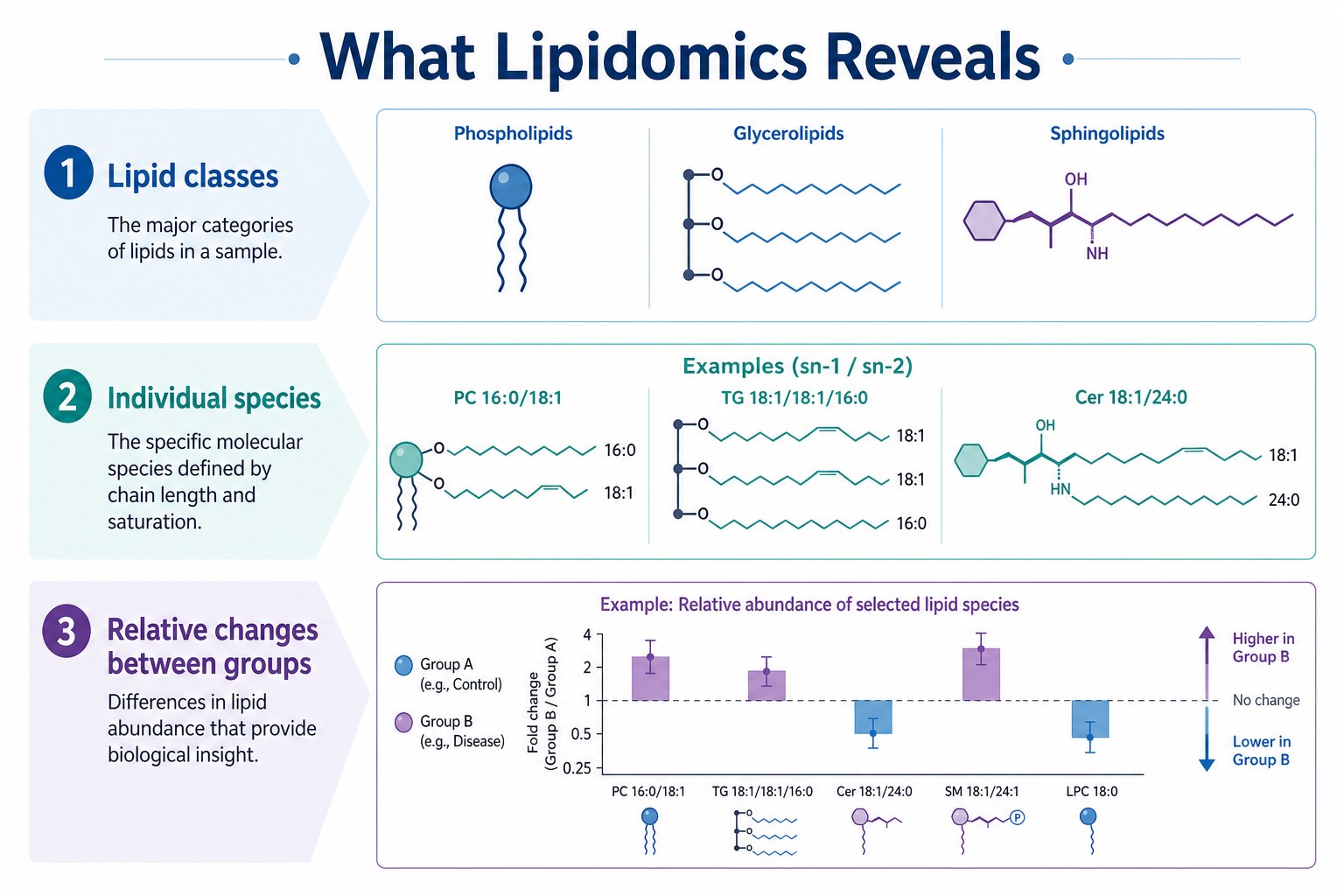
Figure 1. Lipidomics analysis profiles lipid composition at the level of lipid classes, annotated species, and relative changes between groups.
What Information Lipidomics Analysis Can Provide
1. Lipid class coverage
At the broadest level, lipidomics shows which lipid classes are detectable under the selected analytical workflow. This typically spans glycerophospholipids, glycerolipids, sphingolipids, and other common categories, depending on the sample and method.
Class-level views are useful early. They show whether a shift is broad, touching many families at once, or narrow, concentrated in one or two classes.
2. Individual lipid species
Within each lipid class, lipidomics can annotate lipid species at different levels of structural resolution based on the available mass spectrometric evidence. The achievable resolution depends on the analytical workflow, and positional, isomeric, or other detailed structural information may not always be resolved.
For example, a study may find that the overall phospholipid profile remains relatively stable while selected annotated unsaturated lipids increase and saturated lipids decrease. Such patterns may be missed when the results are viewed only at the class level.
3. Relative abundance changes between groups
Most discovery projects care less about a single number and more about direction of change. The analysis compares relative abundance across conditions, which supports contrasts such as treatment response, genotype effects, or time-course shifts.
These comparisons are most interpretable when study groups are appropriately matched and sample handling is consistent, which helps reduce preanalytical variation related to collection, processing, and storage.
4. Candidate lipids for follow-up
Discovery results usually produce a shortlist. Candidate lipids can be prioritized by considering the magnitude and consistency of change, statistical support, signal quality, annotation confidence, and biological relevance.
This is a prioritization step rather than a final conclusion. It helps identify which lipid features may warrant targeted follow-up or further evaluation.
Untargeted and Targeted Lipidomics: Different Kinds of Answers
The two main routes answer composition questions from different angles, and knowing the difference helps set expectations early.
Untargeted lipidomics provides broad profiling of detectable lipid features without requiring a predefined target list, making it suitable for discovery-oriented studies when the lipids of interest have not yet been defined.
-
Strength: broad view of composition and unexpected changes.
-
Limit: candidate annotations depend on the available spectral, database, and structural evidence and do not automatically represent confirmed molecular identities.
Targeted lipidomics focuses on a predefined set of lipids. It is suitable when the lipid targets are already known or when selected candidates require focused follow-up measurement. Target coverage and the applicable project scope should be reviewed before the project is confirmed.
-
Strength: Focused measurement of selected lipid targets.
-
Limit: Lipids outside the predefined target scope are not assessed.
The two approaches can also be used sequentially. Untargeted lipidomics can first identify candidate lipid changes, while selected lipids may then be considered for targeted follow-up after target coverage and project scope are reviewed.
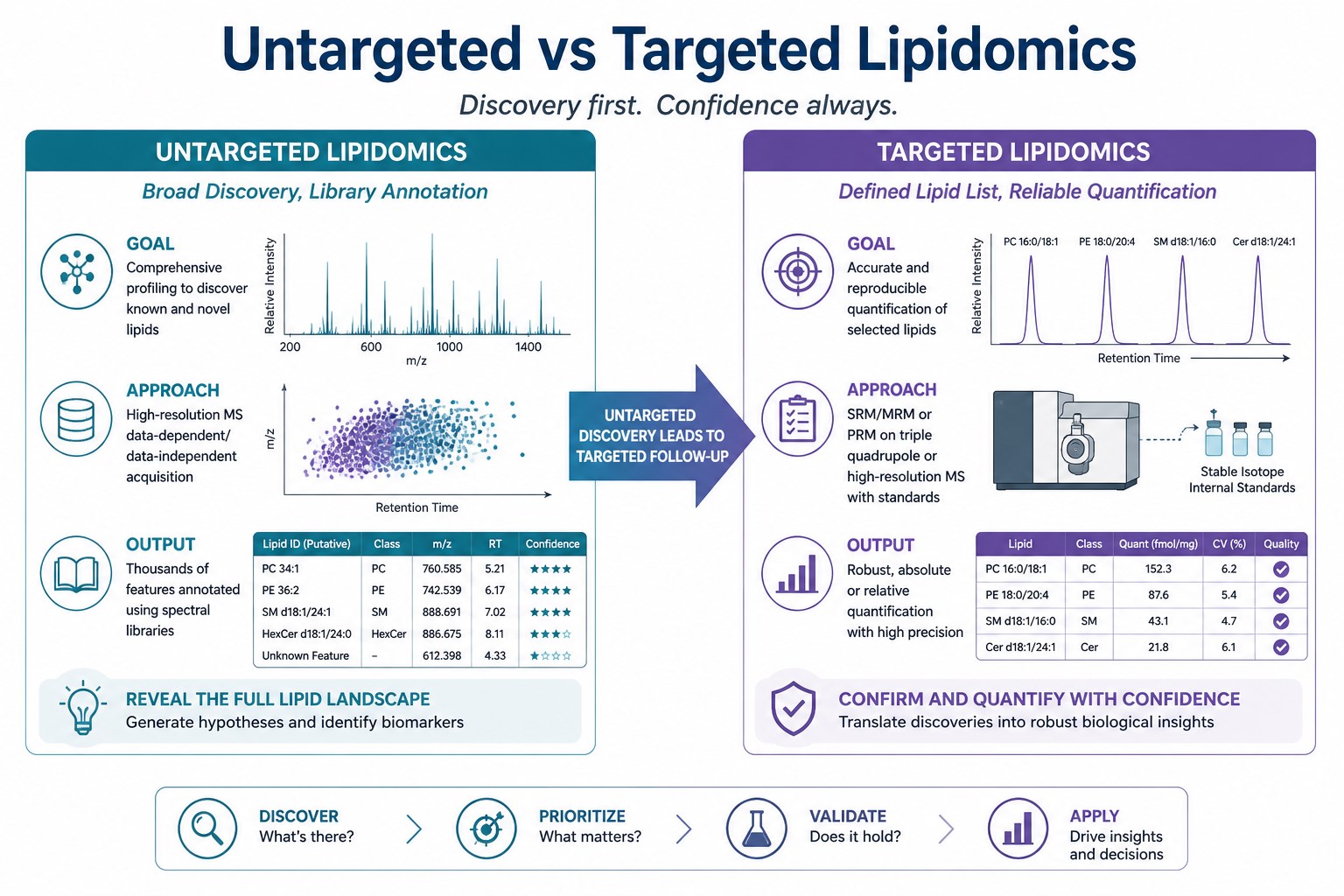
Figure 2. Untargeted lipidomics surveys broad lipid composition, while targeted lipidomics focuses on a predefined lipid set.
How to Read the Results Without Overstating Them
Lipidomics is powerful, but the interpretation needs the same care as any discovery method. A few points keep conclusions defensible.
Annotation is not the same as confirmed identity. Untargeted lipid features may receive candidate annotations based on available spectral libraries, lipid databases, and structural evidence. These annotations provide a useful starting point, but stronger structural claims may require additional supporting evidence.
Relative change is not absolute concentration. Discovery lipidomics commonly focuses on relative or normalized abundance changes between samples or groups. The quantitative scope should be defined according to the study objective and analytical design.
Detected lipids depend on sample and method. Coverage varies with sample type, extraction, and platform. A lipid that is absent from the list is not automatically absent from the sample; it may simply sit outside the detection window of the chosen approach.
Which Studies Benefit Most From Lipid Composition Data
Lipidomics fits research where lipid identity and balance, not just total lipid amount, are likely to carry the signal. Common examples include the following.
-
Metabolic and nutritional studies, where diet, intervention, or metabolic state reshapes the lipid profile.
-
Membrane and organelle biology, where the mix of species affects fluidity, transport, or signaling.
-
Disease mechanism research, where lipid remodeling accompanies a phenotype and the team wants candidate markers.
-
Model and treatment comparisons, where matched groups make relative composition changes interpretable.
Across these cases, the shared value is the same: a direct, structured readout of composition that turns a vague suspicion about lipids into a testable shortlist.
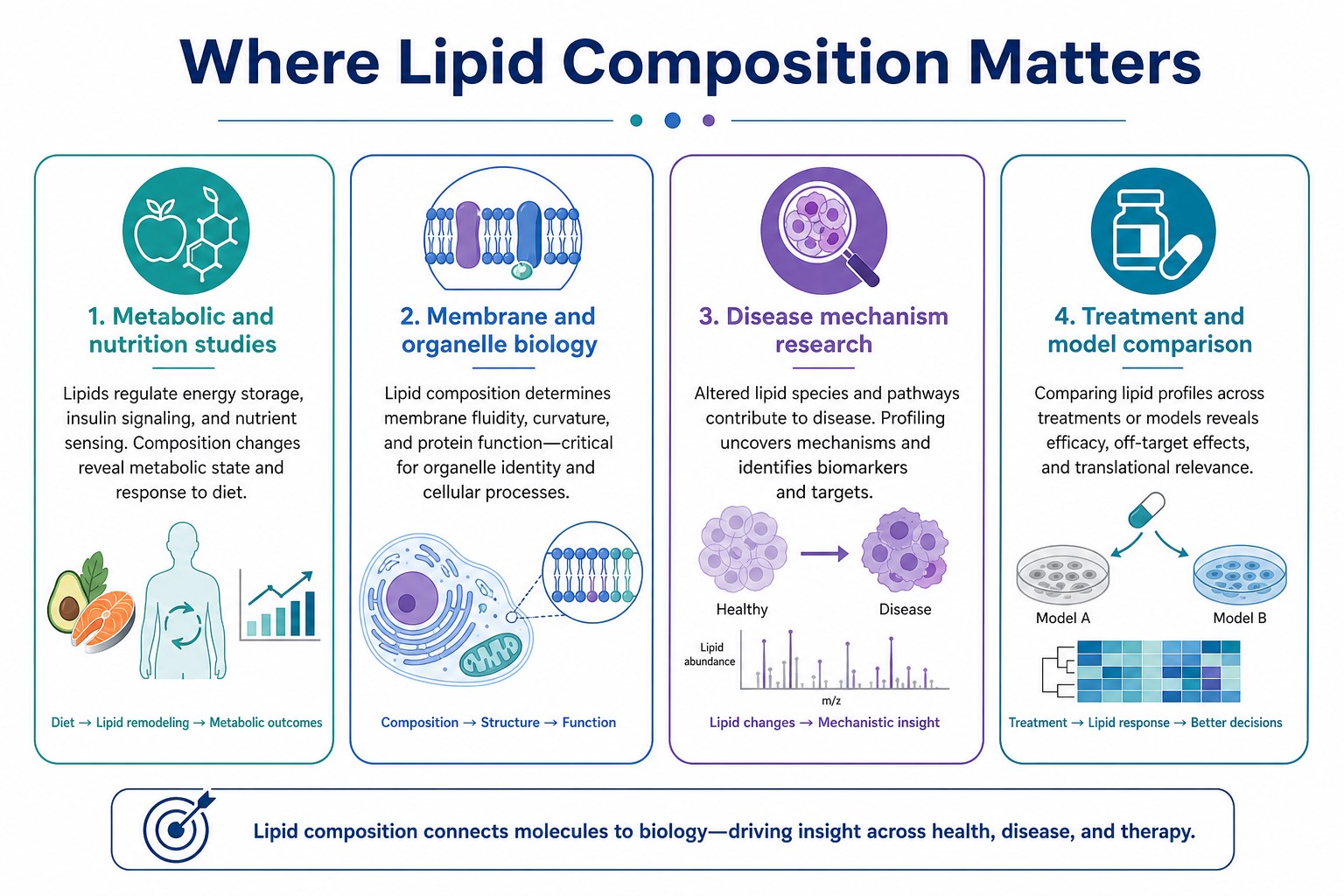
Figure 3. Lipid composition data is most useful when species identity and balance, not total lipid mass, drive the biological question.
Sample Notes That Shape What You Can Detect
The quality and type of sample influence how much composition detail is realistic, so it helps to plan inputs early.
Common sample types include serum and plasma, urine, feces, tissue, cells, and culture supernatant, among others. Input requirements depend on the sample type and proposed workflow. Confirming sample suitability and available amount before collection helps reduce the risk of insufficient input or an unsuitable analytical design.
Consistent handling across arms matters as much as the amount. Because lipid profiles may be affected by storage conditions and repeated freeze-thaw cycles, consistent collection, processing, and storage across study groups help reduce preanalytical variation.
For teams unsure whether their samples and goals fit a lipidomics design, MtoZ Biolabs can review sample type, amount, and the intended comparison before the project begins.
Related Services
Metabolomics and Lipidomics Analysis Services
Targeted Lipidomics Analysis Service
Untargeted Lipidomics Analysis Service
Frequently Asked Questions
1. What can lipidomics analysis reveal about lipid composition?
It shows which lipid classes and annotated lipid species are detectable under the selected analytical workflow and how their relative abundance differs between conditions. It can also highlight candidate lipids for follow-up when the results are interpreted in the context of the study biology.
2. Does lipidomics give confirmed lipid identities?
Untargeted lipidomics provides candidate annotations based on the available spectral, database, and structural evidence rather than automatically providing confirmed molecular identities. The confidence and structural resolution of an annotation depend on the evidence available for that feature.
3. Should I choose untargeted or targeted lipidomics?
Choose untargeted lipidomics for broad profiling or group comparison when the lipids of interest have not been predefined. Choose targeted lipidomics when a defined lipid set requires focused measurement and the target scope can be specified in advance.
4. Can every predefined lipid be included in targeted lipidomics?
Not necessarily. Target coverage and the applicable project scope should be reviewed based on the proposed lipid list before the project is confirmed.
5. What samples work for lipidomics analysis?
Common inputs include serum, plasma, urine, feces, tissue, cells, and culture supernatant. Confirm the recommended amount and handling with the laboratory for the chosen sample type.
Conclusion
Lipidomics analysis turns a general interest in lipids into concrete composition data. It characterizes detectable lipid classes and annotated species, compares their relative abundance across conditions, and highlights candidates that may warrant further evaluation.
The appropriate analysis route depends on the research question. Untargeted profiling provides a broad view of lipid composition, while targeted analysis supports focused measurement of predefined or prioritized lipids. Careful interpretation is still needed to avoid presenting candidate annotations as confirmed molecular identities. Teams planning a lipidomics study can contact MtoZ Biolabs to review the research objective, sample type, study design, and target information and determine an appropriate analysis direction.
How to order?




