






Very Long Chain Fatty Acids Profiling Service
MtoZ Biolabs provides a Very Long Chain Fatty Acids Profiling Service to analyze very long chain fatty acids (VLCFAs, fatty acids with carbon chain lengths greater than 20) using GC-MS and LC-MS/MS. This service supports studies in lipid metabolism, peroxisomal biology, neurobiology, inherited metabolic pathways, and mechanism-of-action research by delivering high-confidence profiling results for key VLCFAs across diverse biological matrices.
What Is Very Long Chain Fatty Acids?
Very long chain fatty acids, commonly referred to as VLCFAs, are fatty acids whose carbon chains extend beyond 20 atoms. Their extended hydrophobic backbones give them distinct physicochemical properties, which is why VLCFAs are not simply free metabolites in solution. Instead, they are incorporated into complex lipids such as sphingolipids and glycerophospholipids and contribute to membrane architecture, barrier function, and lipid signaling capacity across organisms.
VLCFA biology is tightly linked to specialized lipid metabolism. In plants, VLCFAs are produced through elongation cycles that add two carbon units at a time, and the balance of elongation activities helps determine which VLCFA species accumulate in specific tissues. This regulation connects VLCFA composition to traits such as surface lipid composition, environmental adaptation, and tissue specific lipid programs. In mammals, VLCFAs reflect the coordinated activity of elongation and organelle linked turnover, and disruption of these pathways can lead to abnormal VLCFA accumulation that is widely used as a biochemical readout in peroxisome related research and inherited metabolic disorder studies.
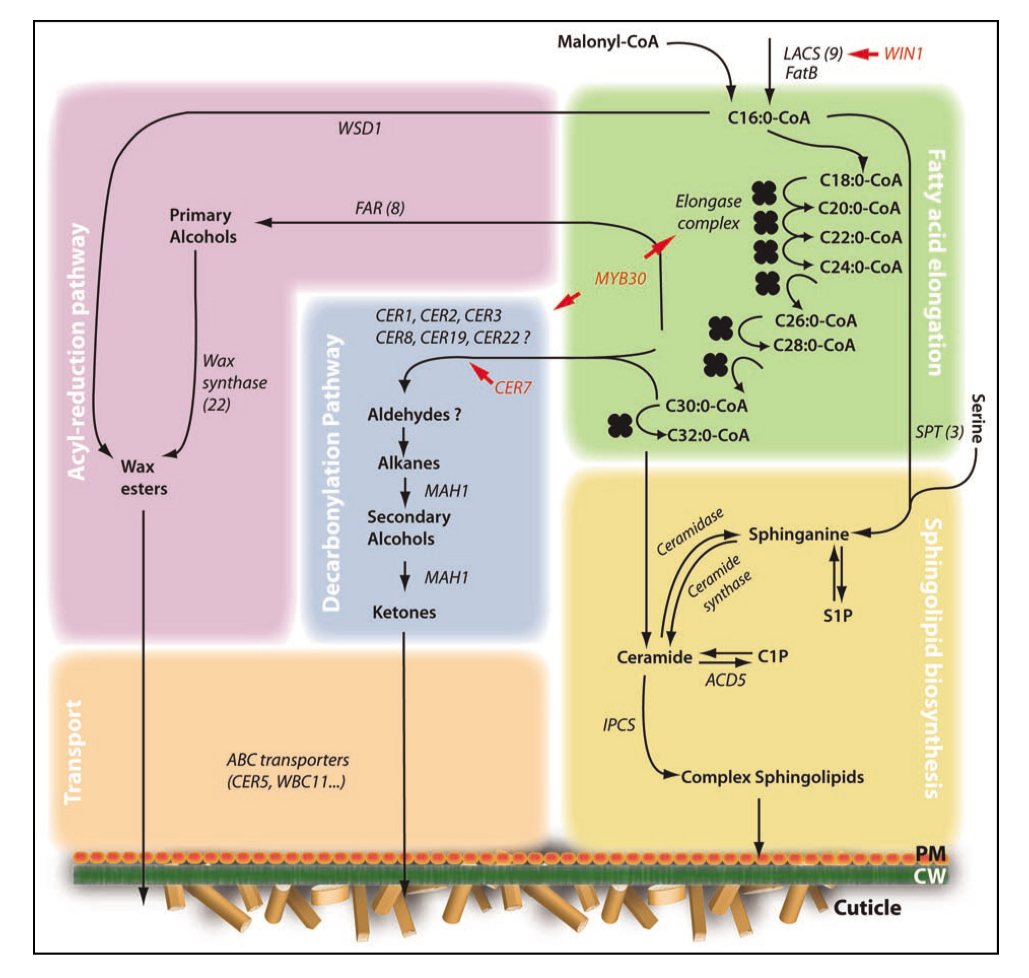
Raffaele, S. et al. Plant Signal Behav. 2009.
Figure 1. Simplified Pathways for VLCFA and VLCFA Derivative Biosynthesis and Transport in Arabidopsis
Accurate VLCFA analysis is technically challenging because these analytes are highly hydrophobic, can be present at low abundance, and are strongly influenced by sample matrix effects. Extraction efficiency, lipid class composition, derivatization performance for GC-based methods, and ion suppression in LC-MS/MS can all shift apparent abundance if not carefully controlled. Background contamination from solvents and plastics, as well as variability introduced by sample handling and freeze thaw cycles, can further reduce signal to noise.
Very Long Chain Fatty Acids Profiling Service at MtoZ Biolabs
MtoZ Biolabs provides Very Long Chain Fatty Acids Profiling Services using GC-MS and LC-MS/MS workflows to support confident identification, quantification, and compositional characterization of VLCFAs across diverse biological matrices. Our methods integrate matrix-appropriate extraction, internal-standard normalization, and QC-driven data review to reduce background interference and improve cross-sample comparability, while optimized chromatography ensures strong resolution between closely related chain lengths and species. By combining robust separation with sensitive mass spectrometric detection, we can reliably detect and differentiate low-abundance VLCFAs and deliver analysis-ready results for downstream biological interpretation.
Why Choose MtoZ Biolabs
☑️Advanced Platforms
Optimized GC-MS and LC-MS/MS workflows designed for low-abundance, hydrophobic analytes in complex matrices.
☑️Deep Expertise
Experienced scientists who understand VLCFA biology, analytical pitfalls, and how to translate measurements into interpretable readouts.
☑️Custom Study Design
Flexible panels, matrix-specific preparation, and reporting formats tailored to your hypothesis and constraints.
☑️High-Quality Data
Internal standards and QC checkpoints that support consistency across batches and comparative studies.
☑️Outstanding Customer Service
Clear communication, practical guidance, and responsive support from study setup through final delivery.
Applications of Very Long Chain Fatty Acids Profiling Service
1. Drug Discovery and Development
VLCFAs can serve as pharmacodynamic readouts in target engagement and mechanism studies for programs that modulate lipid metabolism, organelle biology, or oxidative stress pathways.
2. Neuroscience and Neurobiology
Because VLCFAs contribute to membrane properties and are tied to organelle-linked lipid turnover, profiling supports studies of myelination, neuroinflammation, and cellular stress responses.
3. Nutrition and Metabolism Research
VLCFA composition can provide pathway-level evidence for dietary intervention studies, metabolic rewiring, and lipid handling under controlled experimental conditions.
4. Agriculture and Plant Science
VLCFA biosynthesis is linked to waxes, cuticular barriers, and stress adaptation in plants, making VLCFA profiling useful for trait and stress response studies.
5. Environmental and Microbial Systems Research
In specialized models, VLCFA profiling can support functional studies of lipid adaptation, membrane remodeling, and stress tolerance, depending on organism and experimental design.
FAQ
Q1: What types of samples are suitable?
Cells, tissues, and biofluids used in lipid metabolism research are generally suitable. For unusual sample types or low-yield materials, please contact MtoZ Biolabs in advance for customized preparation guidance.
Q2: How should I prepare my samples?
1. Ensure samples are freshly prepared or snap-frozen.
2. Avoid detergents, salts, and reducing agents that may interfere with MS analysis.
3. Store samples at –80 °C before shipment.
4. Transport samples on dry ice to maintain stability during delivery.
For more information, please refer to Sample Submission Guidelines for Proteomics and Sample Submission Guidelines for Metabolomics.
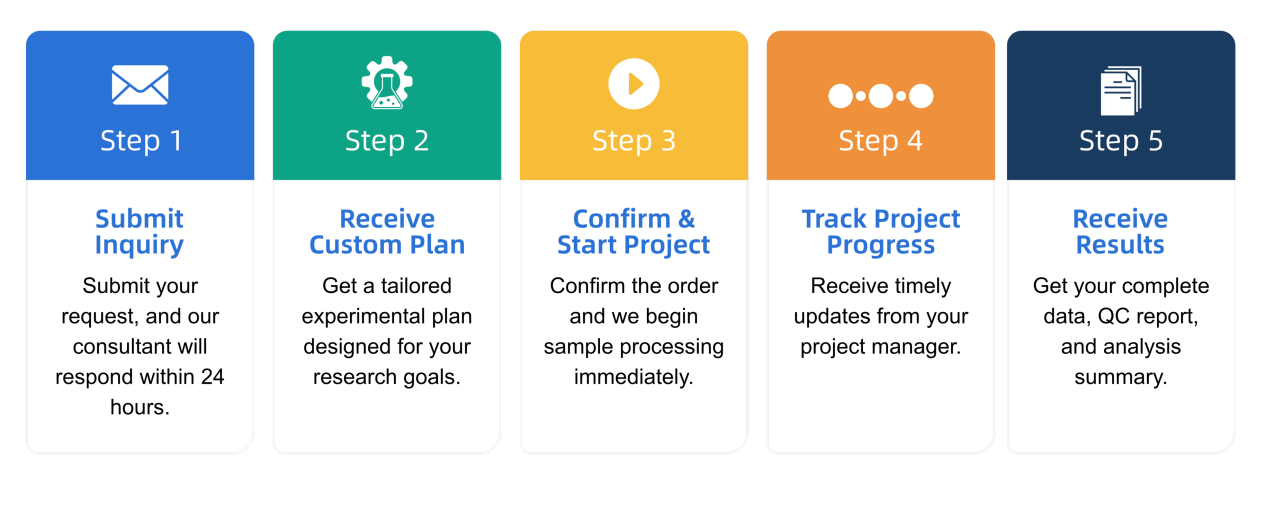
Q3: What is the service general workflow?
Q4: What data formats are provided?
1. Raw data: Vendor raw files from GC-MS or LC-MS/MS such as RAW, D, WIFF, or similar instrument formats.
2. Processed data: Quantified VLCFA results tables with sample IDs and key metrics delivered as XLSX or CSV.
3. Figures: Chromatograms and summary plots such as group comparisons delivered as PNG or TIFF.
4. Report: A PDF report describing methods, QC overview, and result interpretation with key findings.
Additional formats can be provided upon request to meet specific analysis or publication requirements.
Start Your Project with MtoZ Biolabs
MtoZ Biolabs has extensive experience in VLCFA profiling across diverse sample matrices and study designs, delivering reliable results that support confident biological interpretation.
Contact us to request a free business assessment, and our team will review your study goals, sample type, and target panel to recommend a fit-for-purpose analytical strategy.
How to order?




