






Roots, Leaves, or Seeds: How to Choose Samples for Plant Proteomics
Roots, leaves, and seeds are the most common starting tissues in plant proteomics, but they are not interchangeable sample choices. Leaf fits many canopy and stress-phenotype questions. Root fits uptake, root-zone exposure, and below-ground signaling. Seed fits storage-protein, filling, and quality contrasts at maturity. Choosing the wrong organ increases material waste, expands project scope without improving the answer, and can force repeat collection when the comparison no longer matches the biological claim.
For plant proteomics planning, sample choice should be fixed before estimating project scope. Tissue class changes collection guides, extraction difficulty, and how much material must be reserved per biological replicate.
If you are choosing samples for a plant proteomics project, share the comparison sentence, organ type, replicate plan, and whether the study is a pilot or full quantitative comparison with MtoZ Biolabs while harvest planning is still open.
What Each Tissue Supports in Plant Proteomics
Each organ answers a different slice of plant biology.
Leaf proteomics is widely used for canopy stress, photosynthesis-related remodeling, foliar pathogen responses, and shoot-scored breeding contrasts. Soft leaf tissue often follows collection guides of about 2 g per biological replicate in standard planning examples.
Root proteomics fits drought or salt uptake questions, rhizosphere pathogen entry, and early below-ground responses before strong shoot symptoms appear. Root is commonly planned as hard plant tissue, with about 5 g per biological replicate as a collection guide.
Seed proteomics fits storage-protein composition, seed filling, quality differences between lines, and maturity-stage contrasts. Seeds and many fruit tissues are also commonly planned as hard plant tissues, with about 5 g per biological replicate as a collection guide.
These amounts are collection guides, not performance promises. They help estimate how much material to reserve per replicate; they do not guarantee a specific protein count or depth level.
Sample Choice Matrix for Common Project Goals
Use the matrix below to match tissue to project goal before locking sample number and workflow scope.
| Project Goal | Primary Tissue to Plan First | Why This Tissue Fits | Scope Caution |
| Drought or salt canopy injury | Leaf | Wilting, chlorosis, and photosynthesis-related stress are read out in shoot tissue | Add root only if uptake or root-zone response is part of the question |
| Root-zone salinity or soil drying | Root | Exposure begins at the absorbing surface | Add leaf only when canopy response is also part of the design |
| Foliar pathogen defense | Leaf at lesion or treatment site | Infection biology is linked to the sampled canopy tissue | Do not substitute root without a root-inoculation design |
| Breeding line quality at harvest | Seed or grain | Traits may involve storage proteins and filling | Match maturity stage across lines |
| Developmental transition in shoot | Leaf or flower | Organ choice follows the developmental claim | Pollen or flower may require different mass planning |
| Multi-organ coordination question | Parallel root and leaf or seed sets | Each organ provides a separate biological view | Each organ needs its own matched comparison |
The matrix is a planning guide. It does not replace writing the comparison sentence for the specific crop and treatment.
Collection Guides and Material Planning by Tissue Class
Standard plant proteomics planning examples commonly use:
-
About 2 g per biological replicate for soft tissues such as leaves, flowers, grasses, algae, ferns, or fleshy fungal tissue
-
About 5 g per biological replicate for hard tissues such as roots, bark, twigs, fruits, or seeds
-
About 100 mg per biological replicate for pollen
Material planning should include:
-
Enough mass per biological replicate for extraction without repeated freeze-thaw
-
Separate biological samples for destructive time points and separate tissue portions when multiple organs are planned
-
Backup material when extraction difficulty is expected for root, seed, or lignified tissue
Degraded, contaminated, or repeatedly freeze-thawed material is not recommended for submission. Infectious plant material cannot be accepted. Poor sample condition may lead to repeat collection and expand project scope.
Scope Drivers That Change After Tissue Choice
Project scope in plant proteomics is shaped by decisions that follow tissue selection. Specific pricing is quote-dependent, but these drivers affect workload and feasibility.
| Planning Decision | How Tissue Choice Interacts with Scope | Practical Planning Note |
| Single-organ vs multi-organ design | Each organ increases sample number and collection mass | Start with one organ unless the question requires coordination |
| Identification-only vs quantitative comparison | Quantitative designs require consistent replicate handling | Match tissue and replicate handling across groups |
| Number of biological replicates | Hard tissues require more starting material per replicate | Reserve tissue-appropriate amounts for each independent replicate |
| Number of groups or time points | More groups increase LC-MS/MS sample count | Each destructive time point requires its own planned biological samples |
| Acquisition strategy | DDA or DIA can support quantitative workflows | Choose according to study design and quantitative goals |
| Bioinformatics depth | Standard pathway analysis and deeper custom analysis differ in scope | GO, KEGG, PPI, and Reactome views depend on species support |
None of these rows should be read as fixed prices or guaranteed turnaround. They explain why two projects with the same tissue name can differ in scope once groups, replicates, and quantitative goals are defined.
Leaf, Root, or Seed: Decision Logic Before Harvest
Start with the comparison sentence, not with whichever tissue is easiest to collect.
Examples include:
-
Drought-treated versus control leaf at 72 h
-
Salinity-exposed versus control root at matched exposure duration
-
High-protein versus low-protein seed line at maturity
Then apply three checks:
-
Where is the phenotype scored? Canopy traits point to leaf. Root-zone traits point to root. Grain quality traits point to seed.
-
Where does the treatment act first? Foliar spray points to leaf. Soil-imposed stress may justify root, leaf, or both depending on the claim.
-
Can one organ answer the claim alone? If yes, avoid expanding to multi-organ scope without a clear reason.
When seed or root is chosen, plan the higher collection guide early to avoid insufficient material during extraction.
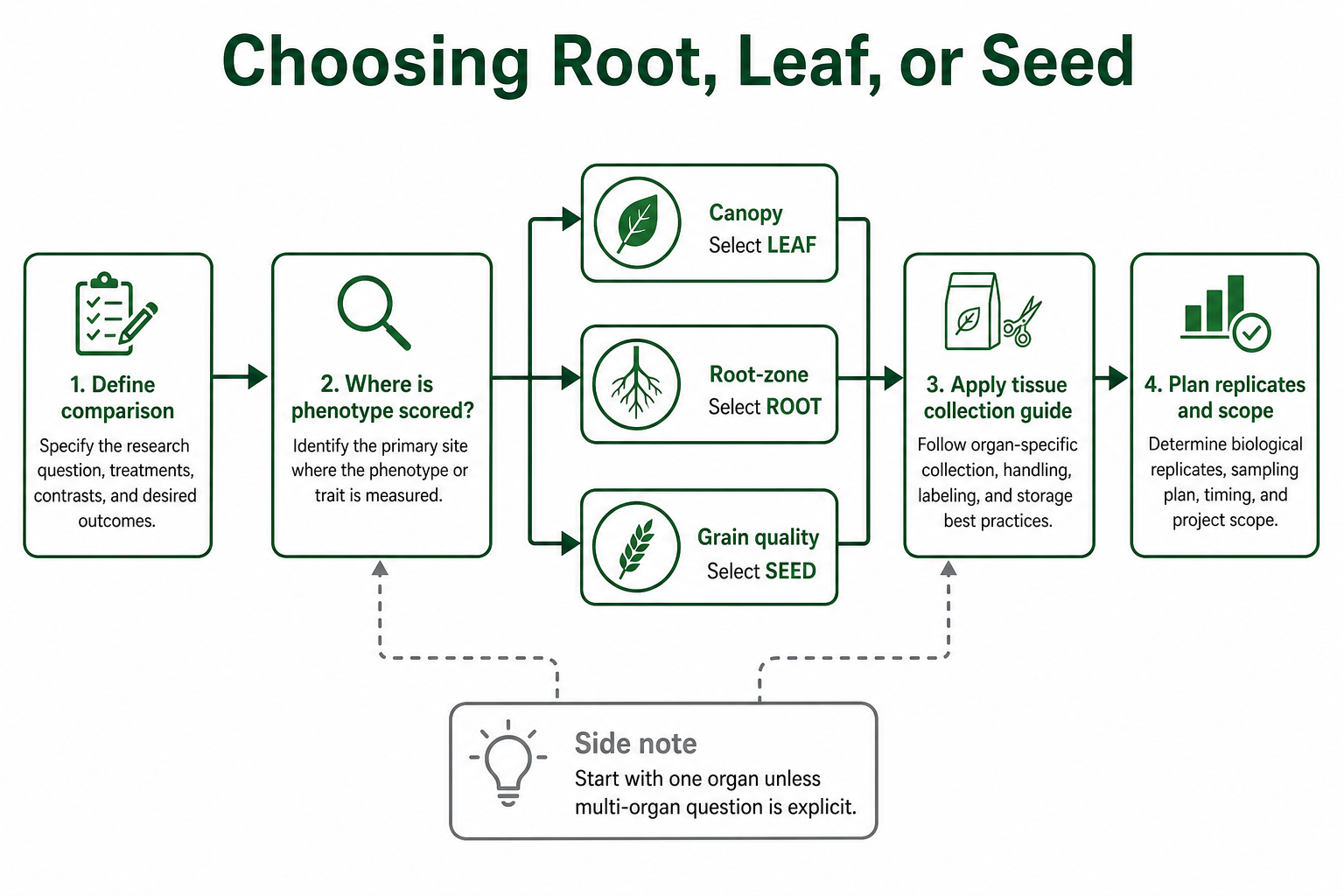
Figure 1. Leaf, root, and seed proteomics match different biological claims and different collection guides.
Pilot Design vs Full Study: Sample Choices That Contain Scope
A scope-efficient plant proteomics path often starts narrow.
A practical sequence is:
-
Choose one organ that matches the comparison sentence
-
Run a small matched pilot with independent biological replicates
-
Assess extraction feasibility and data quality in that tissue
-
Expand replicates, time points, or secondary organs after feasibility and study design are confirmed
Leaf pilots are common when the team needs an initial feasibility readout for a new treatment or line pair. Root or seed pilots are appropriate when the claim is organ-specific from the start, but they should use tissue-appropriate collection guides from the first harvest.
Adding a second organ mid-project usually increases sample count, material demand, and interpretation complexity more than adding one replicate to a well-chosen primary tissue.
Workflow options include DDA for flexible discovery and quantitative workflows, and DIA when consistent quantitative comparison and reduced missing values across matched samples are important. The final acquisition strategy should follow study design, sample complexity, and quantitative goals.
The LC-MS/MS platform should be selected according to sample type, study design, and quantitative requirements.
Plant proteomics service scope typically includes protein extraction or purification, enzymatic digestion, LC-MS/MS analysis, and bioinformatics reporting.
Common Sample-Choice Mistakes That Expand Cost and Risk
-
Defaulting to leaf for a seed-quality or root-uptake question
-
Collecting insufficient root or seed material for the planned workflow
-
Planning multi-organ sampling without accounting for added material and sample number
-
Mixing developmental stages or organs inside one group label
-
Failing to reserve independent biological samples for planned destructive time points
-
Scaling to more groups or time points before the primary tissue and contrast are stable
Pre-Shipment Sample Planning Checklist
-
Write the comparison sentence and primary organ on one line.
-
Choose leaf, root, or seed based on phenotype and treatment site.
-
Apply the correct tissue-class collection guide per biological replicate.
-
Plan independent biological replicates per group.
-
Reserve independent samples for destructive time points and separate tissue portions for secondary organs.
-
Record genotype, treatment, tissue position, and harvest time for each replicate.
-
Confirm sample condition and intake requirements before dispatch.
Share species, tissue type, group design, replicate number, and approximate mass available so sample fit can be reviewed before the project scope is finalized.
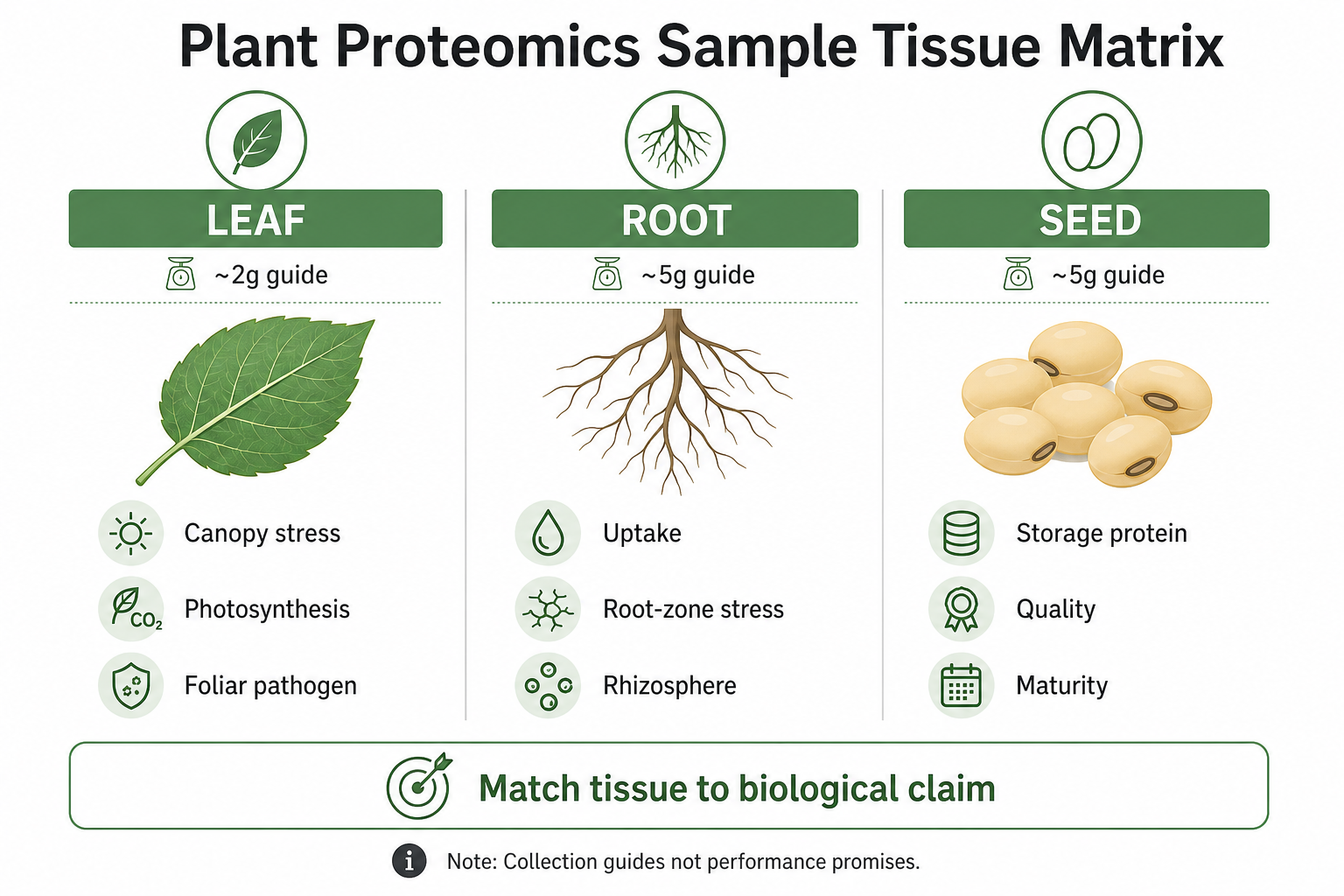
Figure 2. Fix the biological claim first, then select the tissue and collection guide that match the question.
Related Services
Quantitative Proteomics Service
Proteomics Bioinformatic Analysis Service
Frequently Asked Questions
1. Is leaf the default best tissue for plant proteomics?
No. Leaf is common for canopy and foliar questions, but root and seed are often the correct primary tissues for uptake and quality questions.
2. Why do root and seed samples often need more starting material?
Root and seed are commonly planned as hard plant tissues, with about 5 g per biological replicate used as a collection guide in standard planning.
3. Should roots, leaves, and seeds be analyzed together in one group?
Not for a single treatment-versus-control contrast. Multi-organ studies need separate matched comparisons for each organ.
4. Does choosing seed or root always increase project scope?
It increases material demand and may require more preparation attention per replicate. Scope also depends on replicate number, groups, and quantitative design.
5. Can a pilot use less tissue than the collection guide?
Insufficient material may reduce usable protein or require repeat collection. Use tissue-appropriate collection guides during planning rather than assuming smaller amounts will perform the same.
6. What should be shared before finalizing sample choice?
Share species, comparison design, organ options under consideration, replicate plan, harvest timing, and approximate tissue availability.
Conclusion
Roots, leaves, and seeds should be chosen for plant proteomics based on where the phenotype is scored, where the treatment acts, and which organ can answer the comparison alone. Collection guides, replicate planning, and project scope follow from that decision.
To review sample choice and project scope before harvest, contact MtoZ Biolabs with the species, comparison design, tissue options, and replicate plan the study requires.
How to order?




