






Root or Leaf Proteomics: Which Tissue Better Reflects Plant Stress?
Neither root nor leaf proteomics is universally better for studying plant stress. Root sampling often fits questions involving below-ground exposure, nutrient or ion uptake, root-local infection, and early root-zone responses. Leaf sampling often fits questions involving photosynthesis, canopy injury, foliar infection, and visible stress phenotypes.
The better tissue is the one that matches the biological question, stress application site, phenotype measurement, and harvest stage—not simply the organ that is easiest to collect.
Plant proteomics measures proteins recovered from the tissue submitted for extraction. Drought, salinity, heat, or pathogen exposure may produce clear changes in roots before visible leaf injury develops. In other cases, leaf damage may dominate while root protein profiles show weaker or different responses. Sampling the wrong organ can make a genuine response appear absent or generate pathway results that do not address the intended question.
If you are deciding between root and leaf proteomics, share the species, stress protocol, phenotype measurements, harvest timing, and comparison design with MtoZ Biolabs before tissue collection begins.
What Root and Leaf Proteomics Measure Under Stress
Root and leaf proteomics examine different biological compartments. Although both tissues belong to the same plant, their protein profiles reflect distinct functions, cellular compositions, exposure histories, and response timing.
Root Proteomics
Root proteomics focuses on proteins recovered from root tissue. It may be appropriate for investigating:
-
Water and nutrient uptake
-
Ion transport and exclusion
-
Root membrane and cell-wall remodeling
-
Root-local stress signaling
-
Osmotic adjustment
-
Root metabolism
-
Rhizosphere or root-infecting pathogens
-
Genotype-dependent differences in below-ground responses
Root proteins associated with transport, membrane organization, antioxidant defense, metabolism, and stress signaling may change under drought, salinity, nutrient limitation, or root-zone pathogen exposure. These changes remain organ-specific observations and do not automatically demonstrate whole-plant tolerance.
Leaf Proteomics
Leaf proteomics focuses on proteins recovered from leaf tissue. It may be appropriate for investigating:
-
Photosynthesis-related remodeling
-
Light capture and energy metabolism
-
Oxidative stress responses
-
Proteins associated with stomatal regulation
-
Water-loss and wilting-related responses
-
Chlorosis, necrosis, or visible leaf injury
-
Foliar pathogen responses
-
Genotype differences scored through shoot phenotypes
Leaf protein changes can be compared with measurements such as wilting score, chlorophyll-related traits, lesion severity, or photosynthetic performance when those phenotypes are collected using an appropriate study design.
Plant proteomics reporting may include protein identification, quantitative comparison, differential protein analysis, and functional annotation using resources such as GO and KEGG. Database-derived protein interaction networks or Reactome analysis may also be included when supported by the species and annotation resources.
These analyses provide functional context and candidate prioritization. They do not independently prove direct protein interactions, causal regulation, whole-plant tolerance, or field performance.
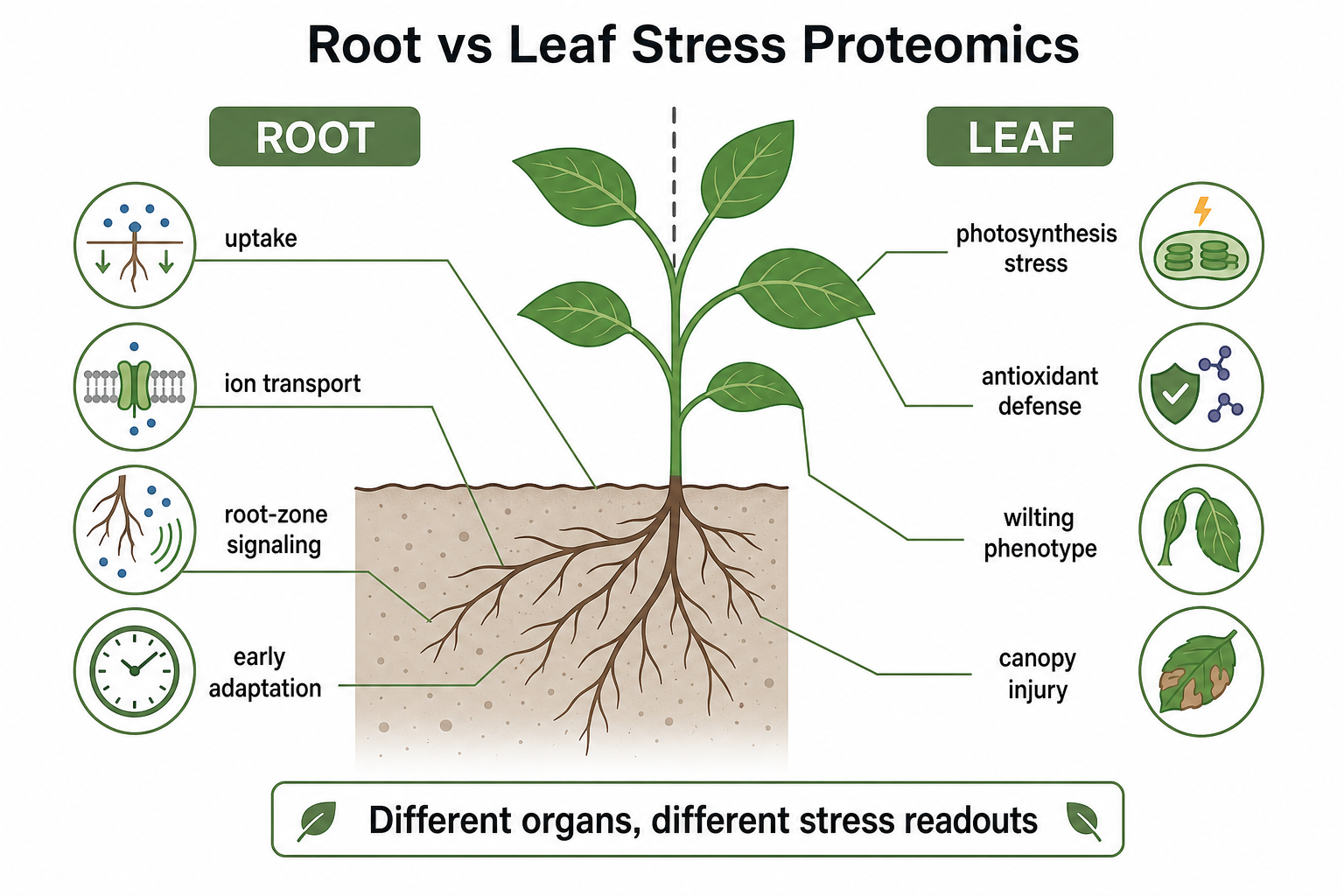
Figure 1. Root proteomics emphasizes below-ground exposure and root functions, whereas leaf proteomics emphasizes canopy physiology and visible shoot responses.
Root vs. Leaf Proteomics by Stress Question
The appropriate organ depends on where the stress is applied, where the phenotype is measured, and which stage of the response is being studied.
| Stress or Study Focus | Root Proteomics Often Fits When | Leaf Proteomics Often Fits When | Main Interpretation Risk |
| Drought or water deficit | The question concerns water uptake, root-zone exposure, osmotic adjustment, or early below-ground responses | The question concerns wilting, photosynthesis, water-loss responses, or visible canopy injury | Root-only data may not explain canopy injury; leaf-only data may miss early root responses |
| Salinity | The question concerns ion uptake, exclusion, transport, or direct root-zone exposure | The question concerns leaf ion injury, chlorosis, photosynthetic disruption, or canopy phenotype | Leaf injury should not automatically be interpreted as proof of failed root exclusion |
| Heat stress | The treatment specifically affects root-zone temperature or below-ground responses | The treatment concerns canopy heat, leaf temperature, photosynthetic injury, or visible shoot damage | Whole-plant and organ-specific heat treatments should not be treated as equivalent |
| Pathogen challenge | The pathogen enters through roots or colonizes root tissue | The pathogen infects leaves or the study focuses on foliar lesions and defense | The sampled organ must match the infection site and stage |
| Genotype comparison | The tolerance phenotype is linked to root architecture, uptake, or below-ground responses | The phenotype is defined through leaf injury, photosynthesis, or shoot performance | A general “tolerant” label may not identify which organ contributes to the phenotype |
| Systemic response | Root-to-shoot signaling or below-ground initiation is central | Shoot responses to root-applied stress are the main outcome | A single organ may not resolve the direction or timing of systemic communication |
These are planning principles rather than predictions of which proteins will change in a specific species or experiment.
When Root Proteomics Better Matches the Question
Root proteomics is often the stronger primary choice when the biological question begins below ground or when the stress is applied directly to the root environment.
Consider root proteomics when the study focuses on:
-
Soil drying or root-zone osmotic stress
-
Salinity effects on ion uptake or exclusion
-
Root membrane transport and remodeling
-
Nutrient-stress responses
-
Root-local inoculation or root colonization
-
Early sampling before visible shoot injury develops
-
Genotype differences defined by root traits or uptake performance
Root sampling requires careful standardization. Root position, developmental zone, washing procedure, attached soil, and collection delay can influence the resulting protein profile. Fine roots, mature roots, root tips, and entire root systems should not be treated as interchangeable sample definitions.
The root-cleaning procedure should also match the study objective. Soil and external contaminants generally need to be removed consistently, but excessive or inconsistent washing may introduce variation. The collection and cleaning protocol should therefore be defined before harvest and applied equally across groups.
Root proteomics is less suitable as the only tissue when the primary phenotype is canopy wilting, leaf chlorosis, photosynthetic decline, or shoot injury. Root changes may contribute to those outcomes, but root data alone may not directly represent the measured leaf phenotype.
When Leaf Proteomics Better Matches the Question
Leaf proteomics is often the stronger primary choice when the project is centered on canopy physiology, visible shoot injury, or foliar treatment.
Consider leaf proteomics when the study focuses on:
-
Wilting, chlorosis, necrosis, or leaf injury scores
-
Photosynthesis-related changes
-
Oxidative stress in shoot tissue
-
Foliar pathogen infection
-
Aerial chemical or biological treatments
-
Genotype selection based on shoot performance
-
Later response stages dominated by canopy remodeling
Leaf position must be standardized because leaf rank, age, developmental stage, light exposure, and source–sink status can influence protein abundance. “Leaf tissue” should therefore be defined more precisely, such as the same fully expanded leaf position or the same developmental stage across all plants.
Time of day should also be controlled or recorded. Photosynthesis-related proteins, metabolic pathways, and stress responses may vary over the diurnal cycle. Stress and control groups should be harvested within a matched time window.
Leaf proteomics is less suitable as the only tissue when the main hypothesis concerns root uptake, ion exclusion, rhizosphere signaling, or early root-zone responses. The absence of a strong leaf response does not demonstrate that the roots were unaffected.
Harvest Time Can Change the Tissue Decision
Tissue choice cannot be separated from harvest timing.
An early drought or salt-stress time point may capture root signaling and transport-related changes before leaves develop visible injury. A later harvest may reveal stronger leaf-level changes associated with photosynthetic remodeling, oxidative stress, or tissue damage.
Similarly, pathogen studies may require sampling according to infection stage rather than using one fixed time point across unrelated infection routes.
Before choosing root or leaf tissue, determine whether the study is intended to examine:
-
Early perception or signaling
-
Acclimation
-
Established stress response
-
Visible injury
-
Recovery after stress removal
-
Genotype differences at the same chronological time
-
Genotype differences at a comparable phenotype stage
Comparing genotypes at the same time after treatment answers a different question from comparing them at the same injury score. The sampling rule should be chosen before the experiment and reported clearly.
Post-treatment phenotype matching should be used cautiously because selecting samples based on an outcome observed after treatment can introduce bias. In many comparative studies, it is preferable to harvest at predefined times and record phenotype severity for later interpretation.
When Parallel Root and Leaf Sampling Is Needed
Some studies require both organs because the research question explicitly concerns root–shoot coordination.
Parallel sampling may be appropriate when asking:
-
Does root acclimation occur before visible leaf injury?
-
Are salt-related transport changes in roots accompanied by photosynthesis-related changes in leaves?
-
Do tolerant and sensitive genotypes differ in the timing of root and shoot responses?
-
Does a root-applied treatment produce systemic leaf changes?
-
Does foliar infection produce detectable changes in root protein abundance?
Root and leaf samples should be treated as separate tissue datasets rather than combined into one group. Each tissue requires its own stress-versus-control or genotype comparison.
When root and leaf are collected from the same plant, the two tissue samples are paired observations from one biological unit. They should not be counted as two independent biological replicates. The paired structure should be retained in the sample metadata and considered during statistical analysis.
A parallel design should define:
-
Whether both organs come from the same plant
-
Which root region and leaf position will be collected
-
Whether both tissues are harvested at the same time
-
How treatment and control groups are paired
-
Whether the primary objective is organ-specific analysis or explicit root–shoot comparison
-
Whether sufficient material remains for each planned workflow
Pooling root and leaf extracts removes organ-specific information and is generally unsuitable when the goal is to compare their responses.
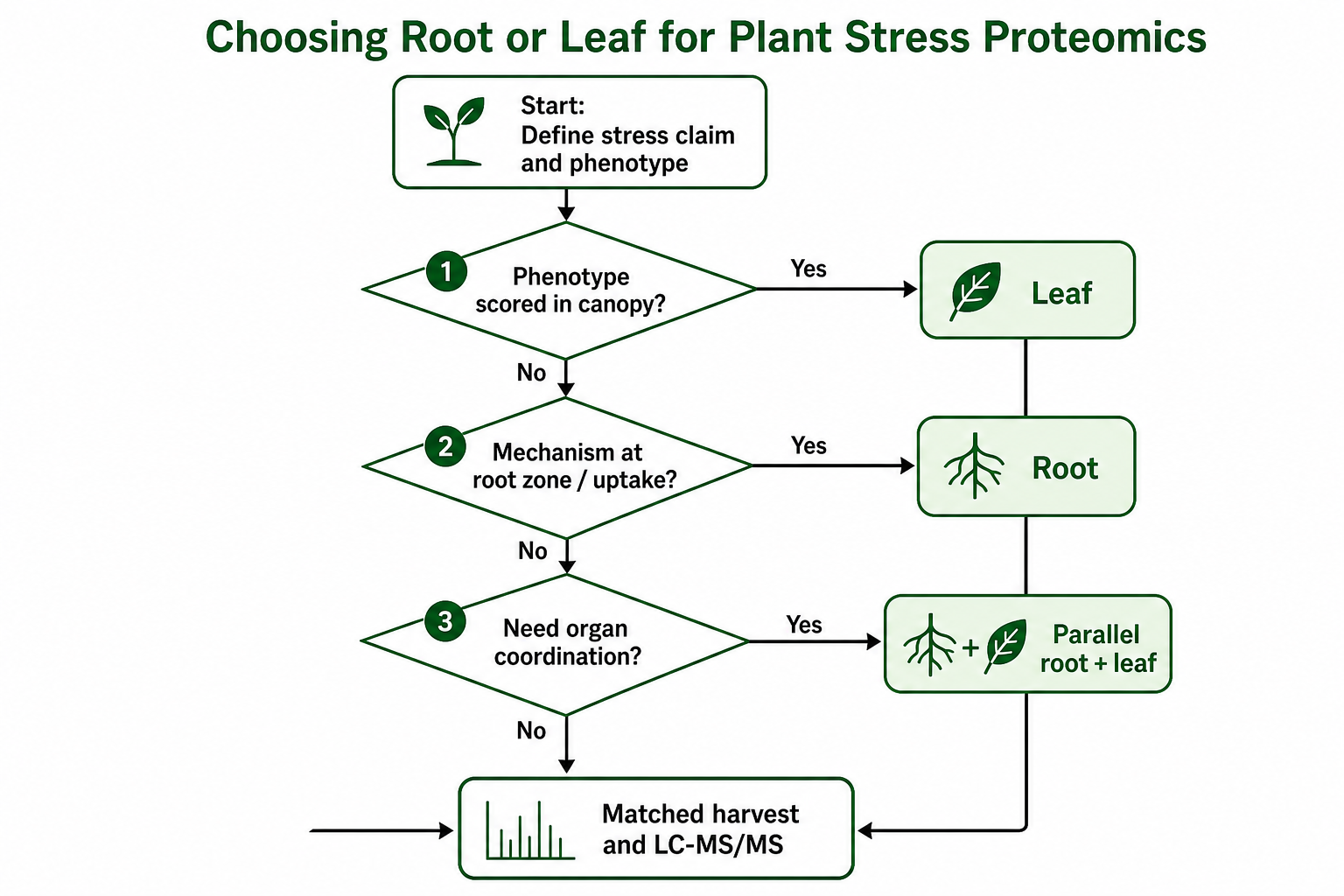
Figure 2. Parallel root and leaf sampling should preserve organ identity and the paired relationship between tissues collected from the same plant.
Preparation Differences Between Root and Leaf Samples
Root and leaf tissues can enter a similar downstream workflow of protein extraction, digestion, LC-MS/MS, and bioinformatics analysis, but their preparation requirements may differ.
Root samples may present challenges related to:
-
Soil or substrate contamination
-
Lignification
-
Heterogeneous root regions
-
Low protein yield in some tissues
-
Inconsistent washing
-
High levels of polysaccharides or other interfering compounds
Leaf samples may present challenges related to:
-
Chlorophyll and other pigments
-
Polyphenols
-
Abundant photosynthetic proteins
-
Differences in leaf age or position
-
Diurnal variation
-
Stress-dependent changes in water content
These characteristics do not mean that one organ always requires more starting material than the other. Sample amount depends on species, tissue condition, protein yield, matrix composition, and whether a standard or specialized enrichment workflow is planned.
Tissue-specific collection guidance should be confirmed before harvest. Limited, lignified, pigment-rich, low-protein, or otherwise complex samples may benefit from an initial feasibility review or pilot experiment.
For either organ:
-
Use a consistent harvest-to-freezing interval
-
Keep tissue definitions identical across comparison groups
-
Avoid repeated freeze–thaw cycles
-
Preserve sample identity through collection and processing
-
Balance or randomize extraction and LC-MS/MS order across groups
-
Record deviations from the planned sampling protocol
Samples involving pathogens, infectious agents, or quarantine risks require prior review and may be subject to acceptance restrictions.
Match the Analytical Workflow to the Comparison
Tissue choice and biological contrast should be defined before selecting the mass spectrometry workflow.
Protein identification may be appropriate when the primary goal is to characterize proteins detectable in a tissue or condition. Quantitative proteomics is needed when the study depends on comparing protein abundance between groups.
DDA and DIA are data acquisition strategies rather than direct substitutes for identification and quantification. Label-free quantification, TMT-based quantification, DDA, and DIA represent related but different workflow decisions.
DDA can support identification and quantitative studies in pilot or larger projects. DIA can support consistent quantitative comparison across matched sample sets. Selection should consider:
-
Number of biological samples
-
Number of groups and planned comparisons
-
Quantitative consistency requirements
-
Tissue complexity
-
Expected protein coverage
-
Project scope
Data may be processed using software such as MaxQuant, Proteome Discoverer, Spectronaut, or DIA-NN, depending on the selected acquisition and quantification strategy. Instrument platforms such as Orbitrap Exploris 480, timsTOF Pro, and Orbitrap Astral may be considered where appropriate to the project.
A standard plant proteomics workflow may include protein extraction or purification, enzymatic digestion, LC-MS/MS analysis, and bioinformatics reporting. Standalone gel imaging or preparation-only work is generally outside the workflow described here.
Decision Path for Choosing Root or Leaf Proteomics
1. Define the Stress Application Site
Determine whether the treatment is applied to:
-
The root zone
-
The leaves or canopy
-
The entire plant
-
A specific infection site
The application site does not automatically determine the sampling organ, but it helps identify where the earliest direct response may occur.
2. Define the Primary Phenotype
Identify whether the main phenotype concerns:
-
Root growth or architecture
-
Water or nutrient uptake
-
Ion accumulation
-
Wilting or chlorosis
-
Photosynthetic performance
-
Foliar lesion severity
-
Whole-plant growth or yield
The sampled tissue should be able to address the phenotype rather than merely being associated with the same treatment.
3. Define the Response Stage
Specify whether the project targets early signaling, acclimation, visible injury, late damage, or recovery.
4. Decide Whether One Organ Is Sufficient
Choose root when the primary question is below-ground and root-specific. Choose leaf when the main question is canopy- or leaf-specific. Plan both tissues when the hypothesis explicitly concerns organ coordination or systemic response.
5. Confirm the Comparison and Workflow
After tissue selection, define:
-
Experimental groups
-
Independent biological replicates
-
Tissue position
-
Harvest time
-
Phenotype measurements
-
Identification or quantitative analysis
-
Need for PTM, metabolomics, or other complementary analysis
| Decision Checkpoint | Favor Root | Favor Leaf | Favor Parallel Sampling |
| Primary phenotype | Root growth, uptake, rhizosphere response | Wilting, leaf injury, photosynthesis | Coordinated root and shoot phenotype |
| Stress application | Root-zone treatment or root inoculation | Foliar treatment or aerial infection | Whole-plant or systemic treatment |
| Response stage | Early below-ground response | Established canopy response | Organ-specific timing comparison |
| Sampling confidence | Consistent root region and cleaning protocol | Consistent leaf rank and harvest time | Sufficient matched tissue from the same plants |
| Main interpretation | Root-specific candidates | Leaf-specific candidates | Root–shoot coordination |
Common Mistakes in Root vs. Leaf Stress Proteomics
-
Choosing leaves only because they are easier to collect when the question concerns root uptake
-
Choosing roots only because a treatment was soil-applied when the measured phenotype is canopy injury
-
Combining root and leaf tissue in one stress-versus-control sample
-
Counting root and leaf from the same plant as independent biological replicates
-
Comparing genotypes harvested at different injury stages without defining the sampling rule
-
Treating root pathway changes as proof of canopy tolerance
-
Treating leaf injury-associated proteins as proof of failed root transport
-
Using inconsistent root regions or leaf positions across groups
-
Switching organs during the study without revisiting the biological question
-
Choosing DDA or DIA before defining the tissue, groups, and required comparison
Related Services
Frequently Asked Questions
1. Is root or leaf proteomics better for plant stress studies?
Neither tissue is universally better. Root proteomics fits questions involving below-ground exposure, uptake, root-local infection, or early root responses. Leaf proteomics fits questions involving photosynthesis, foliar infection, canopy injury, and visible shoot phenotypes.
2. Can one organ represent the whole-plant stress response?
Not reliably when the research question is organ-specific or when roots and shoots respond at different times. One organ can support a focused study, but it should not automatically be used to describe the entire plant.
3. Should drought and salinity studies always include both roots and leaves?
No. Both organs are needed when the hypothesis concerns root–shoot coordination or organ-specific timing. A single-organ design is appropriate when the question and phenotype are clearly matched to that tissue.
4. Are root and leaf samples from the same plant independent replicates?
No. They are paired tissue samples from the same biological unit. Their relationship should be preserved in the study design and data analysis.
5. Do root and leaf proteomics use the same LC-MS/MS workflow?
The downstream workflow may be similar, but extraction and collection requirements differ because root and leaf matrices have different biological and chemical characteristics.
6. What information is needed before selecting root or leaf tissue?
Provide the species, stress type, application site, treatment duration, phenotype measurements, tissue availability, harvest timing, and comparison design.
Conclusion
Root or leaf proteomics reflects plant stress most effectively when the sampled organ matches the biological question, phenotype, stress application site, and response stage.
Root proteomics is generally more informative for below-ground exposure, uptake, root-local infection, and early root responses. Leaf proteomics is generally more informative for photosynthesis-related changes, foliar infection, canopy injury, and shoot-scored phenotypes. Parallel sampling is appropriate when the project explicitly examines root–shoot coordination.
To evaluate tissue choice before harvest, contact MtoZ Biolabs with the stress protocol, phenotype measurements, harvest plan, and primary biological comparison.
How to order?




