RNA Immunoprecipitation (RIP) Service
MtoZ Biolabs provides RNA Immunoprecipitation (RIP) Service to identify RNAs associated with target RNA-binding proteins through antibody-based enrichment and RIP-qPCR or RIP-seq analysis.
Compare RBP-associated RNA enrichment across experimental conditions, prioritize candidate transcripts, and investigate potential roles of RNA-binding proteins in RNA stability, splicing, and other post-transcriptional processes.
- RIP-qPCR and RIP-seq Analysis
- Support for Diverse Cell and Tissue Samples
- RBP-Associated RNA Identification
- Customized Experimental Design and Data Analysis
What Is RNA Immunoprecipitation (RIP)?
RNA immunoprecipitation (RIP) is an antibody-based technique used to investigate RNA-protein interactions by enriching specific RNA-binding proteins (RBPs) and their associated RNA molecules.
RNA-binding proteins participate in various post-transcriptional regulatory processes, including RNA splicing, transport, localization, translation, and degradation. Identifying RNAs associated with a specific RBP helps researchers understand its role in RNA metabolism and gene expression regulation.
RIP uses specific antibodies to capture target RBPs and their associated RNAs from cell lysates. Following RNA isolation and purification, different downstream detection methods can be selected based on the research objectives:
- RT-qPCR: Detects predefined candidate RNAs and evaluates their relative enrichment in the target protein immunoprecipitate.
- High-Throughput Sequencing (RIP-seq): Sequences RNAs recovered from immunoprecipitation to characterize the RNA population associated with the target RBP.
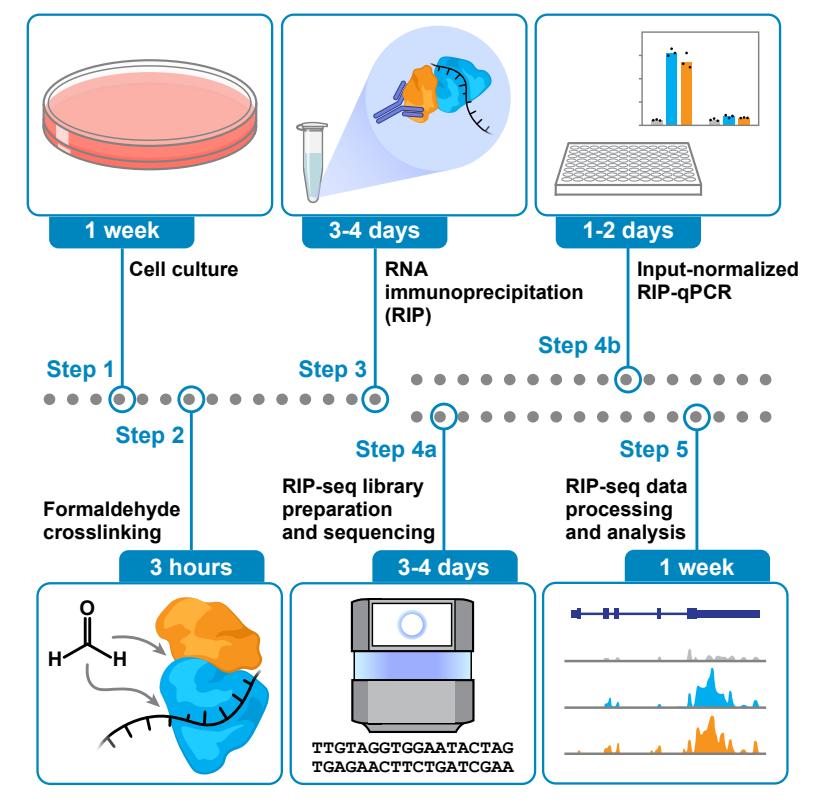
Trotman JB, et al. STAR Protoc. 2026.
Figure 1. RNA Immunoprecipitation (RIP) Principle
RNA Immunoprecipitation (RIP) Service at MtoZ Biolabs
MtoZ Biolabs provides RNA immunoprecipitation (RIP) services to enrich target RNA-binding proteins (RBPs) and their associated RNAs using specific antibodies. Depending on the research objectives, our RIP service supports the following applications:
1. RBP-Associated RNA Identification
Identify RNAs associated with a known RBP to discover potential regulatory targets for subsequent functional studies.
2. Candidate RNA Validation
Evaluate the enrichment of specific mRNAs, lncRNAs, or other candidate RNAs in target RBP immunoprecipitates.
3. Analysis of Changes in RNA-Protein Associations
Compare RBP-associated RNA profiles across different treatment conditions, genotypes, or environmental stimuli.
4. Post-Transcriptional Regulation Studies
Investigate RNAs associated with RBPs involved in RNA stability, splicing, localization, and translation to support studies of regulatory mechanisms.
RIP is primarily used to investigate associations between known proteins and RNAs. RNA enrichment alone does not establish direct binding or identify precise binding sites. For studies that begin with a known RNA and aim to identify its associated proteins, our RNA Pull-Down Service may be a more suitable option.
RIP-qPCR vs. RIP-seq: How to Choose?
RIP-qPCR and RIP-seq share the same fundamental immunoprecipitation principle but differ in their downstream detection methods, analytical scope, and research objectives.
|
Comparison |
RIP-qPCR |
RIP-seq |
|
Research Objective |
Validate known candidate RNAs |
Identify a broader range of RBP-associated RNAs |
|
Prior RNA Target Information |
Required |
Not required for all candidate RNAs |
|
Detection Method |
RT-qPCR |
High-throughput sequencing |
|
Primary Results |
Candidate RNA enrichment levels |
RBP-associated RNA lists and annotation results |
|
Typical Applications |
Validation of candidate RNA-protein associations |
RBP target RNA discovery and comparative analysis |
Service Advantages
1. Advanced Analytical Platforms
Modern immunoenrichment workflows combined with integrated RT-qPCR and next-generation sequencing (NGS) capabilities support sensitive RNA detection and consistent data quality.
2. Rigorous Quality Control
MtoZ Biolabs assess immunoprecipitation efficiency, input and negative controls, RNA integrity, and sequencing quality to minimize background and ensure reliable RIP results.
3. Customized Experimental Design
We develop tailored immunoprecipitation and downstream analysis workflows based on the target RBP, antibody characteristics, sample type, and research objectives.
4. One-Time Charge
Our pricing is transparent, with no hidden fees or additional costs.
Sample Submission Requirements
MtoZ Biolabs accepts cells, tissues, and RNA isolated after immunoprecipitation (post-IP RNA) for RIP-related analysis. Minimum sample amounts, quality specifications, and storage and shipping requirements are outlined below.
|
Sample Type |
Minimum Sample Amount |
Quality Requirements |
Storage and Shipping Requirements |
|
Cells |
≥1–2 × 10⁷ cells |
Samples must be in good condition, with RNA degradation minimized. |
Flash-freeze in liquid nitrogen and ship on dry ice. |
|
Tissues |
≥500 mg |
Freshly collected tissue with minimal RNA degradation. |
Flash-freeze fresh tissue in liquid nitrogen, store at −80°C, and ship on dry ice. |
|
Post-IP RNA |
≥1 µg |
OD260/280 ≥1.8; OD260/230 ≥1.5; no significant RNA degradation. |
Store under RNase-free conditions, preferably at −80°C, and ship on dry ice. |
Note: Samples below the minimum input requirements or showing significant RNA degradation are not accepted. Before submission, please provide the sample type, target RBP, experimental groups, and downstream analysis requirements to confirm the appropriate RIP analysis workflow.
Deliverables
1. Raw Sequencing Data
FASTQ files containing the raw sequencing data generated from RIP-seq analysis.
2. Peak Calling and Annotation
Peak detection results identifying regions of RNA enrichment, along with associated gene and transcript annotations.
3. Analysis Report (PDF)
A comprehensive PDF report containing sequencing quality assessments, peak calling results, and annotation results.
FAQs
1. Does RIP require a validated antibody?
An IP-validated antibody is recommended to ensure specific and efficient RBP enrichment. Tagged-RBP immunoprecipitation may be considered if a suitable antibody is unavailable.
2. How can the specificity of RNA enrichment in RIP experiments be evaluated?
Specificity is assessed using input samples, negative controls such as IgG, and biological replicates to distinguish target enrichment from nonspecific background.
3. Can RIP-seq identify precise RBP binding sites on RNA?
No. RIP-seq identifies RBP-associated RNAs but does not provide nucleotide-resolution binding sites. Additional binding-site mapping methods are required.
4. What should be considered when comparing RIP-seq results across different treatment groups?
Input controls, biological replicates, background RNA abundance, and enrichment differences should be considered to distinguish changes in RNA expression from RBP association.
5. Does the absence of an expected RNA in RIP results indicate that no interaction exists?
No. Low RBP abundance, inefficient immunoprecipitation, RNA degradation, or weak interactions may prevent detection. Quality-control results should be reviewed before drawing conclusions.
Start Your RIP Project with MtoZ Biolabs
Whether your project requires RIP-qPCR to validate known candidate RNAs or RIP-seq to discover new RBP-associated RNAs, MtoZ Biolabs can help evaluate the appropriate workflow based on your available samples and experimental design.
Share your target RBP, sample type, research objectives, and intended analysis with our technical team to receive a project feasibility assessment and a customized service proposal.
