






Resources
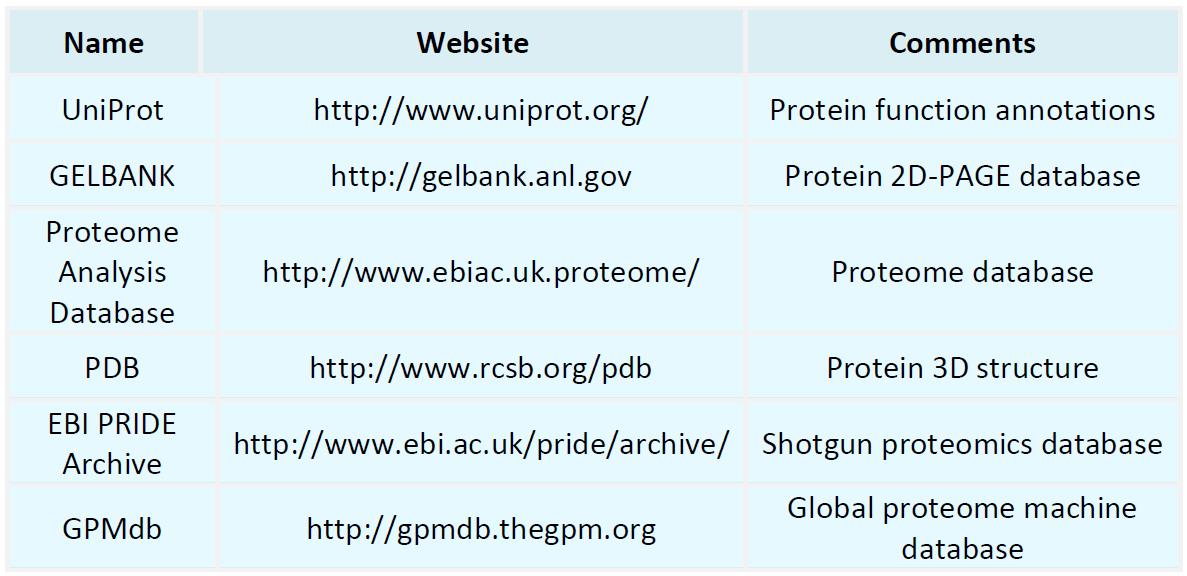
Proteomics Databases
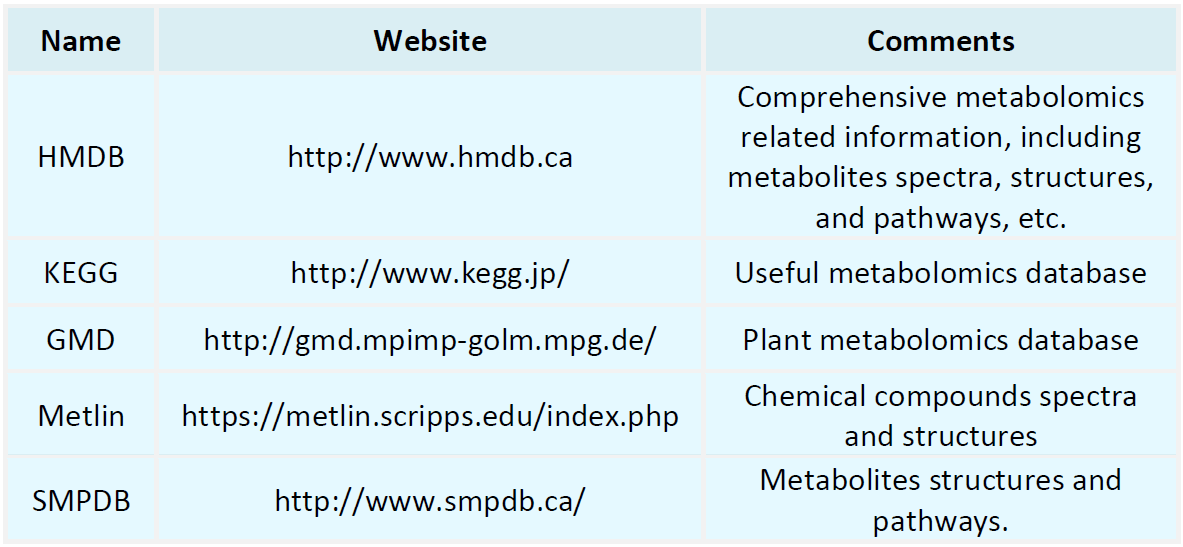
Metabolomics Databases
-
• Mechanism of Semi-Quantitative Proteomic Analysis
Semi-quantitative proteomics analysis is a technique used to study changes in protein expression levels by comparing the relative abundance of proteins under different experimental conditions, thereby revealing underlying biological mechanisms. Unlike quantitative proteomics, semi-quantitative analysis does not rely on absolute quantification but instead infers trends by comparing the relative abundance of proteins across multiple samples.
-
• Application of Semi-Quantitative Proteomic Analysis
Proteomics is the study of the structure, function, and interactions of all proteins in a biological system. Recent advancements in proteomics research have been driven by significant improvements in mass spectrometry (MS) technology and the development of bioinformatics tools. Semi-quantitative proteomics analysis, a key research technique, has attracted attention for its ability to provide relative protein abundance information without requiring absolute quantification standards.
-
• Workflow of Semi-Quantitative Proteomic Analysis
Semi-quantitative proteomics is a widely used technique in biomedical research, enabling the identification and relative quantification of proteins within complex biological samples using mass spectrometry. Unlike fully quantitative proteomics, semi-quantitative analysis focuses on comparing changes in protein abundance under different conditions, providing insights into the dynamic changes occurring in biological systems.
-
• Principle of Semi-Quantitative Proteomic Analysis
As proteomics research progresses, there is an increasing demand for quantitative analysis of protein expression levels. Semi-quantitative proteomics analysis offers an efficient and cost-effective approach to estimating the relative abundance of proteins.
-
• Protein Mass Spectrometry: Comprehensive Comparison of Methods for Peptide Purity Detection
Proteins are vital components of living organisms and are vital in the study of biological functions and drug development. As the building blocks of proteins, the purity detection of peptides is crucial for ensuring the accuracy of experimental results and the safety of drugs.
-
Proteins are one of the most important molecules in biological organisms, playing a key role in cellular functions and biological processes. Understanding the structure and function of proteins is of great significance in the study of biology and the development of biopharmaceuticals. Proteomic mass spectrometry is a common technique used to identify protein sequences and structures.
-
• Quantification of Free Sulfhydryl Groups in Recombinant Protein Vaccines
Recombinant protein vaccines are prepared using genetic engineering technology, with the aim of eliciting an immune response by expressing and producing specific proteins of pathogens. These vaccines do not contain complete active pathogens but select specific proteins or parts of the pathogens as antigens. In the structure of proteins, mercapto mainly exists in cysteine, playing a key role in protein folding and stability.
-
• Mechanism of 2D-DIGE-Based Protein Quantification
In proteomics research, accurate protein quantification is a fundamental task. Traditional protein quantification methods, such as one-dimensional polyacrylamide gel electrophoresis (1D-PAGE), often face limitations in resolution and sensitivity, making it difficult to distinguish and quantify proteins in complex samples precisely.
-
• Workflow of 2D-DIGE-Based Protein Quantification
Two-Dimensional Difference Gel Electrophoresis (2D-DIGE) is a powerful proteomics technique for the simultaneous separation and quantification of proteins from different biological samples. This technique significantly improves the accuracy and sensitivity of protein quantification by labeling and separating multiple samples on the same gel.
-
• Application of 2D-DIGE-Based Protein Quantification
Two-Dimensional Difference Gel Electrophoresis (2D-DIGE) is a powerful tool that combines traditional two-dimensional electrophoresis with fluorescent dye labeling technology, widely used for protein separation and quantitative analysis in proteomics. This technique has seen extensive application in studying protein expression changes under different conditions, protein-protein interactions, and identifying disease-related biomarkers.
How to order?




