






Protein Interaction Analysis in Native Cells vs Overexpression Systems
Introduction
Protein interaction analysis often begins with a practical decision: should the experiment use native cells or an overexpression system? The choice affects biological relevance, signal strength, background, and how confidently the final results can be interpreted. Native-cell analysis preserves endogenous protein levels and the natural cellular environment, but low-abundance proteins can be difficult to capture and detect. Overexpression systems increase signal and simplify tag-based enrichment, but nonphysiological expression can create interactions that do not occur under native conditions. This trade-off is especially important for Co-IP-MS, pull-down MS, proximity labeling, and other mass spectrometry-based interaction workflows.
Neither system is universally better. Native cells are often preferred when the research question depends on physiological stoichiometry, cell-state regulation, or disease-relevant expression. Overexpression systems are useful when the bait is too low in abundance, when antibody quality is poor, or when the project needs a controlled perturbation model. A strong study may use both approaches in sequence: overexpression for early feasibility and native cells for biological confirmation. The best choice depends on the question being asked, not only on which workflow gives the strongest signal.
Related Services
| Service Area | Recommended Service |
| Protein interaction MS | Fusion Protein Interaction Analysis Service | Pull-Down and MS |
| Protein analysis | Protein Analysis Service |
| Protein identification | Protein Identification Service |
| Proteomics | Proteomics Analysis Service |
For researchers comparing native-cell and overexpression workflows, MtoZ Biolabs can help align sample input, capture strategy, LC-MS/MS depth, and control design with the intended biological claim.
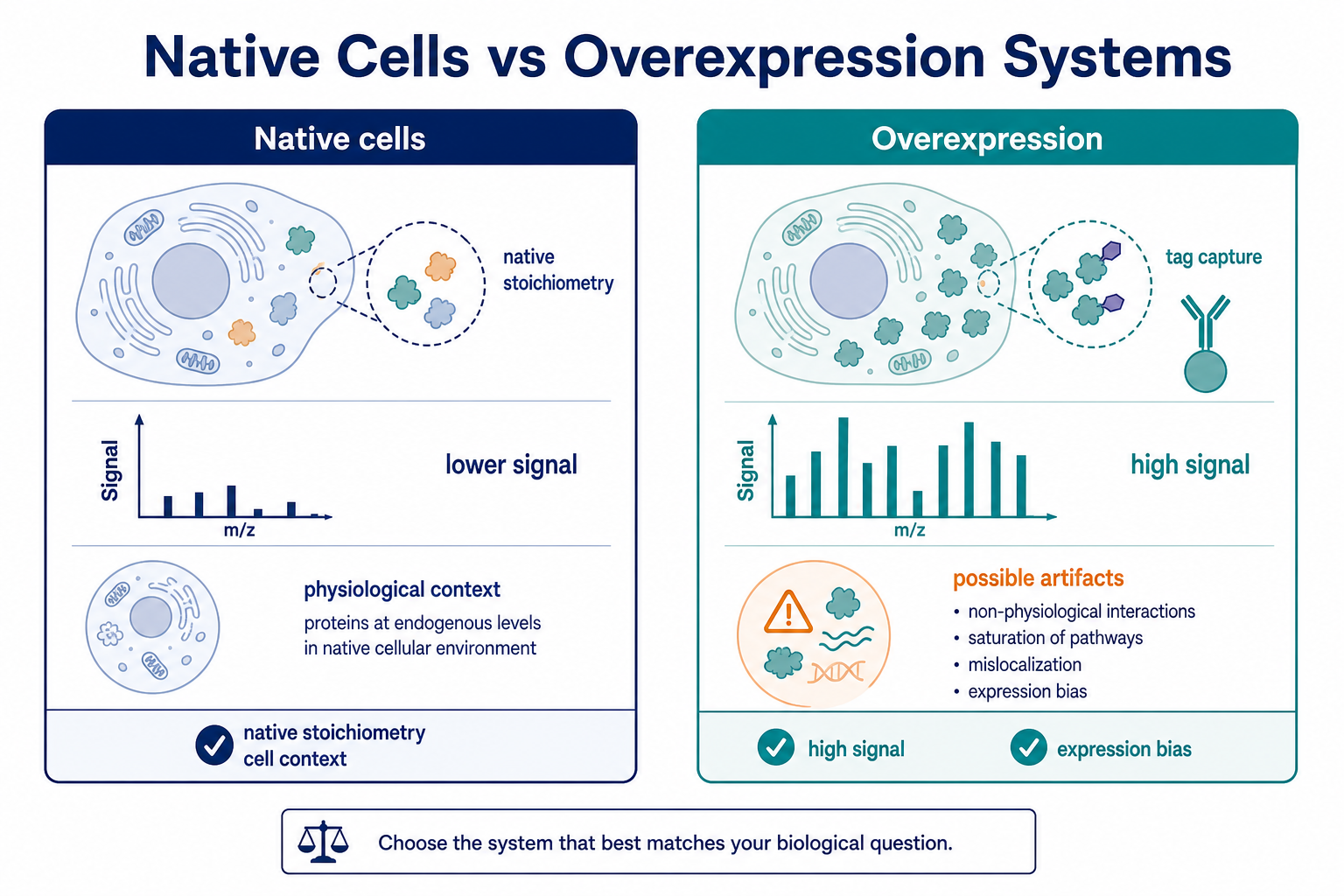
Figure 1. Native cells preserve physiological context, while overexpression systems often provide stronger signal with a higher risk of expression-driven artifacts.
What Native-Cell Interaction Analysis Offers
Native-cell protein interaction analysis studies proteins at endogenous expression levels. The bait and potential partners remain under natural transcriptional, translational, localization, and post-translational regulation. This is valuable when the interaction depends on cell cycle stage, stimulation, drug exposure, differentiation, stress response, or disease state.
The main advantage is biological relevance. An interaction detected under native conditions is more likely to reflect the real cellular environment. Native analysis also avoids artifacts caused by excessive bait concentration, tag-driven localization, or saturation of binding partners. This matters for signaling proteins, transcription factors, membrane-associated complexes, and low-copy regulatory proteins.
The main limitation is sensitivity. Endogenous proteins may be present at low levels, and the interaction may be transient or weak. Antibodies that work for Western blotting may not work for immunoprecipitation. Low signal can also make LC-MS/MS identification difficult, especially when background proteins are abundant.
What Overexpression Systems Offer
Overexpression systems introduce a tagged or untagged protein at higher-than-native levels. The increased bait abundance can improve capture efficiency and make protein interaction analysis easier to perform. Tags such as FLAG, HA, His, GFP, or biotin ligase-based systems can also provide standardized enrichment when endogenous antibodies are not suitable.
The main advantage is feasibility. Overexpression can help researchers test whether a bait has candidate partners, evaluate domain mutants, compare constructs, or develop a workflow before moving to endogenous systems. It can also support mechanistic studies when the expression level is controlled and matched across constructs.
The main limitation is artifact risk. Too much bait can force weak or nonspecific associations. Overexpression can saturate pathways, mislocalize proteins, alter stoichiometry, and expose interaction surfaces that are normally hidden. Tag position can also affect folding, localization, or binding. These effects can generate convincing-looking data that does not fully represent native biology.
Key Comparison Dimensions
Native cells and overexpression systems should be compared across the dimensions that affect interpretation. Signal strength alone should not determine the system. A high-confidence result requires a match between the experimental model and the biological question.
| Dimension | Native Cells | Overexpression Systems |
Practical Interpretation
|
| Biological relevance | High when the model matches the question | Variable, depends on expression level and localization | Native results usually support stronger physiological claims |
| Signal strength | Often lower | Often higher | Overexpression may help feasibility testing |
| Artifact risk | Lower expression-driven artifact risk | Higher risk of nonphysiological binding | Controls and dose titration are critical |
| Capture strategy | Requires strong endogenous antibody or tagging | Tags simplify enrichment | Tag controls are required |
| Low-abundance proteins | Challenging | Easier to detect | Overexpression may be used as a pilot tool |
| Mechanistic mutation studies | Possible but harder | Easier with construct design | Mutants should be expression-matched |
The comparison shows why the best workflow may not be the most convenient workflow. Native-cell analysis is more demanding, but it can support stronger biological interpretation. Overexpression is more accessible, but it requires careful control of expression level and localization.
When Native Cells Are the Better Choice
Native cells are usually preferred when the goal is to understand interactions under physiological or disease-relevant conditions. This is especially true when protein abundance, localization, post-translational modification, or complex stoichiometry is central to the biology.
Native-cell analysis is also preferred when the interaction is expected to be regulated. For example, a signaling complex may assemble only after ligand stimulation. A transcriptional complex may form only at a specific cell state. A drug may alter an endogenous interaction without changing total protein abundance. In these cases, overexpression can mask the natural regulation.
Researchers should choose native-cell analysis when the final claim needs to be close to in vivo biology. However, the study should include a feasibility check. The bait must be detectable, the capture reagent must be specific, and the LC-MS/MS method must be sensitive enough for the expected abundance.
When Overexpression Is the Better Starting Point
Overexpression can be the better starting point when endogenous detection is not feasible. If the bait is extremely low in abundance or if no validated IP-grade antibody exists, a controlled overexpression model can help test whether the workflow is worth further development.
Overexpression is also useful for mapping domains or testing mutants. A researcher can compare wild-type bait with deletion mutants, point mutants, or tag-position variants. This approach can identify regions required for candidate interactions. However, construct expression should be matched, and localization should be checked before interpreting differences.
Overexpression works best when the expression level is modest and experimentally controlled. Inducible expression, low-copy vectors, stable cell lines, or endogenous tagging may reduce artifacts compared with strong transient overexpression. The goal is not simply to maximize bait abundance. The goal is to increase detectability while preserving meaningful biology.
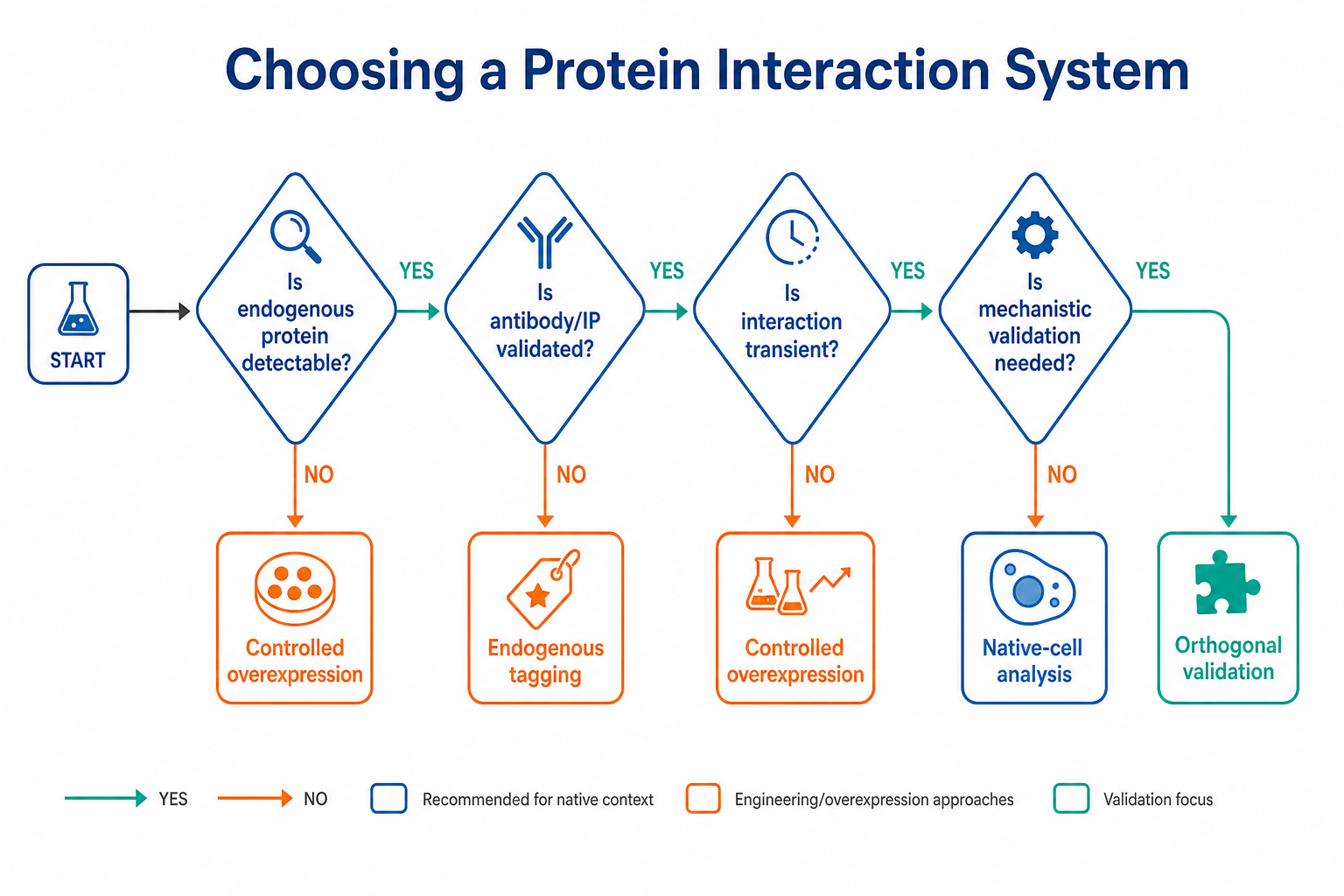
Figure 2. System selection should consider endogenous detectability, capture validation, interaction dynamics, and the need for mechanistic validation.
Controls for Native and Overexpression Workflows
Controls determine whether a protein interaction analysis result is interpretable. Native-cell workflows should include input lysate, IgG or isotype control, beads-only control, and biological replicates. Knockout or knockdown controls can strengthen specificity when available. Treatment studies should include matched untreated, vehicle, or time-course controls.
Overexpression workflows need additional controls. A tag-only or empty-vector control can identify tag-associated background. Expression-matched controls help ensure that differences are not caused by unequal bait abundance. Localization checks can confirm that the construct reaches the relevant cellular compartment. Dose titration can reduce artifacts caused by excessive expression.
Mass spectrometry controls also matter. LC-MS blanks, randomized injection order, replicate consistency, and defined filtering criteria help reduce carryover and analysis bias. Candidate interactions should be ranked against controls, not judged by presence alone.
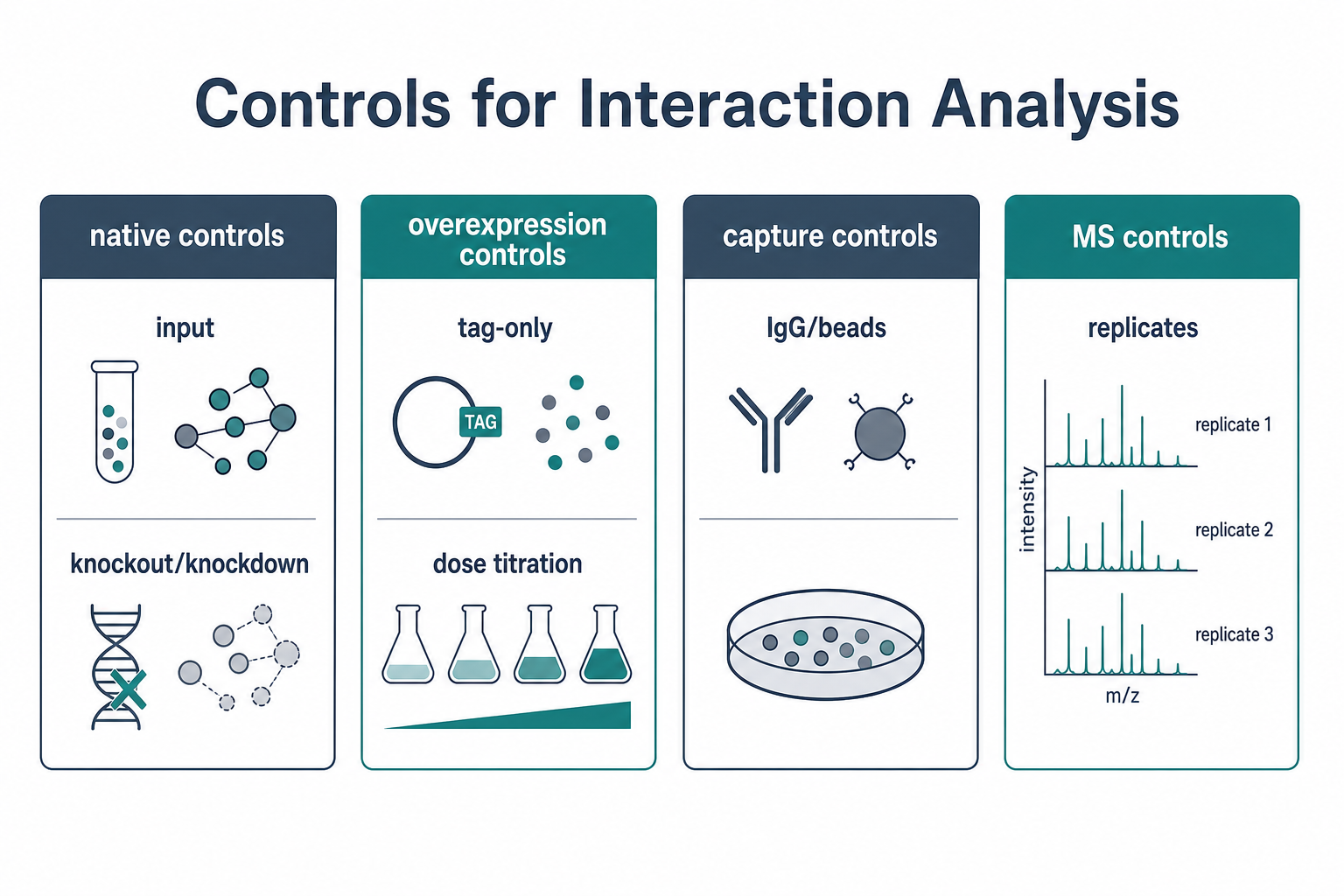
Figure 3. Native and overexpression workflows require different controls to reduce false positives and expression-driven artifacts.
How to Combine Both Systems
Many strong studies use native cells and overexpression systems together. The order depends on the project risk. If the endogenous bait is detectable and a validated antibody exists, native-cell analysis can be the primary workflow. Overexpression can then be used for mutation testing or rescue experiments. If the endogenous bait is not detectable, overexpression can serve as a feasibility model before moving to endogenous tagging or native validation.
A practical combined strategy may include three stages. First, use a controlled overexpression system to identify candidate partners and optimize sample handling. Second, test selected candidates under native conditions using Co-IP-MS, targeted MS, or orthogonal assays. Third, use mutants or perturbations to test whether the interaction has functional relevance.
This sequence avoids two common problems. It prevents native-cell studies from failing because the workflow was never optimized. It also prevents overexpression-only results from being treated as definitive physiological evidence.
Choosing the Right Claim for Each System
The wording of the conclusion should match the system. Native-cell data can support claims about endogenous association under defined biological conditions. Overexpression data can support claims about potential binding capacity, domain dependence, or construct-based mechanisms. The two types of evidence are related, but they are not identical.
For example, an overexpression-based pull-down may show that a mutant loses binding to a candidate partner. This supports a mechanistic hypothesis. A native-cell Co-IP-MS result showing that the endogenous proteins co-enrich after stimulation supports physiological relevance. Together, the results are stronger than either result alone.
Researchers should avoid saying that overexpression proves a native interaction unless the interaction is validated at endogenous levels. Researchers should also avoid dismissing overexpression data entirely. When well controlled, overexpression systems can be useful for method development and mechanism testing.
Practical Decision Guide
Start with native cells when the bait is detectable, the antibody or tag-free capture method is validated, and the biological claim depends on endogenous regulation. Start with overexpression when the bait is not detectable, the antibody is not suitable for IP, or the project requires construct-based testing.
Consider endogenous tagging when native antibodies are weak but physiological expression is important. Endogenous tagging can improve capture while preserving more natural expression than conventional overexpression. However, tag insertion should be validated because tags can still affect protein behavior.
For projects with rare samples, low-abundance proteins, or uncertain antibody performance, a small pilot study is often the safest first step. MtoZ Biolabs can support pilot planning for protein interaction analysis, including sample input evaluation, capture strategy, and LC-MS/MS readout design.
Frequently Asked Questions
1. Is native-cell protein interaction analysis always better?
No. Native-cell analysis is usually more physiologically relevant, but it can fail when the bait is too low in abundance or when no suitable capture reagent exists. Overexpression may be more practical for feasibility testing.
2. Does overexpression always create false interactions?
No. Overexpression does not always create false interactions. The risk increases when expression is very high, localization is abnormal, or controls are weak. Inducible and expression-matched systems can reduce this risk.
3. What controls are needed for overexpression-based interaction studies?
Useful controls include empty-vector or tag-only controls, expression-matched constructs, localization checks, input lysate, biological replicates, and capture controls such as IgG or beads-only samples.
4. Can endogenous tagging replace overexpression?
Endogenous tagging can be a strong alternative when native antibodies are not suitable. It can improve capture while preserving natural expression. However, the tag may still affect localization, stability, or interaction surfaces, so validation is needed.
5. Which system is better for Co-IP-MS?
The better system depends on the question. Native cells are better for physiological association claims. Overexpression systems are useful for low-abundance bait proteins, antibody-limited projects, and mutant testing.
Conclusion
Protein interaction analysis in native cells and overexpression systems involves a balance between biological relevance and experimental feasibility. Native cells preserve physiological stoichiometry and cellular context, but sensitivity and antibody performance can limit detection. Overexpression systems improve signal and enable construct-based studies, but expression-driven artifacts must be controlled. The strongest workflow often uses the two systems strategically: controlled overexpression for feasibility or mechanism testing, followed by native-cell validation for biological relevance. Researchers should select the system based on the claim they need to make, the abundance of the bait, and the controls available to support interpretation.
How to order?




