






Plant Proteomics vs. Transcriptomics: Which Approach Fits Your Study?
A crop physiology group may already have RNA-seq data from drought-treated leaves yet still lack clarity on which enzymes or transporters change at the protein level under the same protocol. A plant breeding team may compare transcript profiles between high- and low-quality seed lines while the trait of interest depends on stored proteins rather than mRNA abundance alone. A stress biology study may detect strong transcript induction after salinity exposure but still need to determine whether corresponding protein changes are measurable at the selected harvest stage.
Plant proteomics and transcriptomics answer related but distinct questions. Transcriptomics measures RNA abundance and can support transcript- or isoform-level analysis when the library design, sequencing strategy, annotation quality, and analysis workflow are appropriate. Plant proteomics identifies and quantifies proteins recovered from a defined tissue or sample preparation using LC-MS/MS. Choosing the wrong molecular layer may produce extensive data without directly addressing the biological question.
This article compares plant proteomics and transcriptomics to help research teams decide which approach should be used first, when both layers are valuable, and what must be aligned before a project begins.
What Plant Transcriptomics and Plant Proteomics Measure
Transcriptomics, commonly performed using RNA sequencing, estimates RNA abundance across the transcriptome. It is well suited to detecting transcriptional reprogramming, comparing gene-expression patterns between conditions, examining transcript usage in supported study designs, and generating pathway-level hypotheses. Standard RNA-seq does not directly measure protein abundance, protein turnover, enzymatic activity, or post-translational modification states.
Plant proteomics examines proteins recovered from a defined tissue, organ, fraction, or enriched sample. A standard workflow may include protein extraction or purification, enzymatic digestion, LC-MS/MS analysis, and bioinformatics reporting. Depending on the project design, outputs may include protein identification, quantitative comparison, differential protein analysis, and functional annotation using resources such as GO and KEGG.
Database-derived protein–protein interaction networks or Reactome analysis may also be included when appropriate resources support the species and annotation strategy. These analyses provide functional context but do not demonstrate direct physical interactions in the submitted samples.
RNA and protein results may differ because translation efficiency, protein stability, degradation, transport, compartmentation, and other post-transcriptional processes influence protein abundance. A transcript change therefore does not guarantee a corresponding protein change at the same time point.
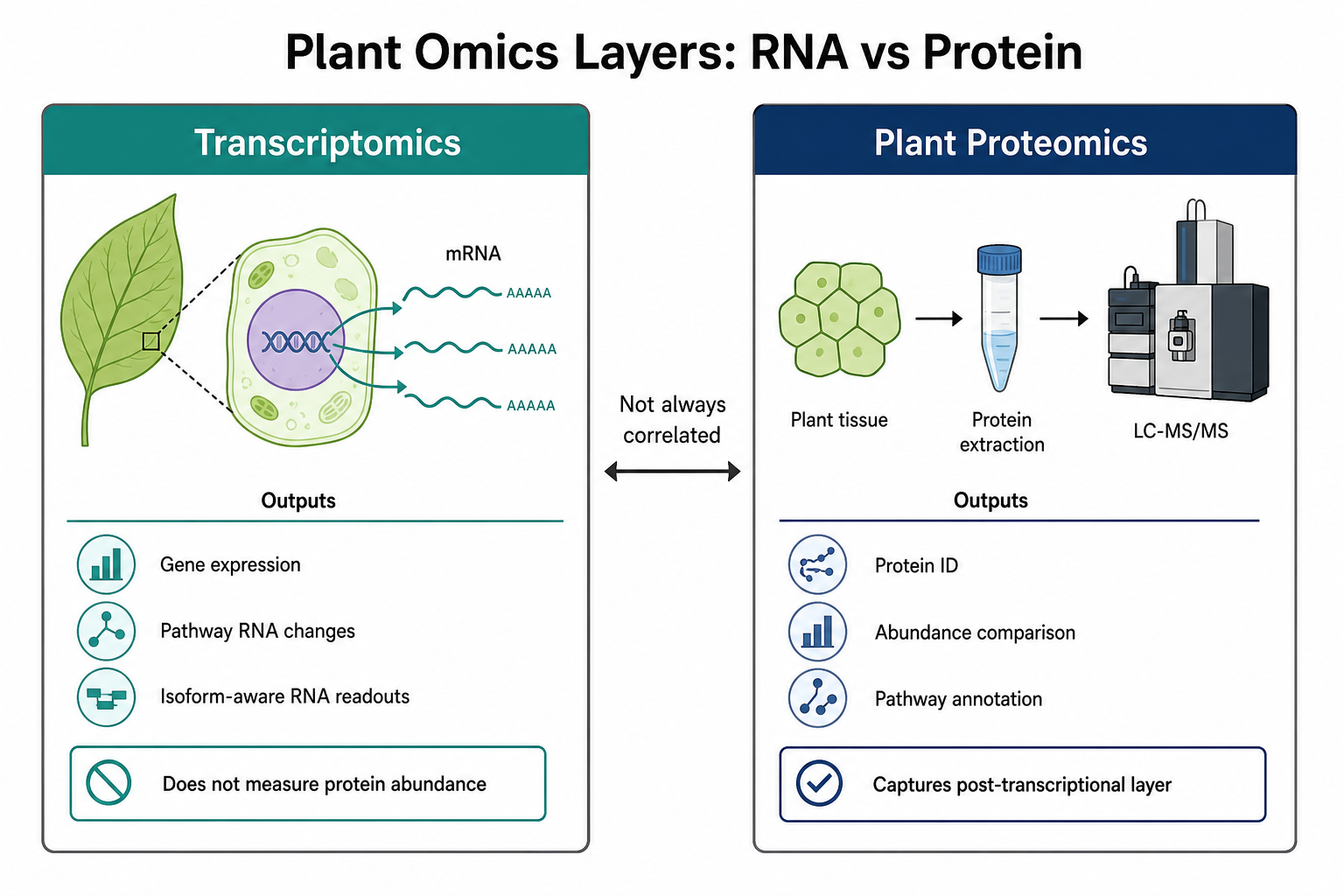
Figure 1. Transcriptomics measures RNA-level patterns, whereas plant proteomics examines proteins recovered from the selected tissue using LC-MS/MS.
Comparison Dimensions That Drive Method Choice
Method selection should follow the biological question rather than platform familiarity alone.
| Comparison Dimension | Plant Transcriptomics | Plant Proteomics |
| Primary readout | RNA abundance and transcript-level information | Identified proteins and protein abundance |
| Strong first use | Broad transcriptional responses, gene-expression screening, and supported isoform questions | Protein-level trait differences, stress responses, and phenotype-aligned abundance comparison |
| Post-transcriptional effects | Not measured directly | Reflected in the resulting protein-level readout |
| PTM information | Not obtained from standard RNA-seq | Requires a dedicated PTM workflow rather than standard profiling |
| Tissue planning | Depends on RNA yield, integrity, library design, and sequencing strategy | Depends on tissue type, matrix complexity, protein yield, and analysis strategy |
| Sample condition | RNA integrity and extraction quality are critical | Protein integrity, contamination, storage history, and matrix effects require review |
| Interpretation boundary | Supports transcription-level hypotheses | Supports protein-level candidate prioritization; mechanism still requires follow-up |
Neither method alone proves causal regulation, direct functional activity, or field performance. Results should be interpreted with biological replicates, tissue context, treatment conditions, harvest timing, and phenotype information.
When Transcriptomics Is the Better First Step
Transcriptomics often fits first when the main question concerns broad changes in gene-expression programs.
RNA-seq may be the primary layer when a project needs to:
-
Screen transcriptional responses across treatments, genotypes, or developmental stages
-
Compare large sets of expressed genes across multiple conditions
-
Examine transcript or isoform usage in an appropriately designed study
-
Generate pathway hypotheses before selecting focused follow-up experiments
-
Evaluate an early response expected to occur primarily at the RNA level
Transcriptomics can also help narrow candidate pathways or identify informative tissues and time points before a protein-level study. However, RNA results should not be treated as direct evidence that the encoded proteins have changed in abundance or activity.
Transcriptomics alone is less suitable when the research decision depends on stored seed proteins, protein abundance, protein turnover, enzyme-level changes, or post-translational regulation. It is also insufficient when the study requires phosphorylation, ubiquitination, glycosylation, acetylation, or another modification-specific readout.
When Plant Proteomics Fits Better
Plant proteomics is more appropriate when the study requires direct protein-level evidence from a defined tissue and condition.
It may be selected first when the project focuses on:
-
Protein abundance differences between genotypes or treatments
-
Storage protein composition in seeds or other reproductive tissues
-
Stress-related proteins measured at a defined exposure stage
-
Enzymes, transporters, or structural proteins associated with a recorded phenotype
-
Protein-level follow-up after transcriptomics has produced broad or inconclusive candidate lists
-
Questions in which RNA abundance is unlikely to represent the relevant functional layer
Quantitative plant proteomics requires clearly defined groups, independent biological replicates, and consistent sample collection and handling. An RNA-seq design should not automatically be reused for proteomics without reviewing tissue quantity, extraction feasibility, matrix composition, and the expected timing of protein-level responses.
Standard plant proteomics projects may include protein extraction, digestion, LC-MS/MS, quantitative analysis, and bioinformatics reporting. Standalone gel imaging or preparation-only work is generally outside the workflow described here.
Sample collection requirements should be confirmed according to tissue type, sample condition, matrix complexity, and analysis strategy. Leaves, roots, seeds, bark, pollen, and pigment- or lipid-rich tissues may require different amounts and preparation approaches. Samples involving pathogens, infectious agents, or quarantine risks require review before submission.
The analytical strategy should also match the comparison design. Protein identification, label-free quantification, TMT-based quantification, DDA, and DIA represent different but related decisions rather than a single choice between DDA and DIA.
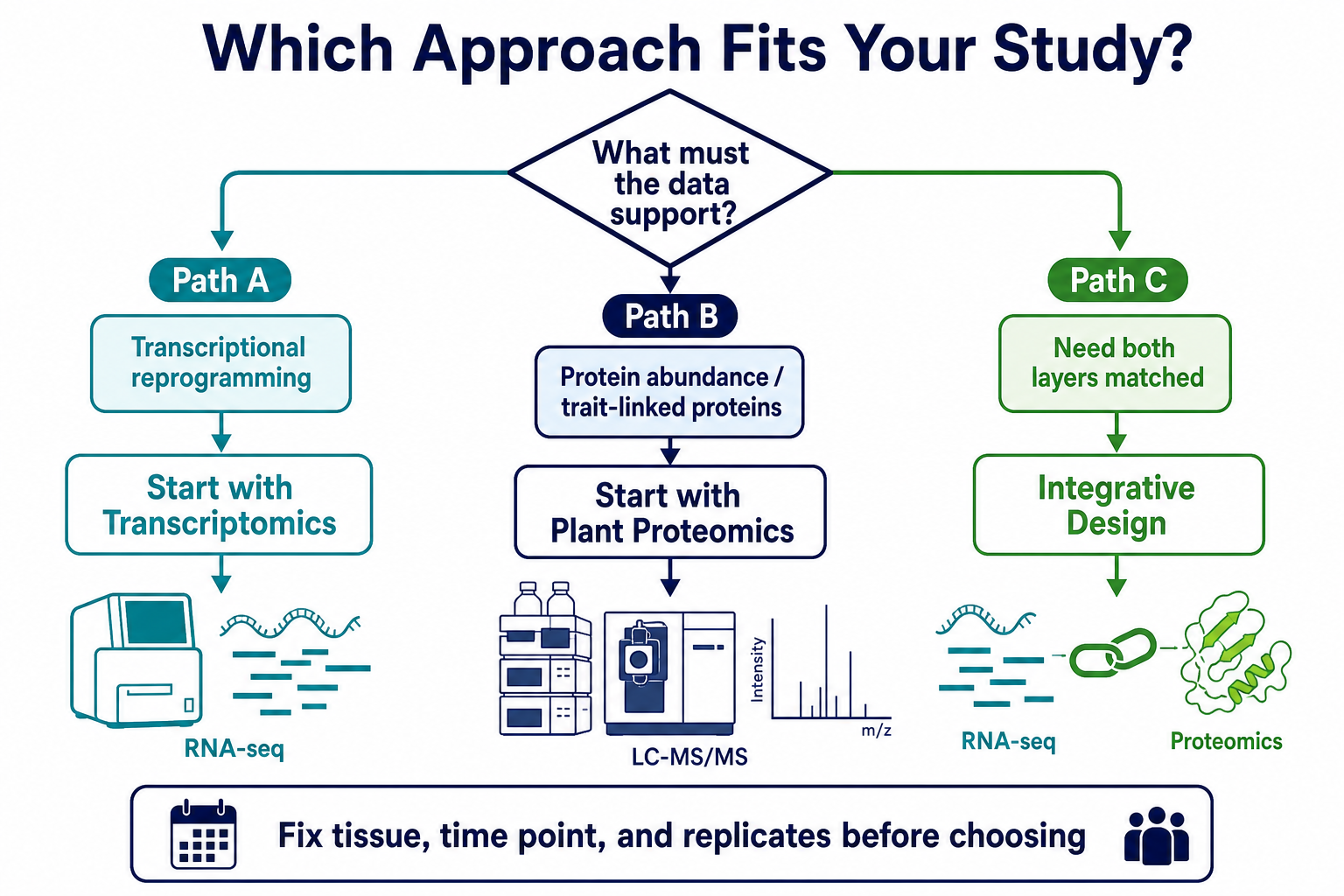
Figure 2. Select the primary omics layer according to the biological question, then determine whether one layer or an integrated design is required.
When an Integrative Design Is Warranted
Some studies benefit from transcriptomics and proteomics being planned as complementary layers rather than competing alternatives.
An integrated design can be useful when RNA-seq identifies transcriptional changes and proteomics evaluates which of those changes are also observable at the protein level. It can also help distinguish:
-
RNA and protein changes that move in the same direction
-
RNA changes without corresponding protein differences
-
Protein changes that are not explained by measured RNA abundance
-
Pathways showing coordinated or layer-specific regulation
-
Candidates that may require PTM, enzyme activity, or functional follow-up
Integration is strongest when both datasets are connected to the same biological contrast. Tissue type, genotype, treatment, harvest stage, replicate structure, and phenotype measurements should be matched or intentionally coordinated.
Exact time-point matching is not always required. RNA and protein responses may peak at different stages, so deliberately offset sampling can be appropriate when supported by the biological hypothesis. The timing strategy should be defined before collection rather than reconstructed after the datasets are generated.
Using unrelated RNA and protein samples collected from different tissues, seasons, batches, or treatment protocols substantially weakens integrative interpretation. Correlation between such datasets should not be presented as evidence of coordinated molecular regulation.
Before collection, determine whether:
-
Both omics layers will use material from the same biological replicate
-
Separate tissue aliquots are required
-
The same or biologically offset harvest times are appropriate
-
Sample processing can be balanced across experimental groups
-
The project requires pathway-level integration or only candidate follow-up
MtoZ Biolabs can review whether transcriptomics, plant proteomics, or an integrated workflow better matches the study question once the species, tissue, group design, sample availability, and expected readout are defined.
Practical Planning Differences Before Project Start
Define the Biological Comparison
Write the comparison in one sentence before selecting a platform. Examples include:
-
Drought-treated versus well-watered leaves at a defined treatment stage
-
Resistant versus susceptible genotypes under the same pathogen challenge
-
High- versus low-quality seeds collected at the same maturity stage
The comparison should determine the tissue, replicate structure, treatment conditions, and harvest timing.
Confirm Sample Availability
Transcriptomics and proteomics have different extraction and input considerations. Proteomics planning should account for tissue-specific protein yield, matrix complexity, and the need to avoid repeated freeze-thaw cycles.
When material is limited, narrowing the comparison or conducting a pilot may be more informative than dividing an inadequate sample across multiple analyses.
Match Harvest Timing to the Question
Early stress sampling may capture transcriptional signaling before substantial protein abundance changes occur. Later sampling may reveal acclimation, metabolic remodeling, or tissue damage more clearly at the protein level.
The two omics layers should not be assumed to show their strongest responses at the same time.
Preserve Sample Metadata
Record genotype, treatment, tissue position, developmental stage, phenotype or stress score, harvest date, processing batch, and storage history. Missing metadata can limit both single-omics interpretation and cross-omics integration.
Define the Required Deliverable
Protein identification, quantitative comparison, differential analysis, RNA–protein correlation, pathway integration, and PTM analysis are distinct deliverables. The required output should be defined according to the research decision the data need to inform.
Related Services
Transcriptome Sequencing (RNA-sequencing) Service
Integrative Transcriptomics-Proteomics Analysis Service
Contact MtoZ Biolabs with the species, tissue type, sample availability, comparison design, and biological question to evaluate whether plant proteomics, transcriptomics, or an integrated workflow fits the project.
Frequently Asked Questions
1. Can transcriptomics replace plant proteomics?
Not when the research question depends on protein abundance, stored proteins, protein turnover, or post-transcriptional regulation. The two methods measure complementary molecular layers.
2. When should a plant study begin with RNA-seq?
RNA-seq often fits first when the primary goal is broad transcriptional screening, gene-expression comparison, supported transcript analysis, or early pathway hypothesis generation.
3. When should plant proteomics be selected first?
Proteomics may be selected first when the project requires protein abundance comparison, stored protein analysis, enzyme- or transporter-level candidates, or protein responses linked to a measured phenotype.
4. Must transcriptomics and proteomics use identical samples?
Matched biological contrasts are strongly recommended. Both layers may use aliquots from the same biological replicate or coordinated samples collected under the same protocol. Any differences in tissue or timing should be intentional and documented.
5. Does agreement between RNA and protein prove regulation?
No. Concordant changes strengthen candidate prioritization but do not establish direct regulation, mechanism, causality, or functional activity.
6. When is a combined design most useful?
A combined design is useful when the study needs to distinguish transcriptional changes from protein-level responses or identify pathways showing coordinated and layer-specific regulation.
Conclusion
Plant proteomics and transcriptomics support different study decisions. Transcriptomics is strongest for examining transcriptional reprogramming and broad RNA-level patterns. Plant proteomics is more appropriate when the project requires protein identification or abundance evidence from a defined tissue and condition.
The better choice depends on the biological question, tissue availability, harvest timing, sample design, and required deliverables. Contact MtoZ Biolabs with the comparison design, tissue type, sample condition, and expected readout to determine whether transcriptomics, plant proteomics, or an integrated strategy is the most appropriate starting point.
How to order?




