






Plant Proteomics Services for Protein Identification and Quantification
Plant-derived peptide data can support protein identification, relative abundance measurement, modification-site analysis, and protein association screening. These outputs are generated through related LC-MS/MS workflows, but they represent different evidence types and should not be interpreted as interchangeable results.
Plant proteomics design therefore begins with the analytical question. Tissue composition, sequence resources, experimental groups, and the intended conclusion determine whether the study requires basic identification, quantitative comparison, PTM-focused analysis, interaction-focused analysis, or a coordinated combination of these modules.
Define the Analytical Scope
1. Establish Sample and Database Readiness
(1) Account for Plant Matrix Effects
Leaves, roots, seeds, fruits, woody tissues, cultured cells, and subcellular fractions differ in protein abundance and in the concentrations of pigments, polyphenols, polysaccharides, lipids, salts, and structural compounds. These components can affect extraction, enzymatic digestion, peptide recovery, chromatography, and ionization. Sample preparation should therefore reflect the plant matrix and remain consistent across experimental groups when quantitative comparison is planned.
(2) Select an Appropriate Sequence Resource
Peptide-spectrum matching depends on the sequence database used for searching. A species-specific protein FASTA is preferable when a sufficiently complete reference is available. Non-model plants may instead require transcriptome-derived sequences, a curated custom database, or a suitable homologous reference. Database incompleteness and redundancy can affect protein inference, identification confidence, and the depth of downstream functional annotation.
2. Match the Analysis to the Required Evidence
(1) Separate Identification from Quantification
Plant protein identification determines which proteins are supported by peptide-level evidence in a tissue, organelle-enriched fraction, or other plant sample. Quantitative plant proteomics compares protein or peptide abundance across predefined groups. Identification alone does not demonstrate abundance change, while differential abundance does not establish causality for a plant phenotype. The biological question should determine which evidence is required.
(2) Combine Modules Only When the Questions Are Linked
Global identification and quantification may be complemented by subcellular enrichment, PTM analysis, or interaction-focused experiments when localization, regulatory sites, or protein associations are part of the hypothesis. Combining modules is most informative when each component answers a defined question. Adding analytical layers without a corresponding experimental objective increases complexity without necessarily strengthening the final interpretation.
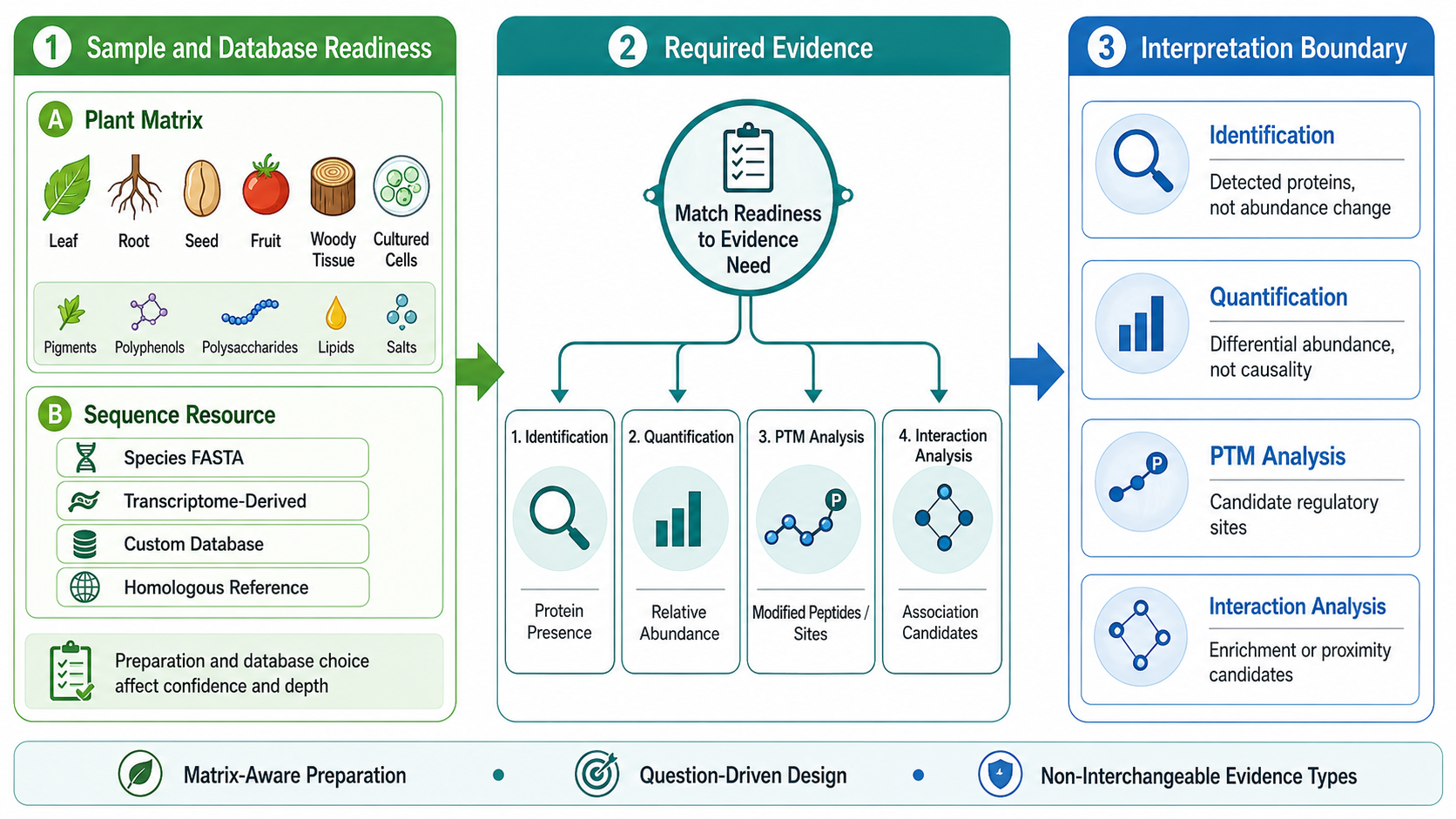
Figure 1. Sample Readiness and Evidence Selection in Plant Proteomics
Resolve Protein Identity and Abundance
1. Identify Proteins in Plant Samples
(1) Characterize Complex Samples and Enriched Fractions
LC-MS/MS protein identification can characterize proteins in plant tissues, cultured cells, organelle-enriched preparations, membrane fractions, purified complexes, and other plant-derived samples. The output is commonly a peptide-supported protein list accompanied by database annotations and confidence-related evidence. The result describes sample composition, but the detected proteins may include major components, low-level background proteins, and proteins shared among related sequence groups.
(2) Analyze Gel Bands and Unknown Proteins
Excised gel bands can be digested and analyzed to obtain peptide evidence for proteins present in the selected region. A visually discrete band may contain several co-migrating proteins, and closely related proteins may share peptides. Unknown-protein identification therefore depends on sequence coverage, unique peptide evidence, database suitability, and sample complexity. Conventional database searching cannot confidently assign a protein whose sequence is absent from the selected database.
2. Quantify Proteins across Biological Conditions
(1) Compare Label-Free and DIA Configurations
Label-free quantification refers to measurement without stable-isotope or isobaric labeling, whereas DDA and DIA describe acquisition modes. In practice, conventional DDA-based label-free analysis is often used for flexible or exploratory sample sets, although independent LC-MS/MS runs can introduce missing values and run-to-run variation. DIA is also usually label-free and records fragment-ion data systematically across precursor ranges, often supporting more consistent cross-sample measurement when preparation and acquisition remain stable.
(2) Use TMT for Planned Multiplexed Comparisons
Tandem mass tag analysis uses isobaric labels to encode samples before they are combined for LC-MS/MS. This configuration is suited to predefined groups that can be prepared and allocated within a coordinated multiplex. Channel balance, shared references, cross-batch structure, co-isolation interference, and ratio compression should be considered during design and interpretation. TMT, DIA, and DDA-based label-free analysis are practical workflow options rather than methods belonging to one identical classification dimension.
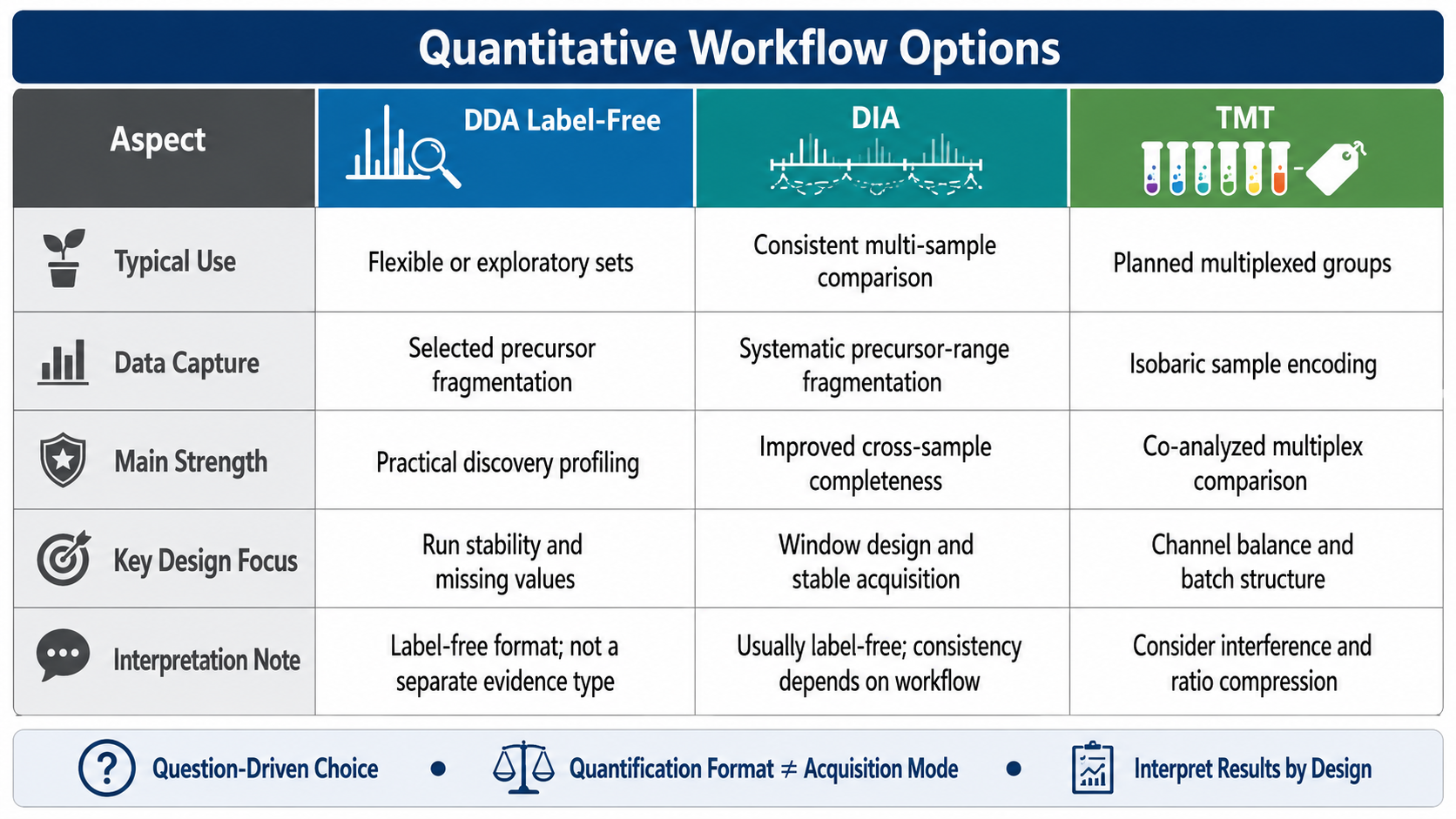
Figure 2. Quantitative Workflow Options for Plant Proteomics
Add Regulatory and Association Evidence
1. Analyze Post-Translational Modifications
(1) Detect and Localize Modified Peptides
PTM-focused plant proteomics examines modified peptides and site-level evidence associated with signaling, development, stress responses, and metabolism. Phosphorylation, acetylation, ubiquitin-remnant modification, glycosylation, and other supported modifications may require selective enrichment and modification-specific data processing. Site localization confidence is important because a modified plant peptide may contain multiple candidate residues.
(2) Interpret PTM Changes with Plant Protein Abundance
A change in modified-peptide signal can reflect altered modification occupancy, altered abundance of the corresponding plant protein, or both. PTM results are therefore often interpreted alongside total-proteome measurements from the same plant samples. Differential sites are candidate regulatory events rather than confirmed drivers of plant growth, development, stress responses, or other phenotypes. Their functions require biochemical, genetic, structural, or other site-specific validation.
2. Analyze Plant Protein Associations
(1) Profile Bait-, Complex-, or Proximity-Associated Plant Proteins
Interaction-focused proteomics can examine plant proteins recovered with a bait, purified complex, membrane-associated assembly, or spatial labeling system. Approaches such as IP-MS, Co-IP-MS, AP-MS, pull-down-MS, proximity labeling, and crosslinking-assisted workflows differ in capture principle and in the interaction states they preserve in plant cells or tissues. Method selection should reflect the target protein, expected interaction stability, plant cellular context, and available controls.
(2) Treat Plant Interactors as Prioritized Candidates
Background binding, abundant plant proteins, nonspecific recovery, and sample handling can influence interaction datasets. Negative controls, biological replication, and condition-dependent enrichment support candidate prioritization. A plant protein enriched with a bait or detected within a proximity-labeling experiment is an association or proximity candidate, not automatically a direct physical interactor or a validated functional partner.
Build the Data Interpretation Layer
1. Evaluate Technical and Quantitative Quality
(1) Review Identification and Quantification Metrics
Peptide and protein evidence, quantitative completeness, sample correlation, missing-value patterns, clustering, principal component analysis, and batch structure can be used to assess dataset quality. These analyses help identify technical inconsistency, outliers, or unexpected sample relationships. They do not by themselves explain the biological cause of separation among groups.
(2) Define Differential Results Carefully
Differential analysis depends on the experimental groups, biological replication, normalization strategy, variance structure, missing data, and statistical criteria. Differential proteins or modified sites represent comparative findings under the selected analysis framework. They can support candidate screening and pathway interpretation, but they should not be described as confirmed regulators or causal mechanisms without additional evidence.
2. Add Functional and Network Context
(1) Apply Annotation and Enrichment Analysis
Optional data analysis may include Gene Ontology annotation, pathway analysis, domain analysis, functional classification, predicted subcellular localization, protein-protein interaction networks, and enrichment analysis. The availability and reliability of these outputs depend on the plant species, database quality, annotation coverage, and the composition of the input list. Non-model species may yield less complete functional context than well-annotated reference plants.
(2) Integrate Evidence for Candidate Prioritization
Protein identities, abundance changes, PTM sites, and association candidates provide complementary evidence when they address the same biological question. Agreement across multiple layers can increase confidence in candidate prioritization, while disagreement may indicate regulation at the level of abundance, localization, modification, or complex formation. Mechanistic conclusions still require experiments that directly test causality, site function, or physical interaction.
Plant proteomics analysis should align the sample matrix, sequence resources, experimental design, and required evidence type. MtoZ Biolabs supports project evaluation for plant protein identification, label-free, DIA, and TMT quantitative proteomics, supported PTM analysis, plant protein interaction analysis, and project-relevant data analysis based on the submitted sample information and research objectives. Submit your inquiry below for project evaluation.
MtoZ Biolabs, an integrated chromatography and mass spectrometry (MS) services provider.
Related Services
How to order?




