






Plant Proteins Disulfide Bond Analysis Service
MtoZ Biolabs provides Plant Proteins Disulfide Bond Analysis Service to support structural and functional characterization of plant proteins. This service focuses on identifying disulfide bond linkages formed between cysteine residues, enabling researchers to assess protein folding, stability, and structure-related biological activity in plant systems.
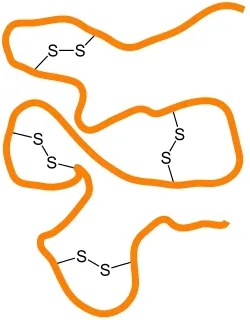
Figure 1. Disulfide Bonds in Proteins
Overview
Disulfide bonds are covalent linkages formed between cysteine residues within or between protein chains and play a critical role in maintaining protein structural integrity. In plant proteins, disulfide bonds are commonly associated with secreted proteins, enzymes, signaling components, and stress-related factors, where correct folding and redox-dependent regulation are essential for biological function.
Unlike sequence-based analysis, disulfide bond analysis provides direct structural evidence by resolving cysteine connectivity. Mapping disulfide bond positions helps clarify protein conformation, supports interpretation of functional differences between protein variants, and enables evaluation of structural changes under different physiological or experimental conditions.
Plant Proteins Disulfide Bond Analysis Service at MtoZ Biolabs
✅ Disulfide Bond Connectivity Identification
Identification of intra- and inter-molecular disulfide bonds to determine cysteine pairing and linkage patterns in plant proteins.
✅ Structural Confirmation of Plant Proteins
Verification of correct disulfide bond formation in native or recombinant plant proteins to support structural and functional studies.
✅ Comparative Disulfide Bond Analysis
Assessment of disulfide bond differences across tissues, developmental stages, genotypes, or treatment conditions to investigate redox-related regulation.
✅ Disulfide Bond Analysis in Complex Plant Samples
Detection of disulfide-linked peptides directly from plant tissue-derived protein mixtures without the need for prior protein purification.
Why Choose MtoZ Biolabs?
· Compatibility with Plant Sample Complexity: Proven experience handling plant matrices rich in polysaccharides and secondary metabolites.
· High Confidence Structural Assignment: MS-based evidence supporting accurate disulfide bond mapping with minimized false positives.
· Flexible Project Scope: Support for individual protein analysis as well as broader exploratory studies.
· Clear and Practical Deliverables: Results provided in formats suitable for structural interpretation and downstream research.
· One-Time-Charge: Our pricing is transparent, no hidden fees or additional costs.
Applications of Plant Proteins Disulfide Bond Analysis Service
· Structural characterization of plant enzymes and secreted proteins
· Verification of recombinant plant protein folding and stability
· Redox regulation and oxidative stress studies
· Investigation of disulfide bond-dependent functional differences
· Support for plant development and signaling research
What Could be Included in the Report?
1. Comprehensive Experimental Details
2. Materials, Instruments, and Methods
3. Total Ion Chromatogram & Quality Control Assessment
4. Data Analysis, Preprocessing, and Estimation
5. Bioinformatics Analysis
6. Raw Data Files
Start Your Project with MtoZ Biolabs
MtoZ Biolabs delivers reliable Plant Proteins Disulfide Bond Analysis Service to support structural and functional studies of plant proteins. Whether your project involves individual proteins or complex plant samples, our Plant Proteins Disulfide Bond Analysis Service provides accurate structural insights aligned with research and development needs. Contact us to discuss your project objectives and sample strategy.
FAQ
Q1: What types of samples are suitable?
This service supports purified plant proteins, recombinant proteins, and plant tissue samples such as leaves, roots, stems, and seeds. Fresh-frozen tissues and prepared protein extracts can be accepted following project assessment.
Q2: How should I prepare my samples?
Plant tissue samples should be collected rapidly and shipped on dry ice or stored at -80°C to preserve native disulfide bonds. Reducing agents should be avoided during sample handling. Protein samples can be prepared using standard lysis buffers without reductants.
For more information, please refer to Sample Submission Guidelines for Proteomics. If you are unsure about sample preparation, our team is available for consultation and can guide you through the process to ensure optimal results.
Q3: What is the service general workflow?
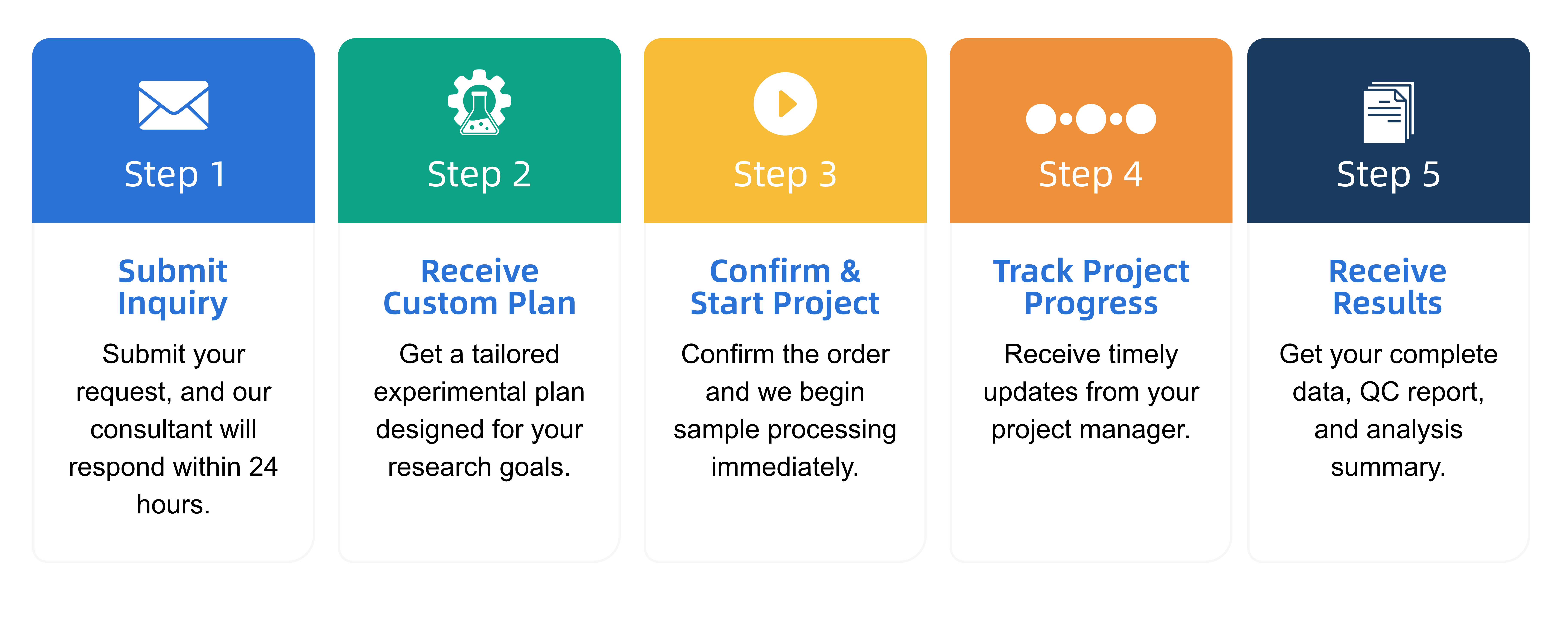
How to order?




