






PhIP-Seq Pathogen-Related Antibody Profiling Service: Support for Infection-Related Antibody Response Analysis
Infection-related antibody response studies are often initiated after the cohort structure has been defined but before the relevant antigenic regions are known. Samples may be grouped by exposure status, infection stage, sampling time point, or pathogen-associated background. At this stage, the analytical objective extends beyond determining whether antibody reactivity is detectable. The study must support sequence-resolved comparison across groups, distinguish reproducible regional patterns from isolated peptide signals, and generate interpretable candidates for subsequent investigation.
Phage Immunoprecipitation Sequencing (PhIP-Seq) is well suited to this research-use setting. In pathogen-related antibody profiling, broad peptide-level screening is combined with comparative interpretation to determine whether infection-related antibody reactivity is concentrated within specific sequence regions, distributed across several related peptides, or associated with particular candidate antigen targets. For studies centered on comparative antibody responses rather than single-target confirmation, this approach provides a structured basis for candidate-region assessment and downstream validation planning.
Project Fit in Infection-Related Antibody Response Analysis
1. Cohort-Based Studies with Unresolved Antigen Space
(1) Comparative designs may precede antigen definition
Many infection-related studies begin with a defined biological comparison but without a sufficiently resolved antigen shortlist. This situation is common in exposure-linked cohorts, longitudinal sample collections, and studies stratified by infection stage. Under these conditions, a target-first workflow may restrict the analytical scope before the relevant antibody-reactive regions have been identified. Broader profiling is more appropriate when the aim is to determine which pathogen-related sequence regions differ across groups before targeted follow-up begins.
(2) Candidate discovery may be driven by sequence regions
Pathogen-related antibody responses are not always represented by a single dominant antigen. Several sequence regions may contribute to the same group-level pattern, and a candidate antigen target may become apparent only after multiple peptide-level signals are interpreted together. Region-level discovery is therefore particularly relevant when the most informative antigen target has not yet been established.
2. Studies That Require Comparative Interpretation
(1) Group-level patterns provide the primary analytical context
In infection-related research, the scientific question is frequently comparative by design. Investigators may need to determine how antibody recognition differs across exposure conditions, infection stages, sampling periods, or pathogen-associated cohorts. The analytical emphasis is therefore placed on the structured interpretation of group-level response patterns rather than on isolated measurements from individual samples.
(2) Discovery-stage studies require candidate reduction before confirmation
Some projects already indicate variation in antibody reactivity but lack a defensible basis for selecting regions for further analysis. In such cases, PhIP-Seq can help reduce a broad set of reactive regions to a smaller and more interpretable candidate set. The immediate objective is candidate selection rather than confirmation, allowing subsequent experiments to focus on regions with stronger comparative support.
Sample Compatibility and Comparative Study Design
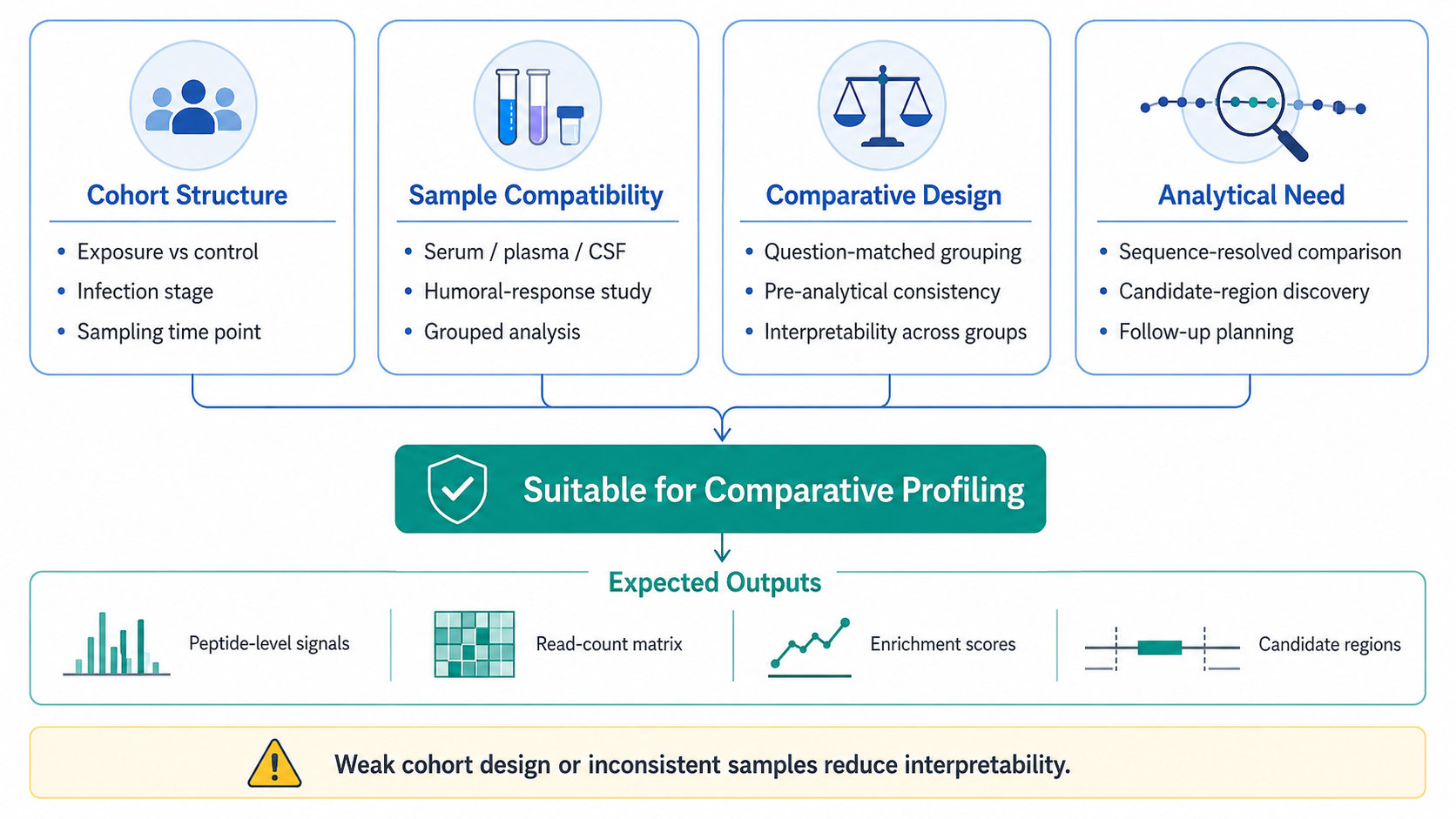
Figure 1. Study-fit framework for comparative infection-related antibody profiling by PhIP-Seq
1. Sample Types Appropriate for Pathogen-Related Profiling
(1) Biofluid samples support humoral-response comparisons
This service is most relevant to studies in which humoral immune recognition is the primary analytical focus. Serum, plasma, and cerebrospinal fluid may be used to compare antibody-reactivity patterns across predefined groups. Sample suitability depends on whether the specimens can support interpretable cohort-level profiling, not merely on whether individual antibody signals can be detected.
(2) Pre-analytical consistency affects interpretability
Sample type alone does not establish comparability. Collection context, storage history, processing procedures, and handling consistency all influence the reliability of group-level interpretation. Technically successful profiling may still yield biologically ambiguous results when comparison groups differ substantially in pre-analytical background.
2. Group Structure Should Match the Study Objective
(1) Exposure-linked and stage-linked studies require distinct interpretation
A pre-exposure versus post-exposure comparison addresses a different biological question from an acute-stage versus recovery-stage study. Neither design should be interpreted in the same way as a comparison across distinct pathogen-associated backgrounds. The analytical framework is most informative when the grouping strategy is aligned with the intended biological interpretation from the beginning of the study.
(2) The suitability of the comparative design should be evaluated before data generation
Meaningful sequence-region comparison depends on whether the planned cohort structure can support interpretable differences. When multiple biological and technical variables are combined within the same grouping strategy, broad changes in antibody reactivity may become difficult to attribute or prioritize. Comparative design assessment is therefore an integral component of project evaluation.
What This Service Can Deliver for Pathogen-Related Antibody Profiling
1. Sequence-Resolved Outputs for Comparative Review
(1) Peptide-level results support region-focused interpretation
PhIP-Seq enables antibody recognition to be examined at peptide resolution. This makes it possible to determine whether reactivity is localized to specific sequence regions, repeated across related peptides, or dispersed across unrelated parts of the antigen space. In discovery-stage research, this resolution helps distinguish isolated observations from candidate regions with stronger comparative relevance.
(2) Read-count matrices support cross-sample assessment
A structured read-count matrix allows investigators to examine the distribution of peptide-level reactivity across individual samples and study groups. This is particularly useful when the analysis must determine whether a region-level difference recurs across related samples or is restricted to isolated cases.
2. Enrichment-Based Interpretation and Protein-Level Summaries
(1) Enrichment scores support candidate-region assessment
The presence of a detectable signal alone is usually insufficient for infection-related antibody response analysis. Enrichment-score analysis provides a comparative basis for distinguishing broadly detectable peptides from regions with stronger group-level relevance. This becomes particularly important when multiple reactive regions are identified but only a limited number can be advanced into follow-up studies.
(2) Protein-level summaries organize peptide evidence
Although the primary analytical unit is the peptide, downstream interpretation may benefit from protein-level summaries. When several reactive peptides map to the same pathogen-related protein, the results can be organized into clearer candidate antigen targets. Protein-level summaries do not replace peptide-level evidence, but they help consolidate distributed signals and support more focused review.
How Candidate Regions Are Interpreted for Follow-Up Work
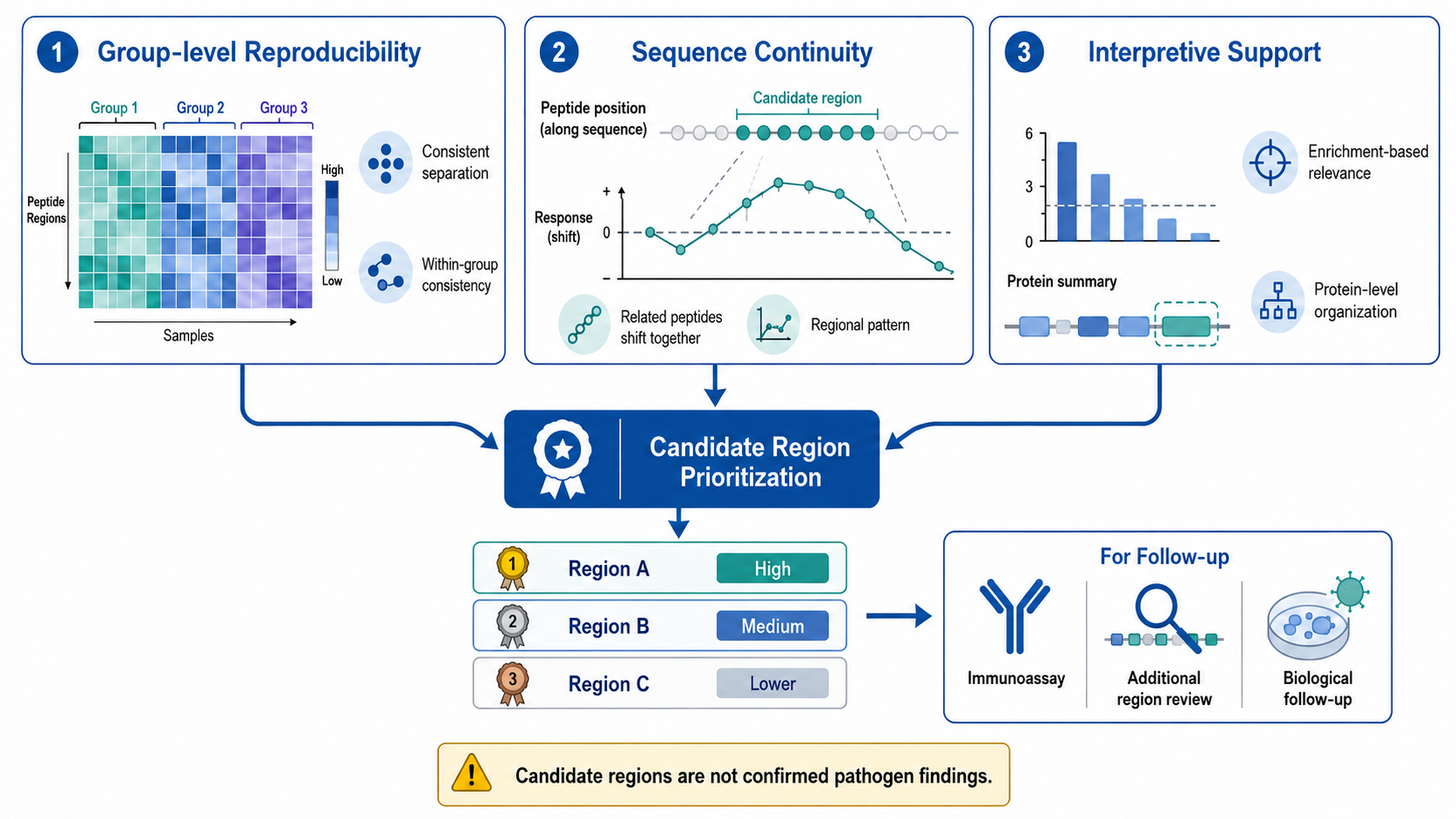
Figure 2. Candidate-region prioritization for follow-up work in infection-related antibody response studies.
1. Comparative Relevance Should Be Established before Biological Interpretation
(1) Group-level reproducibility is more informative than isolated intensity
A strongly reactive peptide in a single sample may warrant attention, but it is rarely sufficient by itself to justify downstream prioritization. Sequence regions that show greater consistency across a defined group comparison generally have stronger analytical value. This distinction is important because broad immune exposure can generate numerous detectable signals with unequal relevance to the study question.
(2) Signal continuity can strengthen candidate-region selection
When related or neighboring peptides change in a coordinated manner across groups, the resulting pattern is generally more informative than a single isolated signal. Sequence continuity provides additional support for selecting a candidate region, particularly when the study aims to identify interpretable pathogen-related antibody-reactivity patterns.
2. Candidate Findings Must Remain within a Research-Use Boundary
(1) Candidate regions are not confirmed pathogen findings
Even when specific sequence regions show clear group-level separation, they remain candidate findings until further evaluation has been completed. Research-use pathogen-related antibody profiling must preserve the distinction between candidate-region discovery and confirmed biological conclusions.
(2) Linear-sequence evidence has a defined interpretation scope
PhIP-Seq is particularly suited to sequence-resolved analysis of linear peptide regions. This makes it valuable for candidate-region discovery, but interpretation should remain consistent with that analytical scope. Results should not be extended to structural epitopes or non-peptide antigenic determinants without additional supporting evidence.
How This Service Supports Downstream Study Progression
1. Candidate Reduction before Orthogonal Validation
(1) Follow-up studies require a focused candidate set
Comparative profiling may identify multiple pathogen-related sequence regions, but subsequent studies rarely evaluate every signal simultaneously. A more practical approach is to reduce the initial region set to a smaller group of candidates supported by group-level consistency, sequence continuity, and relevance to the study design.
(2) Comparative outputs should inform experimental decisions
Downstream validation is more efficient when the profiling stage has already identified which regions are most relevant to the biological comparison. Structured comparative results can guide the selection of targets for immunoassay-based confirmation, additional sequence-region assessment, or broader biological investigation.
Supporting this transition makes the profiling results more suitable for downstream experimental design and helps prevent validation resources from being distributed across poorly supported candidates.
2. Appropriate Use in Research-Use Antibody Studies
(1) Suitable for discovery-stage and comparative workflows
This service is appropriate for studies that require pathogen-related antibody profiling across defined cohorts, candidate-region discovery, and structured interpretation before targeted follow-up. It is intended for research-use infection-related antibody response analysis rather than clinical diagnostic application.
(2) Focused on interpretable study progression
The value of this workflow lies in producing comparative outputs that clarify which pathogen-related sequence regions, peptide clusters, or candidate antigen targets should proceed to further investigation. It is particularly relevant to discovery-stage and comparative infection-related antibody studies in which the antibody-reactive regions have not yet been fully resolved.
For projects requiring pathogen-related antibody profiling across defined study groups, sequence-resolved comparison, read-count matrix assessment, enrichment-score analysis, protein-level summaries, and downstream validation planning, MtoZ Biolabs provides PhIP-Seq services for infection-related antibody response analysis. Contact MtoZ Biolabs to discuss project feasibility, study-specific service planning, and quotation for broader antibody profiling before targeted follow-up.
How to order?




