






PhIP-Seq Biomarker Discovery Service for Antibody Profiling
Antibody biomarker discovery often reaches a practical bottleneck before validation begins. Case-control studies may generate many candidate signals, yet still provide no clear basis for deciding which features should move forward. A narrow target-first strategy can miss relevant disease-associated antibody features, while an overly broad screen can produce a long but weakly prioritized candidate list. At this stage, the priority is not biomarker confirmation, but a structured way to compare antibody features across groups, rank candidates, and define a realistic validation path.
Phage Immunoprecipitation Sequencing (PhIP-Seq) is well suited to this research-use setting. In antibody biomarker discovery, it supports broad profiling of antibody reactivity, peptide-level feature identification, protein-level interpretation, and candidate prioritization before orthogonal confirmation. For studies that require case-control comparison, antibody feature screening, and downstream validation planning, PhIP-Seq provides a practical route from exploratory profiling to a focused candidate set.
Project Fit in Antibody Biomarker Discovery
1. Studies with a Broad Candidate Space
(1) Defined Comparison Framework without a Confident Shortlist
PhIP-Seq is particularly useful when a study already has a defined comparison framework, such as disease versus control, early versus late stage, or responder versus non-responder, but still lacks a confident biomarker shortlist. In this setting, the goal is not to confirm a single predefined analyte, but to determine which antibody features differ across groups and which candidates are more suitable for downstream investigation.
(2) Broad Candidate Space at the Discovery Stage
In early biomarker discovery, the candidate space may remain too broad for direct validation. A profiling strategy is more informative at this stage because it helps identify which antibody features are retained, which are deprioritized, and which patterns are more likely to support follow-up work.
2. Studies That Need Feature Prioritization Before Validation
(1) Limited Value From Narrow Target-First Screening
Some biomarker studies begin with a few plausible targets but do not generate sufficiently strong or interpretable differences. In such cases, repeating narrow validation may add little value if the initial candidate set was too limited to capture the relevant antibody features.
(2) Need to Distinguish Isolated Signals From Antibody Signatures
Other studies detect immune variation but cannot determine whether the relevant information lies in a small number of targets, across several peptide regions, or within a broader multi-feature antibody signature. PhIP-Seq is useful here because it supports candidate comparison before independent validation begins.
Sample Compatibility and Study Readiness
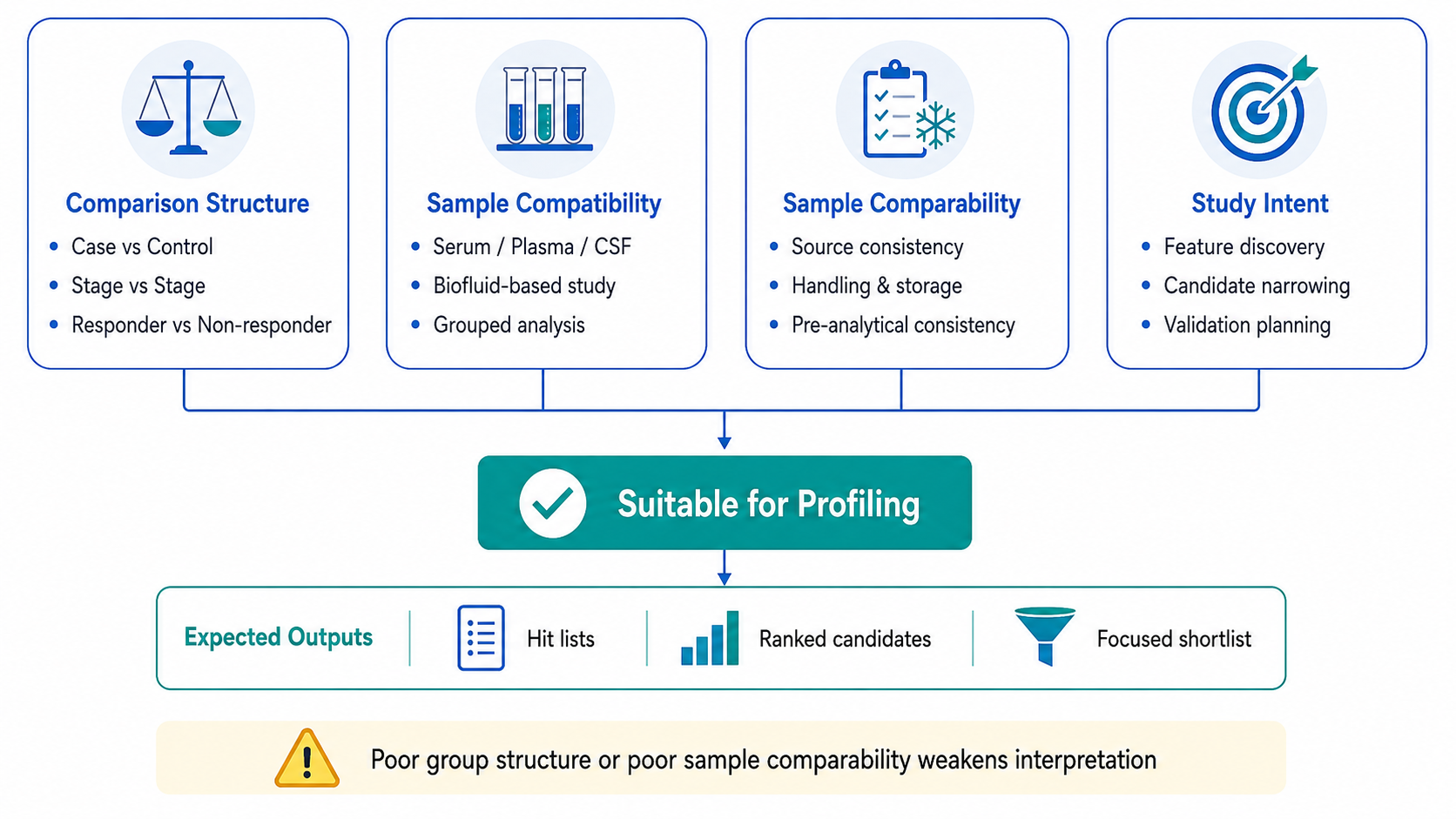
Figure 1. Study readiness assessment for PhIP-Seq antibody biomarker profiling
1. Compatible Biofluid Samples
(1) Suitable Sample Types
PhIP-Seq biomarker discovery is best matched to studies based on compatible biofluid samples, including serum, plasma, cerebrospinal fluid, and other suitable fluids assessed within the project design. The scientific value of antibody profiling depends not only on signal detection, but also on whether case and control samples are biologically comparable and technically suitable for grouped analysis.
(2) Sample Comparability across Groups
Sample compatibility is not defined only by sample type. Pre-analytical consistency also matters. Group-level interpretation becomes weaker when case and control samples differ substantially in source, handling, storage history, or processing conditions. For biomarker-oriented projects, sample comparability should therefore be treated as part of the study design rather than a secondary technical detail.
2. Group Structure Before Profiling
(1) Alignment with the Biological Question
A useful antibody biomarker discovery project requires a group structure that matches the biological question. A disease-versus-control study, a progression study, and a treatment-response study do not ask the same question and should not be profiled or interpreted in the same way. Before profiling begins, it is important to define whether the main objective is broad feature discovery, candidate narrowing, or preparation for independent validation.
(2) Library Scope and Validation Intent
A biomarker discovery study also benefits from clarity about library scope. If the initial screen is too narrow, relevant features may never appear. If it is too broad without a plan for interpretation, the output may be difficult to prioritize. Equally important is knowing what kind of validation is expected next. A project designed to support orthogonal confirmation of a few high-priority candidates should not be structured the same way as a project intended to explore broad antibody feature space before narrowing.
What the Profiling Output Can Support
1. Peptide-Level and Protein-Level Outputs
(1) Peptide-Level Hit Lists
One of the most useful outcomes in this setting is the generation of peptide-level hit lists. These do not serve as confirmed biomarkers. Their value lies in showing which peptide features recur, which differences appear across groups, and which signals are strong enough to enter candidate comparison.
(2) Protein-Level Interpretation
Peptide-level results become more useful when they can be consolidated into protein-level interpretation. Biomarker studies rarely proceed by validating dozens of unrelated peptide hits one by one. Researchers usually need to know whether multiple signals converge on the same protein, the same protein family, or the same biologically coherent candidate set. Protein-level interpretation is therefore essential for narrowing the candidate set and preparing the next validation step.
2. Enrichment-Based Prioritization
(1) Ranking Beyond Raw Signal Presence
Signal detection alone is not sufficient for biomarker discovery. Candidate prioritization requires a structured view of relative signal strength and group-level separation. Enrichment scores are particularly useful because they help rank peptide and protein candidates in a way that is more actionable than raw signal presence alone.
(2) Building a Shortlist for Follow-Up
In practice, enrichment-based ranking supports the transition from a large pool of detectable features to a smaller group of more defensible biomarker candidates. This makes the output more useful for downstream comparison and validation planning.
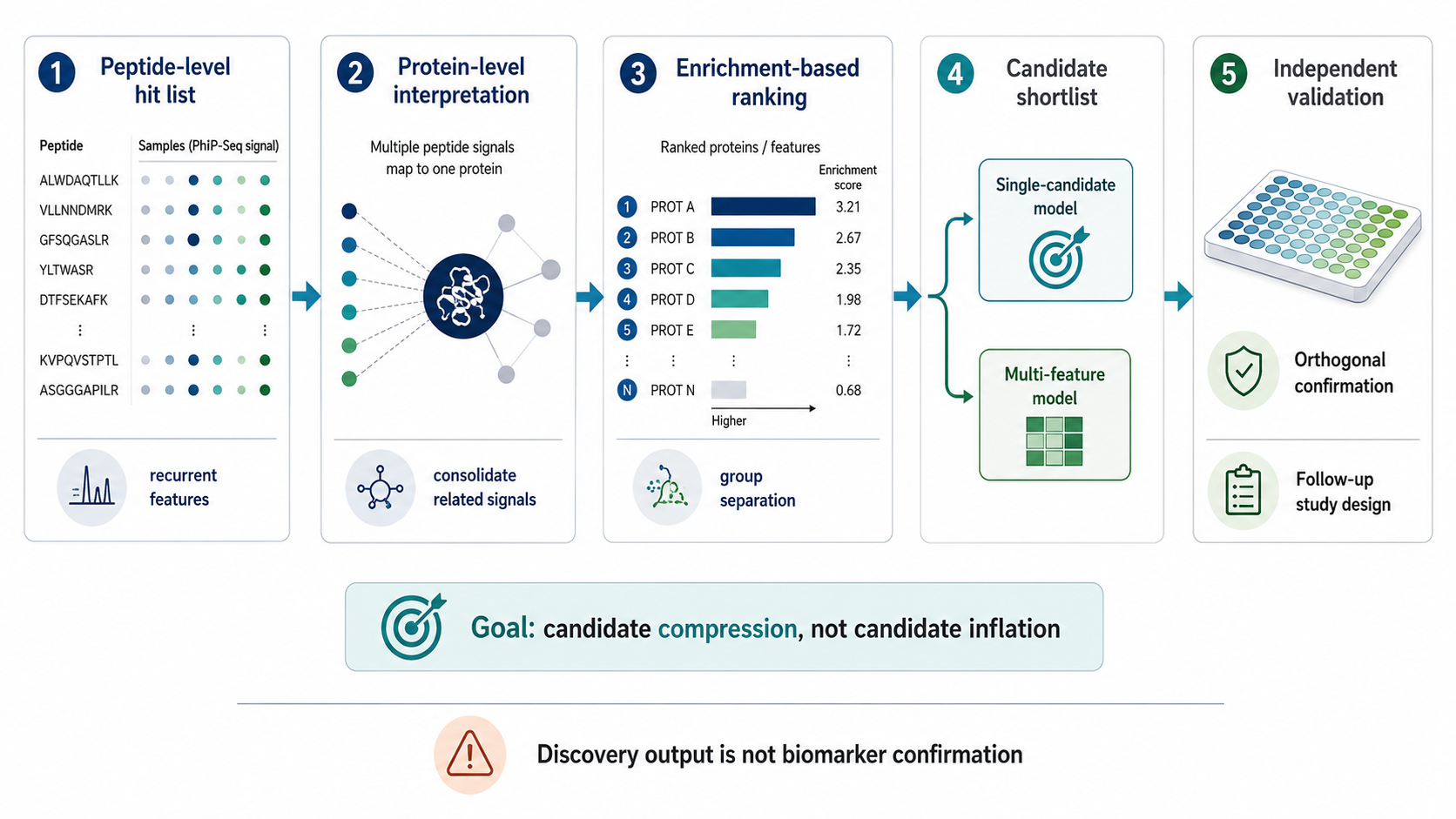
Figure 2. Candidate prioritization from PhIP-Seq profiling to independent validation
How Candidate Signals Should Be Compared
1. Group-Level Trends over Isolated Extremes
(1) Reproducible Separation across Groups
In antibody biomarker discovery, a high signal in a single sample is rarely enough to justify follow-up. More informative candidates usually show reproducible separation between groups. Features that are supported by consistent case-control trends are generally stronger candidates than isolated outliers.
(2) Continuity across Related Features
Candidate comparison should also consider whether related peptide features move together. Several associated signals pointing in the same direction often provide stronger support than one isolated event. This type of continuity improves confidence that the candidate reflects a broader antibody reactivity pattern rather than a single disconnected observation.
2. Candidate Compression Rather Than Candidate Inflation
(1) Reducing Uncertainty
A strong discovery workflow should reduce uncertainty, not increase it. The purpose of comparing candidate signals is not to preserve the longest possible hit list. It is to narrow the candidate set into a smaller, more interpretable group that can be evaluated in independent samples or with orthogonal assays.
(2) Improving Actionability
The comparison step becomes valuable when it transforms a broad set of candidate signals into a prioritized group of features that can support a practical downstream study design.
How PhIP-Seq Supports Independent Validation Planning
1. Candidate Ranking Before Orthogonal Confirmation
(1) Structured Prioritization
Independent validation is more efficient when it starts with a ranked candidate set rather than an undifferentiated list of signals. PhIP-Seq helps establish that ranking by supporting peptide-level feature comparison, enrichment-based prioritization, and protein-level consolidation. This is especially important in studies where validation resources are limited and candidate selection must be justified clearly.
(2) Single-Candidate and Multi-Feature Models
Not all biomarker studies move forward in the same way. Some are best advanced by validating one high-priority candidate. Others benefit more from evaluating a small combination of antibody features that together provide stronger group separation than any single feature alone. A useful antibody profiling workflow should support both possibilities at the candidate selection stage.
2. Discovery and Confirmation as Separate Stages
(1) Discovery Outputs Are Not Confirmation
PhIP-Seq is well positioned for research-use biomarker discovery, candidate feature screening, and prioritization. It should not be presented as a diagnostic endpoint or as a standalone confirmation assay. Candidate hit lists, enrichment scores, and ranked antibody features are valuable because they guide the next step.
(2) Independent Validation Remains Essential
Independent validation remains essential before any candidate biomarker can be interpreted as a confirmed finding. A sound project plan treats profiling and validation as linked stages of the same study, not as interchangeable endpoints.
Appropriate Use in Antibody Biomarker Discovery
1. Studies Best Suited to This Workflow
(1) Defined Comparison Structures
This workflow is especially appropriate for projects with a defined comparison structure, compatible biofluid samples, and a need to identify or prioritize disease-associated antibody features before validation.
(2) Projects Requiring Candidate Narrowing
It is also useful when prior screening has produced too many candidates and the next step requires clearer ranking rather than broader discovery.
2. Practical Value of the Service
(1) Actionable Outputs
In research-use biomarker discovery, the practical value of PhIP-Seq lies in generating actionable outputs: peptide-level hit lists, enrichment-based candidate ranking, protein-level interpretation, and a more focused shortlist for downstream work.
(2) Support for Project Progression
These outputs are most useful when the goal is to move from broad antibody profiling toward a rational and testable validation plan.
For studies that require case-control antibody profiling, candidate feature screening, hit list generation, enrichment-based ranking, and independent validation planning, MtoZ Biolabs provides PhIP-Seq biomarker discovery services for antibody profiling. If your project requires biomarker candidate prioritization from compatible biofluid samples, contact MtoZ Biolabs for project evaluation and service support.
How to order?




