






Peptide Mapping vs Peptide Sequencing: Key Differences Explained
Introduction
Primary structure analysis often brings two related terms into the same discussion: peptide mapping and peptide sequencing. Both involve peptides and mass spectrometry, yet they answer different analytical questions. A biologics team may request peptide sequencing when what it actually needs is a coverage map against a known antibody sequence. A proteomics group may discuss peptide mapping when the real challenge is assigning unmatched spectra from an incomplete database. The confusion is understandable because both workflows use LC-MS/MS and both produce peptide-level evidence.
Peptide mapping compares digested peptide fragments to a known reference sequence to confirm identity, localize modifications, and document coverage across a defined protein. Peptide sequencing determines or confirms the amino acid order of a peptide when that sequence is unknown, unverified, or not represented in the available database. Choosing the wrong workflow can waste sample, delay reporting, and produce data that does not support the intended QC, comparability, or discovery decision.
Understanding the key differences helps teams define the right project scope before digestion, acquisition, and data review begin.
When Researchers Compare Peptide Mapping and Peptide Sequencing
This comparison usually appears when a project needs peptide-level primary structure evidence but the exact workflow has not been defined.
Common scenarios include biologics characterization of a mAb or fusion protein with a known construct sequence, where the goal is coverage confirmation rather than discovery of an unknown sequence; comparability review after a process change, where peptide-level differences between reference and test lots must be documented against an expected sequence; investigation of an unmatched proteomics spectrum, where database searching fails and de novo sequence assignment may be required; synthetic peptide or impurity confirmation, where the ordered or suspected sequence must be verified directly; and regulatory or QC documentation planning, where the deliverable format depends on whether a reference protein sequence already exists.
In each case, the decisive factor is whether a reliable reference sequence is available and whether the project goal is confirmation against that reference or determination of an unknown sequence.
Four Comparison Dimensions That Matter Most
A useful comparison should focus on the analytical question rather than instrument platform alone.
Reference sequence requirement.
Peptide mapping depends on an accurate reference protein or peptide sequence. Peptide sequencing is most critical when that reference is absent, incomplete, or untrusted.
Primary analytical question.
Mapping asks which observed peptides match the expected sequence and where modifications or differences occur. Sequencing asks what amino acid order explains the measured peptide.
Typical sample context.
Peptide mapping is common in biologics development, lot release support, and comparability studies. Peptide sequencing is common in proteomics discovery, synthetic peptide QC, impurity identification, and poorly annotated systems.
Expected deliverable.
Mapping usually produces coverage maps, PSM tables, and modification summaries tied to a known product. Sequencing usually produces assigned peptide sequences, de novo tags, or Edman readouts for specific peptides.
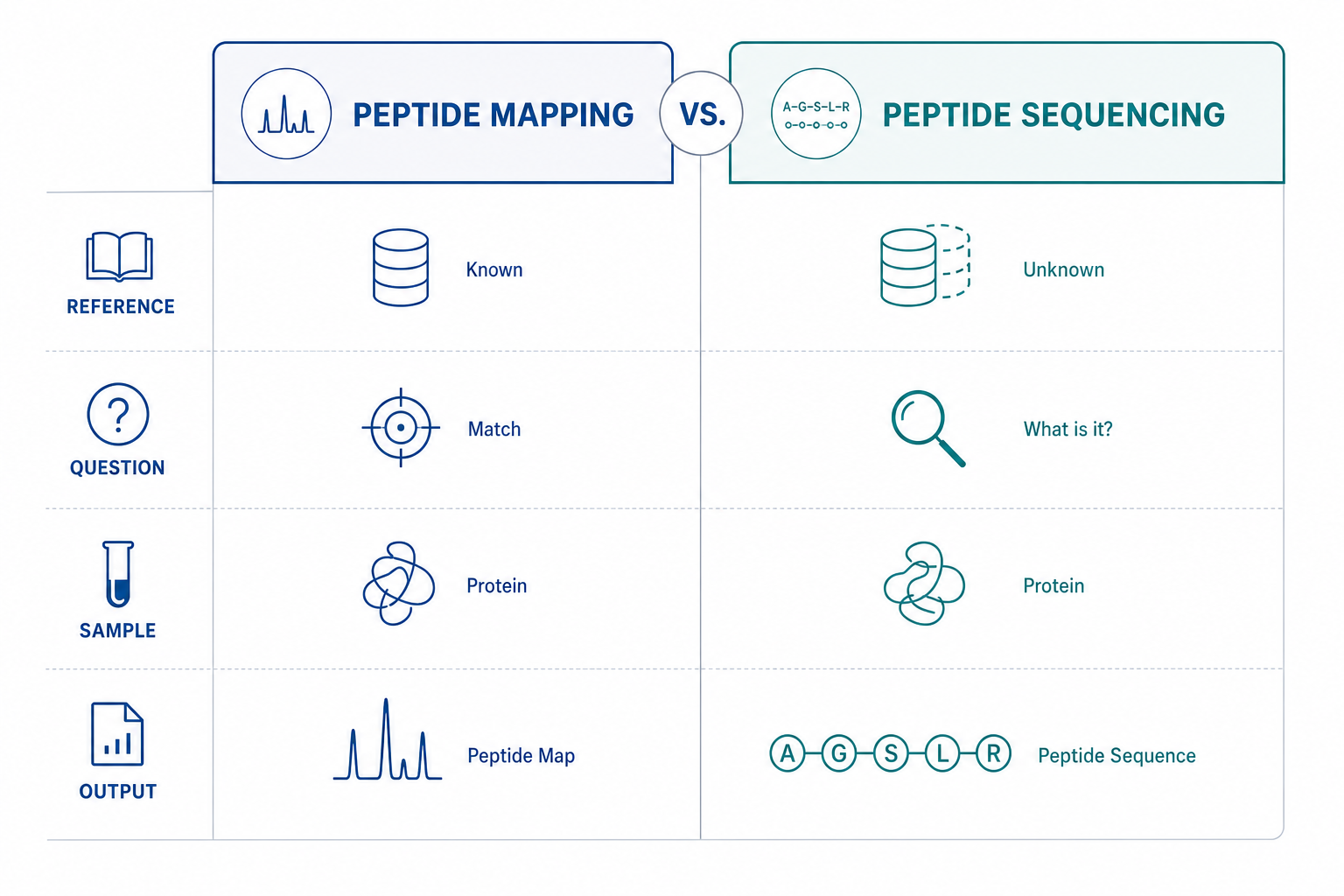
Figure 1. Peptide mapping and peptide sequencing differ most in reference sequence dependence, analytical goal, and reporting format.
How Peptide Mapping Works
Peptide mapping is a bottom-up workflow applied when the expected protein sequence is known. The sample is digested into peptides, separated by LC, and analyzed by MS/MS. Observed peptides are matched to the reference sequence to calculate coverage, confirm identity, localize PTMs, and compare batches when multiple samples are analyzed.
The strength of peptide mapping is efficient confirmation across a defined biologic when digestion design and database setup are matched to the product. The workflow is widely used for mAbs, fusion proteins, and other products with mature sequence information. Its main limitation is dependence on reference accuracy. If the construct file is outdated or the manufactured product contains unexpected variants, mapping alone may not explain all observed peptides.
How Peptide Sequencing Works
Peptide sequencing focuses on determining amino acid order for one or more peptides, often when database searching is insufficient. LC-MS/MS may assign sequences through database matching when a relevant entry exists, or through de novo interpretation of fragment ions when it does not. Edman degradation can provide stepwise N-terminal confirmation for purified short peptides.
The strength of peptide sequencing is residue-level identity when the sequence itself is the unknown. It supports synthetic peptide verification, unmatched spectrum analysis, impurity tracing, and sequence confirmation in poorly annotated systems. Its main limitation is that complex mixtures, weak spectra, and labile modifications can reduce confidence without additional fractionation or expert review.
Related Services
Teams comparing peptide mapping and peptide sequencing often evaluate both service types before finalizing project scope. Relevant options include:
Biopharmaceutical Peptide Mapping Analysis Service
Comprehensive Peptide Mapping Service
De Novo Peptide Sequencing Service
Primary Structure Analysis Service
Researchers unsure which workflow fits their sample and reporting goal can consult MtoZ Biolabs to review reference sequence availability, sample type, and the deliverable format required.
Side-by-Side Comparison
The descriptions above show why the two terms are not interchangeable. The table below summarizes practical differences between peptide mapping and peptide sequencing.
|
Dimension |
Peptide Mapping |
Peptide Sequencing |
|---|---|---|
|
Core question |
Do observed peptides match the expected sequence? |
What is the amino acid sequence of the peptide? |
|
Reference sequence |
Required and central to analysis |
Not always available or not trusted |
|
Typical starting material |
Purified biologic, drug substance, or drug product |
Synthetic peptide, purified fraction, digest, or unmatched spectrum |
|
Main workflow |
Digestion, LC-MS/MS, database search, coverage mapping |
LC-MS/MS assignment, de novo interpretation, or Edman readout |
|
Primary deliverable |
Coverage map and PSM-supported peptide table |
Assigned peptide sequence with spectral support |
|
Best fit |
Biologics identity, PTM review, comparability |
Unknown sequence, synthetic QC, impurity ID, unmatched spectra |
|
PTM localization |
Strong when reference and search parameters are set correctly |
Possible but often narrower in scope |
|
Batch comparison |
Strong for reference versus test lot review |
Less common unless specific peptides are targeted |
|
Main limitation |
Weak when reference is wrong or incomplete |
Weak when spectra are poor or mixtures are complex |
This comparison shows why many projects use one workflow as the primary route and the other as a follow-up when gaps remain.
Which Workflow Fits Different Study Goals
Choose peptide mapping when
a reliable reference sequence is available, the product is a defined biologic such as a mAb or fusion protein, the goal is identity confirmation or comparability documentation, and the report should show coverage across the expected sequence with PTM localization where needed.
Choose peptide sequencing when
the peptide sequence is unknown or must be independently verified, database searching does not assign the spectrum with enough confidence, the sample is a synthetic peptide, purified impurity, or proteomics feature without a trusted reference, or Edman confirmation is needed for a short N-terminal segment.
Use both in sequence when
mapping reveals unexpected peptides or unsupported regions and targeted sequencing is then required to characterize those features; or when a biologics program first confirms major coverage by mapping and later verifies a critical ambiguous peptide by de novo or Edman analysis.
Researchers should define whether the immediate decision depends on confirming a known product or determining an unknown sequence. That distinction usually clarifies the workflow faster than instrument choice alone.
Decision Recommendations by Project Type
|
Project Type |
More Suitable First Workflow |
Why |
|---|---|---|
|
mAb lot release support |
Peptide mapping |
Reference sequence is known and coverage documentation is required |
|
Biosimilar comparability |
Peptide mapping |
Peptide-level comparison against expected sequence is the primary need |
|
Fusion protein PTM review |
Peptide mapping |
Known architecture supports digestion and localization planning |
|
Synthetic peptide QC |
Peptide sequencing |
Ordered sequence must be verified directly |
|
Unmatched proteomics spectrum |
Peptide sequencing |
Database gap often requires de novo or targeted assignment |
|
Biopharmaceutical impurity peak |
Peptide sequencing |
Unknown or suspect sequence must be defined before source tracing |
|
Novel protein from poorly annotated species |
Peptide sequencing |
Reference database may not contain the parent protein |
|
Process drift investigation in known product |
Peptide mapping first |
Coverage comparison usually identifies changed regions faster |
These recommendations are starting points. Sample matrix, reference quality, modification pattern, and reporting urgency can shift the final plan.
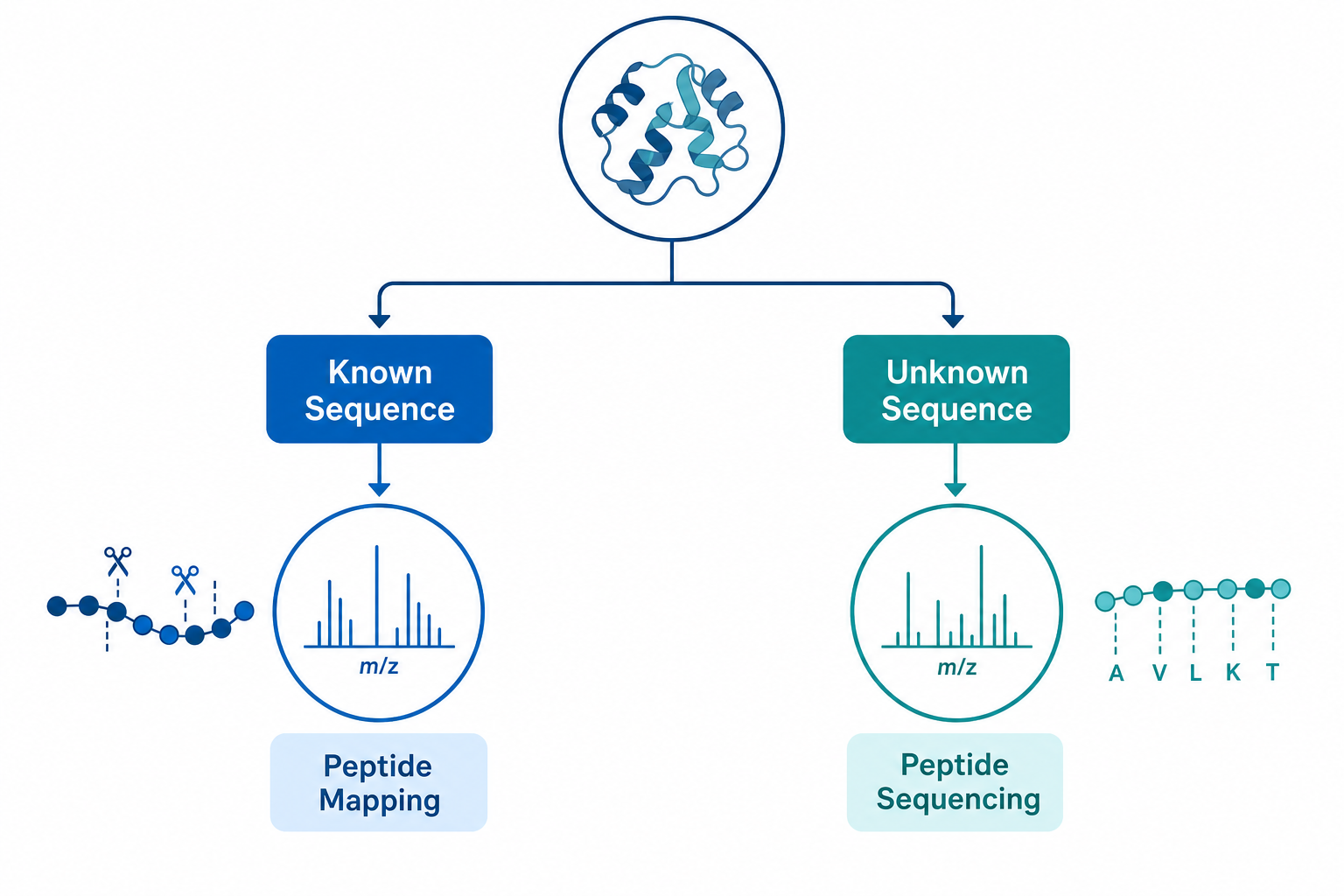
Figure 2. Reference sequence availability and study goal are the main factors in choosing peptide mapping or peptide sequencing.
Combined Use Cases and Practical Limits
Peptide mapping and peptide sequencing are not always mutually exclusive. A common combined pattern starts with mapping to document overall coverage and identify unexpected features, then moves to sequencing for peptides that do not match the reference confidently. Another pattern uses mapping for routine biologics monitoring while sequencing supports investigative work on impurities, clipped forms, or novel proteomics findings.
Mapping is not a substitute for sequencing when the sequence is genuinely unknown. Sequencing is not the most efficient first step for routine comparability on a well-characterized mAb when a qualified coverage map is already the accepted deliverable. The better workflow is the one that produces the evidence format required for the next decision point with the least rework.
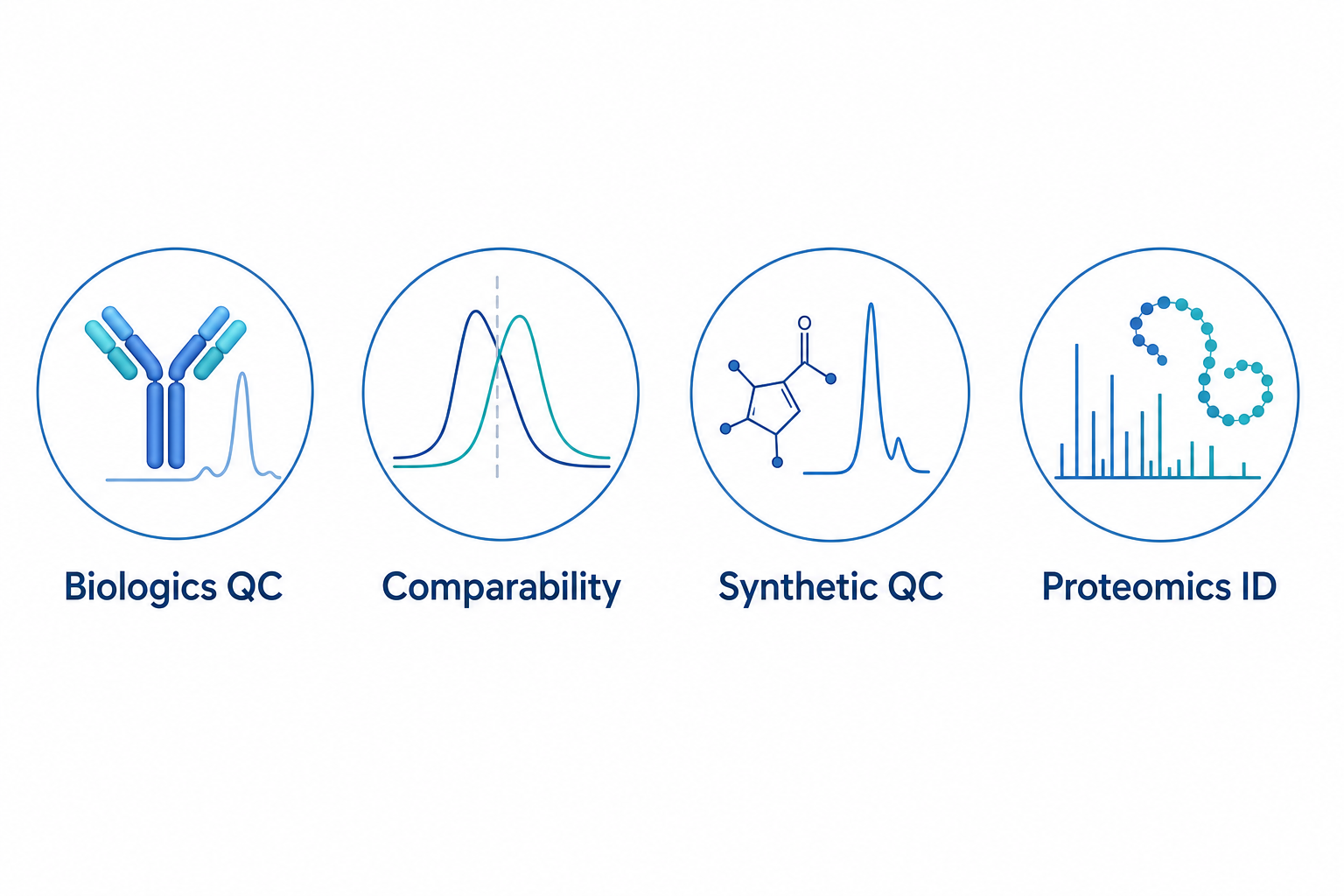
Figure 3. Peptide mapping is often the first route for known biologics, while peptide sequencing is often required for unknown or unmatched peptides.
Frequently Asked Questions
1. What is the main difference between peptide mapping and peptide sequencing?
Peptide mapping matches observed peptides to a known reference sequence. Peptide sequencing determines or confirms the amino acid order of a peptide when the sequence is unknown or not confidently assigned by reference searching alone.
2. Can peptide mapping work without a reference sequence?
Peptide mapping depends on a reference sequence for coverage calculation and PSM assignment. Without a reliable reference, a sequencing-oriented workflow is usually more appropriate.
3. Is peptide sequencing only used for unknown proteins?
No. It is also used for synthetic peptide verification, impurity identification, confirmation of suspect sequences, and re-analysis of unmatched proteomics spectra.
4. Which workflow is better for biologics lot release?
Peptide mapping is usually the better first workflow when the product sequence is known and the deliverable requires documented coverage against that reference.
5. Can one project include both peptide mapping and peptide sequencing?
Yes. Many projects use mapping for broad coverage and then apply sequencing to unresolved, unexpected, or critical peptides that require direct sequence confirmation.
Conclusion
Peptide mapping and peptide sequencing both provide peptide-level primary structure evidence, but they answer different questions. Mapping is reference-driven and optimized for identity confirmation, modification localization, and comparability on known biologics. Sequencing is identity-discovery driven and optimized for unknown peptides, unmatched spectra, synthetic verification, and impurity characterization. The most efficient project plan usually becomes clear once reference sequence availability and reporting goal are defined. Researchers comparing peptide mapping and peptide sequencing for an upcoming study can contact MtoZ Biolabs to review sample type, reference data, and the reporting format required before work begins.
How to order?




