






Micro-area X-ray Diffraction (Micro-XRD) Analytical Service
Micro-area X-ray diffraction (Micro-XRD) is a precise technique used for crystallographic studies of micro-regions. By focusing an X-ray beam on a small area of the sample for crystal structure and composition analysis, it can obtain information such as lattice constants, interplanar spacing, phase composition, and crystal defects. Compared with conventional XRD, Micro-XRD has higher spatial resolution and can provide accurate analysis of heterogeneous samples or local structures. It is widely applied in drug polymorphism research, excipient consistency evaluation, and formulation stability verification, providing reliable support for research and quality control in the biopharmaceutical field.
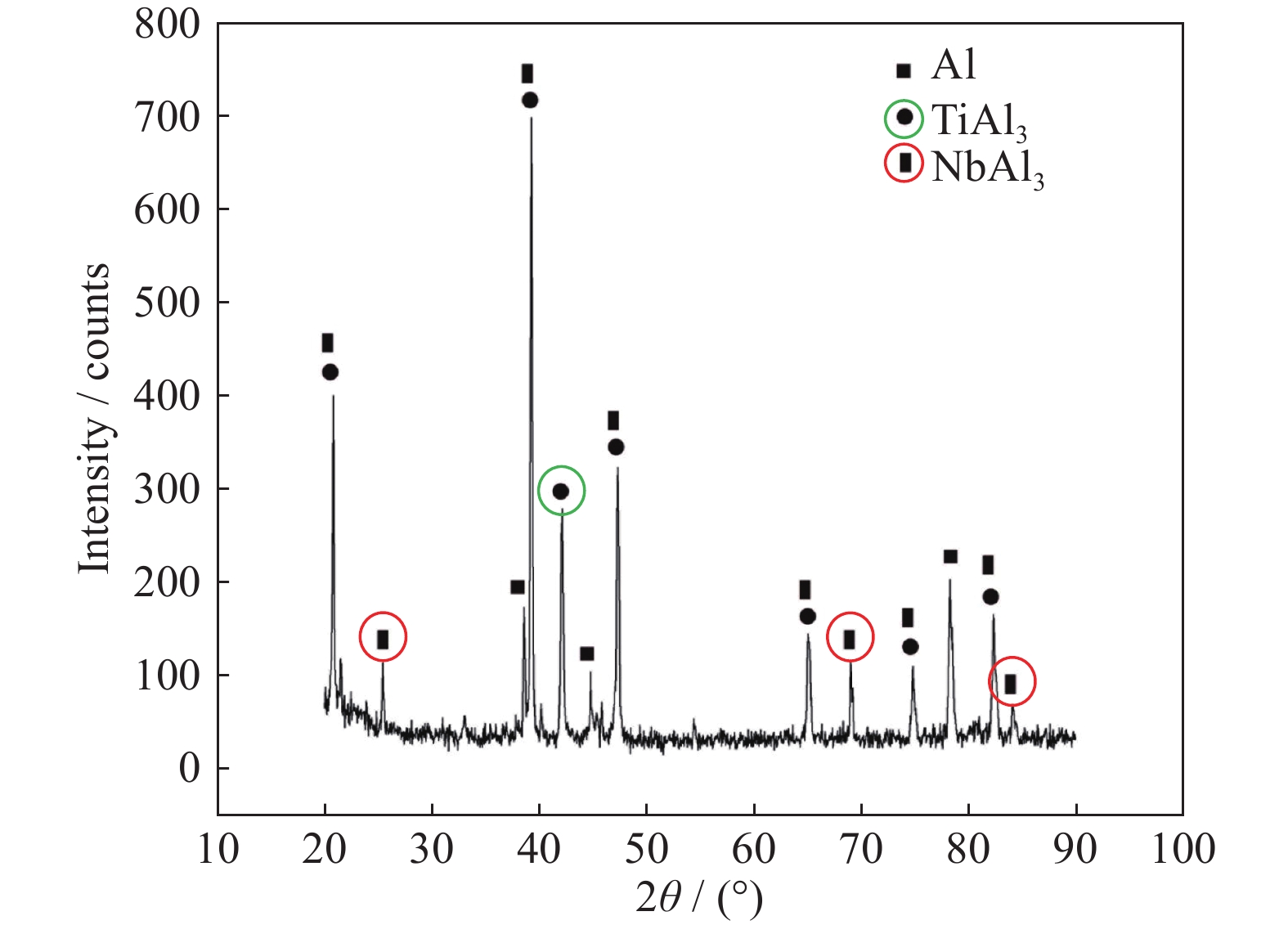
Jafari, R. et al. International Journal of Minerals, Metallurgy and Materials, 2022.
Figure 1. Micro-area XRD Results from TiAl3/Al/NbAl3 Cross-Section of a Sample Annealed.
Services at MtoZ Biolabs
Based on advanced X-ray diffraction instrument platforms, MtoZ Biolabs has launched the micro-area X-ray diffraction (Micro-XRD) analytical service to enable the precise detection of micro-regional samples. Through accurate interpretation of diffraction patterns, researchers can obtain structural differences and physicochemical properties of samples at the micro-area scale. The resulting data not only include lattice and crystal form characteristics but also reflect physicochemical properties at the micro-regional level, providing more precise references for drug development and excipient performance evaluation.
Sample Submission Suggestions
1. Sample Type
Applicable to solid samples for micro-area analysis, including powders, films, single crystals, or micro-particles. Samples should be representative and capable of reflecting local structural characteristics.
2. Sample Purity
It is recommended that impurity content be kept as low as possible to avoid interference with micro-area diffraction signals and to improve the accuracy of local structural analysis.
3. Sample Storage and Transportation
Samples should be kept dry and clean to avoid moisture or contamination. During transportation, sealed packaging is recommended, and low-temperature conditions may be used if necessary to ensure sample stability.
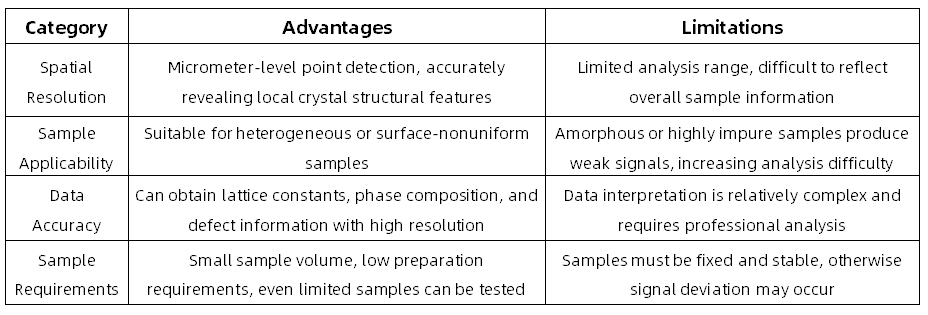
Advantages and Limitations
Applications
1. Drug Polymorphism Analysis
The micro-area X-ray diffraction (Micro-XRD) analytical service can be used to evaluate the local distribution and stability of different drug polymorphs, supporting formulation optimization and consistency studies.
2. Biomaterials Research
Detecting the crystal structure of surfaces or local regions of biomaterials helps assess their biocompatibility and long-term stability.
3. Nanomaterials and Microstructure Research
In nanomedicines or complex material systems, Micro-XRD can be applied to analyze local grain size, phase composition, and defect distribution.
4. Formulation Development and Quality Control
The micro-area X-ray diffraction (Micro-XRD) analytical service can be used to detect the crystallization state of excipients or specific formulation regions, ensuring formulation uniformity and quality consistency during production.
FAQ
Q1: What Is the Difference Between Micro-XRD and Conventional XRD?
A1: Micro-XRD uses micro-area focusing technology to analyze the crystal structure of localized regions, making it suitable for heterogeneous or very small samples. Conventional XRD, on the other hand, is used to obtain average structural information from bulk powders or large-area samples.
Q2: Does the Sample Require Special Preparation?
A2: Sample preparation is relatively simple, but the surface should be flat, clean, and free of visible contamination or cracks to ensure the accuracy and reproducibility of the diffraction signal.
How to order?




